


Secondary sourceArtifactbuilt soon after 1273; museum since 1926
Mevlâna Museum
Badr al-Din Tabrizi (architect) · built soon after 1273; museum since 1926
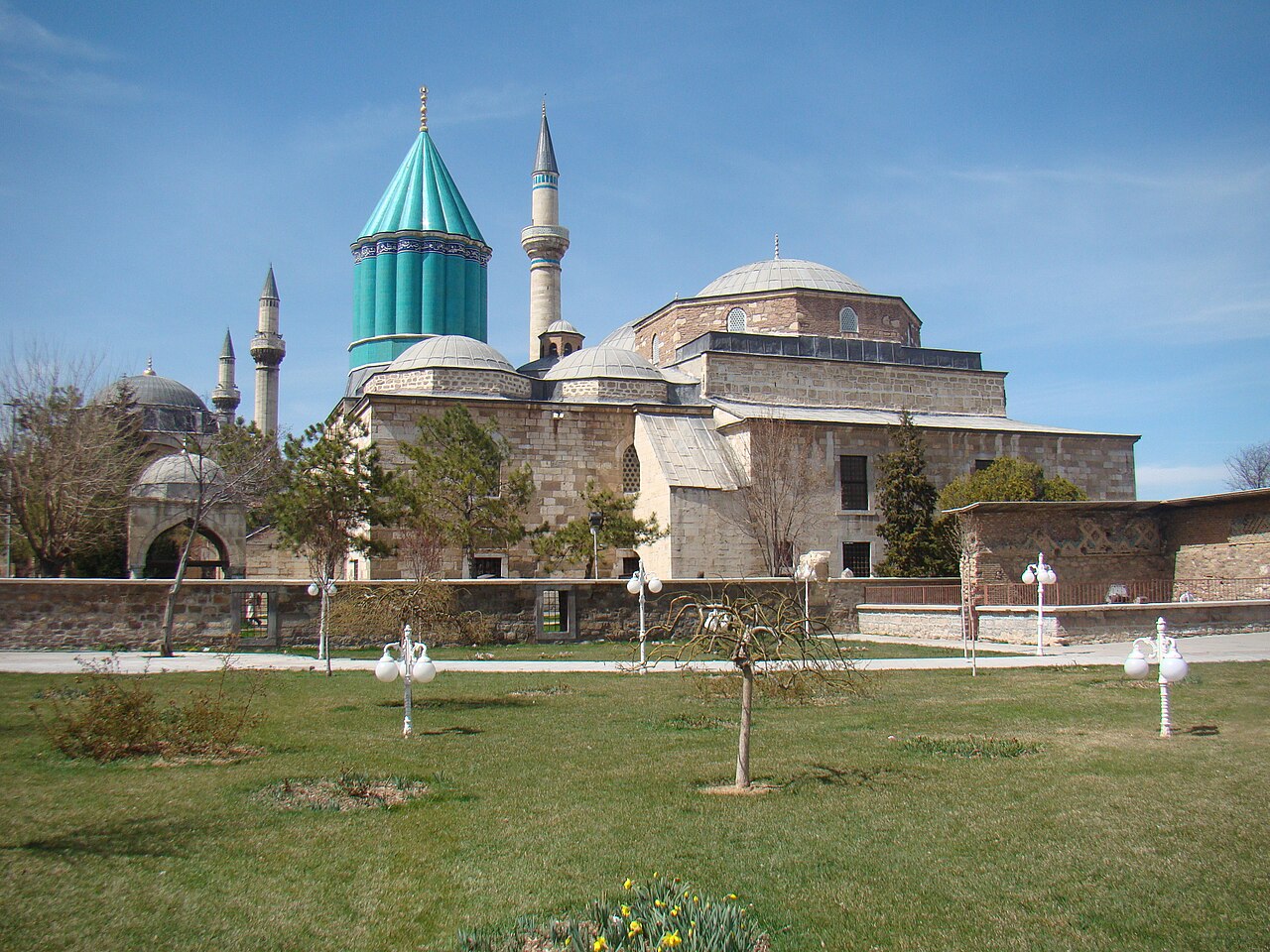
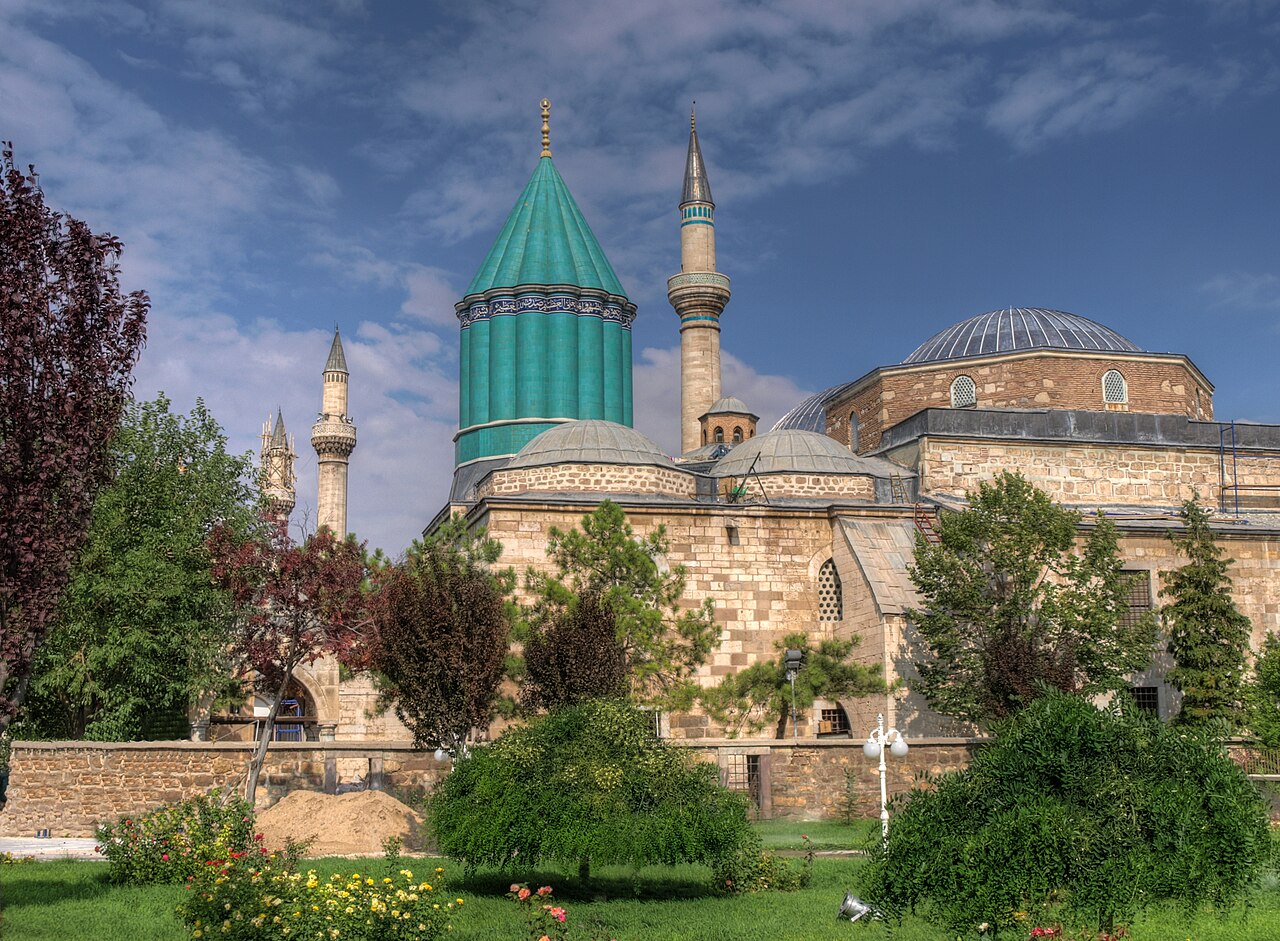
The former dervish lodge and mausoleum in Konya housing Rumi's tomb, later turned into a museum of his life and the Mevlevi order.
This complex holds Rumi's tomb and preserves relics and objects connected to his life and order.
About this source
What it is
Originally a dervish lodge (tekke) of the Mevlevi order, this complex in Konya houses Rumi's mausoleum. It was built by architect Badr al-Din Tabrizi soon after Rumi's death in 1273, funded by Gurju Khatun and Emir Alameddin Kayser, and expanded over centuries. In 1926 it was converted into a museum by decree of Atatürk, opening in 1927.
Why it matters
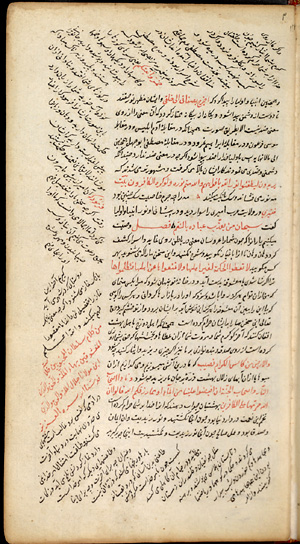
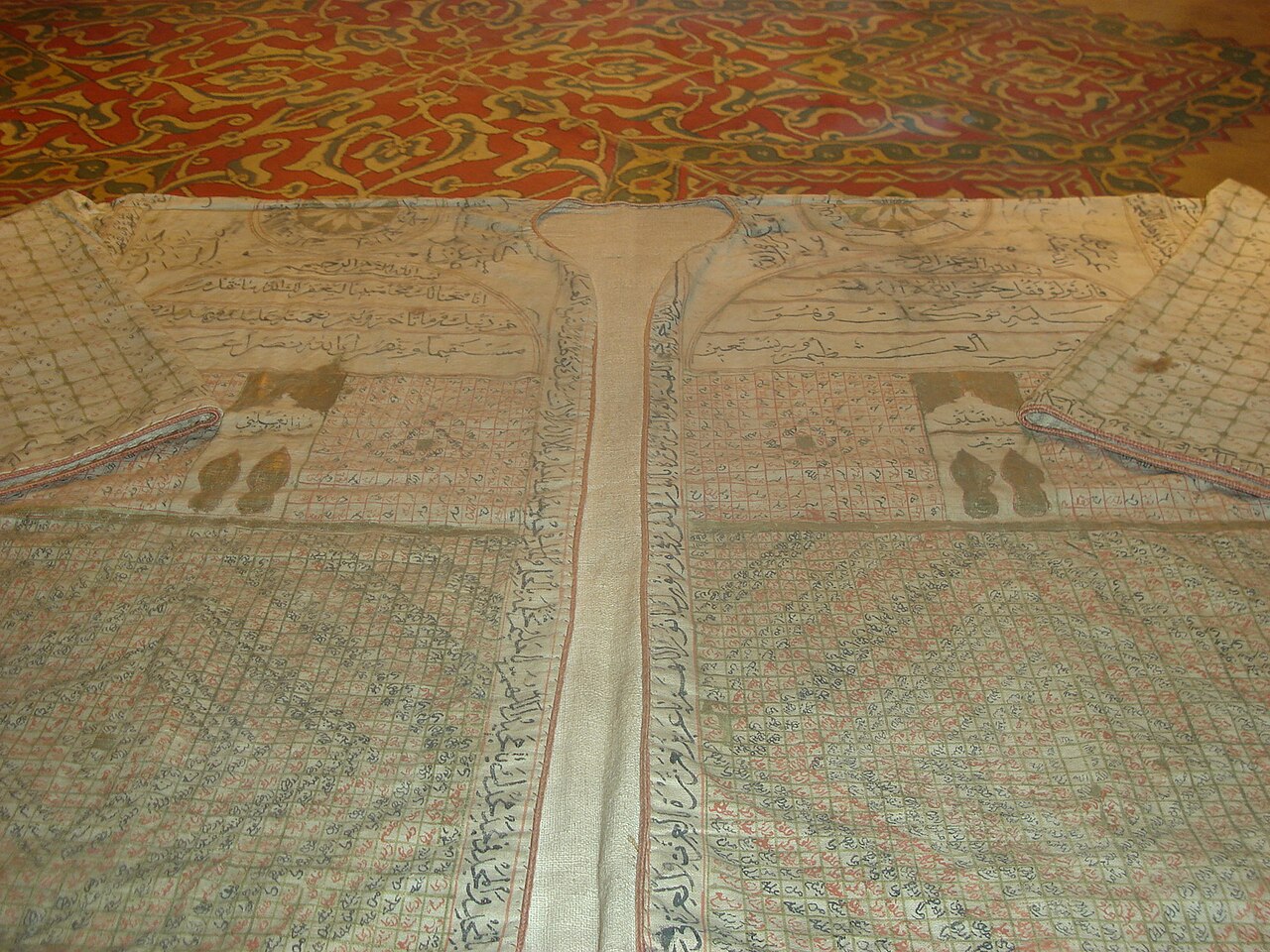
The site became the centre of the Mevlevi order, known for the whirling dervish ritual (sema), and still holds instruments, manuscripts, and relics connected to Rumi and his family, including his son Sultan Walad and father Baha' ud-Din Walad, who is buried nearby. It remains one of Turkey's most visited museums, showing Rumi's lasting importance.
Look closer
- Why might a religious lodge later be turned into a secular museum?
- What do the objects kept here, like instruments and manuscripts, tell us about daily life in the Mevlevi order?
- What does the site's popularity today suggest about how Rumi is remembered now compared to his own time?
This artifact is part of the curated material that grounds the AI version of Rumi (Jalāl ad-Dīn Muhammad Rūmī) on Humy.ai — when students ask about related events, the AI can quote it and cite it.
More Rumi (Jalāl ad-Dīn Muhammad Rūmī) sources
Meet the AI Rumi (Jalāl ad-Dīn Muhammad Rūmī) →
Ready when you are
Start chatting with Rumi (Jalāl ad-Dīn Muhammad Rūmī) now.
20 messages free · No credit card · Available in 50+ languages.