


Secondary sourcePainting1663 AD (1073 AH)
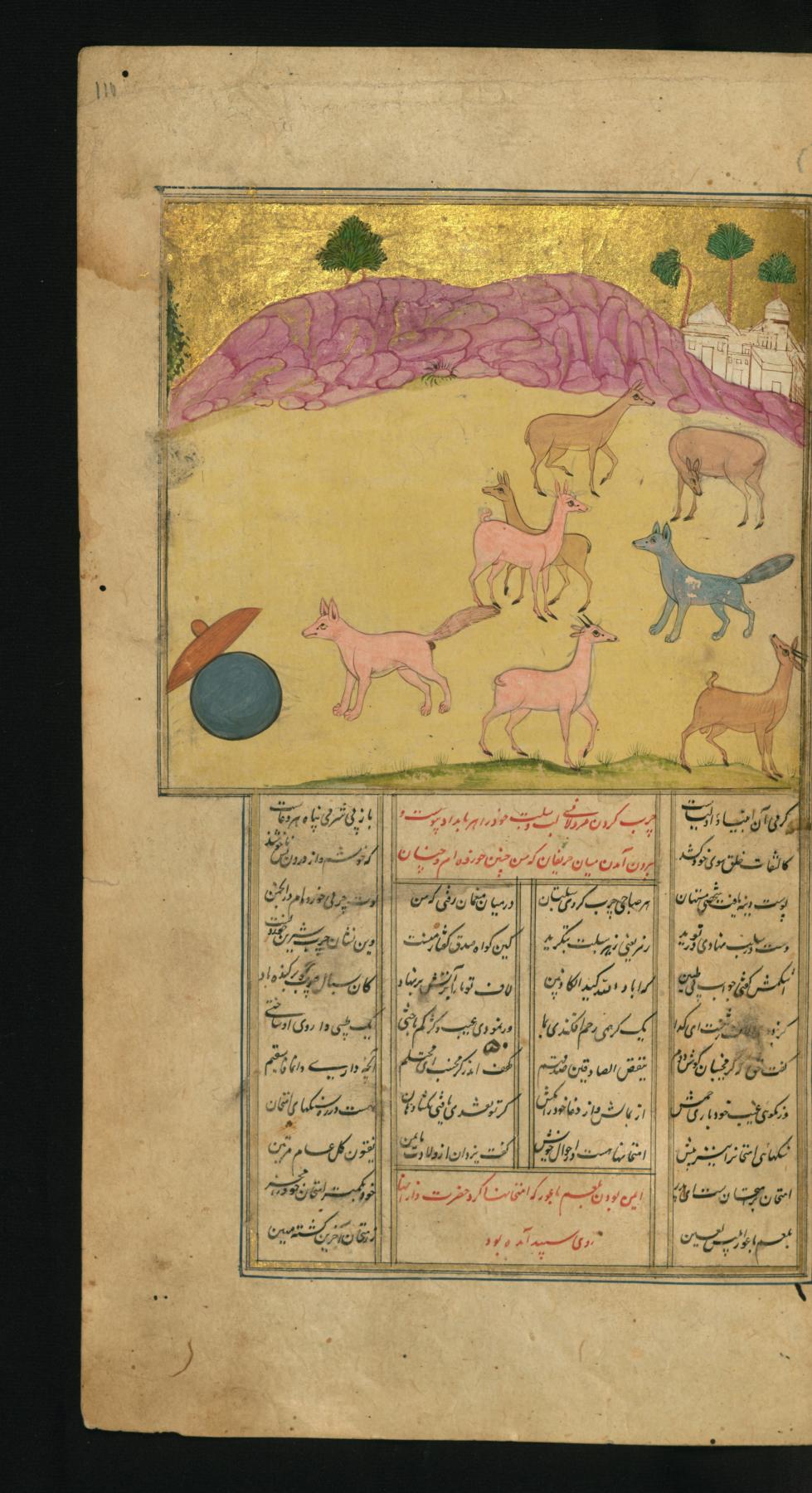
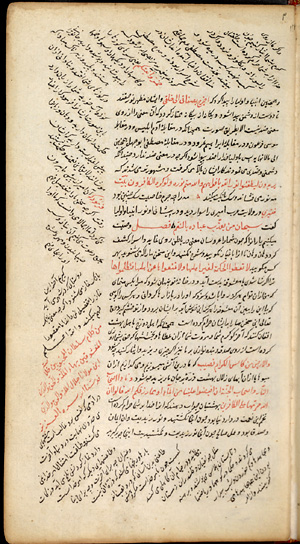
A boastful jackal, Masnavi folio, 1663
1663 AD (1073 AH)
A 1663 Masnavi folio illustrating a fable of a jackal who dyes his coat and boasts of being more beautiful than peacocks.
Shows how a later painter illustrated a moral fable from Rumi's Masnavi, not a picture made by Rumi himself.
About this source
What it is
This is a folio from Walters manuscript W.626, dated 1663 (1073 AH). Above two columns of Persian script is a painted miniature showing a pink-brown jackal and a blue-grey jackal with deer and antelope on a yellow ground, below a pink hill and a white building. According to the Walters record, the jackal has coloured his coat in a jar of paint and boasts that he is more beautiful than peacocks.
Why it matters
Rumi's Masnavi is full of animal fables that teach moral lessons, and this one mocks vanity and pretence. Seventeenth-century painters illustrated such stories for manuscript owners, so the picture shows how Rumi's parables were read and visualised in a later period.
Look closer
- What does the jackal's boast suggest about pride and pretending to be something you are not?
- How does the painter use colour and setting to show the animals?
- What does the picture leave out about the poem's full argument?
This painting is part of the curated material that grounds the AI version of Rumi (Jalāl ad-Dīn Muhammad Rūmī) on Humy.ai — when students ask about related events, the AI can quote it and cite it.
More Rumi (Jalāl ad-Dīn Muhammad Rūmī) sources
Meet the AI Rumi (Jalāl ad-Dīn Muhammad Rūmī) →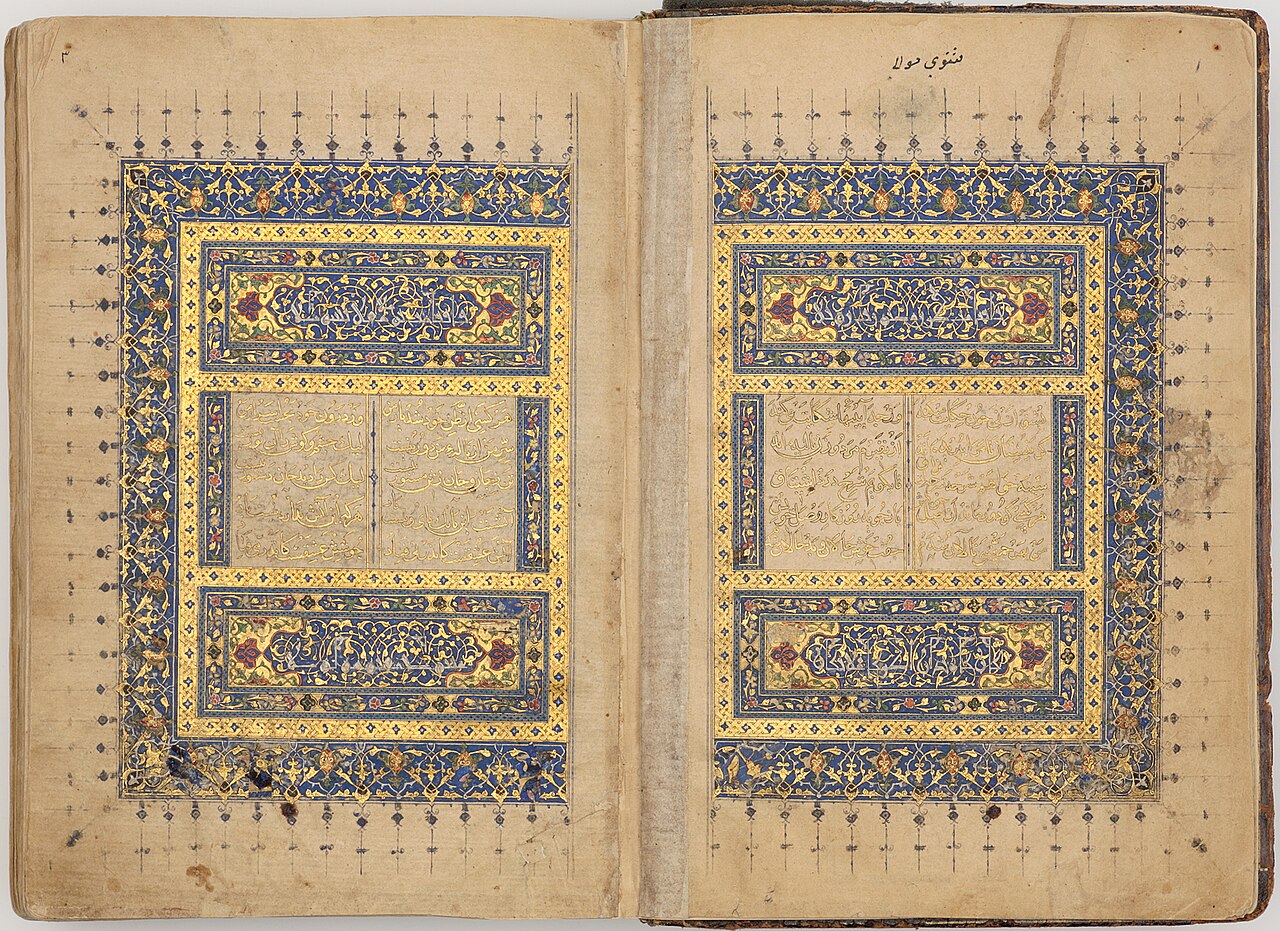 Book
Primary source
Masnavi
Rumi · c. 1258-1273
 Book
Primary source
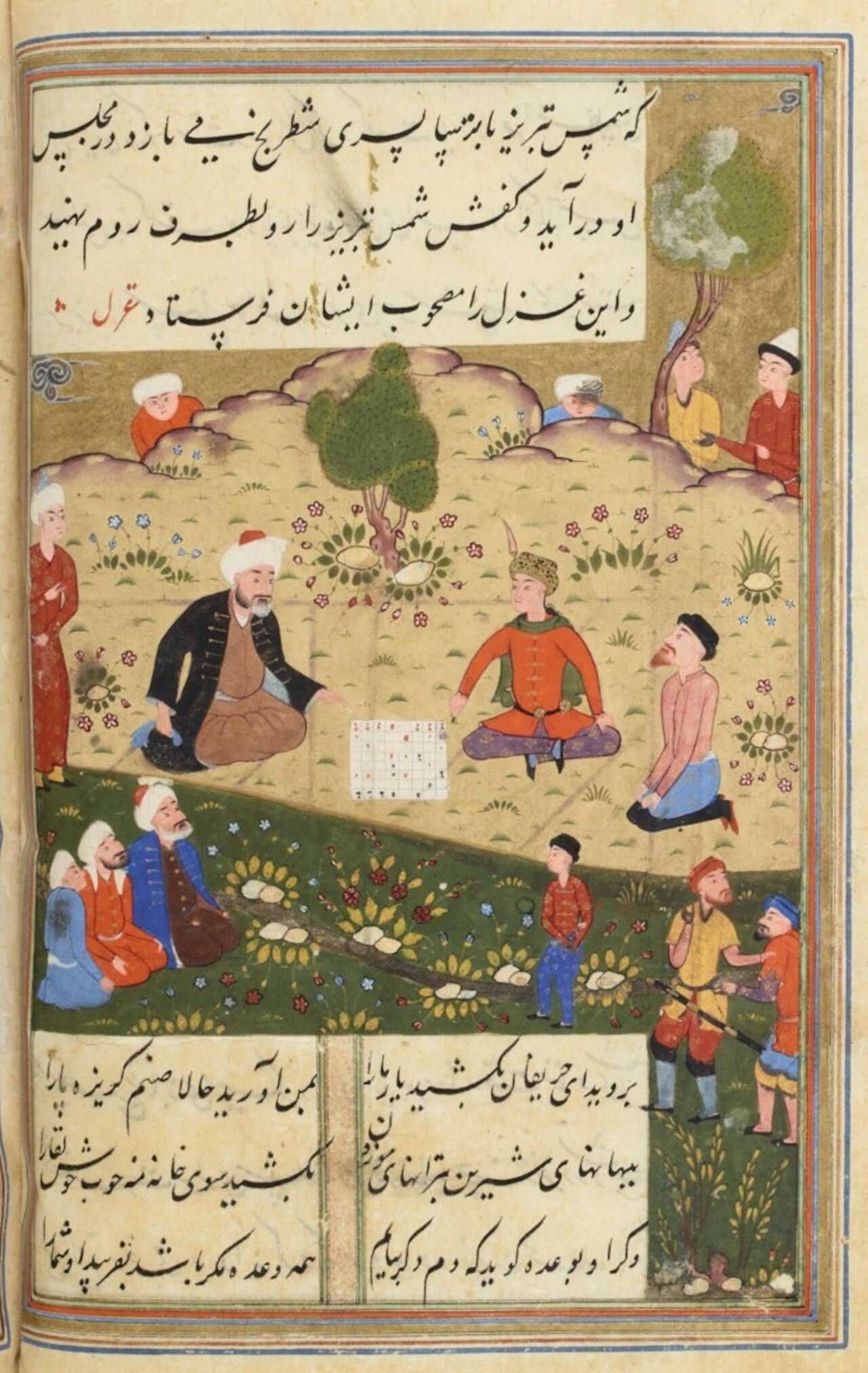
Diwan-e Shams-e Tabrizi
Rumi · c. 1247 onward
 Artifact
Secondary source
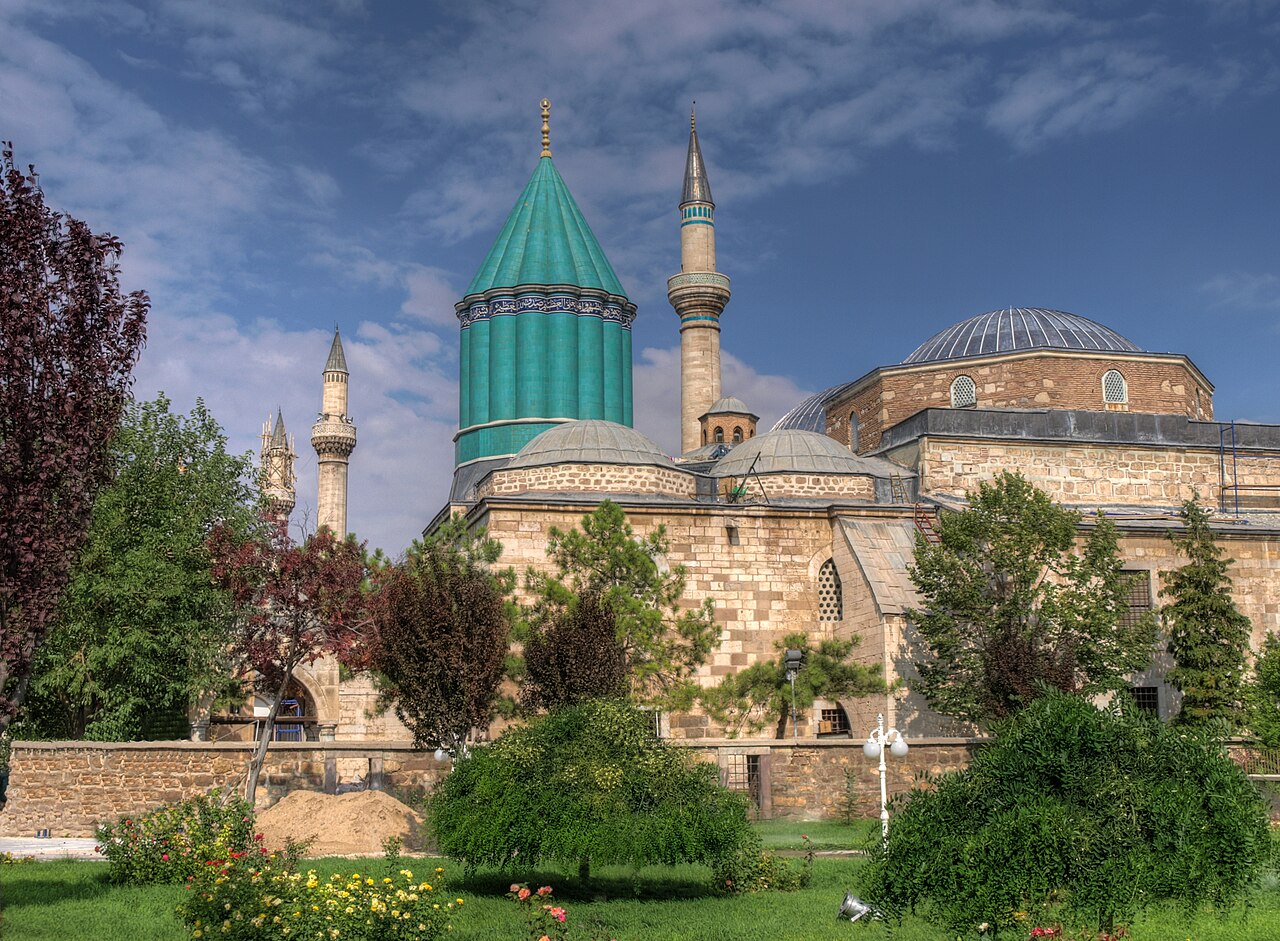
Grave of Rumi
soon after 1273
 Book
Primary source
Fihi Ma Fihi
Rumi · c. 1260-1273
 Artifact
Secondary source
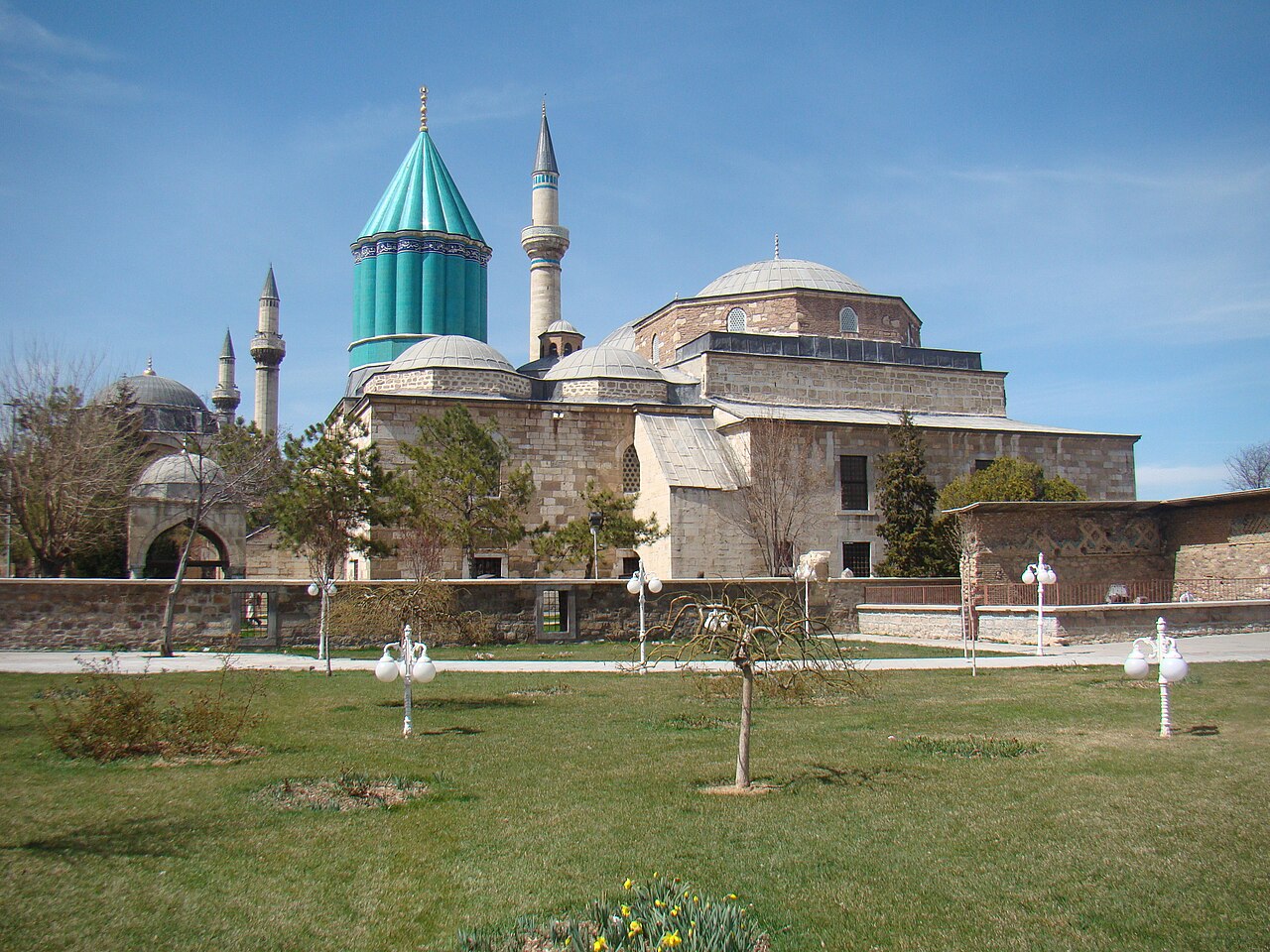
Mevlâna Museum
Badr al-Din Tabrizi (architect) · built soon after 1273; museum since 1926
Ready when you are
Start chatting with Rumi (Jalāl ad-Dīn Muhammad Rūmī) now.
20 messages free · No credit card · Available in 50+ languages.