


Secondary sourcePainting1663 AD (1073 AH)
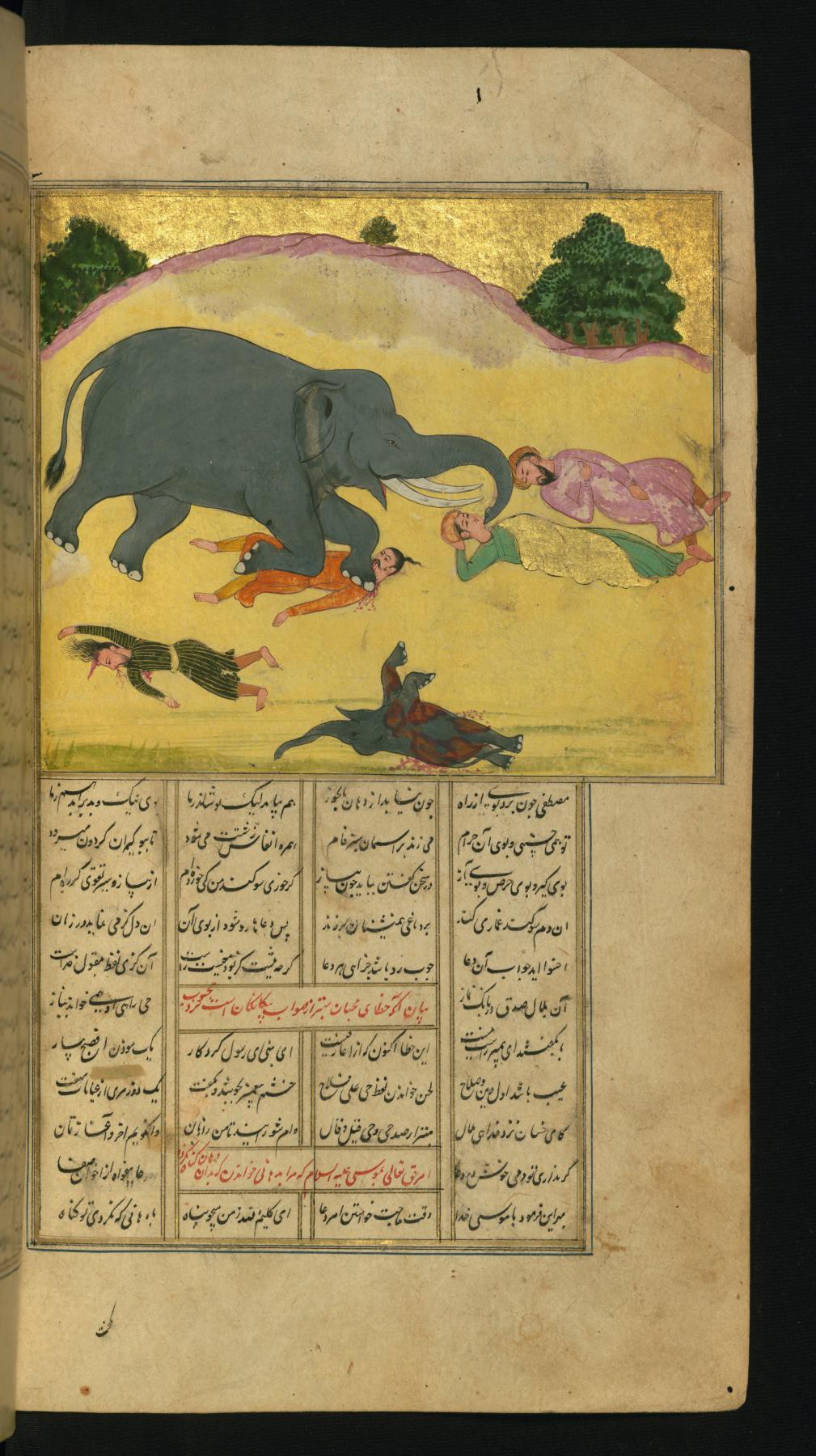
A mother elephant crushes the men who killed her cub, Masnavi folio, 1663
1663 AD (1073 AH)
A 1663 Masnavi folio illustrating a fable in which a mother elephant kills the men who killed her cub.
Shows how a later painter illustrated one of Rumi's animal fables, the kind of parable his Masnavi is known for.
About this source
What it is
This is a folio from Walters manuscript W.626, dated 1663 (1073 AH). The painted miniature, set on gold leaf, shows a grey elephant trampling a man in orange, while a man in green and a man in pink lie on the ground nearby and a dark figure lies below. According to the Walters record, the elephant crushes to death the men who killed her cub and ate its meat. Persian verses in black and red fill the columns beneath the painting.
Why it matters
Rumi used animal fables like this one to teach moral lessons in the Masnavi. Later painters illustrated these stories for manuscript owners in the seventeenth century, so this picture reflects both Rumi's storytelling and the taste of its time.
Look closer
- What moral lesson might the story suggest about cruelty and revenge?
- Why might the painter have chosen to show the violence so directly?
- What does the painting leave out about the reasons behind the men's actions?
This painting is part of the curated material that grounds the AI version of Rumi (Jalāl ad-Dīn Muhammad Rūmī) on Humy.ai — when students ask about related events, the AI can quote it and cite it.
More Rumi (Jalāl ad-Dīn Muhammad Rūmī) sources
Meet the AI Rumi (Jalāl ad-Dīn Muhammad Rūmī) →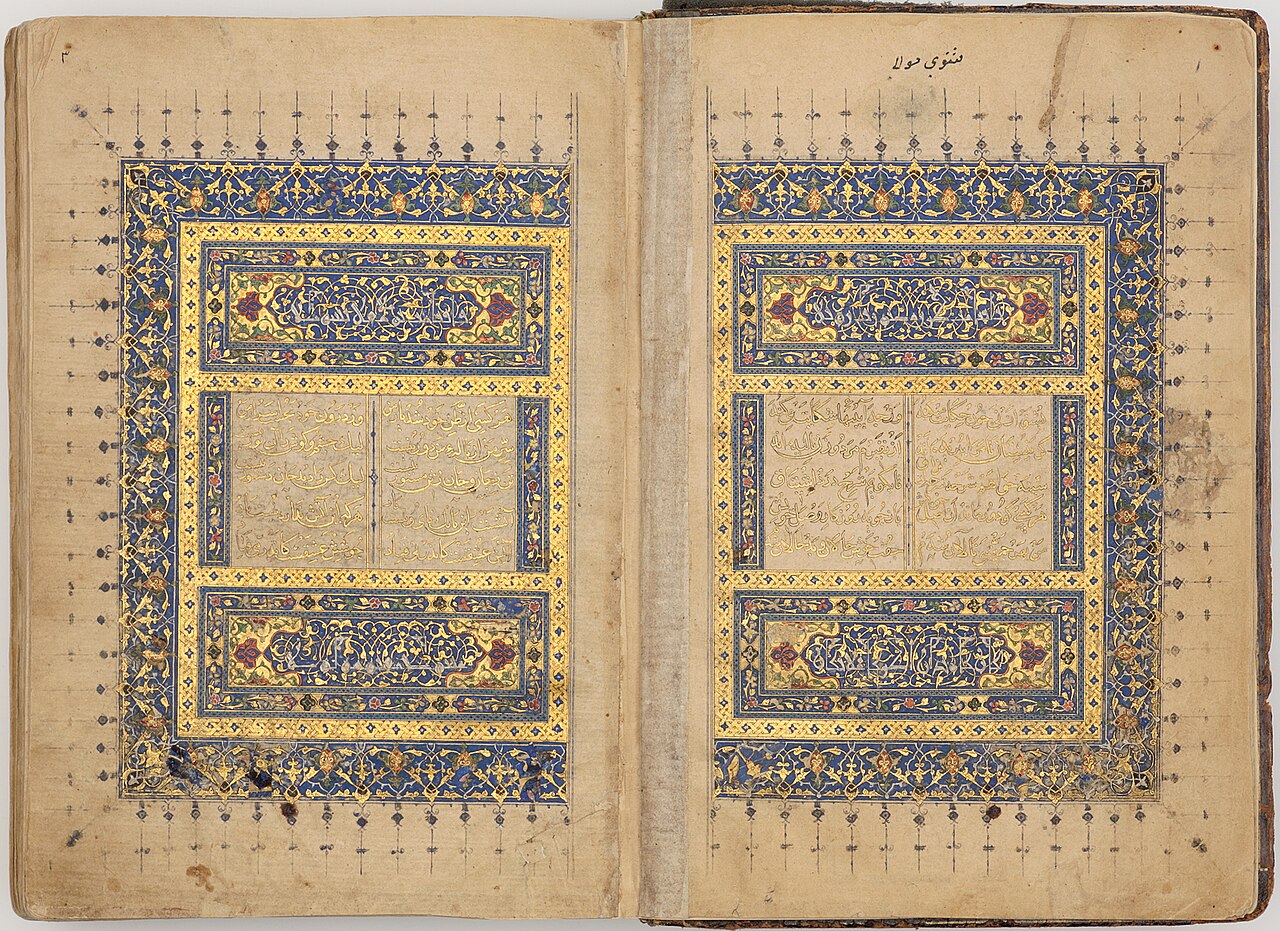 Book
Primary source
Masnavi
Rumi · c. 1258-1273
 Book
Primary source
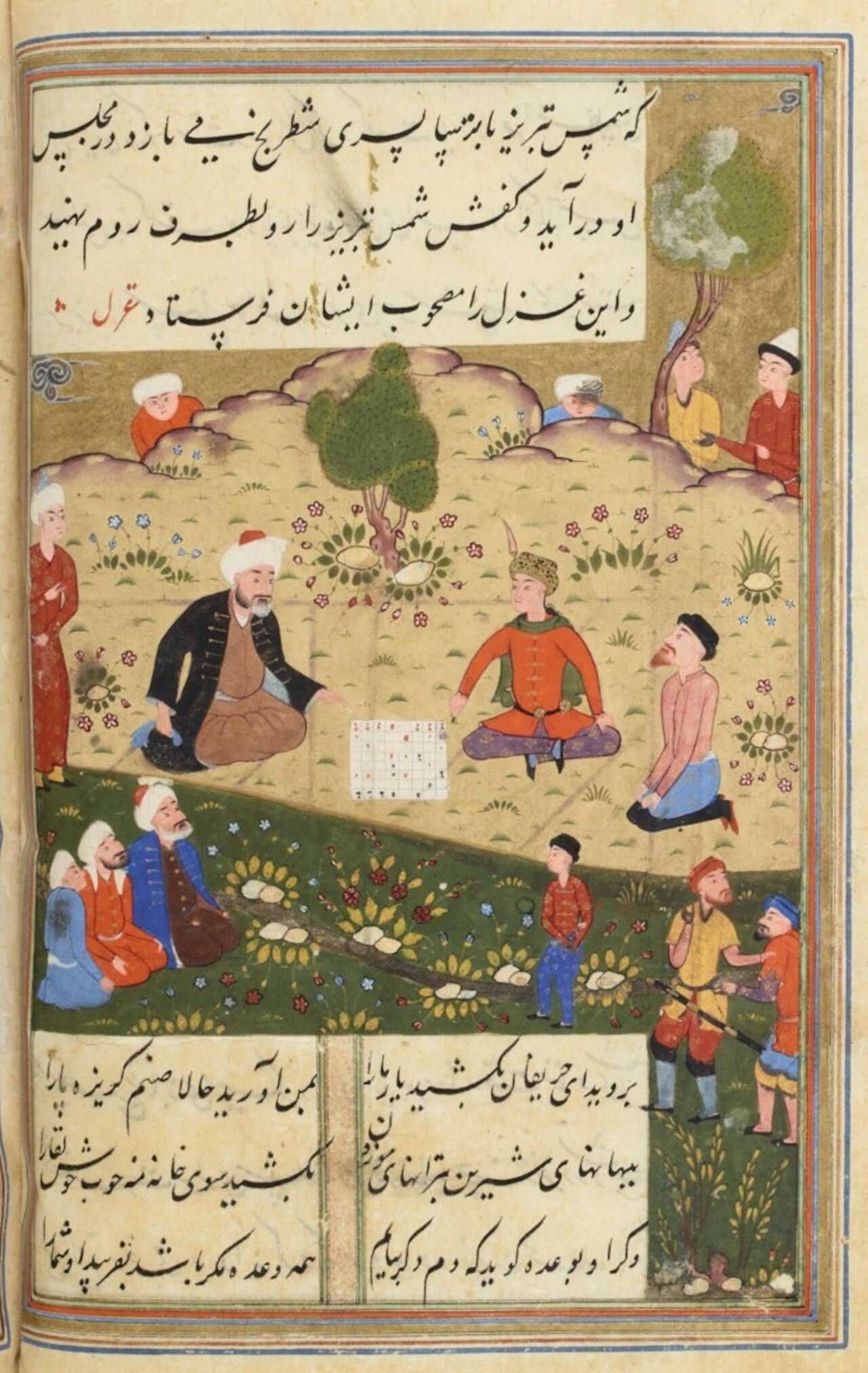
Diwan-e Shams-e Tabrizi
Rumi · c. 1247 onward
 Artifact
Secondary source
Grave of Rumi
soon after 1273
 Book
Primary source
Fihi Ma Fihi
Rumi · c. 1260-1273
 Artifact
Secondary source
Mevlâna Museum
Badr al-Din Tabrizi (architect) · built soon after 1273; museum since 1926
Ready when you are
Start chatting with Rumi (Jalāl ad-Dīn Muhammad Rūmī) now.
20 messages free · No credit card · Available in 50+ languages.