


Primary sourceBook1st century AD (manuscript copy: 15th century)
Agamemnon
Seneca · 1st century AD (manuscript copy: 15th century)
Seneca's Latin tragedy retelling the murder of Agamemnon by his wife Clytemnestra after his return from Troy.
Written by Seneca himself, this tragedy shows his adaptation of Greek drama for Roman audiences.
About this source
What it is
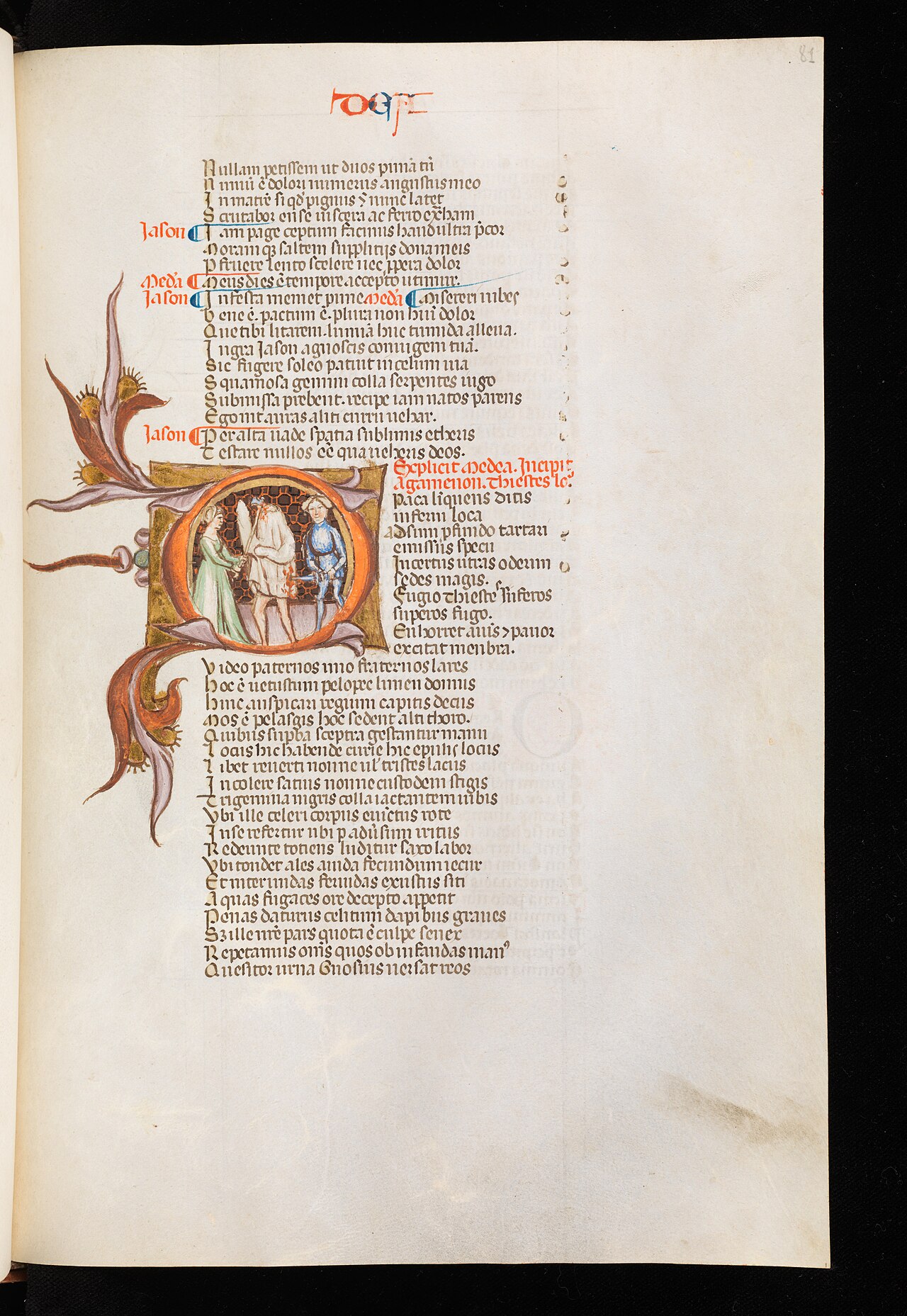
Agamemnon is a Latin tragedy of about 1,012 lines written by Seneca in the 1st century AD, reworking the Greek story of Agamemnon's murder. The manuscript page shown is from a 15th-century Italian codex that collects ten of Seneca's tragedies, with decorated initials and a rubric marking where this play begins.
Why it matters
The play dramatises betrayal, revenge, and the instability of power, following Agamemnon's death at the hands of Clytemnestra and Aegisthus. Seneca adapted earlier Greek tragedy for a Roman audience, showing his skill as both philosopher and dramatist interested in how violence and ambition destroy households and states. The manuscript's survival shows how later copyists kept Roman tragedy alive for medieval readers.
Look closer
- Why might Seneca have been drawn to stories about the destructive consequences of power and revenge?
- What clues on the manuscript page show how it was meant to be read or displayed?
- What might be missing from a text-only record of what was originally a performed drama?
This book is part of the curated material that grounds the AI version of Seneca on Humy.ai — when students ask about related events, the AI can quote it and cite it.
More Seneca sources
Meet the AI Seneca →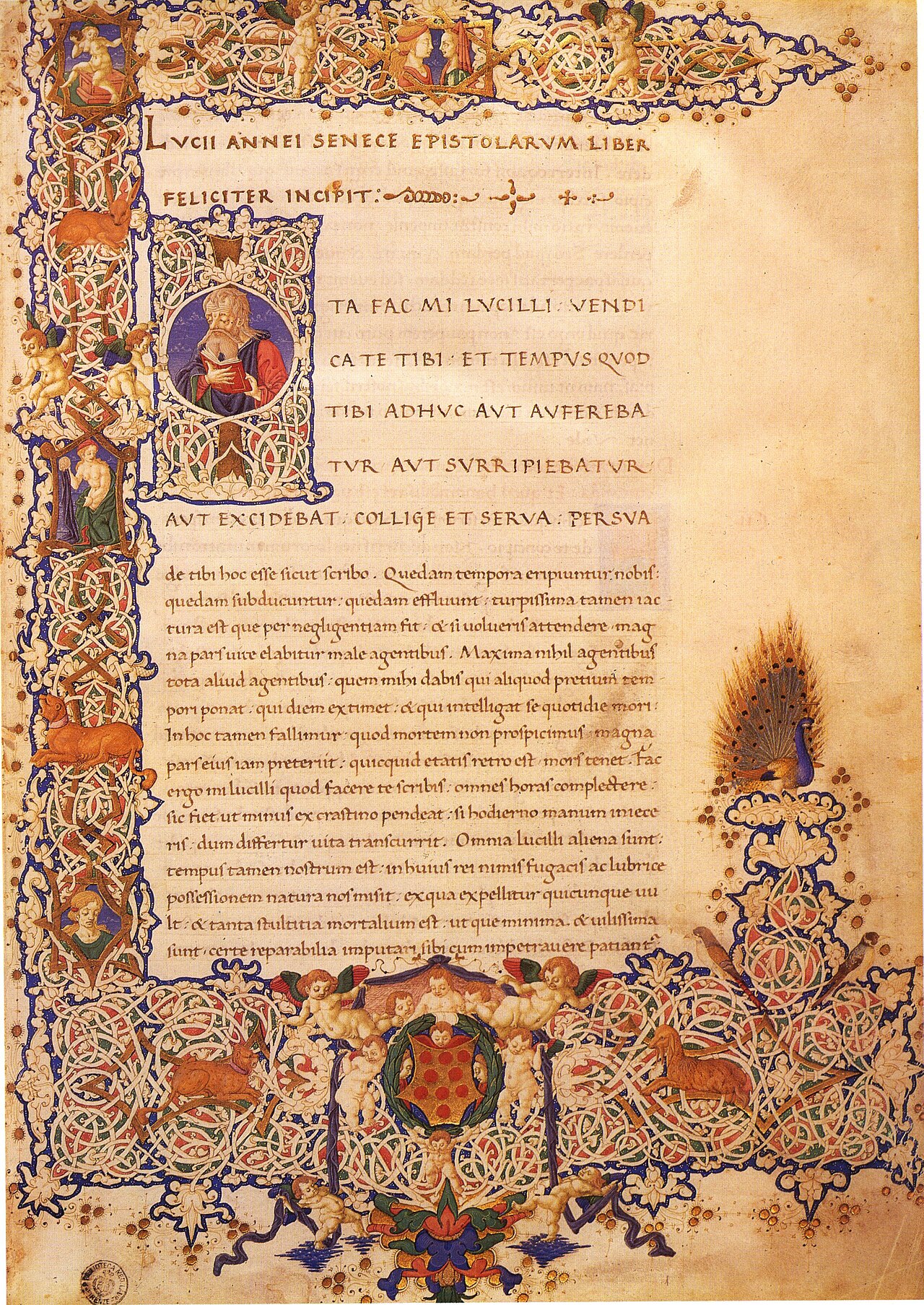 Letter
Primary source
Epistulae Morales ad Lucilium
Seneca · c. 62-65 CE
 Book
Primary source
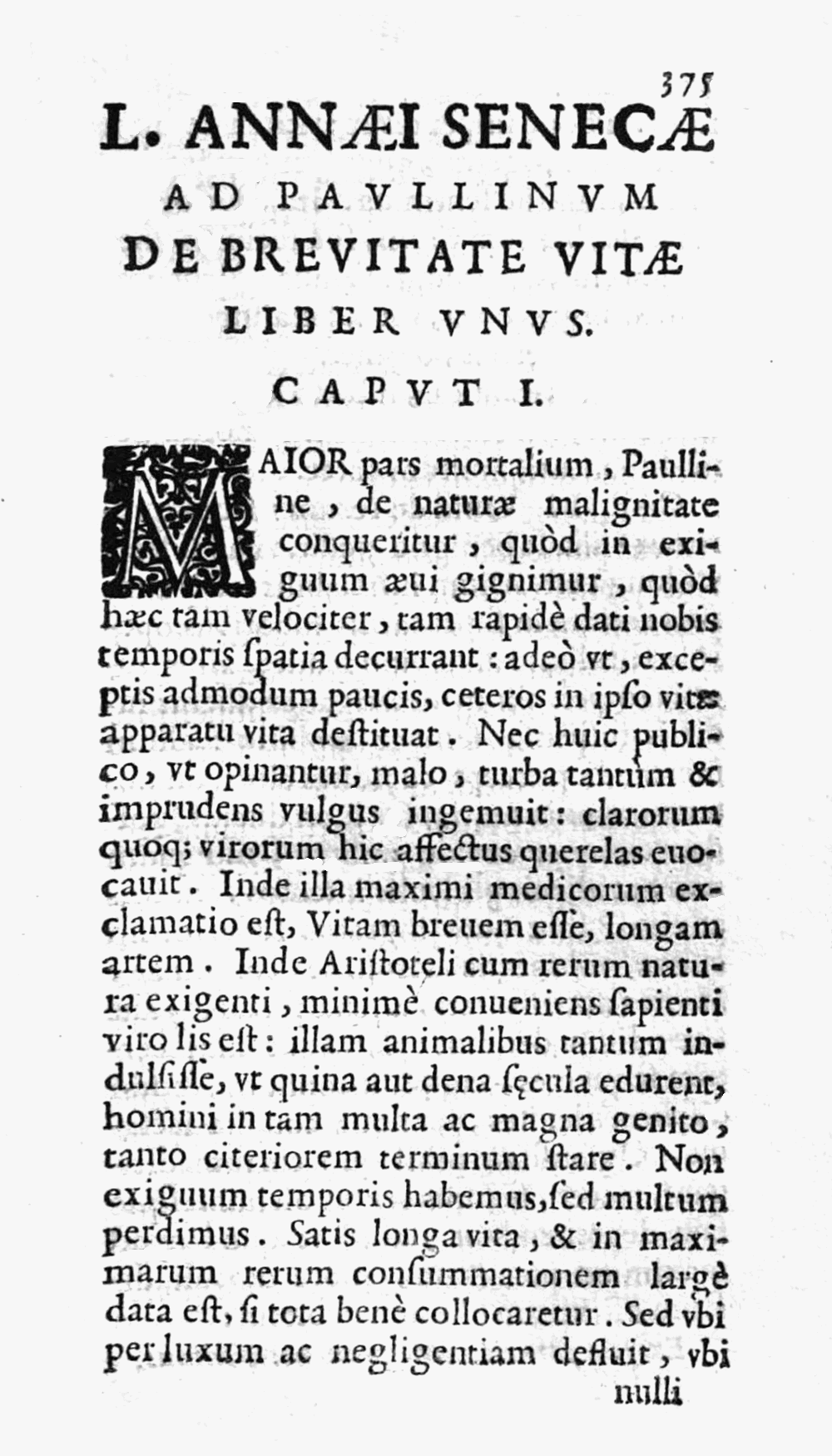
De Brevitate Vitae
Seneca · c. 49 CE
 Book
Secondary source
Annals
Tacitus · c. AD 116 or later
 Book
Primary source
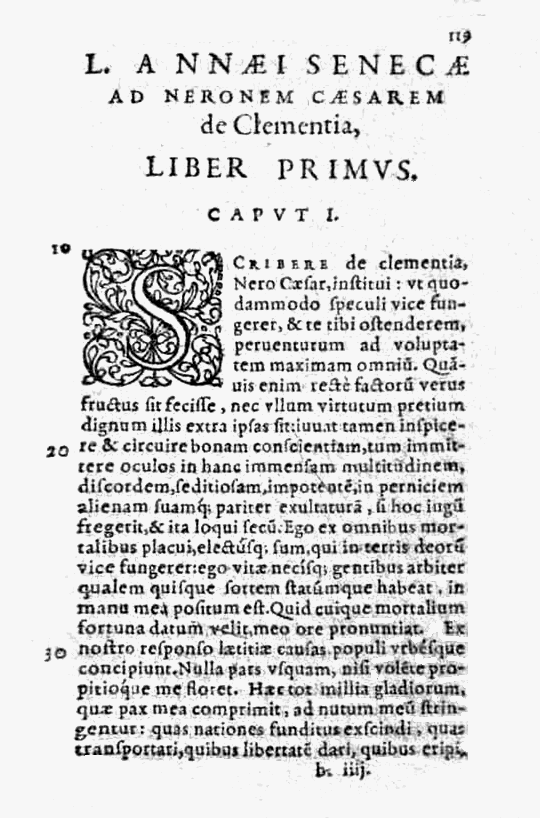
De Clementia
Seneca · 55-56 CE
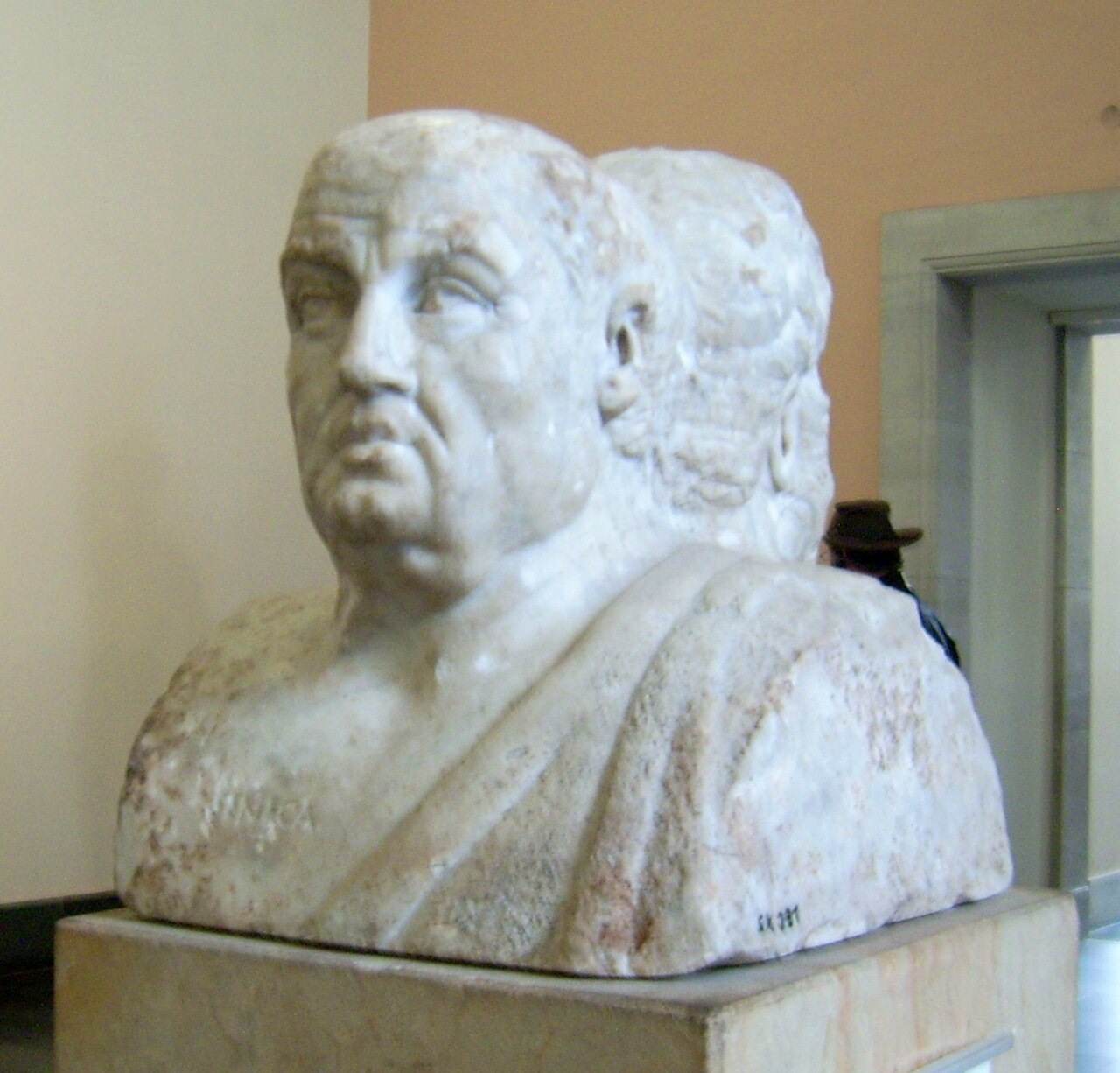 Sculpture
Secondary source
Double Herm of Socrates and Seneca
first half of the 3rd century AD
Ready when you are
Start chatting with Seneca now.
20 messages free · No credit card · Available in 50+ languages.