


Secondary sourceArtifact1403
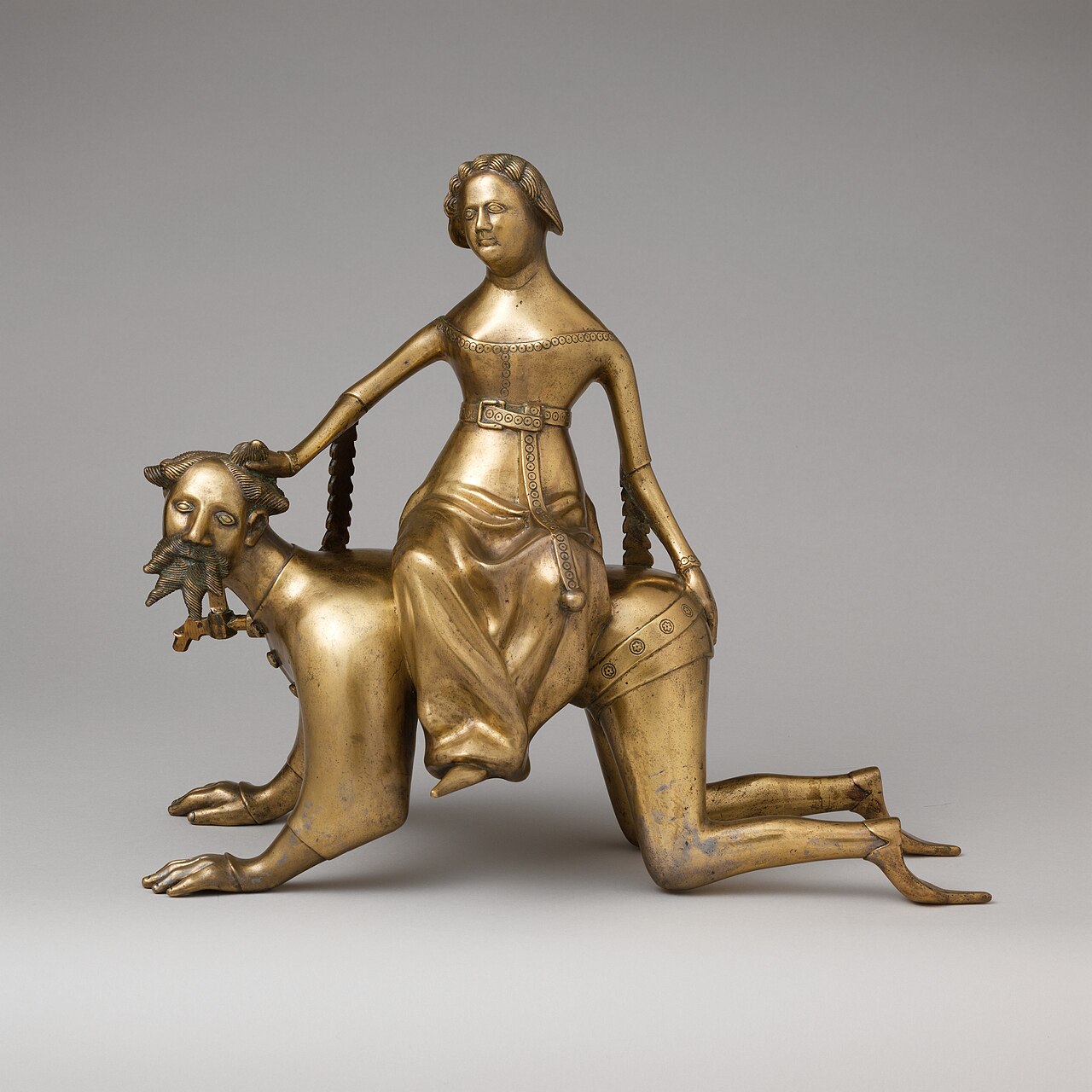
Aquamanile in the Form of Aristotle and Phyllis
1403
A medieval bronze vessel depicting the comic legend of Aristotle being ridden by Phyllis, a popular tale mocking his reasoning.
This object reflects a legend mocking Aristotle's reputation for reason by showing him dominated by desire.
About this source
What it is
This gilt bronze vessel, made in 1403 and held by the Metropolitan Museum of Art, takes the shape of the legendary story of Aristotle and Phyllis. It shows a crowned woman riding a kneeling, bearded man on hands and feet.
Why it matters
The object illustrates a popular medieval legend in which the philosopher Aristotle, famous for his reason and self-control, is humiliated and ridden like a horse by a woman named Phyllis, who had seduced him. The story was used to warn against the power of desire over even the wisest men. It shows how, centuries after his death, Aristotle's reputation as the ultimate rational thinker was turned into comedy and moral lesson.
Look closer
- Why would medieval artists choose this humorous legend rather than Aristotle's actual writings?
- What might this story suggest about medieval attitudes toward reason, women, and desire?
- What everyday object type (an aquamanile, used for pouring water) is this story attached to, and why might that matter?
This artifact is part of the curated material that grounds the AI version of Aristotle on Humy.ai — when students ask about related events, the AI can quote it and cite it.
More Aristotle sources
Meet the AI Aristotle →


Ready when you are
Start chatting with Aristotle now.
20 messages free · No credit card · Available in 50+ languages.