


Secondary sourceBookfirst half of the 13th century
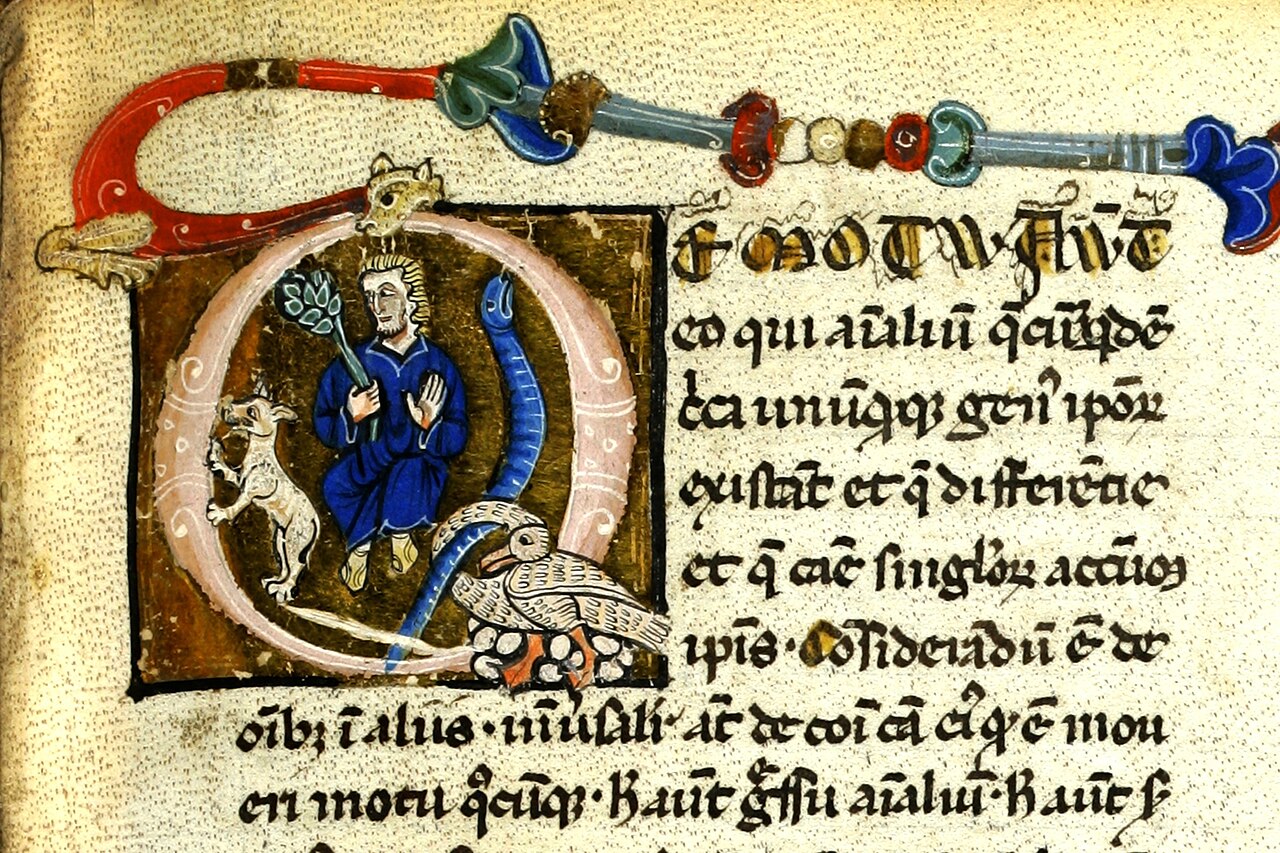
Aristoteles-Albertus-Magnus-Handschrift
first half of the 13th century
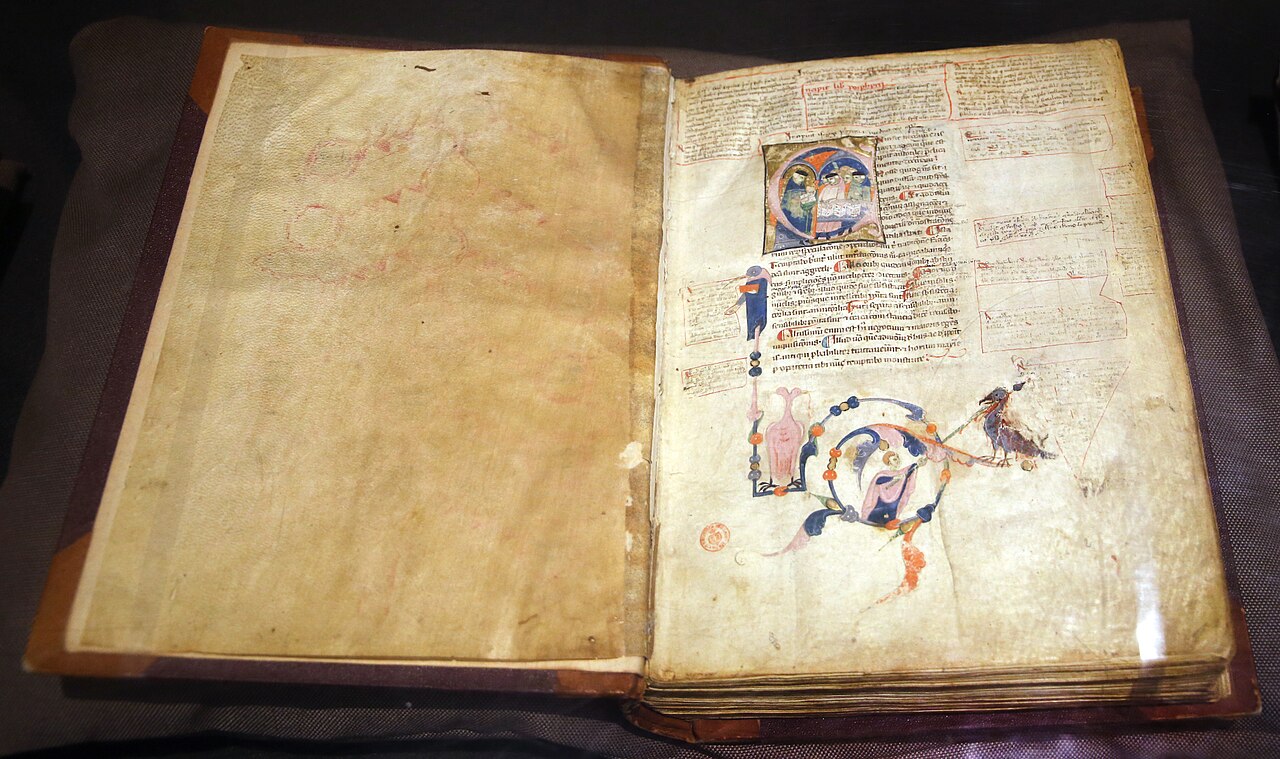
A richly illuminated 13th-century Italian manuscript combining Aristotle's works with commentary by Albertus Magnus.
This manuscript preserves and comments on Aristotle's works, showing his lasting influence on medieval scholarship.
About this source
What it is
This is a parchment manuscript made in Italy in the first half of the 13th century. It contains works attributed to Aristotle alongside scientific treatises by Albertus Magnus, including his writings on minerals and on the nature of land.
Why it matters
The manuscript shows how medieval scholars studied Aristotle, often called simply 'the Philosopher', pairing his ideas with later commentary. It is evidence of how universities preserved and reinterpreted ancient Greek learning centuries after Aristotle's death.
Look closer
- What does the decorated initial, with its animals and plants, tell you about the care taken in making this book?
- Why might scribes combine Aristotle's own texts with later commentaries in one volume?
- What does this manuscript suggest about who could read and study philosophy in medieval Europe?
This book is part of the curated material that grounds the AI version of Aristotle on Humy.ai — when students ask about related events, the AI can quote it and cite it.
More Aristotle sources
Meet the AI Aristotle →

Ready when you are
Start chatting with Aristotle now.
20 messages free · No credit card · Available in 50+ languages.