


Secondary sourcePainting
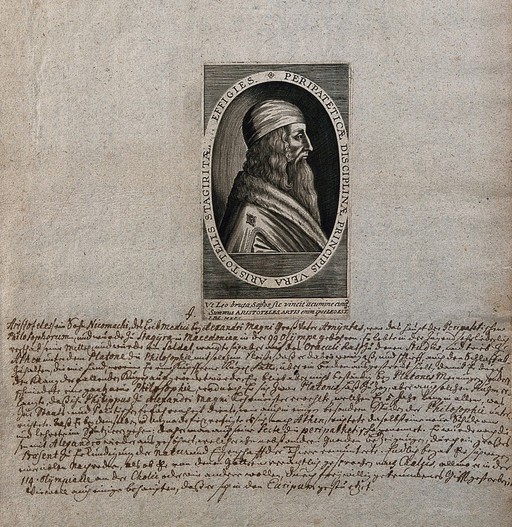
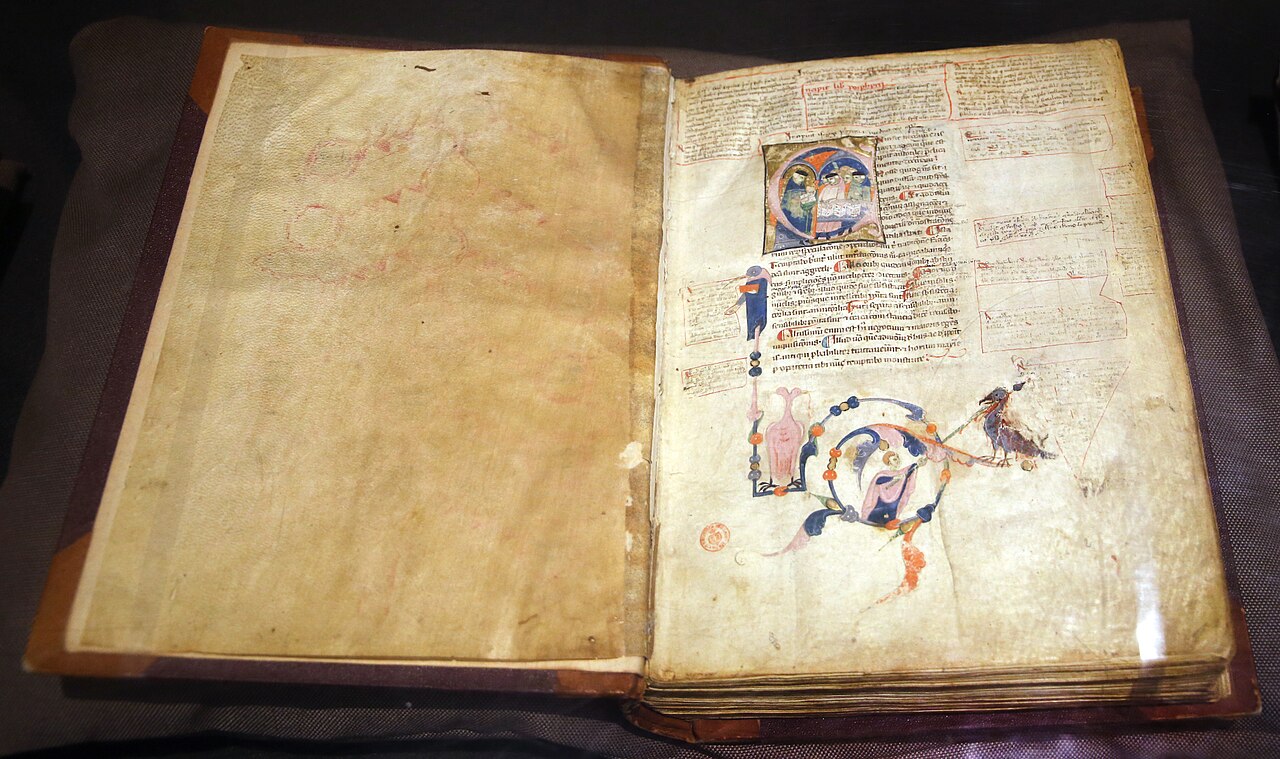
Aristotle, line engraving
A line engraving of Aristotle in an oval frame with Latin inscriptions. It was made long after his death and shows how later Europeans pictured him.
A later European engraving of Aristotle, showing how his image was made and kept by readers long after he lived.
About this source
What it is
This is a line engraving of Aristotle held by the Wellcome Collection in the United Kingdom. It shows a bearded man in a headdress and cloak, seen in profile, inside an oval frame with Latin inscriptions. The media description also notes handwritten manuscript notes below the image on aged paper. The maker is not named in the facts.
Why it matters
Aristotle died in the 4th century BCE, so this print was made many centuries later. Engravings like this one gave readers an image of a famous philosopher, often copied from earlier pictures. The handwritten notes on the same sheet show that people used such prints as part of their own reading and study.
Look closer
- What does the headdress and cloak suggest about how the engraver wanted Aristotle to be seen?
- What might the handwritten notes tell you about who owned this print and how they used it?
- Which parts of this image are likely invented by later artists rather than based on any evidence from Aristotle's time?
This painting is part of the curated material that grounds the AI version of Aristotle on Humy.ai — when students ask about related events, the AI can quote it and cite it.
More Aristotle sources
Meet the AI Aristotle →

Ready when you are
Start chatting with Aristotle now.
20 messages free · No credit card · Available in 50+ languages.