


Secondary sourceArtifactc. 650 BCE
Assyrian Relief of Ashurbanipal's Campaign Against Hamanu
c. 650 BCE
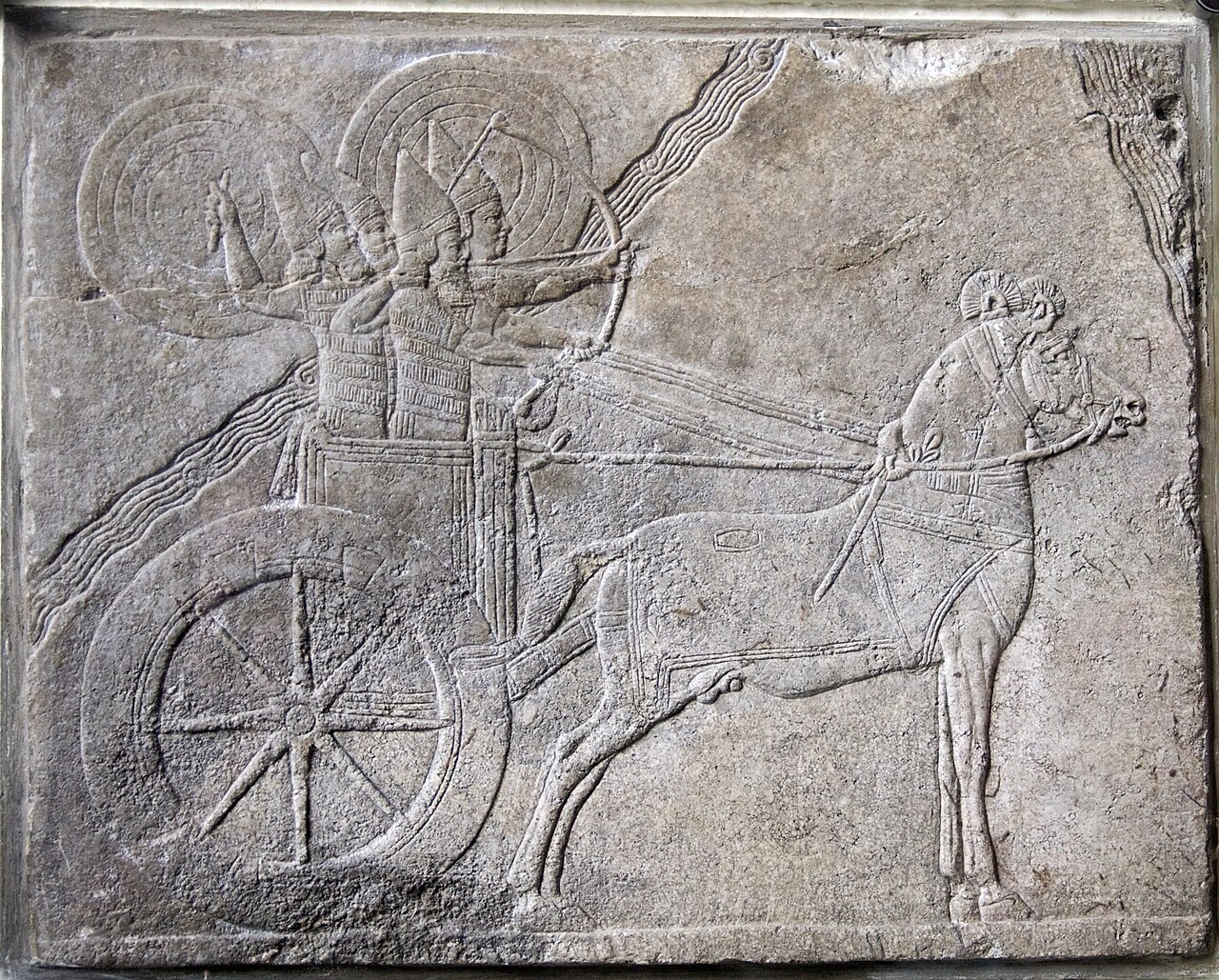
A stone relief from Nineveh, possibly showing a battle scene from Ashurbanipal's campaign against the Elamite city of Hamanu.
This relief likely depicts a battle from Ashurbanipal's military campaigns, commissioned for his palace.
About this source
What it is
This alabaster relief comes from Nineveh, made around 650 BC, and is now held at the Pergamon Museum in Berlin. It shows an Assyrian war chariot with a charioteer and archer, protected by shield-bearers, in what may depict a scene from Ashurbanipal's campaign against the Elamite city of Hamanu.
Why it matters
Reliefs like this were carved for Ashurbanipal's palace to record and celebrate his military campaigns. They give historians detailed evidence about ancient warfare, including chariots, weapons and tactics, and show how the king wanted his victories remembered.
Look closer
- What details about Assyrian weapons and vehicles can you identify in this carving?
- Why would a king want scenes of his own battles carved into his palace walls?
- What might this image leave out about the experience of the people being fought?
This artifact is part of the curated material that grounds the AI version of Ashurbanipal on Humy.ai — when students ask about related events, the AI can quote it and cite it.
More Ashurbanipal sources
Meet the AI Ashurbanipal →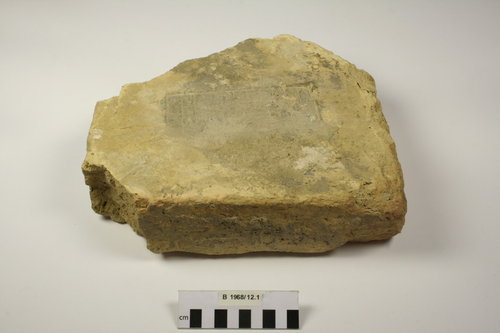 Artifact
Primary source
Baked Brick Naming King Ashurbanipal
7th century BCE
 Sculpture
Primary source
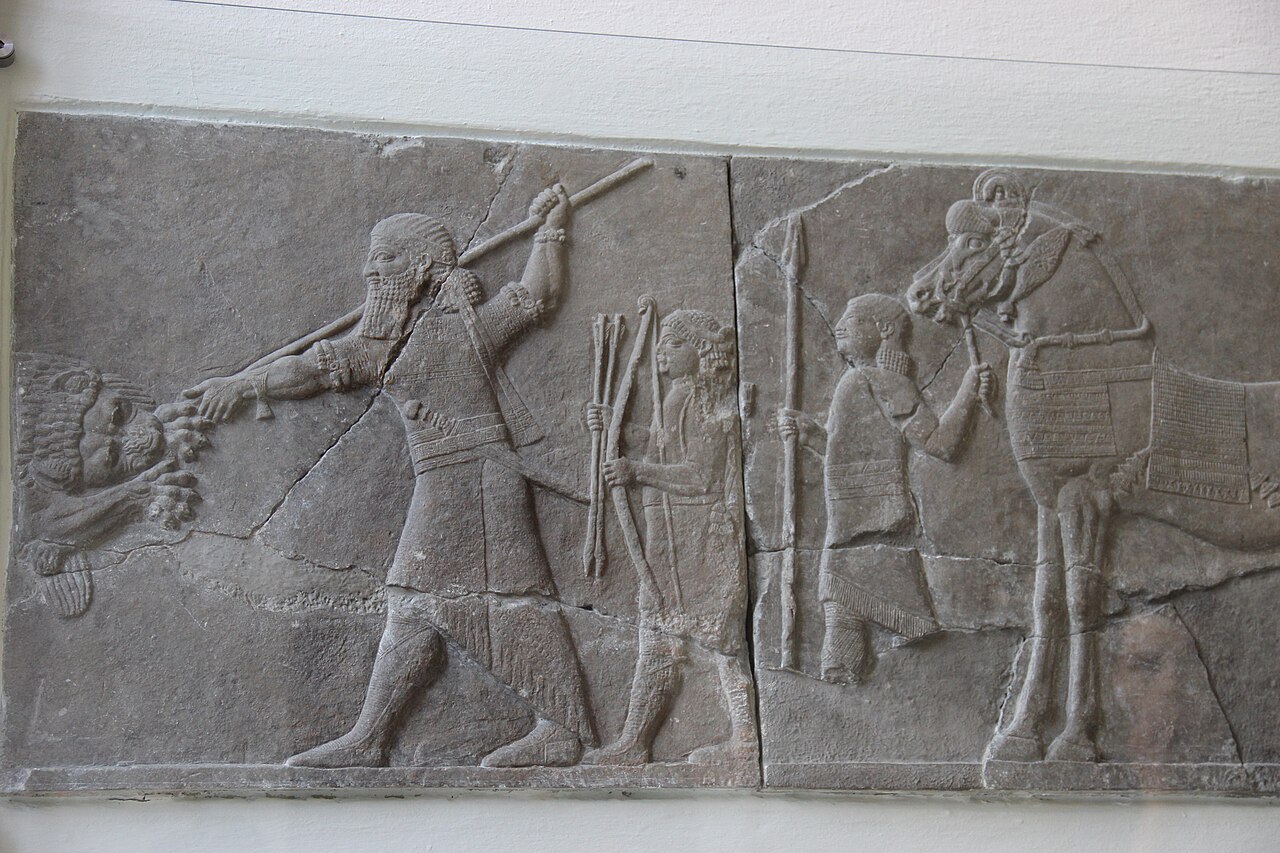
Lion Hunt of Ashurbanipal
Assyrian royal sculptors · c. 645–635 BCE
 Document
Primary source
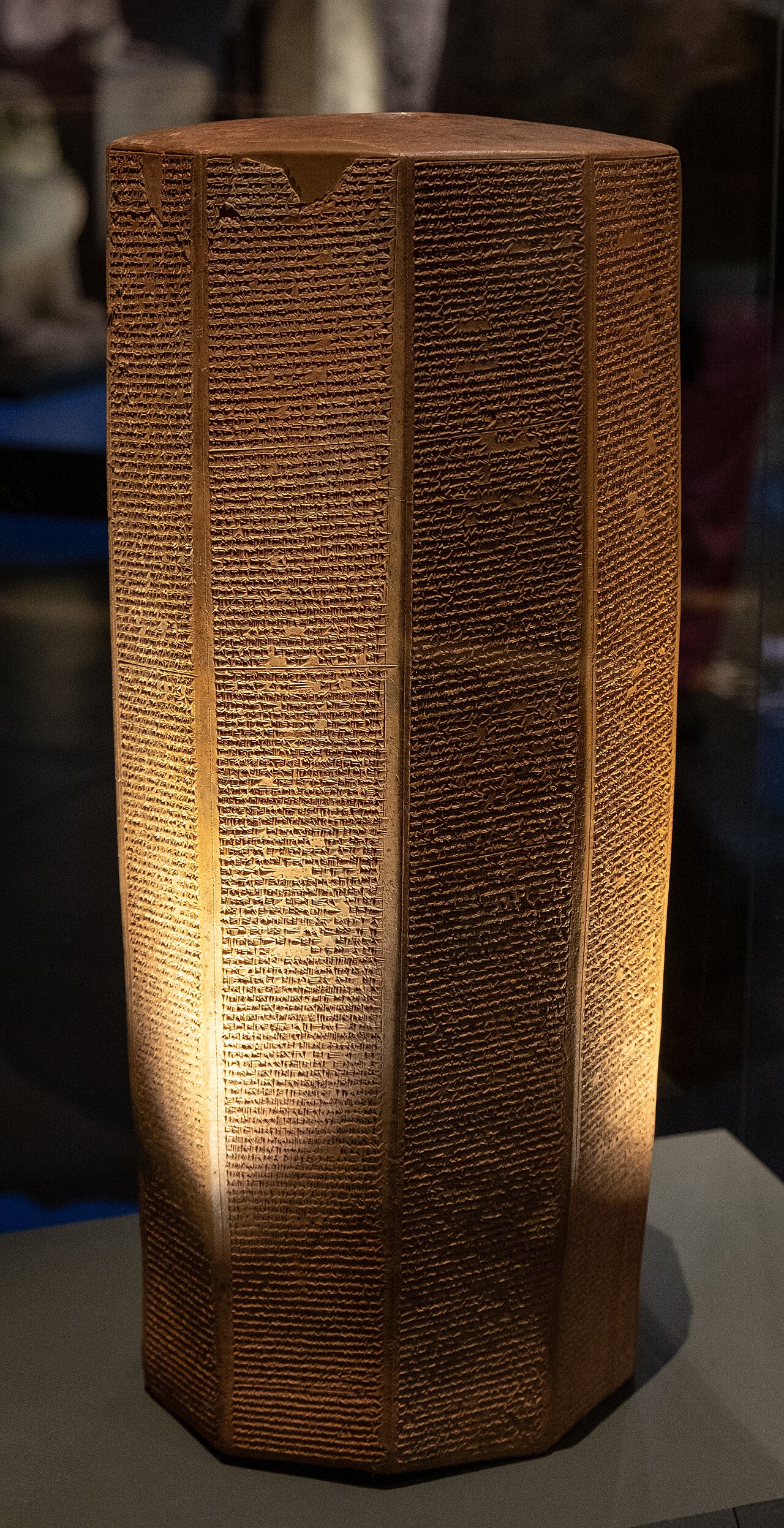
Rassam Prism of Ashurbanipal
643 BCE
 Painting
Secondary source
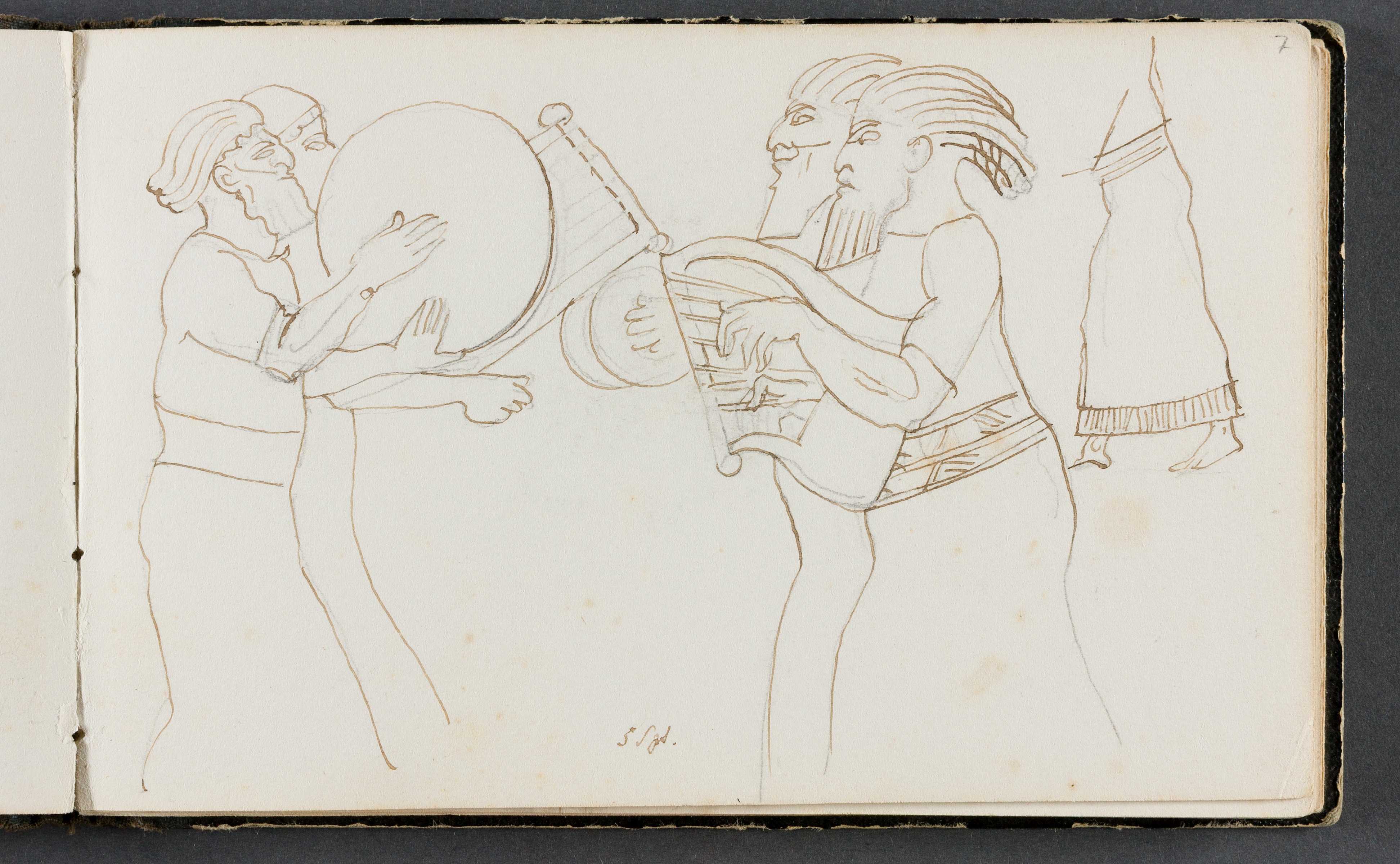
Relief with Musicians from the Palace of Ashurbanipal in Nineveh
 Document
Primary source
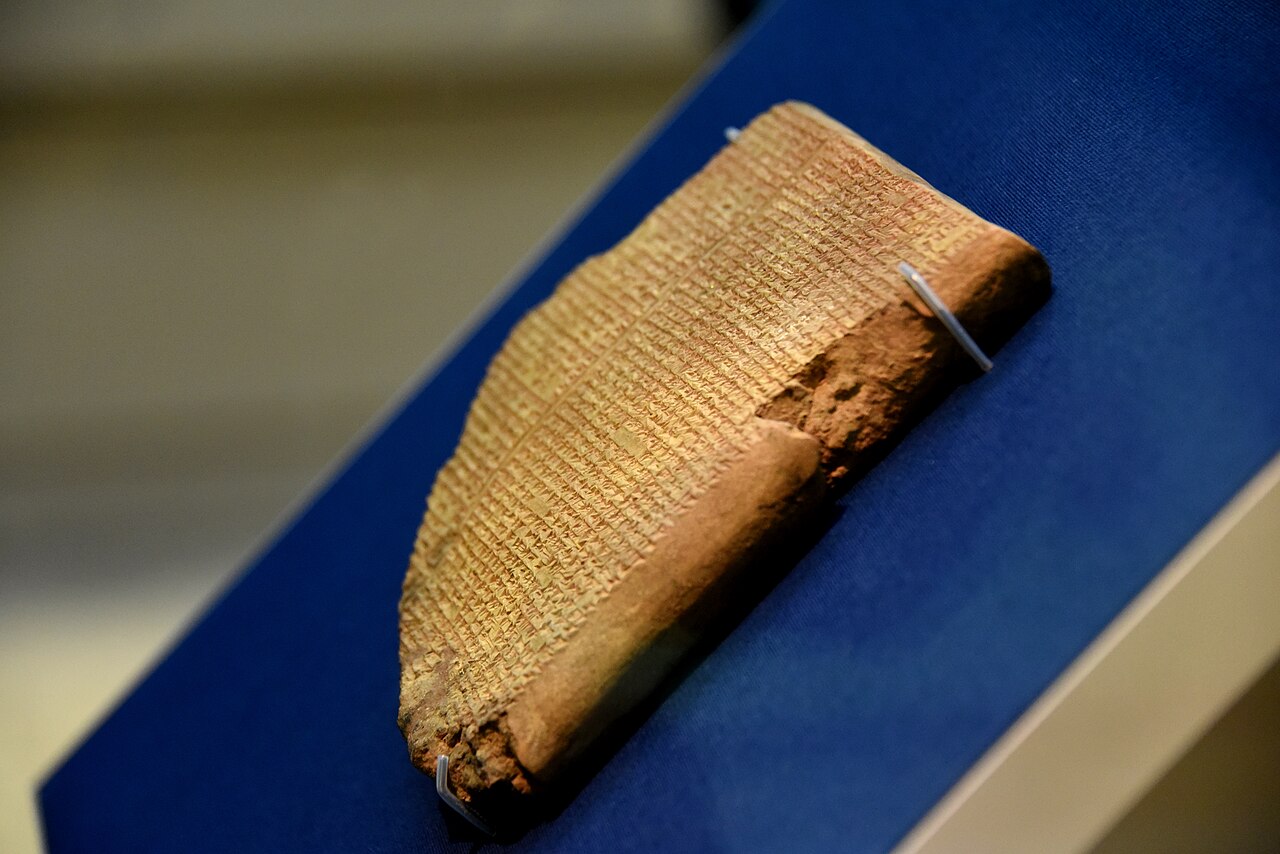
Flood Tablet
Scribes of Ashurbanipal's library · 7th century BCE
Ready when you are
Start chatting with Ashurbanipal now.
20 messages free · No credit card · Available in 50+ languages.