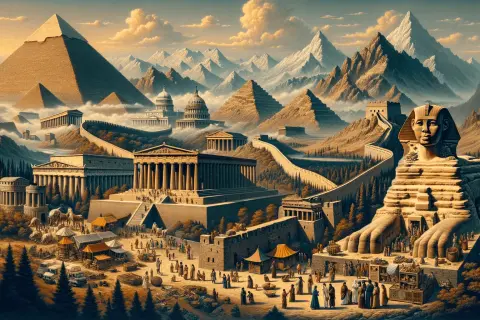

Portrait of Ashurbanipal

AI Historical Figure

Ashurbanipal

Assyrian king and renowned scholar, known for his extensive library.

Chat with Ashurbanipal via text or voice — in 42 languages, drawing on a curated biography and 80 historical sources. Available 24/7.

Start chatting with Ashurbanipal20 messages free · No credit card
Lived
c. 685–631 BCE
From
Iraq
Known for
Rulers & royaltyScholarship & social science
Ashurbanipal

Ashurbanipal

Online · responds in seconds

Hello — I'm Ashurbanipal. Assyrian king and renowned scholar, known for his extensive library. What would you like to ask me?

20 messages free · No credit card · Powered by Humy.ai

Live preview · Switch between 42 languages above · Send a message to continue in the app

Multilingual

Talk to Ashurbanipal in 42 languages

Ask Ashurbanipal questions in any language below, and the rest of Humy's app speaks it too. Pick yours to open the chat in that language.

Also in German (Austria), German (Switzerland), English (UK), English (Australia), English (Canada).

The sources behind this AI

80 sources · 33 sculptures · 20 documents · 13 books · 5 artifacts · 5 paintings · 3 photographs · 1 letter

Ashurbanipal doesn’t improvise from thin air. The AI is grounded in 80 curated historical sources students can inspect. Open any of them to see what informs the conversation.

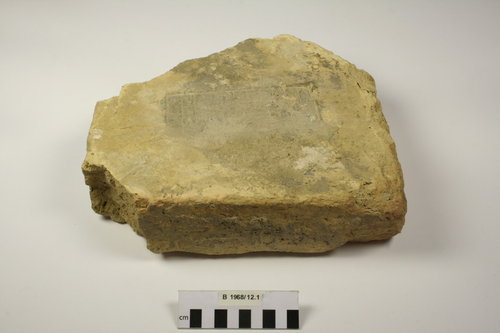
A pale yellowish-beige baked brick fragment lies on a white background, with a scale bar and label reading B 1968/12.1 beside it. The brick's surface shows faint, worn markings.Artifact

Primary source

Baked Brick Naming King Ashurbanipal

7th century BCE

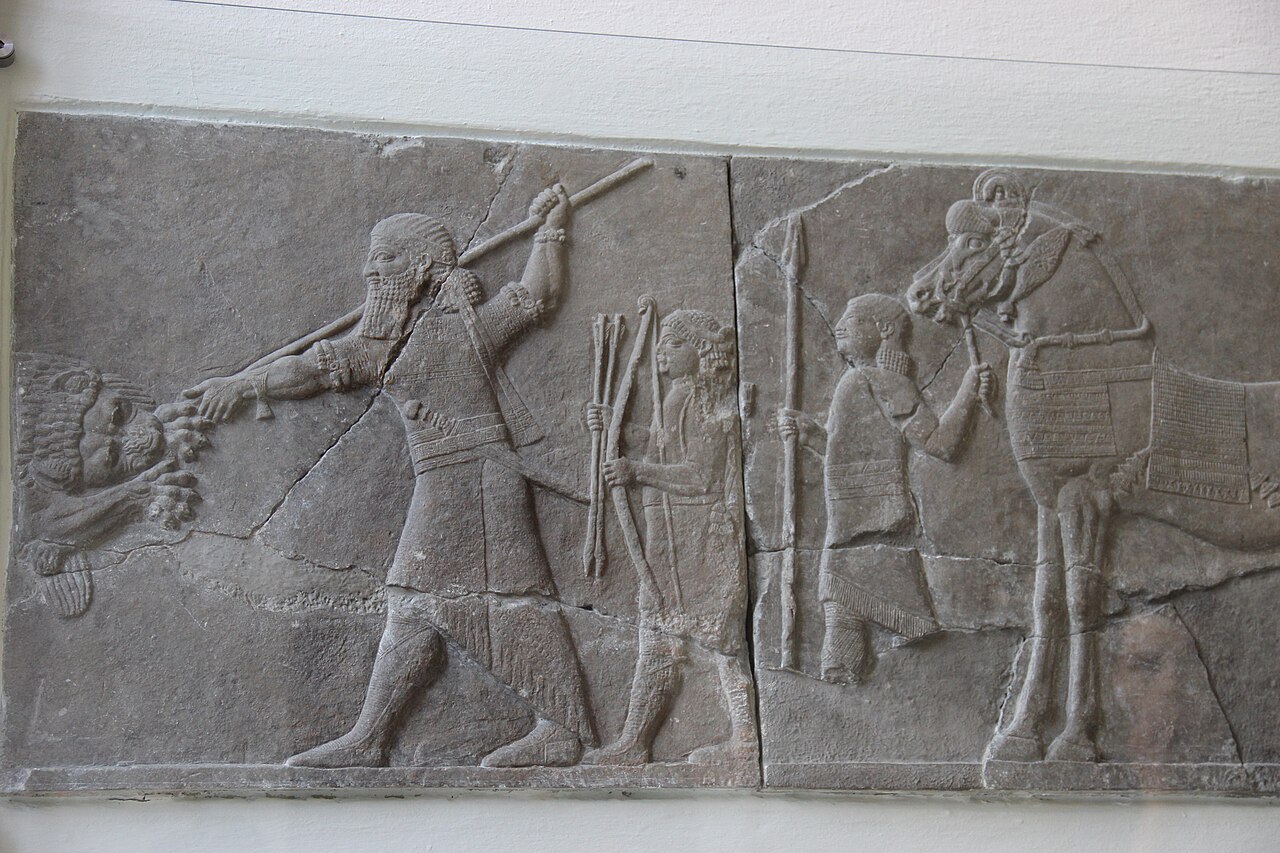
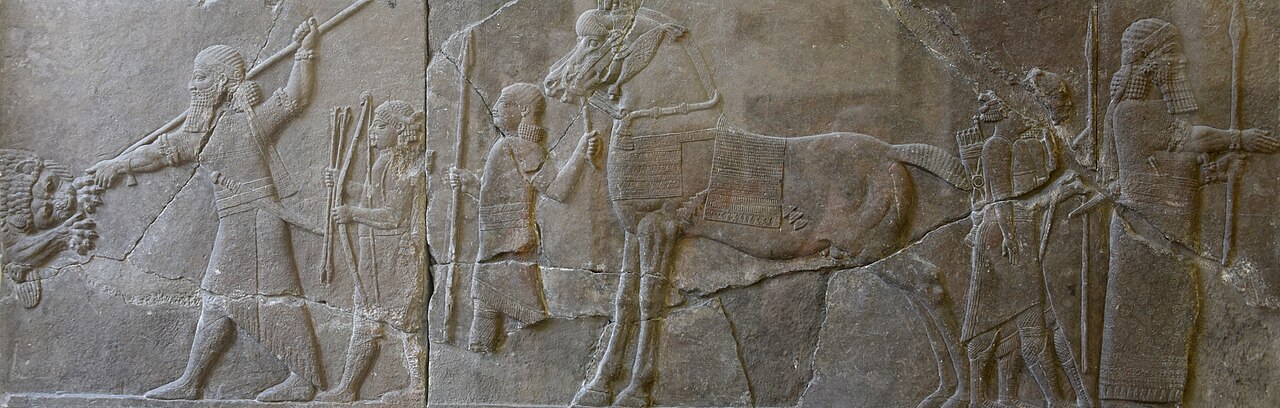
Photo of a carved stone relief panel. At left, a bearded man in a robe thrusts a spear into the head of a lion. An attendant with a quiver stands beside him. At right, a figure walks beside a horse, and a rider sits on the horse's back.Sculpture

Primary source

Lion Hunt of Ashurbanipal

Assyrian royal sculptors · c. 645–635 BCE

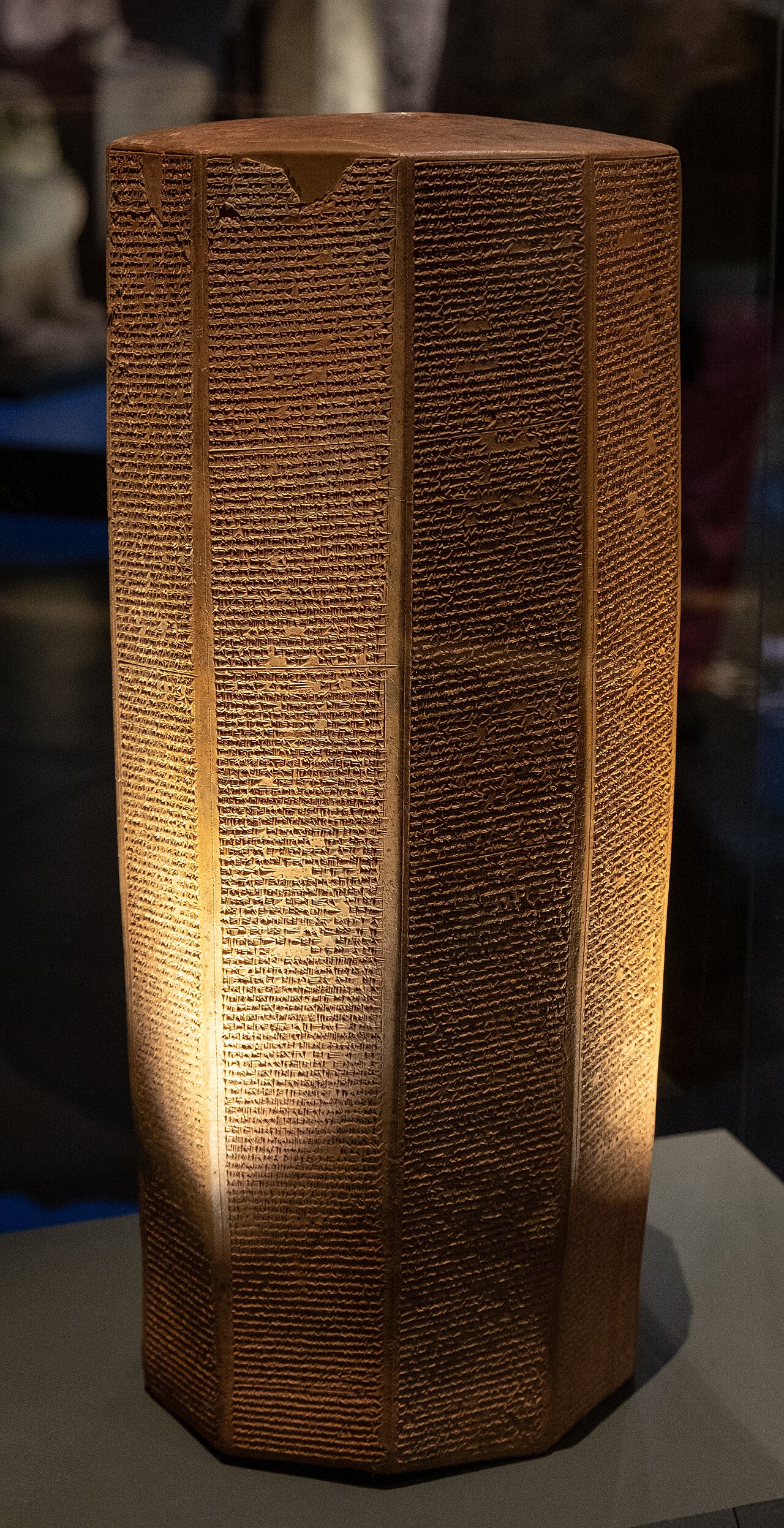
A tall, multi-sided clay prism covered in rows of cuneiform script, lit from the left against a dark background, standing on a grey display base. Its faces show fine wedge-shaped writing.Document

Primary source

Rassam Prism of Ashurbanipal

643 BCE

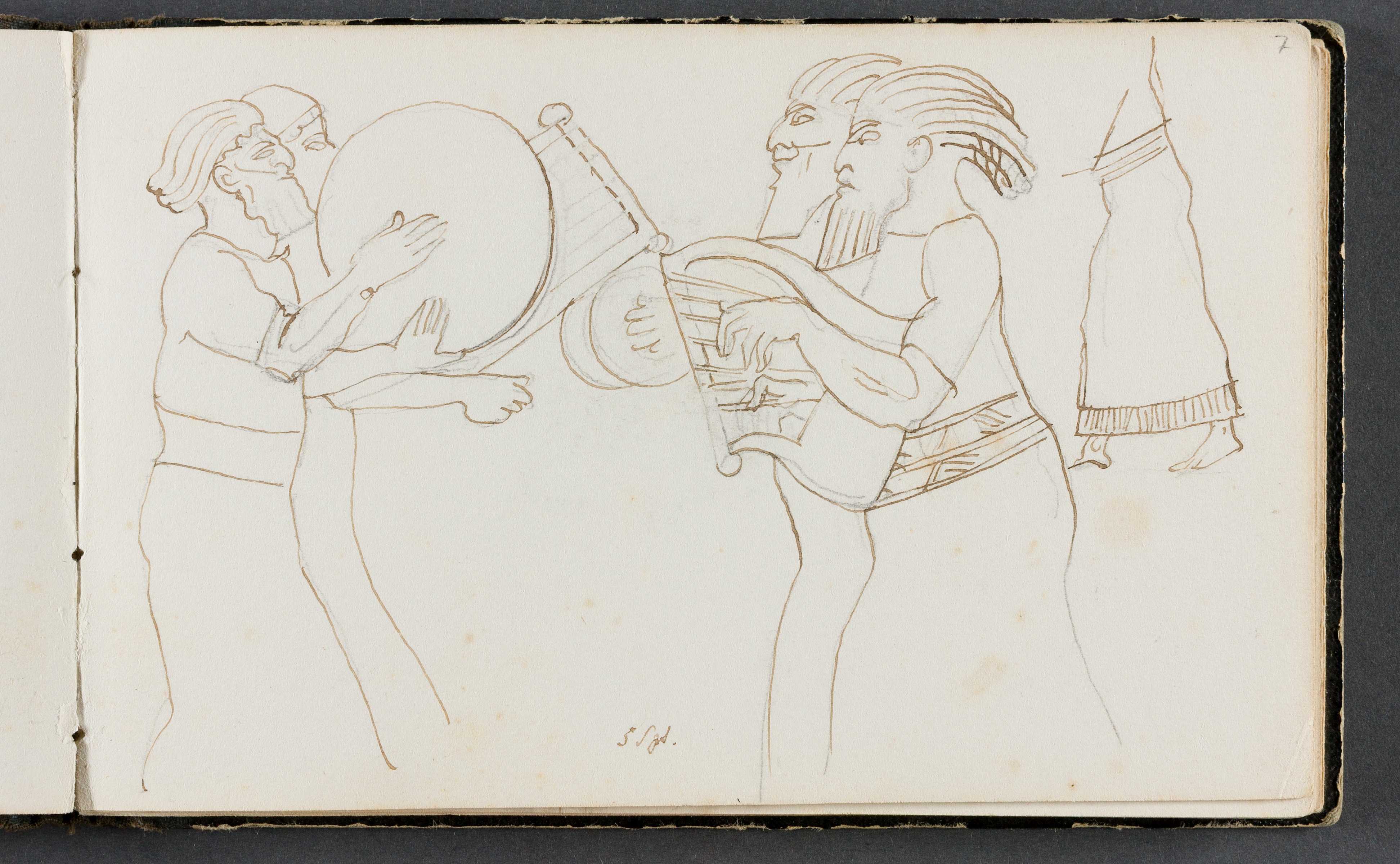
Pen and brown ink sketch on a cream sketchbook page, numbered 7 in the top right corner. Two bearded figures with long curled hair stand in profile, one playing a large round-bodied harp or lyre with a curved frame, the other playing a stringed instrument. A third figure in a long fringed robe stands at the far right. Pencil construction lines are visible. Handwritten note at bottom.Painting

Secondary source

Relief with Musicians from the Palace of Ashurbanipal in Nineveh

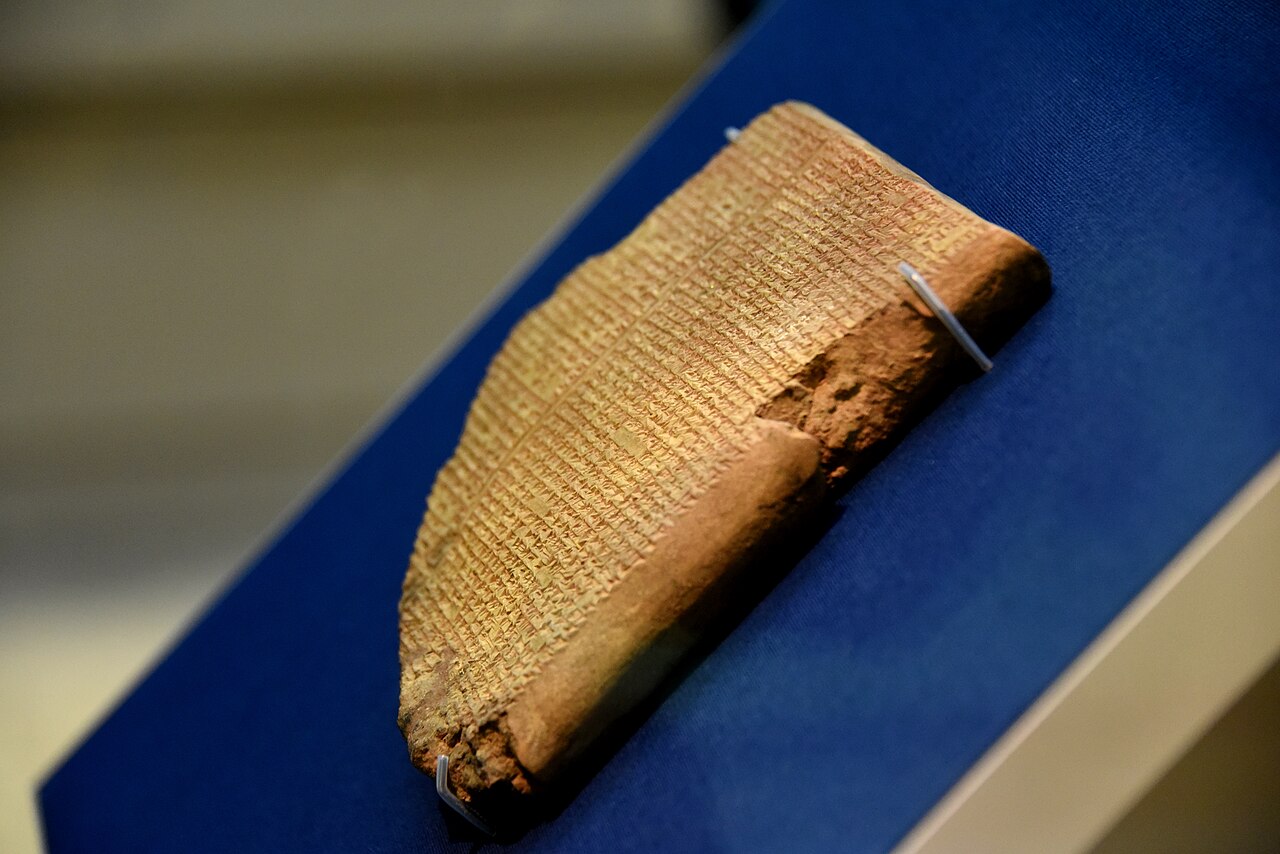
A cuneiform clay tablet, tan and brown with a broken edge, resting on a blue display surface. Rows of wedge-shaped script cover its face. The tablet is tilted toward the viewer in a museum case, with a thin metal support visible.Document

Primary source

Flood Tablet

Scribes of Ashurbanipal's library · 7th century BCE

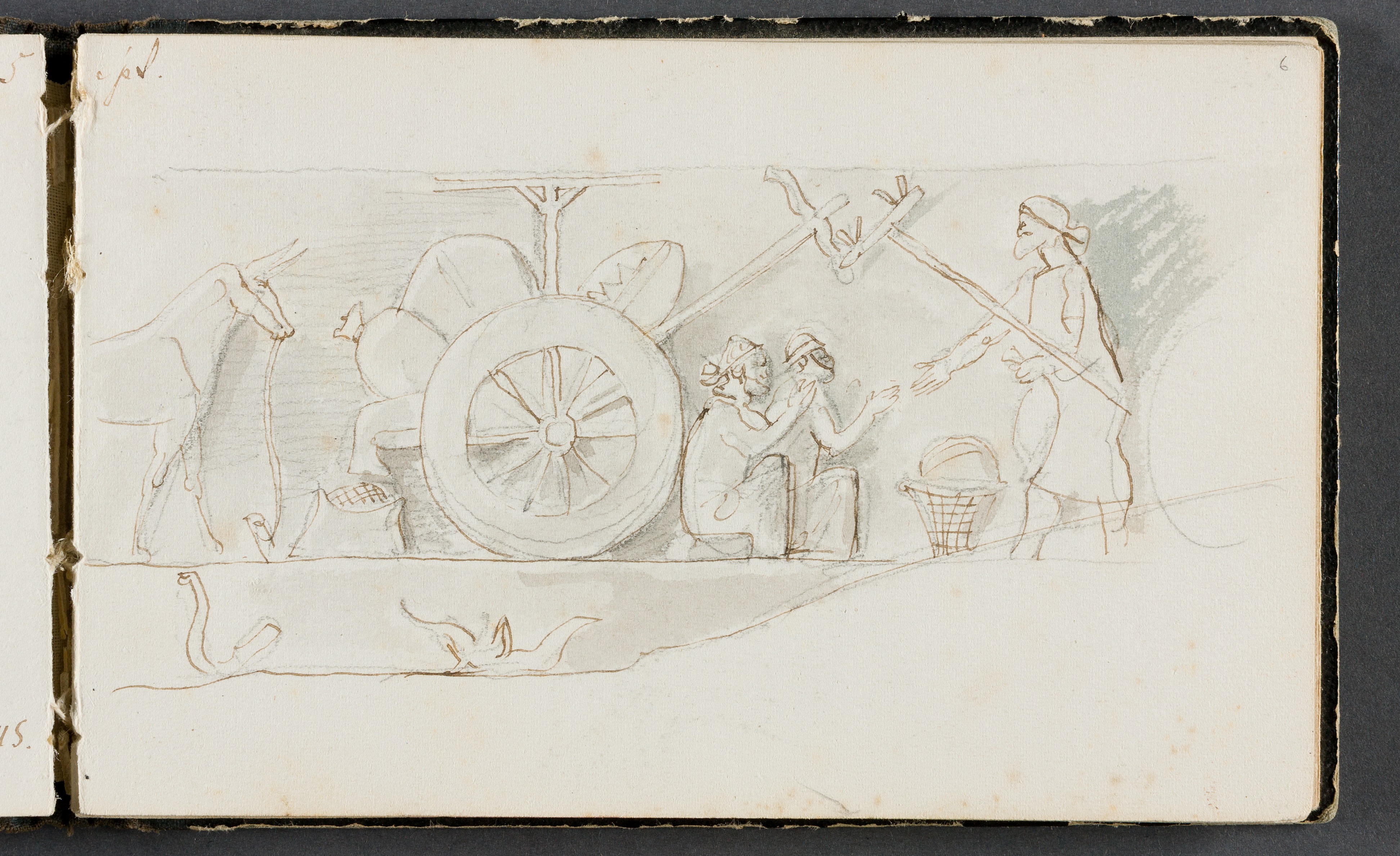
Pen and grey wash drawing in a sketchbook of a relief scene: a wheel of a chariot or cart dominates the center, two seated figures face each other at right, a standing figure with a headband carries a long pole at far right, a basket sits near them, and a horse-like animal appears at left, with a few wavy lines of a ground or stream at bottom. Page number 6 is at top right.Painting

Secondary source

Relief with a Bivouac Scene on a Campaign of King Ashurbanipal

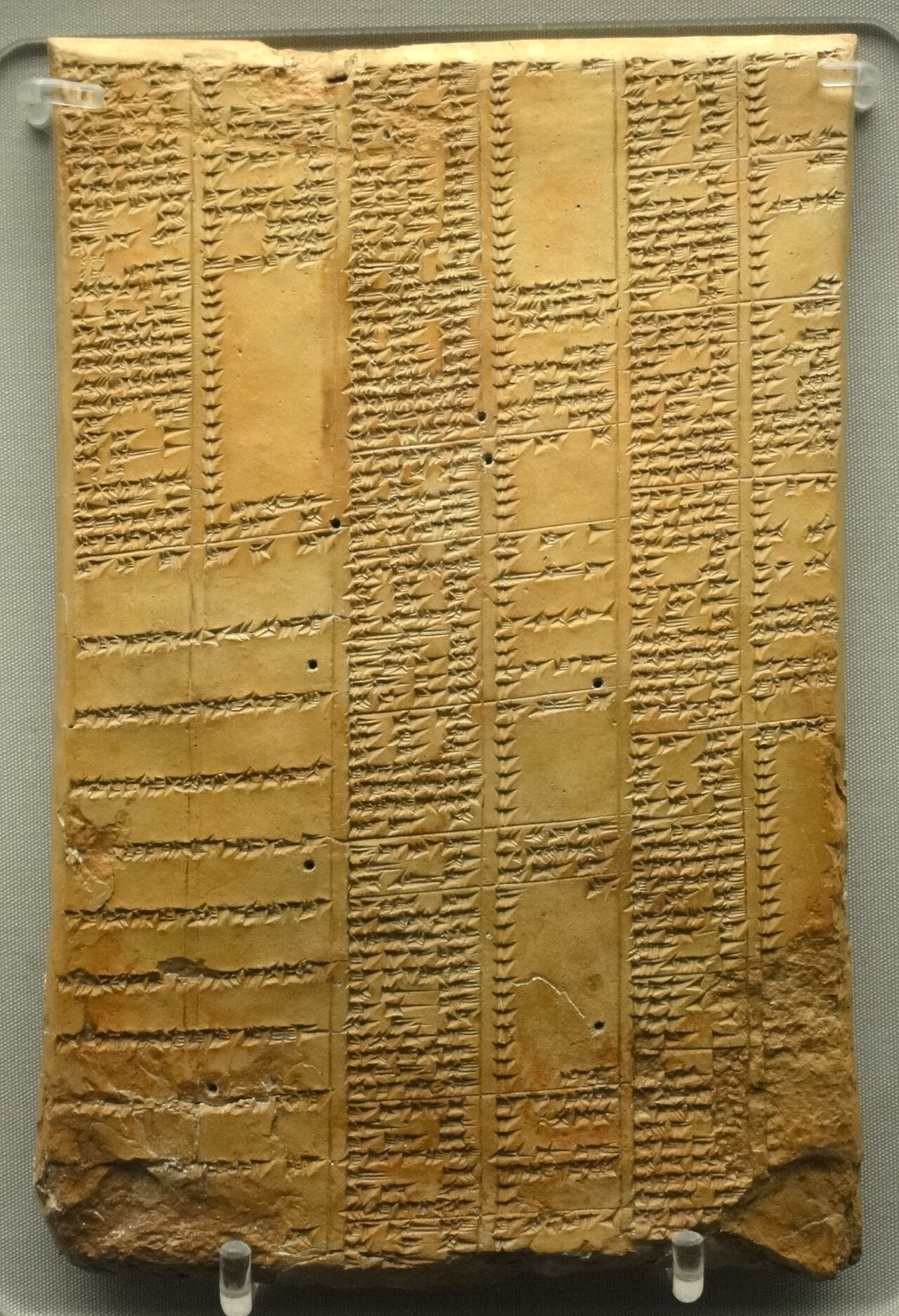
Photograph of a cuneiform clay tablet with multiple columns of wedge-shaped script, mounted behind glass on a grey background. The tablet is tan-colored with a chipped edge at the bottom and right.Document

Primary source

Library of Ashurbanipal

7th century BCE

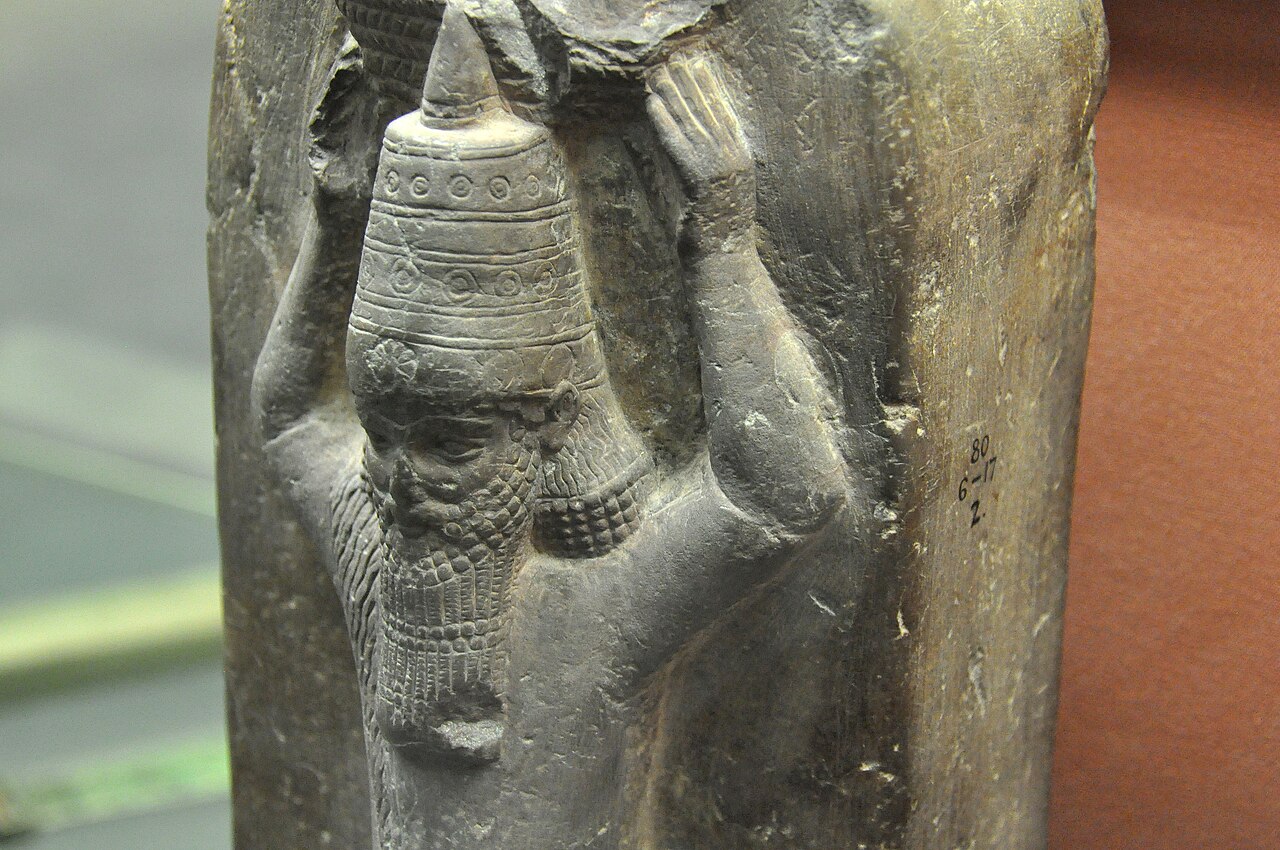
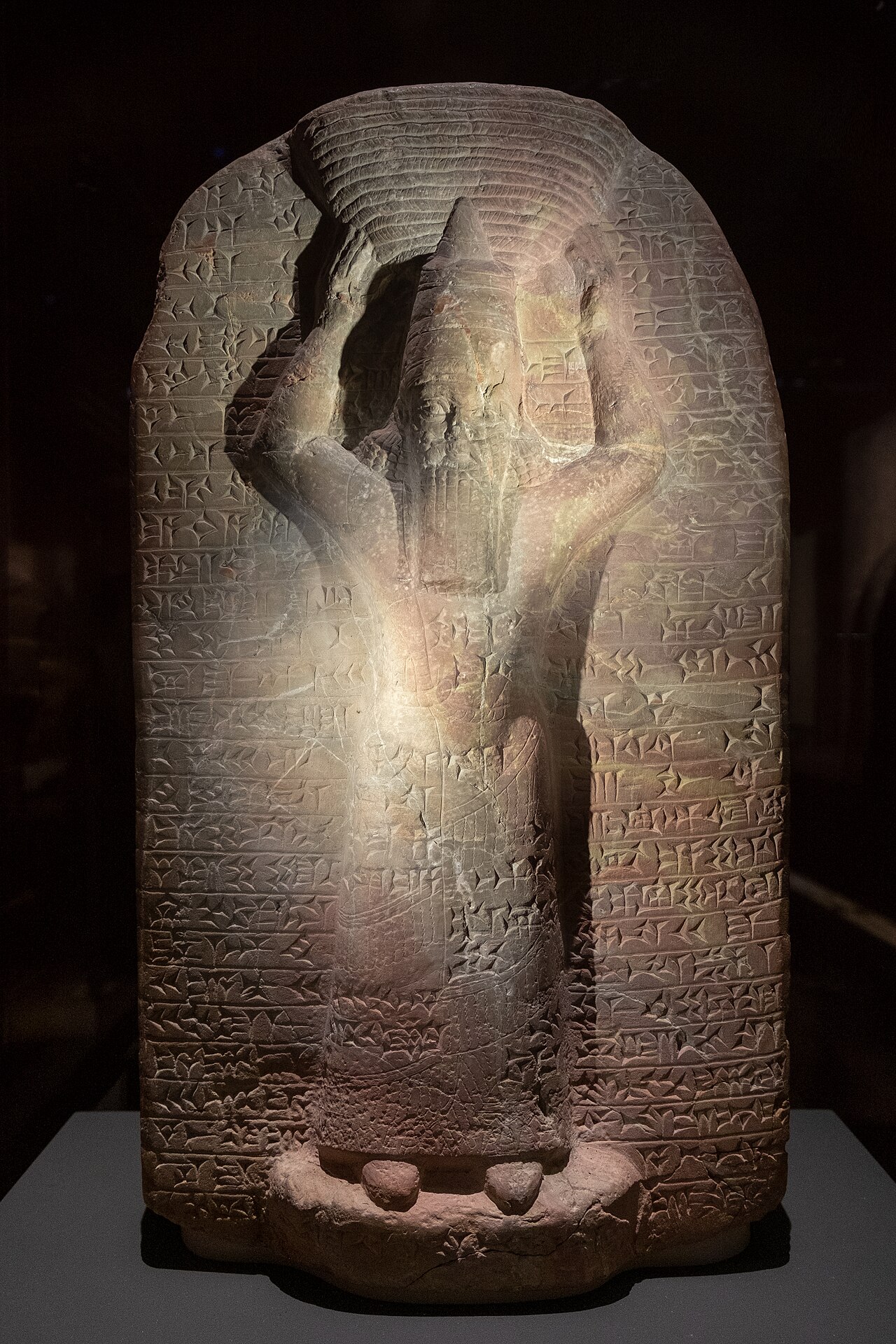
Close-up photo of a dark stone relief sculpture showing a bearded figure wearing a tall cylindrical crown with rows of carved circles, with arms raised overhead holding a basket. A museum label is visible on the right side.Sculpture

Primary source

Stone Monument of Ashurbanipal as Basket-Bearer

668-655 BCE

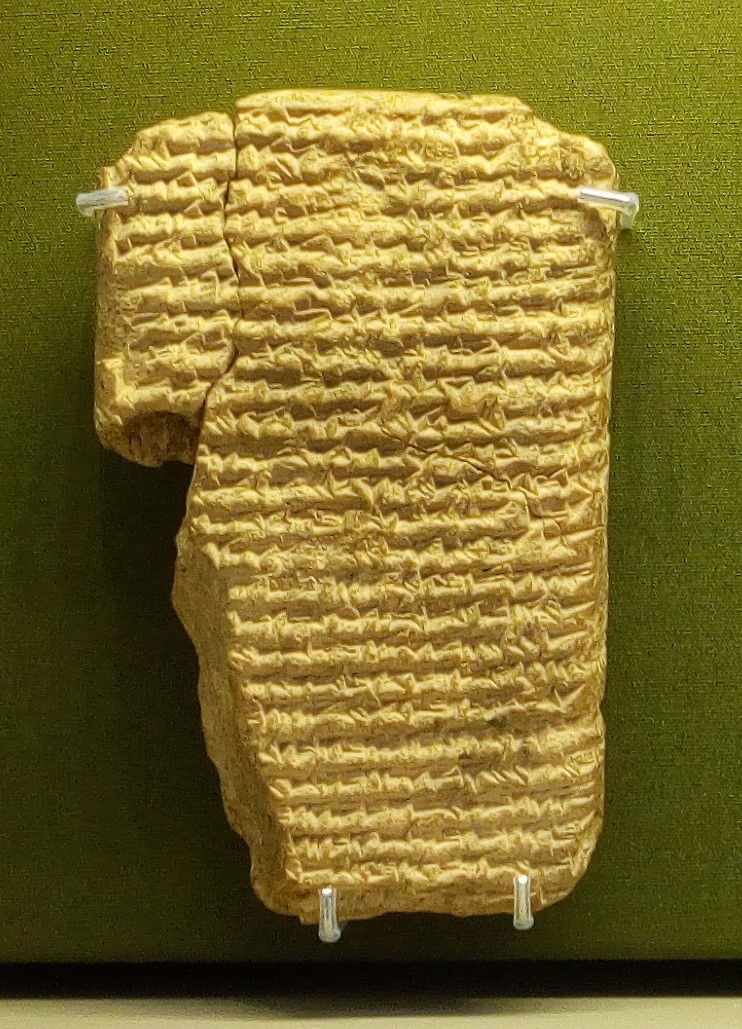
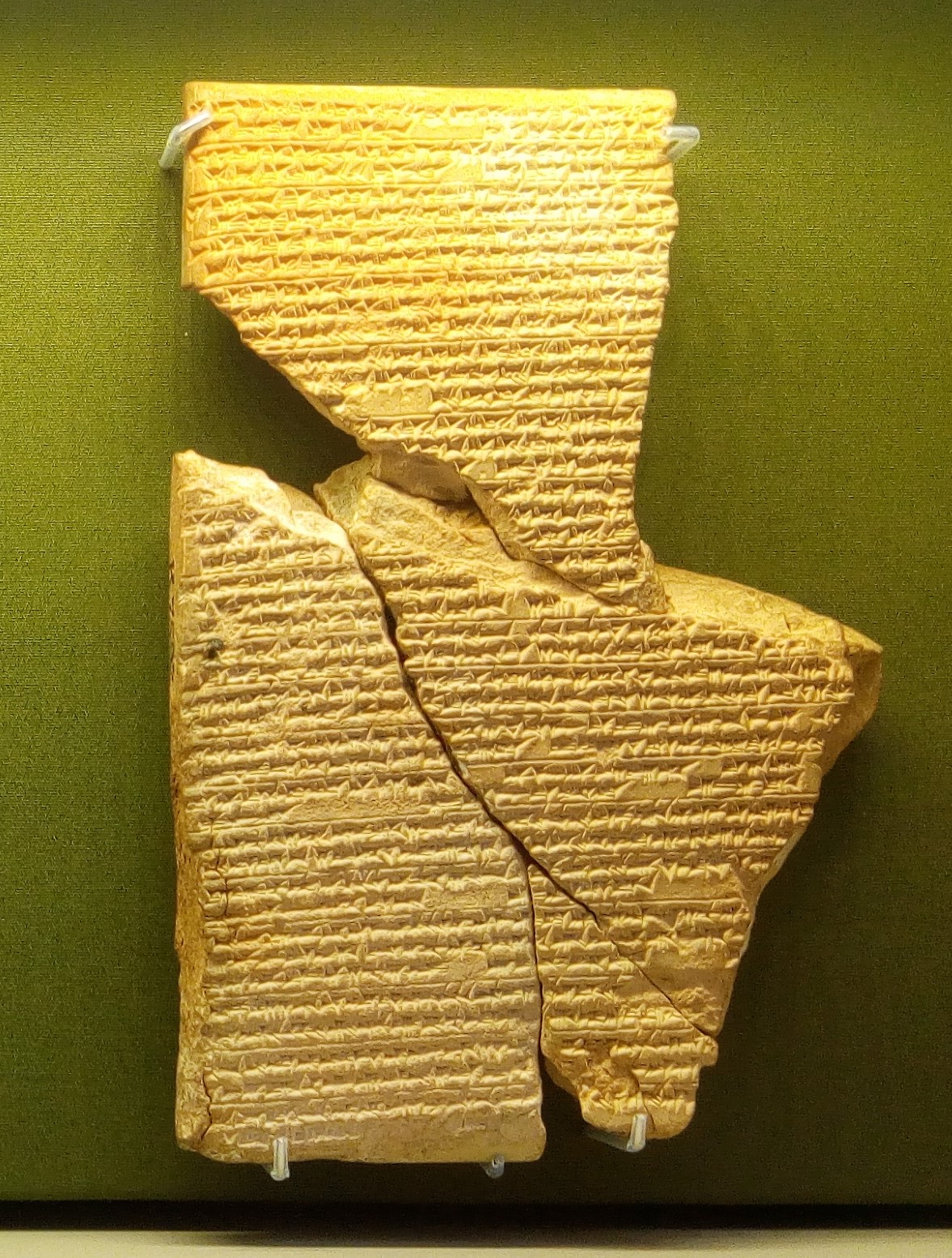
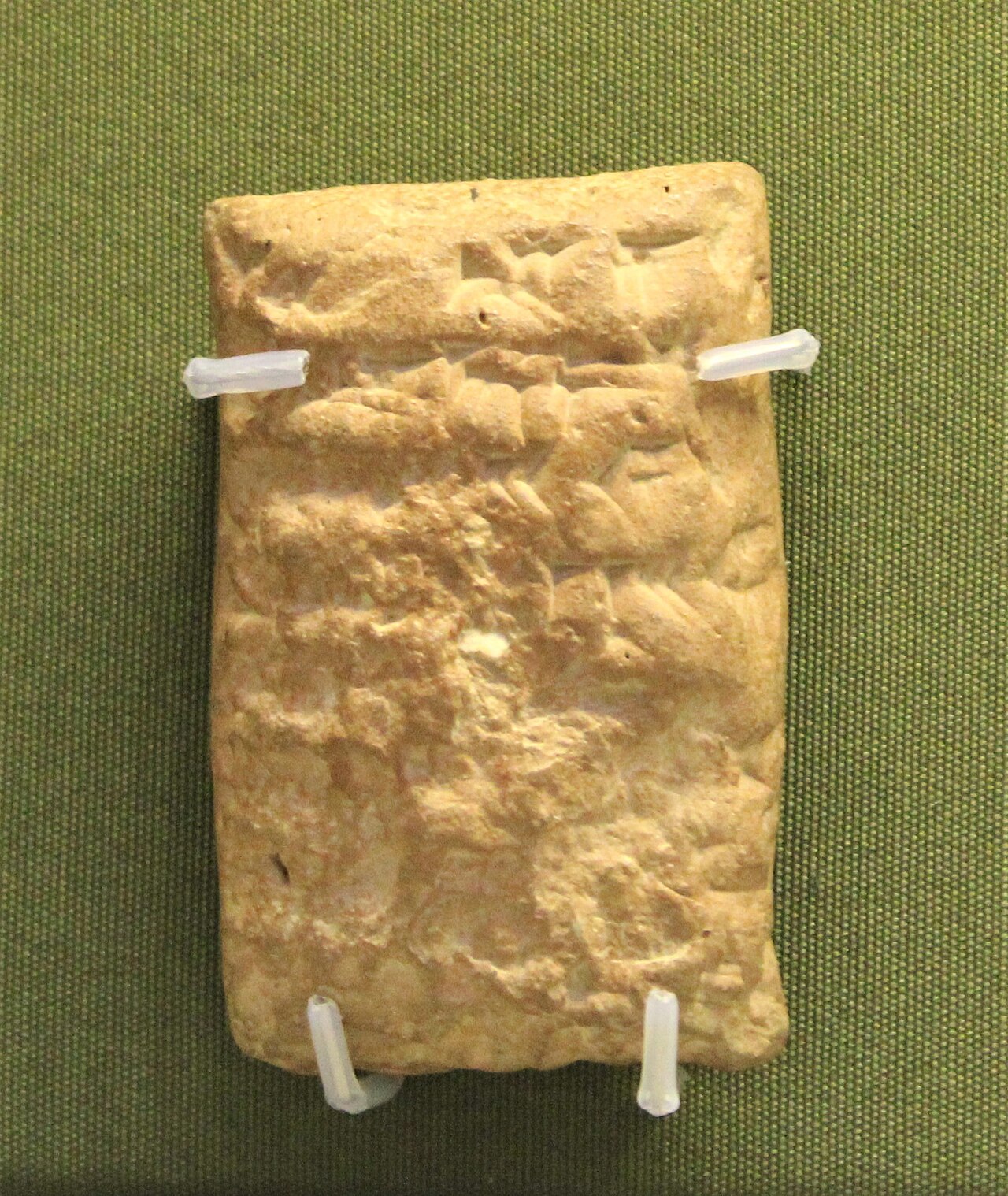
Photograph of a cuneiform clay tablet fragment, pale tan with wedge-shaped impressions in horizontal rows, mounted with small clips against a green background. The upper left edge is broken.Document

Primary source

Zakutu Treaty

Zakûtu (Naqi'a) · 669 BCE

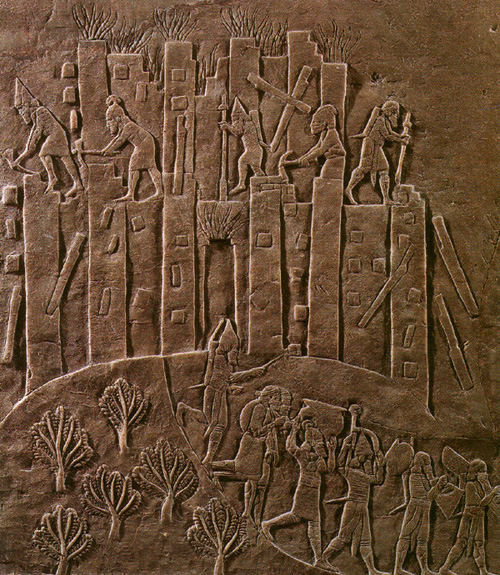
Carved relief panel in brown stone showing a walled city with tall towers and tiered structures, soldiers and figures at the base, trees below, and figures advancing and attacking the city.Sculpture

Primary source

Destruction of the Elamite City of Hamanu

645-635 BCE

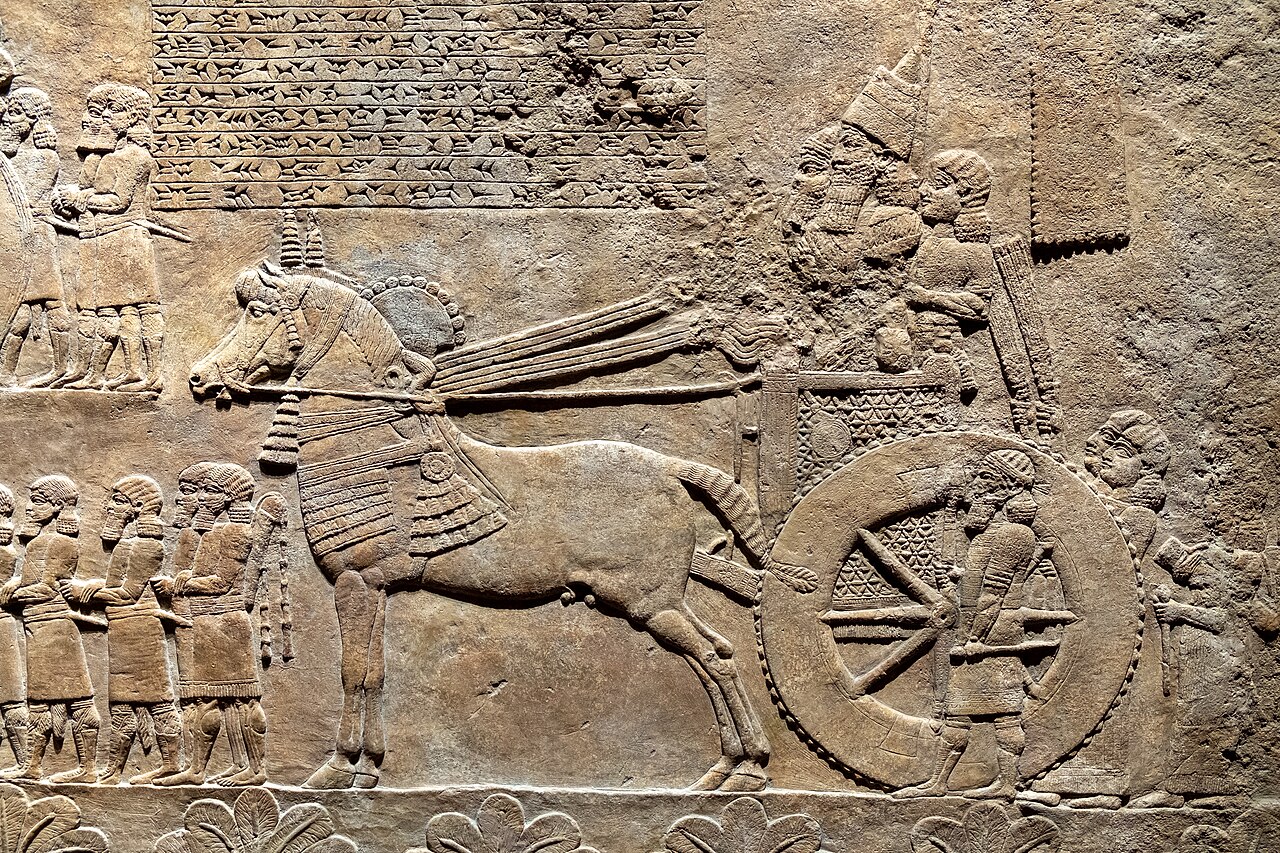
Close-up of an Assyrian relief sculpture in carved stone showing a horse-drawn chariot with a large spoked wheel, a figure in the chariot, and rows of robed attendants walking below. Cuneiform inscription bands fill the upper area.Sculpture

Primary source

Ashurbanipal Inspects Booty and Prisoners from Babylon

645-640 BCE

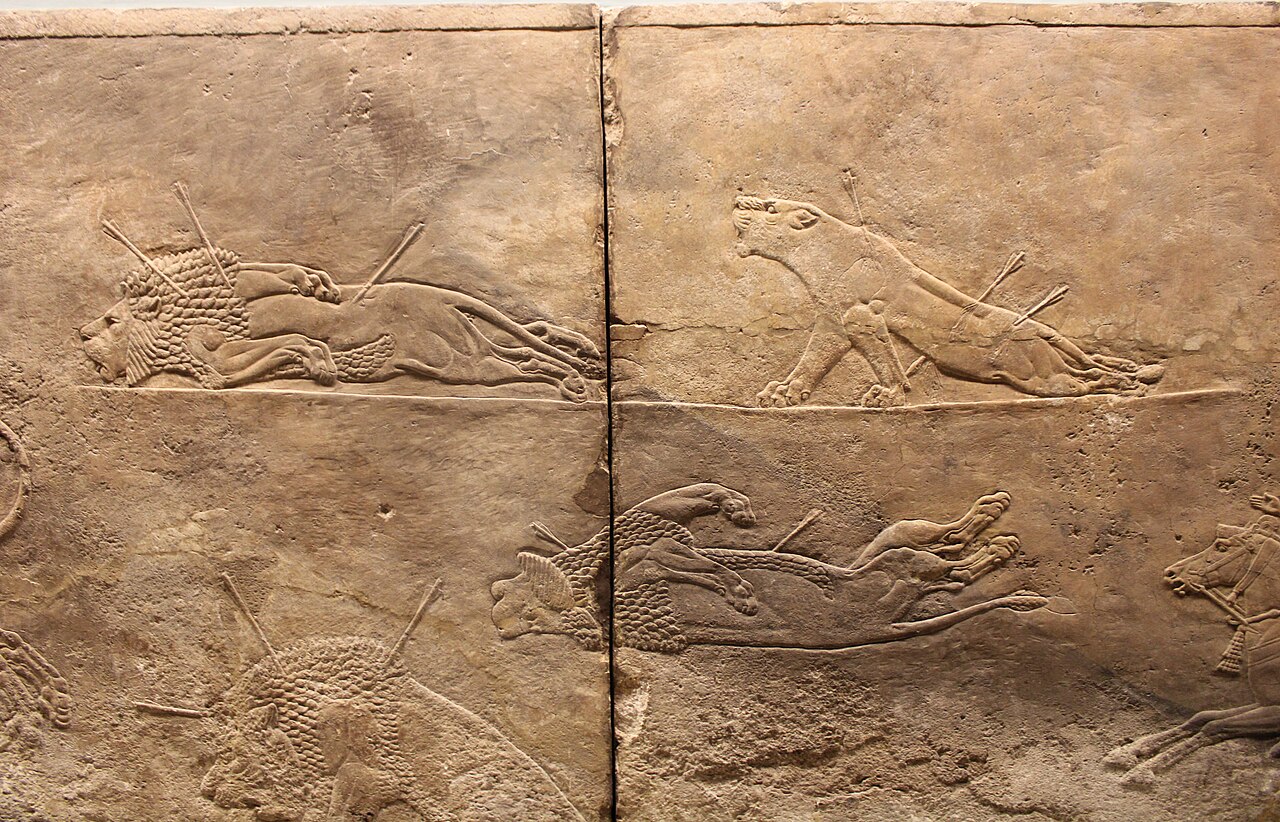
Photograph of Assyrian carved stone relief panels showing wounded and dying lions pierced by arrows. At upper left a lion lies on its side, at upper right a lioness collapses with arrows in her body, and below a lion and a lioness are sprawled. A horse and rider appear at the far right edge.Sculpture

Primary source

The Dying Lioness

Assyrian royal sculptors · c. 645 BCE

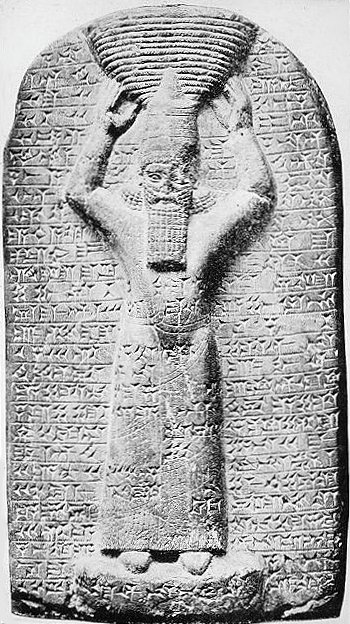
Black-and-white photograph of a carved stone stele covered in rows of cuneiform script. In the center, a relief figure in a long robe with a tall conical headdress raises both arms in front of the body.Sculpture

Primary source

Ashurbanipal as High Priest

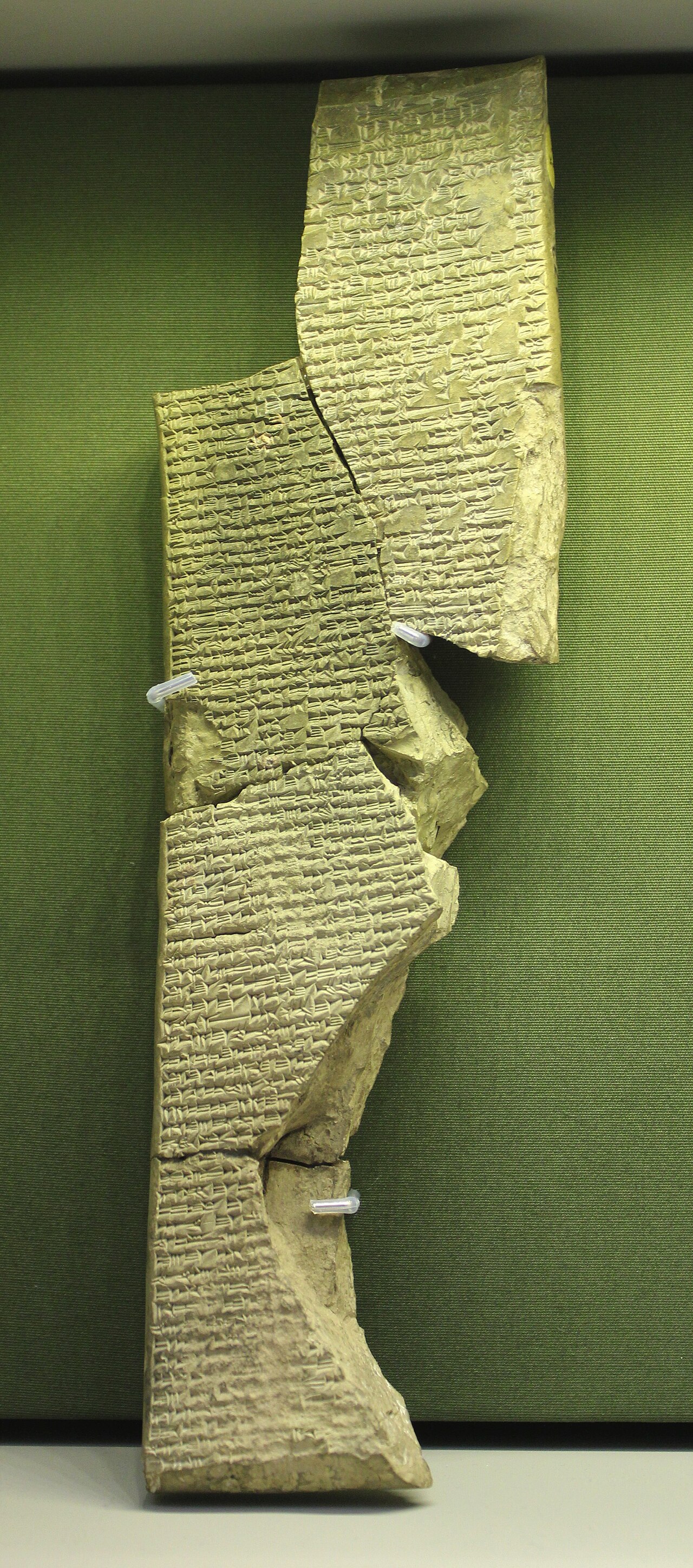
Photograph of a cuneiform clay tablet, broken into fragments that are fitted together, mounted against a dark green background. Rows of wedge-shaped signs cover the tablet's surface. A thin crack runs diagonally through the middle, and the lower edge has small metal support stands.Document

Primary source

Acrostic Hymn to Marduk and Zarpanitu

Ashurbanipal · 7th century BCE

Photograph of a broken clay tablet covered in cuneiform wedge-shaped writing, displayed against a green background. The tablet is made of several joined fragments, with a pale, weathered surface and two small clear plastic supports holding it upright.Document

Primary source

Enuma Elish Tablet from the Library of Ashurbanipal

7th century BCE

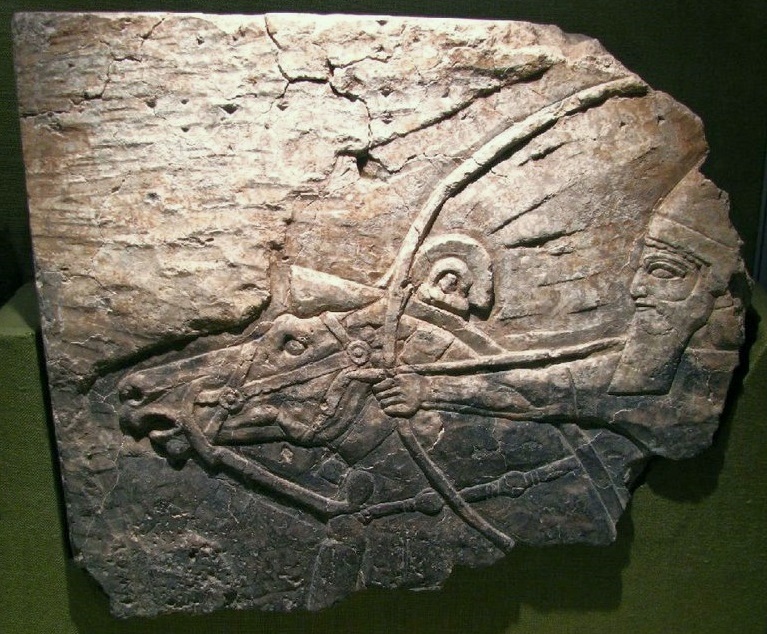
Photograph of a carved stone relief fragment showing an Assyrian king on horseback hunting, drawing a bow. Horse heads and a bearded rider with a tall headdress are visible; the stone is weathered and the edges are broken.Sculpture

Primary source

Relief of Ashurbanipal Hunting on Horseback

Unknown

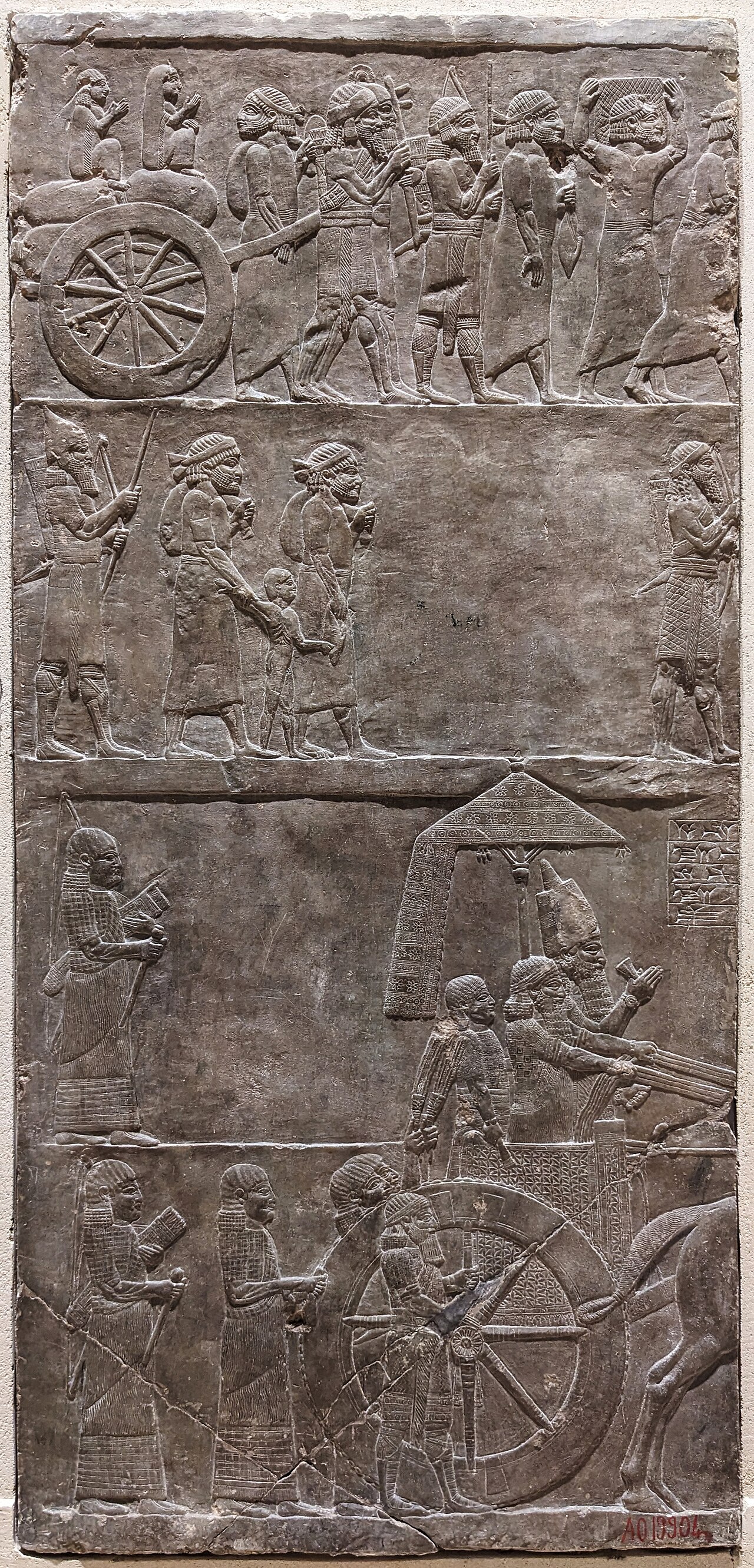
Grey stone Assyrian relief panel in four horizontal registers. Top: a chariot wheel and bearded figures in procession, some carrying objects. Middle: bearded figures, one holding a child. Lower: a king under a parasol on a chariot with a horse, and bearded prisoners walking. Inventory label AO 19904 in red at bottom right.Sculpture

Primary source

Ashurbanipal on His Chariot with Elamite Prisoners

Shonagon

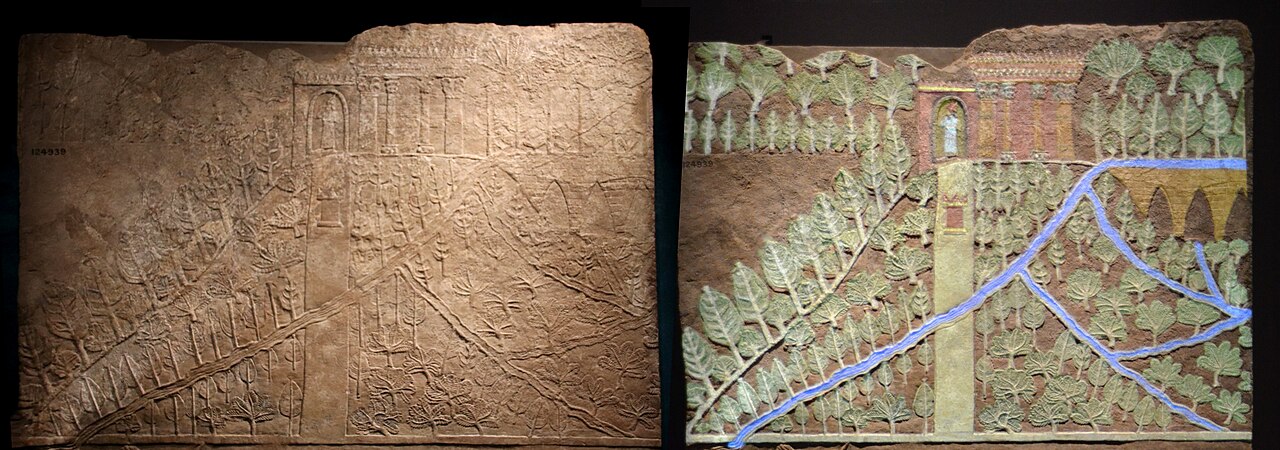
Two side-by-side photographs of a carved relief panel from the Gardens of Ashurbanipal. The left shows the uncolored sandstone-toned relief with a gate or pavilion structure, trees, and channels. The right shows a painted, colored version of the same type of relief with green trees, blue water channels, and a building with a columned gate, plus a golden arched structure.Sculpture

Primary source

Relief of the Gardens of Ashurbanipal

Unknown

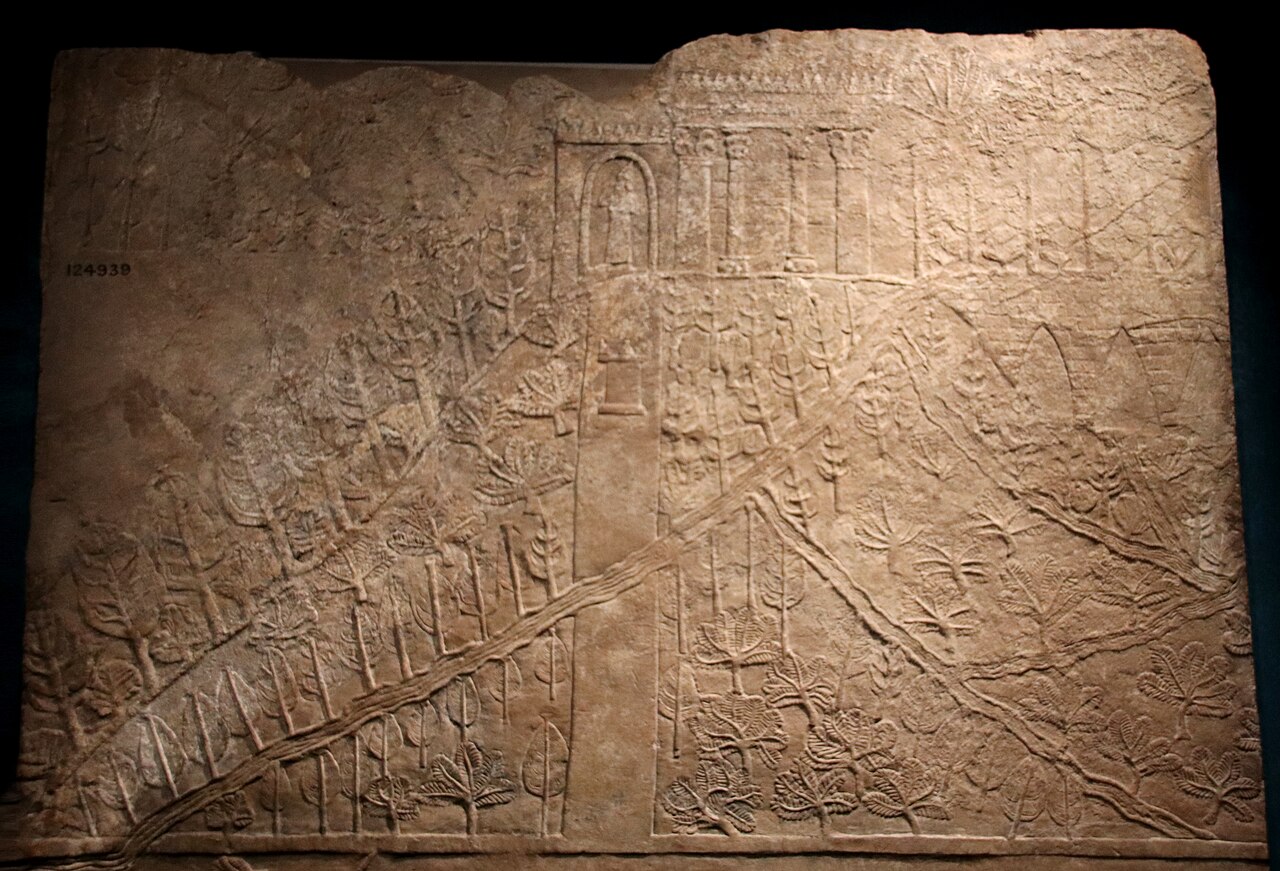
Carved gypsum relief panel showing a garden landscape with trees, plants, a stream or channel winding diagonally, and a structure with columns and a niche at upper center. Museum label number 124939 at left edge.Artifact

Primary source

North Palace of Nineveh

Ashurbanipal · c. 645 BCE

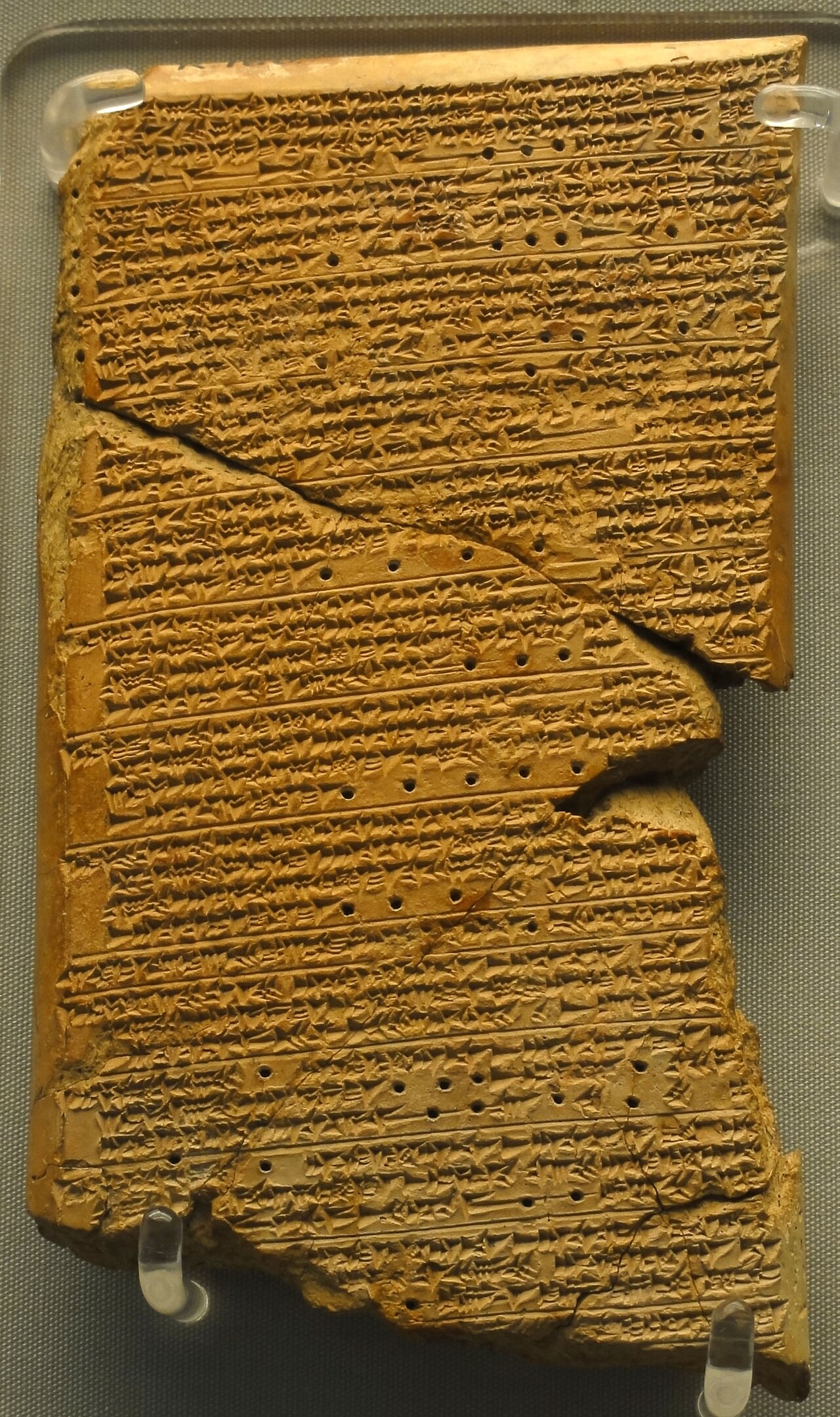
Photograph of a broken clay tablet covered in cuneiform script arranged in horizontal lines, with small circular holes punched along some lines. It is displayed behind glass with plastic mounting clips.Document

Secondary source

Venus Tablet of Ammisaduqa

Neo-Assyrian period copy, originally compiled c. mid-17th century BC

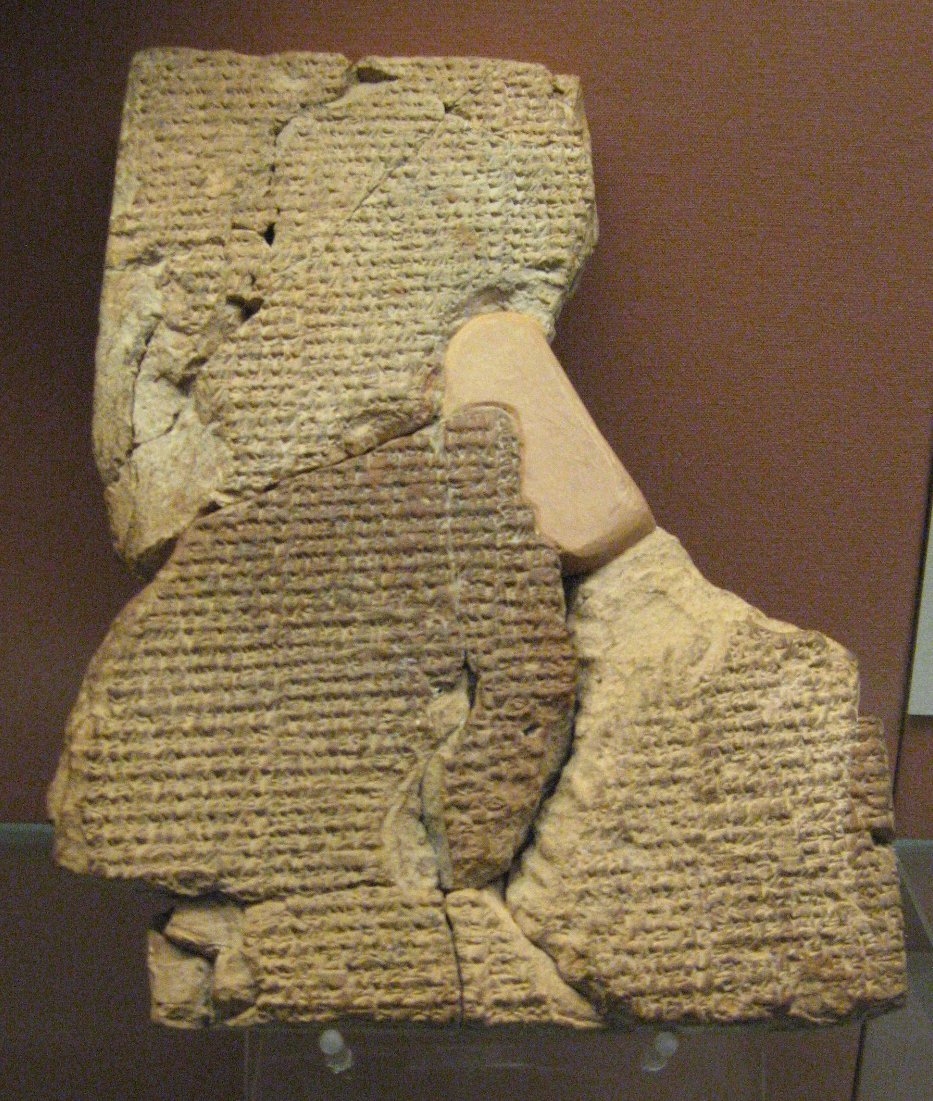
Photo of a large, fragmented clay tablet covered in rows of cuneiform wedge-shaped script, reassembled from several broken pieces, displayed against a dark reddish wall. A pale patch fills one gap.Document

Primary source

Atra-Hasis Tablet

c. 1600 BCE (Assyrian copy from Nineveh)

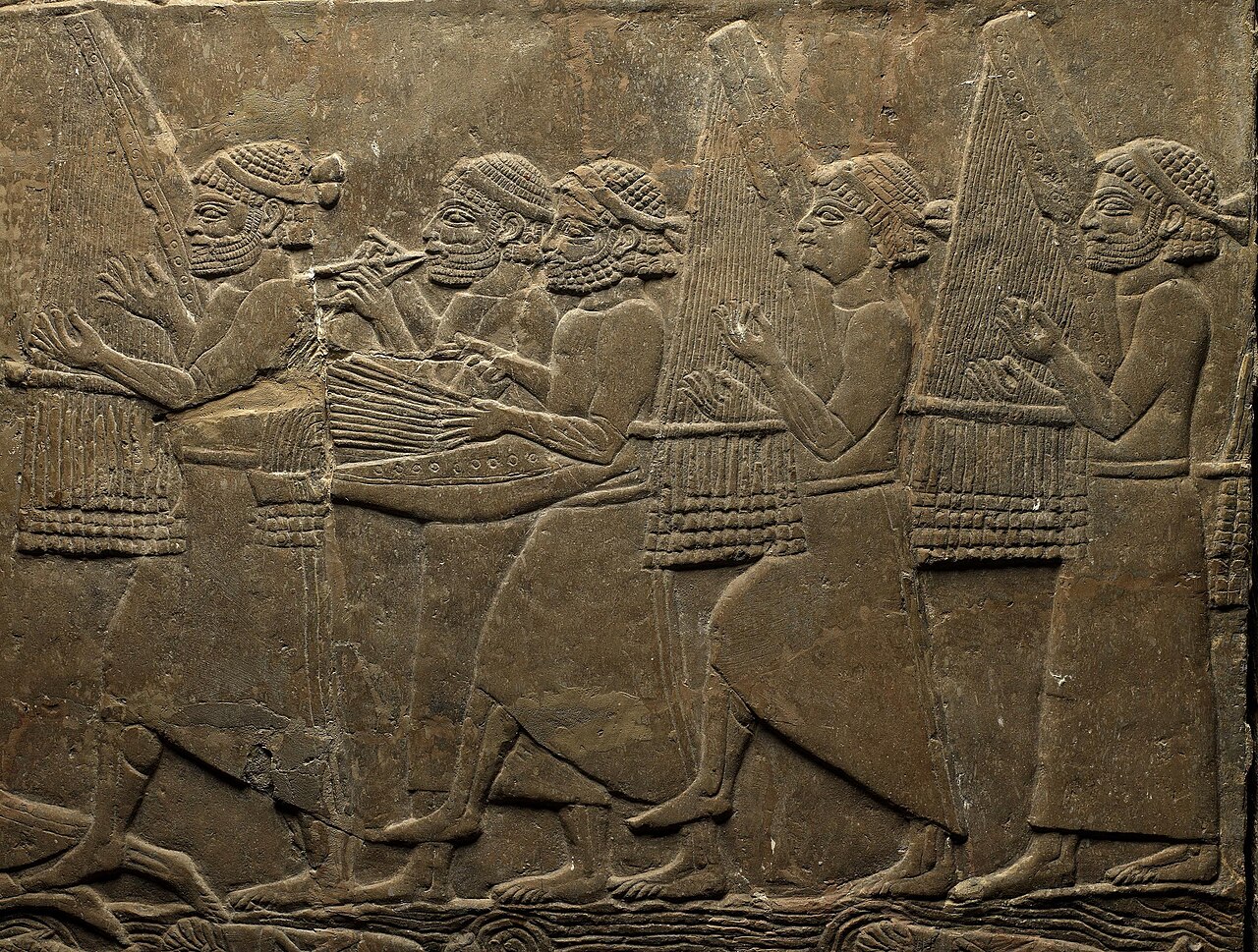
Detail of an Assyrian relief carving showing a procession of figures with bearded faces and layered headdresses. Some carry long triangular or harp-like instruments, and one plays a wind instrument. Carved in low relief on a brownish stone slab.Sculpture

Primary source

Elamite Royal Orchestra Relief

c. 660-650 BC

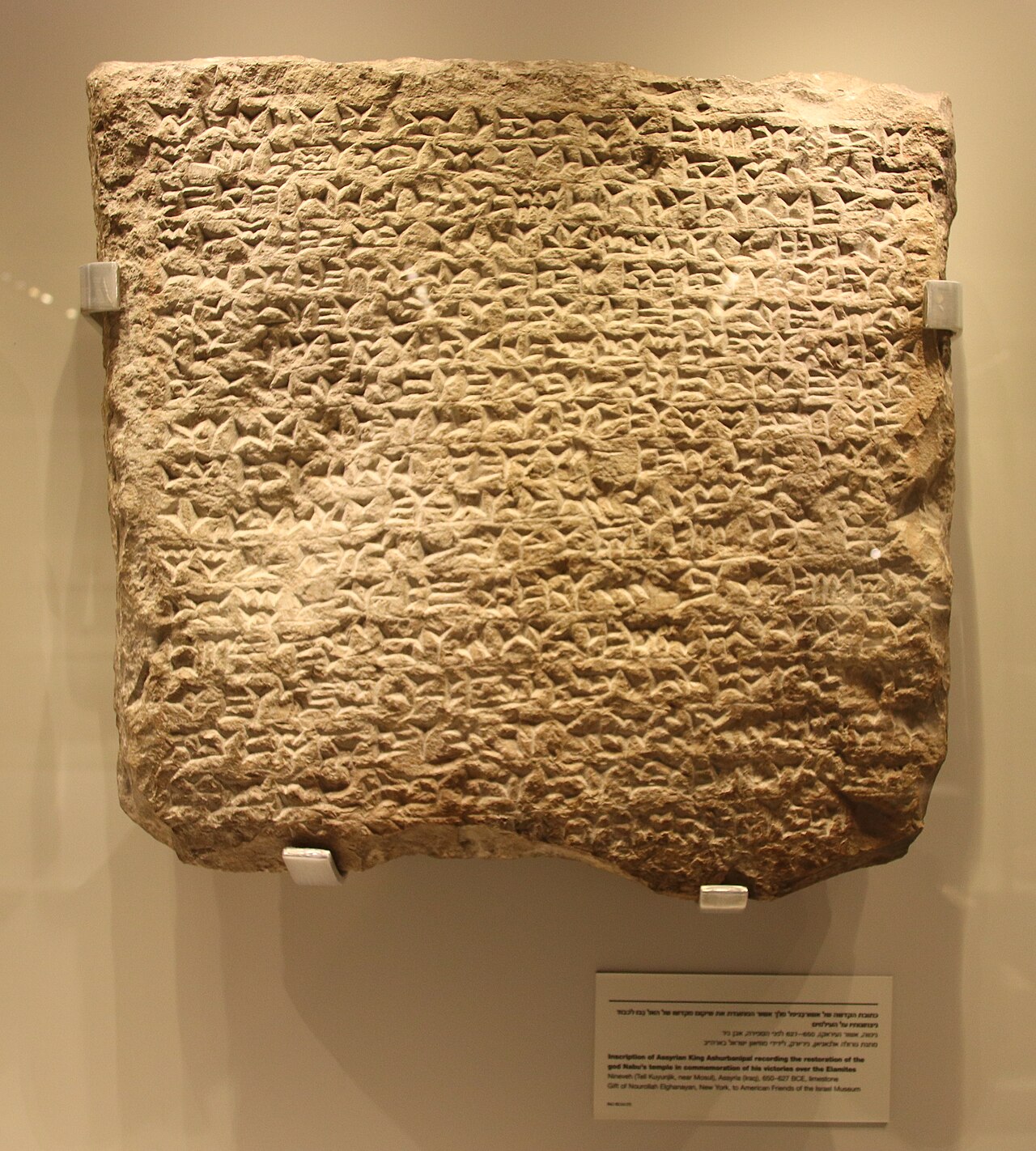
Photo of a rectangular limestone tablet with cuneiform inscription in many rows, mounted on a wall with small white supports. A museum label with text sits below it on the wall.Document

Primary source

Limestone Building Inscription of Ashurbanipal

Ashurbanipal · 650-627 BC

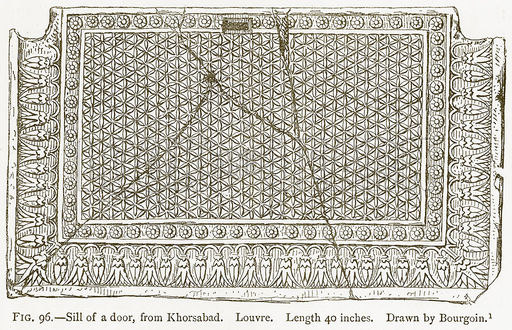
Engraved line drawing of a door sill from Khorsabad, shown in the Louvre. A rectangular slab with a dense geometric lattice of interlocking diamonds and rosettes in the center, bordered by a band of rosettes and a lower band of standing figures in rows. Caption reads Fig. 96, Sill of a door, from Khorsabad, Louvre, Length 40 inches, Drawn by Bourgoin.Artifact

Primary source

Sill of a Door from Khorsabad

Jules Bourgoin · 19th century engraving of an ancient original

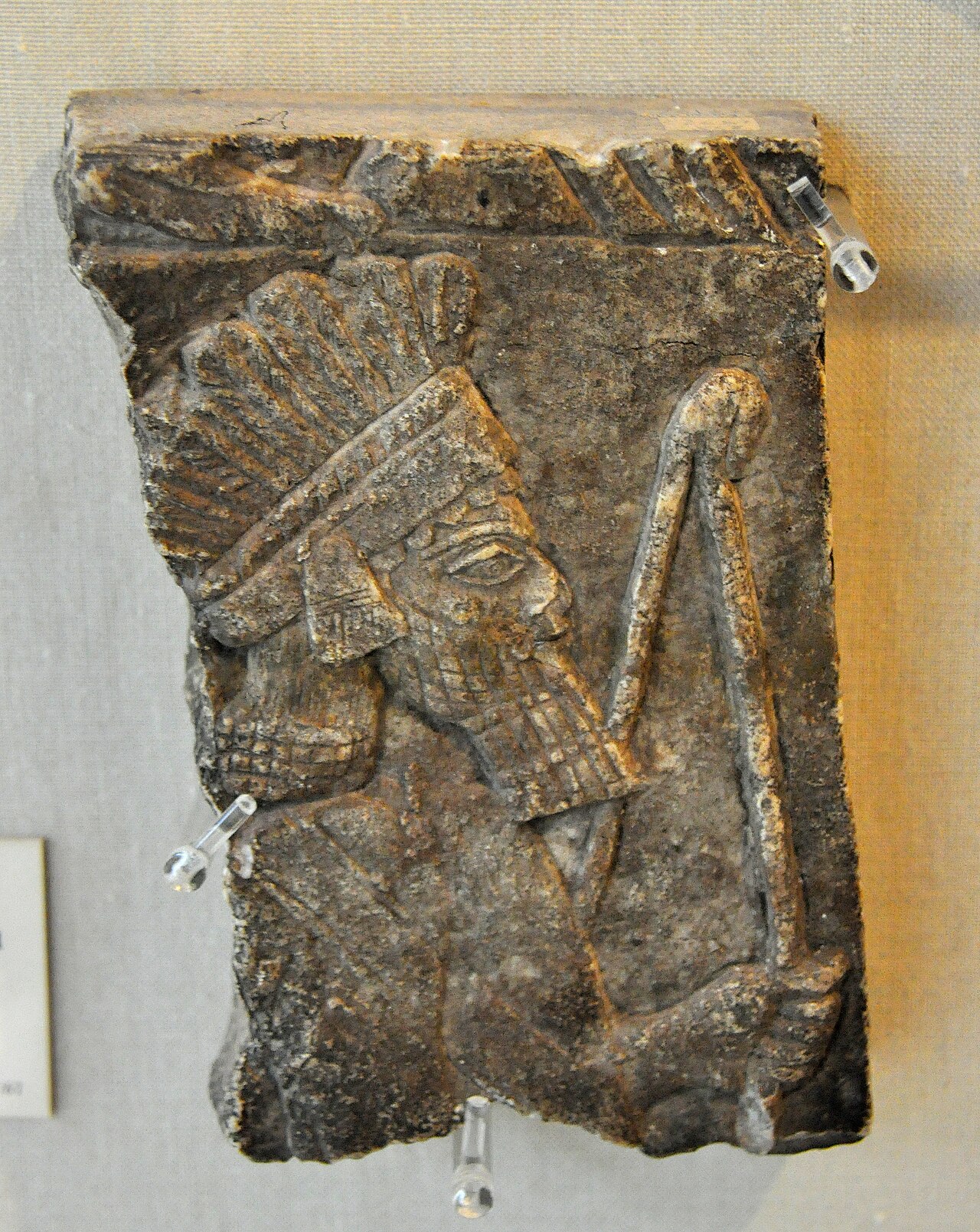
Photo of an Assyrian alabaster relief carving in a museum display. A bearded figure in a feathered headdress faces left, drawing a bow with an arm raised, in profile on a weathered stone slab.Sculpture

Primary source

Archer Wearing Feather Headdress Relief

668-627 BCE

Book

Secondary source

Book of Nahum

Nahum · c. 663-612 BC (disputed)

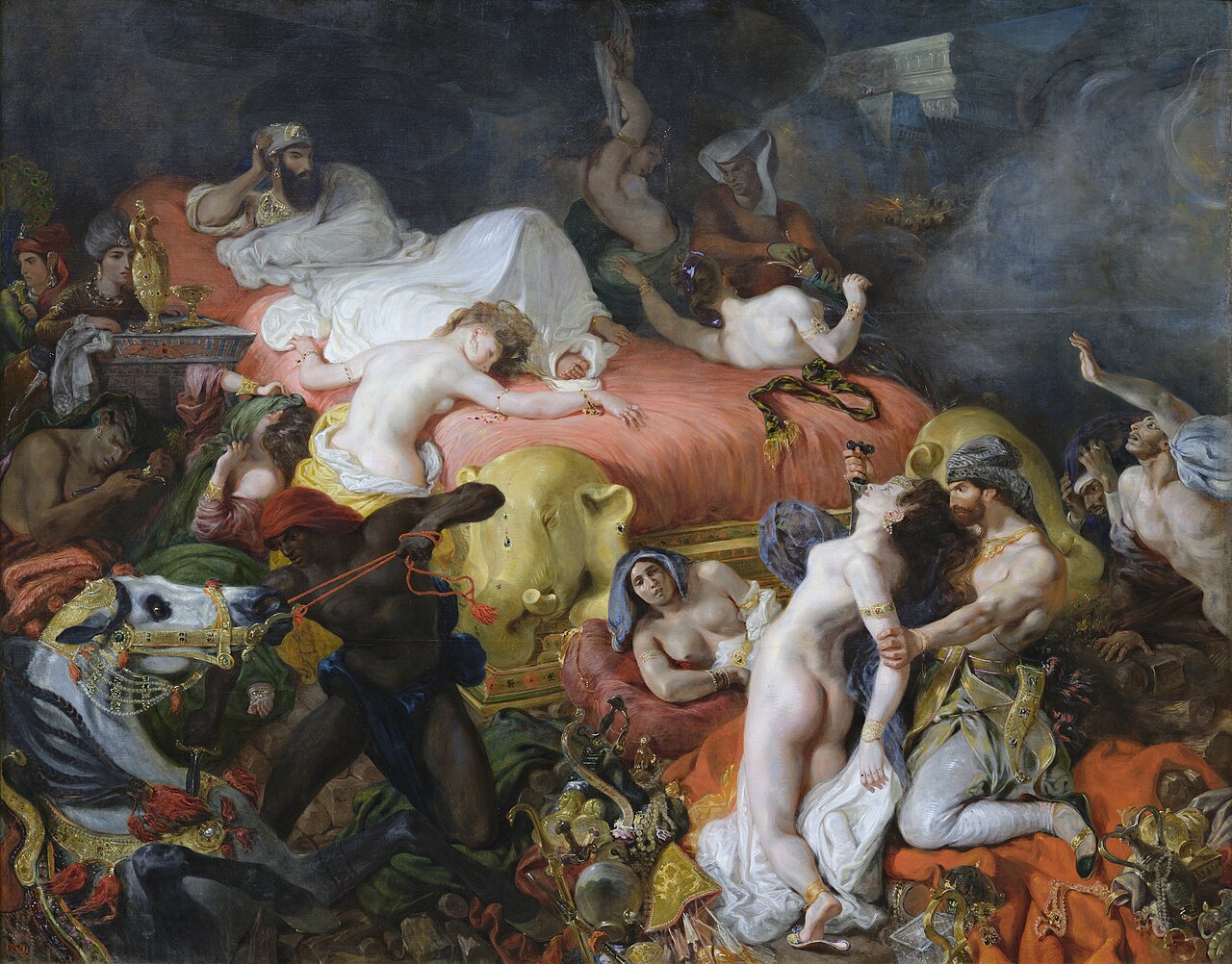
Painting of a chaotic palace scene with a bearded king reclining on a red and white bed above, while nude women, servants, and soldiers are slain or struggle around him. A horse and a gold vessel appear at left.Painting

Secondary source

The Death of Sardanapalus

Eugène Delacroix · 1827

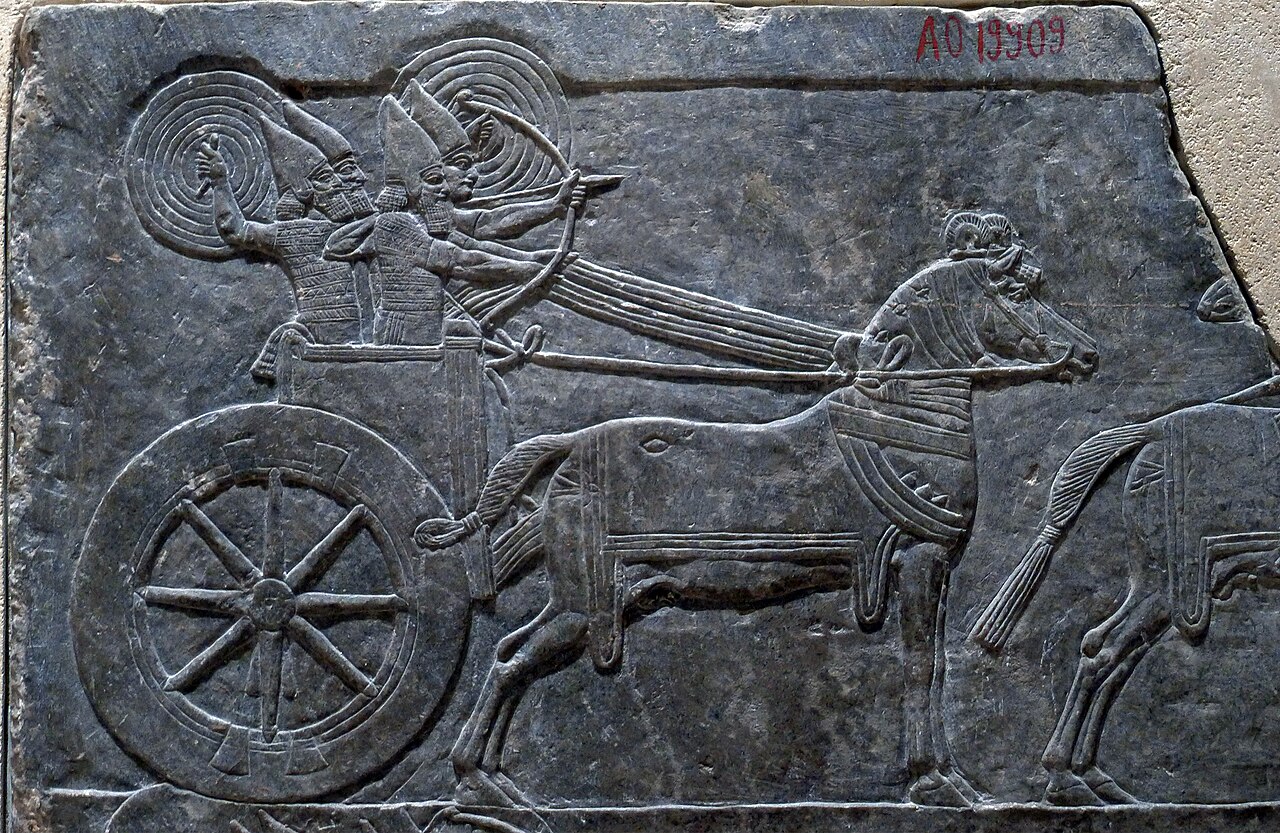
Carved gray stone relief panel showing an Assyrian chariot with two bearded figures in tall headdresses, one drawing a bow, pulled by horses, with a wheel with eight spokes in the foreground and a second horse on the right. Red inventory number AO 19909 at top.Sculpture

Primary source

Relief of an Assyrian Chariot and Horsemen

Unknown artist

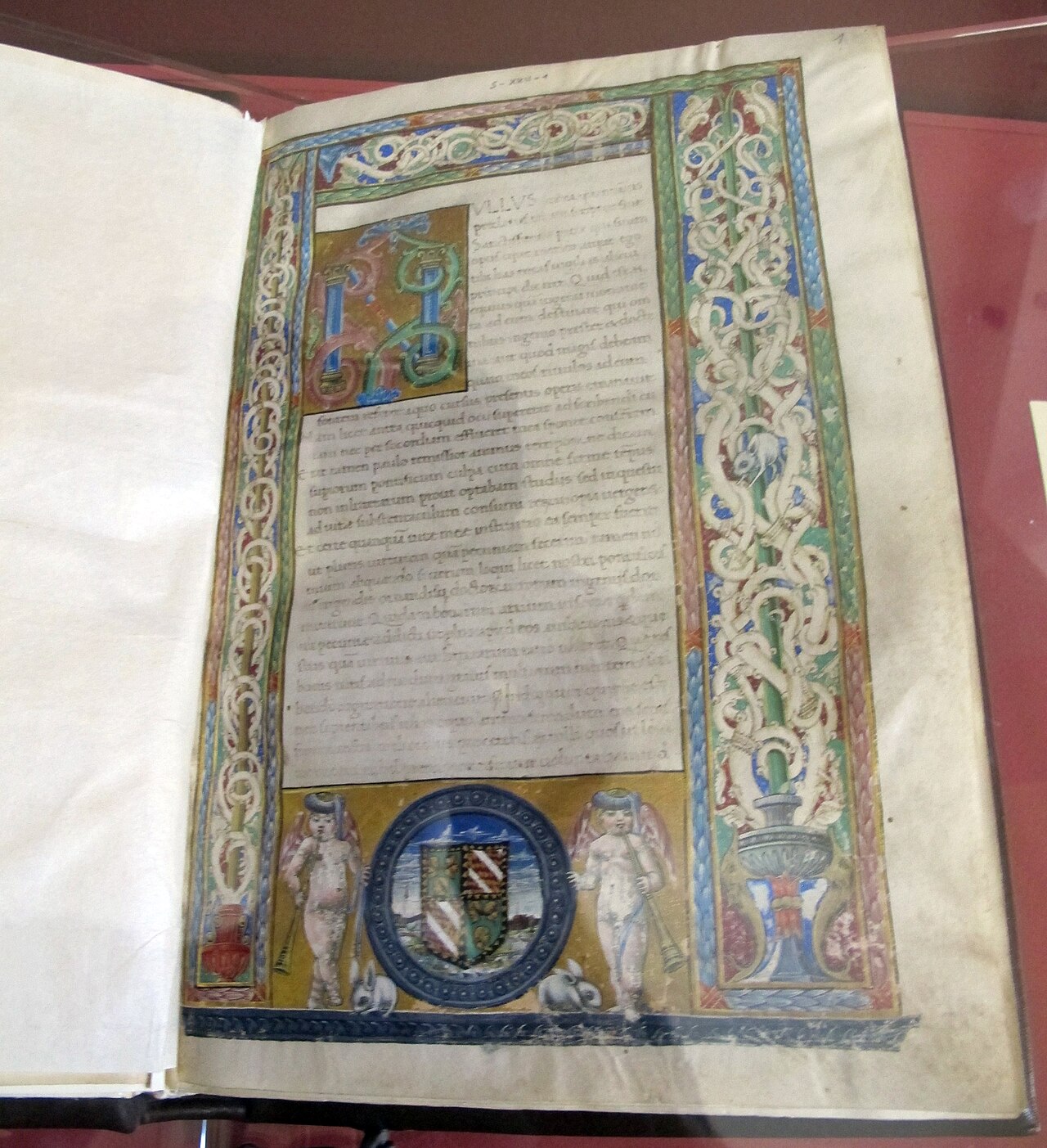
Open illuminated manuscript page on vellum in a display case, with a decorative border of foliage and interlace, a historiated initial, and a central text block in Latin script. A circular coat of arms with angels and rabbits appears at the bottom.Book

Secondary source

Bibliotheca Historica

Diodorus Siculus · 1st century BCE

Blue cloth book cover with a white library barcode label on the upper left spine area, printed with the number 31761 04263 3503 running vertically. Faint marks appear on the cover.Book

Secondary source

History of Assurbanipal, Translated from the Cuneiform Inscriptions

George Smith · 1871

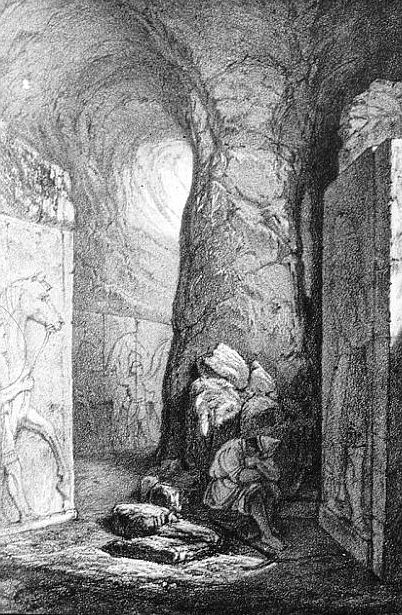
Monochrome lithograph of a dim vaulted chamber with a carved relief of a horse on the left wall and a doorway on the right. Two seated figures in robes sit near the lower center, with stone slabs at their feet. Light enters from a far arched opening.Painting

Secondary source

Entrance to the Archive Chambers in the Palace of Ashurbanipal

Photographische Werkstatt der Preußischen Staatsbibliothek · 19th century

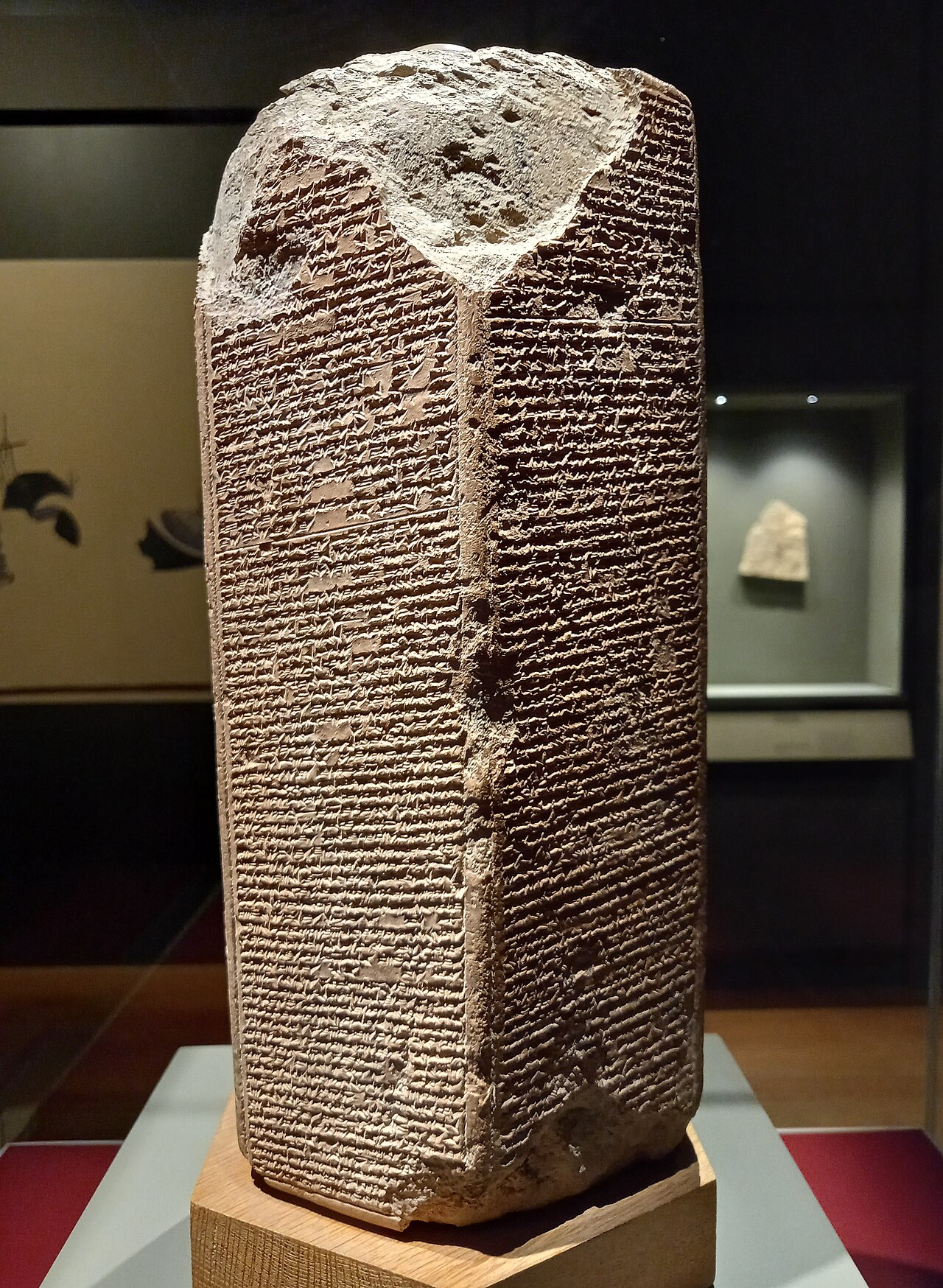
Photograph of a six-sided clay prism covered in cuneiform script, displayed on a wooden base in a museum case. The top is broken and uneven, and the faces are densely inscribed with small wedge-shaped marks.Document

Primary source

Prism F of Ashurbanipal

Ashurbanipal

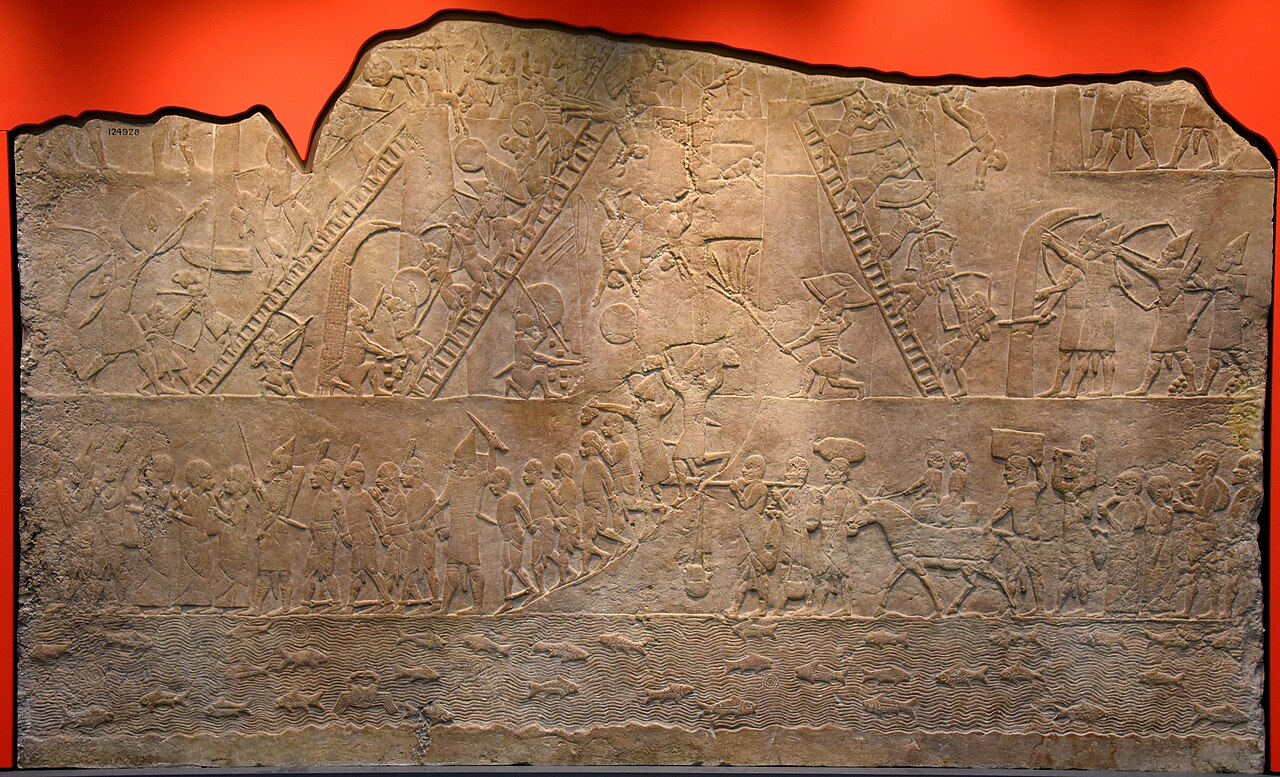
Carved gypsum relief panel showing Assyrian soldiers attacking a city with ladders and scaling walls in the upper register, and a lower register of marching soldiers, captives, and wagons, above a wavy-lined band of fish and water.Sculpture

Primary source

Ashurbanipal's Army Attacking Memphis

645-635 BCE

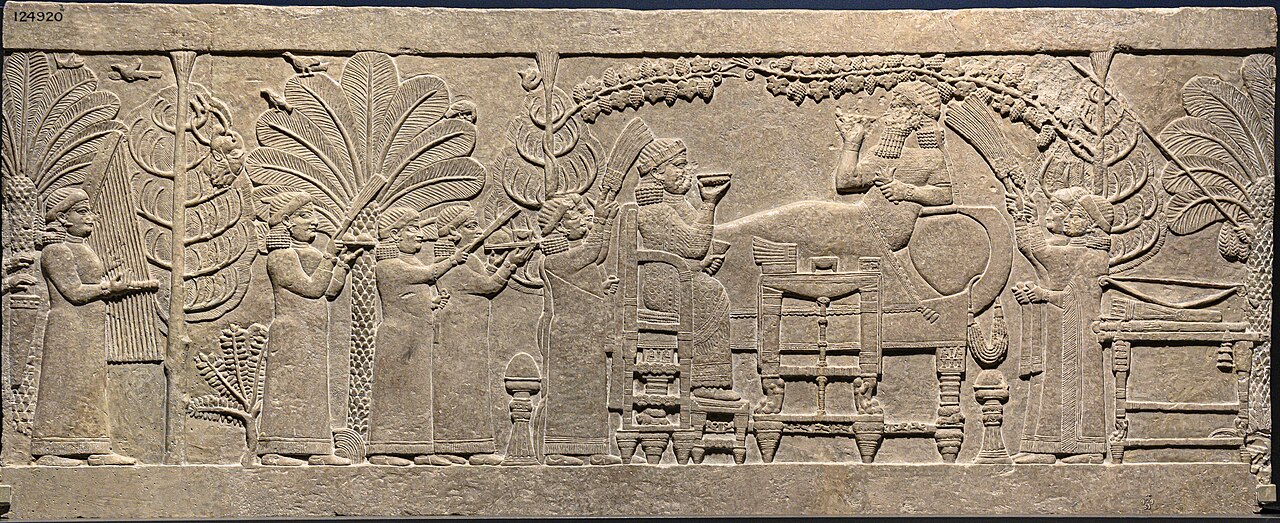
Carved stone relief of a banquet scene. A king reclines on a couch under a vine arbor holding a cup, while a seated queen faces him. Attendants stand nearby, with palm trees and a table holding weapons at right.Sculpture

Primary source

Banquet of Ashurbanipal with His Queen

645-640 BCE

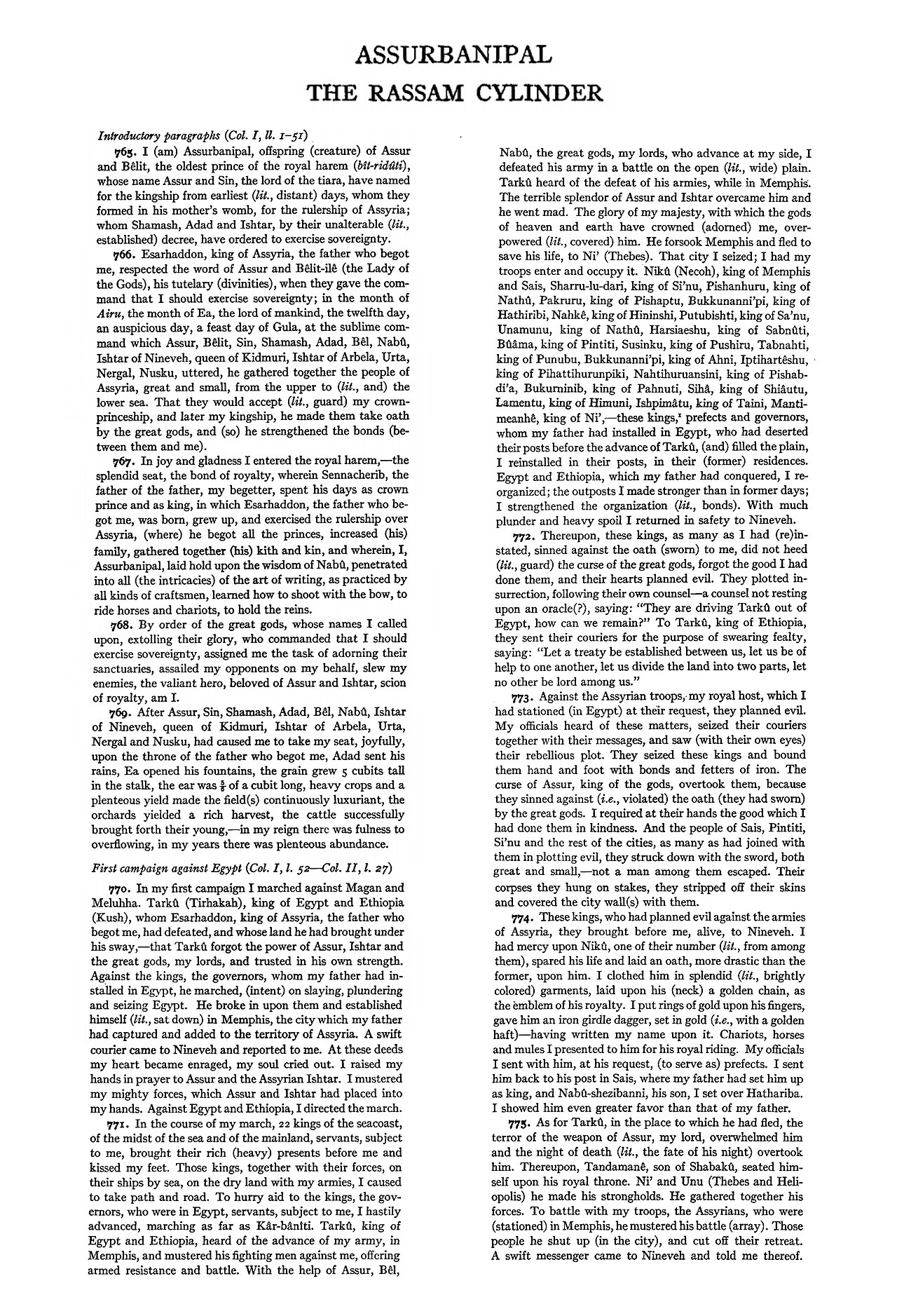
Scanned printed page titled ASSURBANIPAL, THE RASSAM CYLINDER, showing two columns of English translation text with section numbers and headings for Introductory paragraphs and First campaign against Egypt.Book

Secondary source

Rassam Cylinder, First Column

Daniel David Luckenbill · 1927

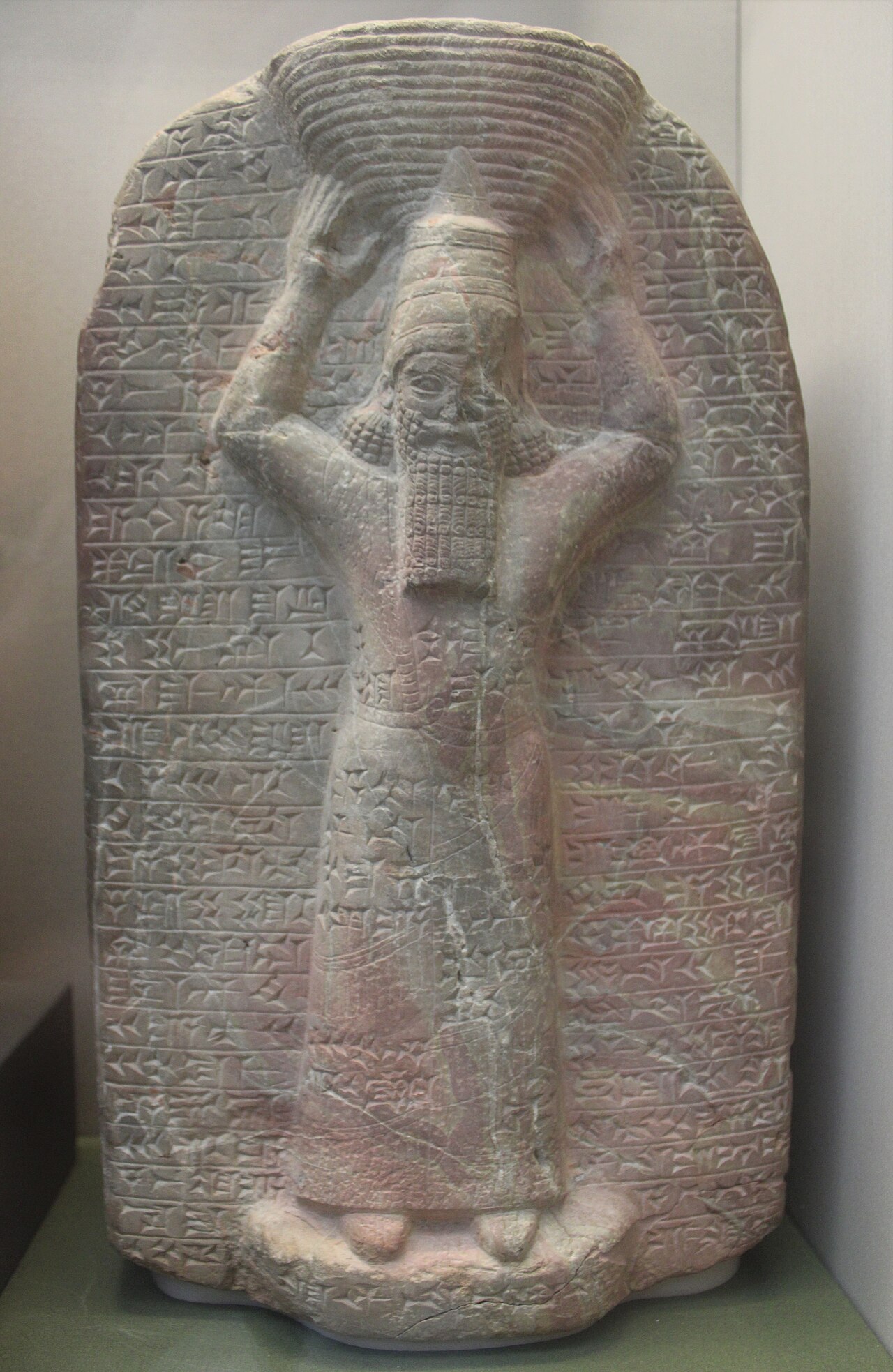
Photograph of a grey-pink stone stela carved with cuneiform script in horizontal rows. A relief figure of a bearded king in a long robe lifts a basket of earth on his head with both hands. Displayed in a museum case.Sculpture

Primary source

Stone Stela of Ashurbanipal Rebuilding Esagil

7th century BCE

Photograph of a rectangular, pale yellowish clay tablet with damaged surface covered in cuneiform wedge impressions, mounted on a green fabric background with clear plastic supports holding it upright.Letter

Primary source

Letter from the Young Ashurbanipal to His Father Esarhaddon

Ashurbanipal · 7th century BCE

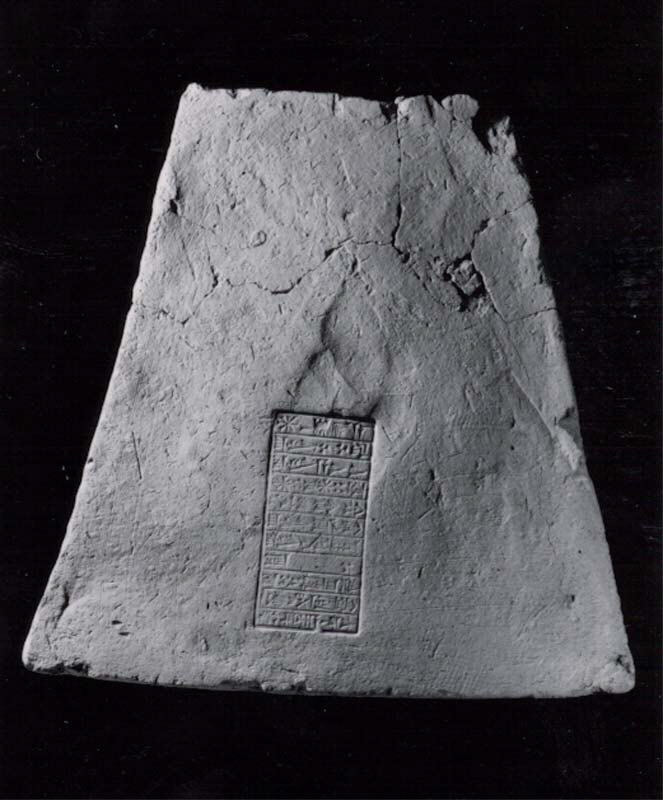
Black-and-white photograph of a trapezoidal clay brick on a dark background, with a rectangular block of cuneiform inscription in its lower center. The brick has cracks and surface wear.Artifact

Primary source

Brick Inscribed by Ashurbanipal from the Ekur Temple at Nippur

Ashurbanipal · circa 668-631 BCE

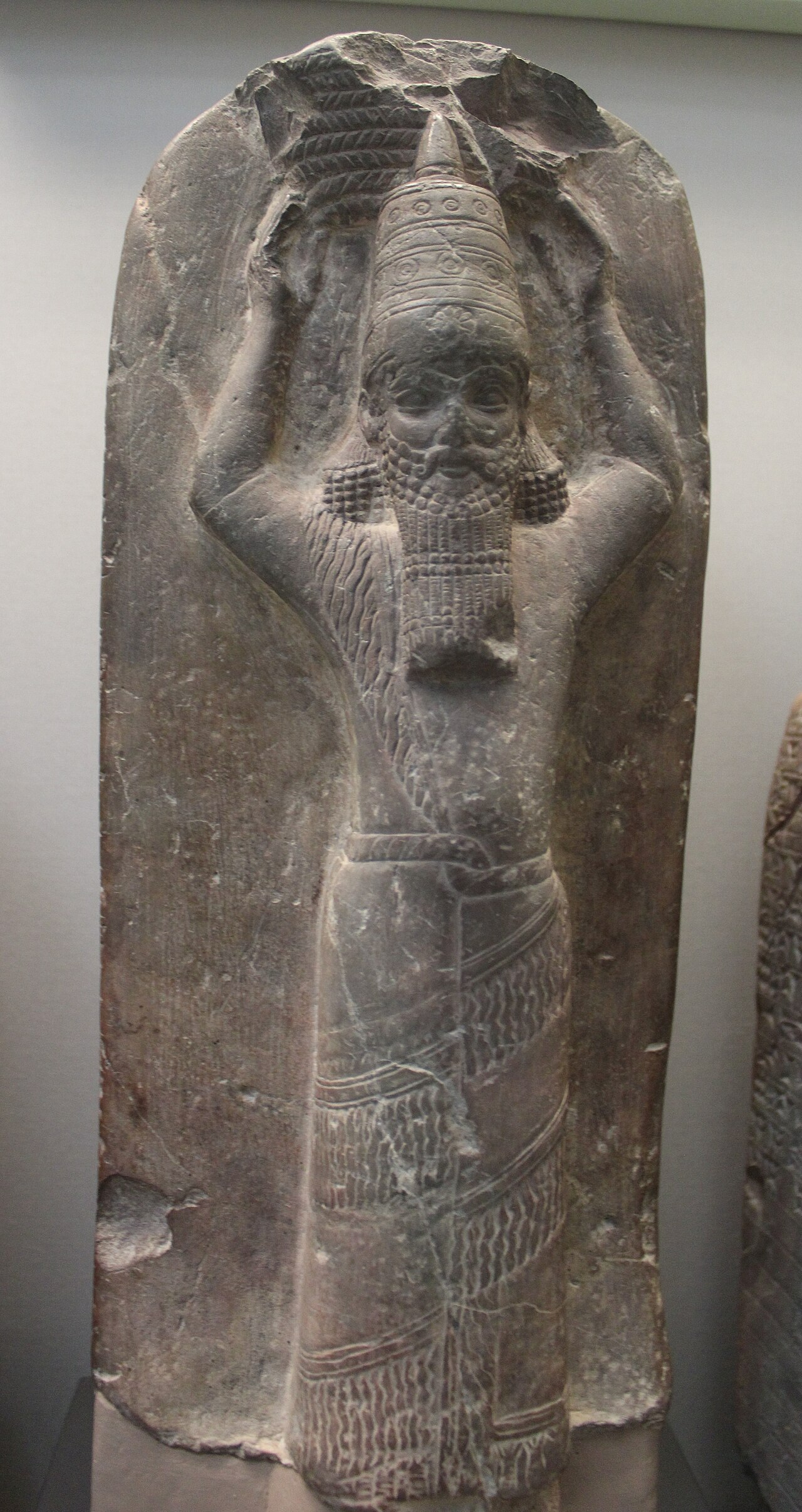
Carved grey stone relief stela showing a bearded figure in a tiered cylindrical headdress with arms raised holding a basket on his head, wearing a fringed, layered robe with a belt. Arched stone top edge.Sculpture

Primary source

Stela of Ashurbanipal Carrying a Basket of Earth

7th century BC

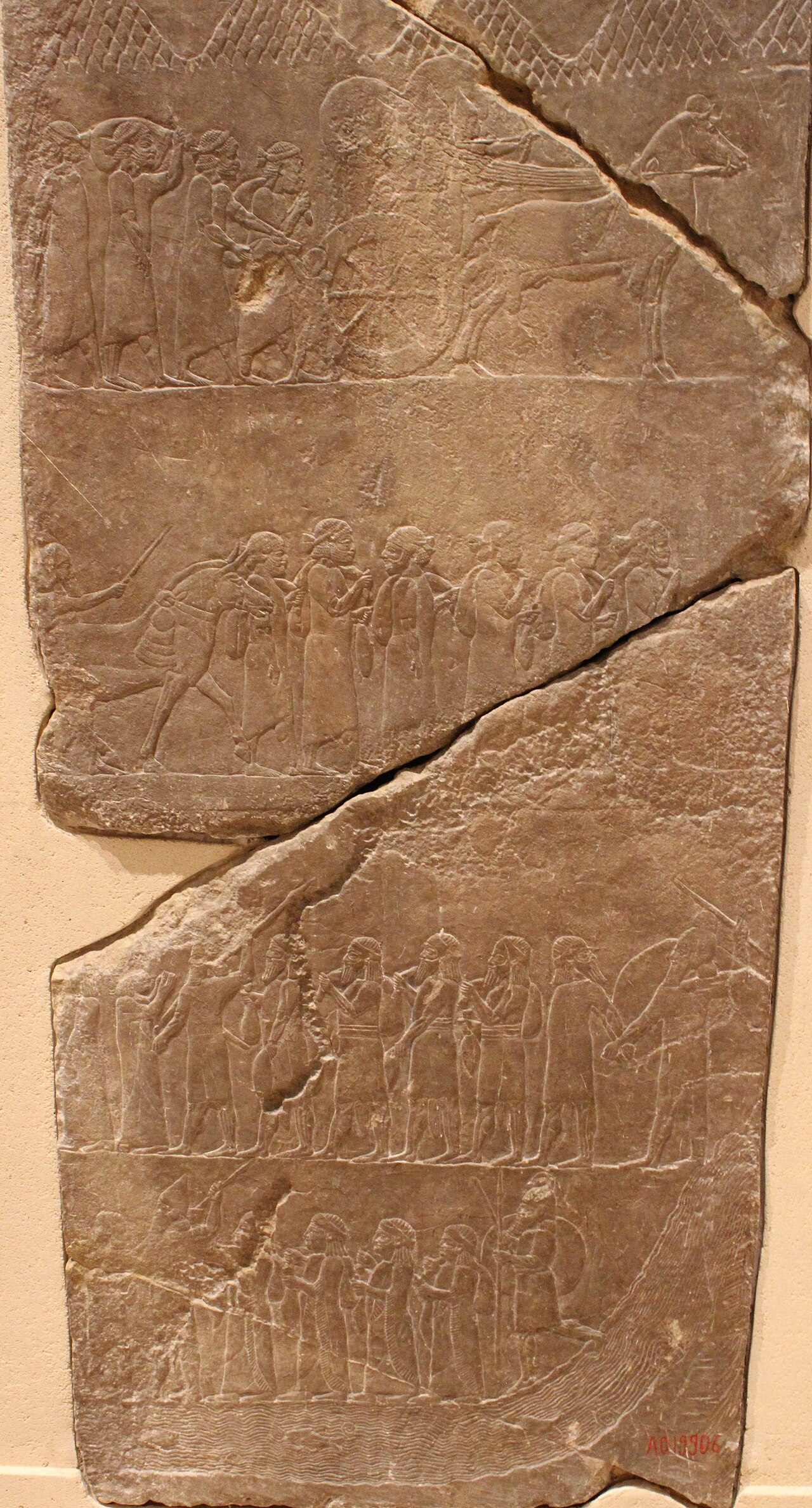
Photograph of a pale gypsum alabaster relief slab with carved registers of figures: at top, a chariot and soldiers; in the middle, a row of bearded men walking; at bottom, rows of standing and walking figures near a wavy-lined river. Inventory number AO 19906 is painted in red at lower right.Photograph

Secondary source

Relief of the Deportation of Elamites from Nineveh

Zunkir · c. 645 BC

Book

Secondary source

Nineveh and Its Remains, vol. 2

Austen Henry Layard · 1849

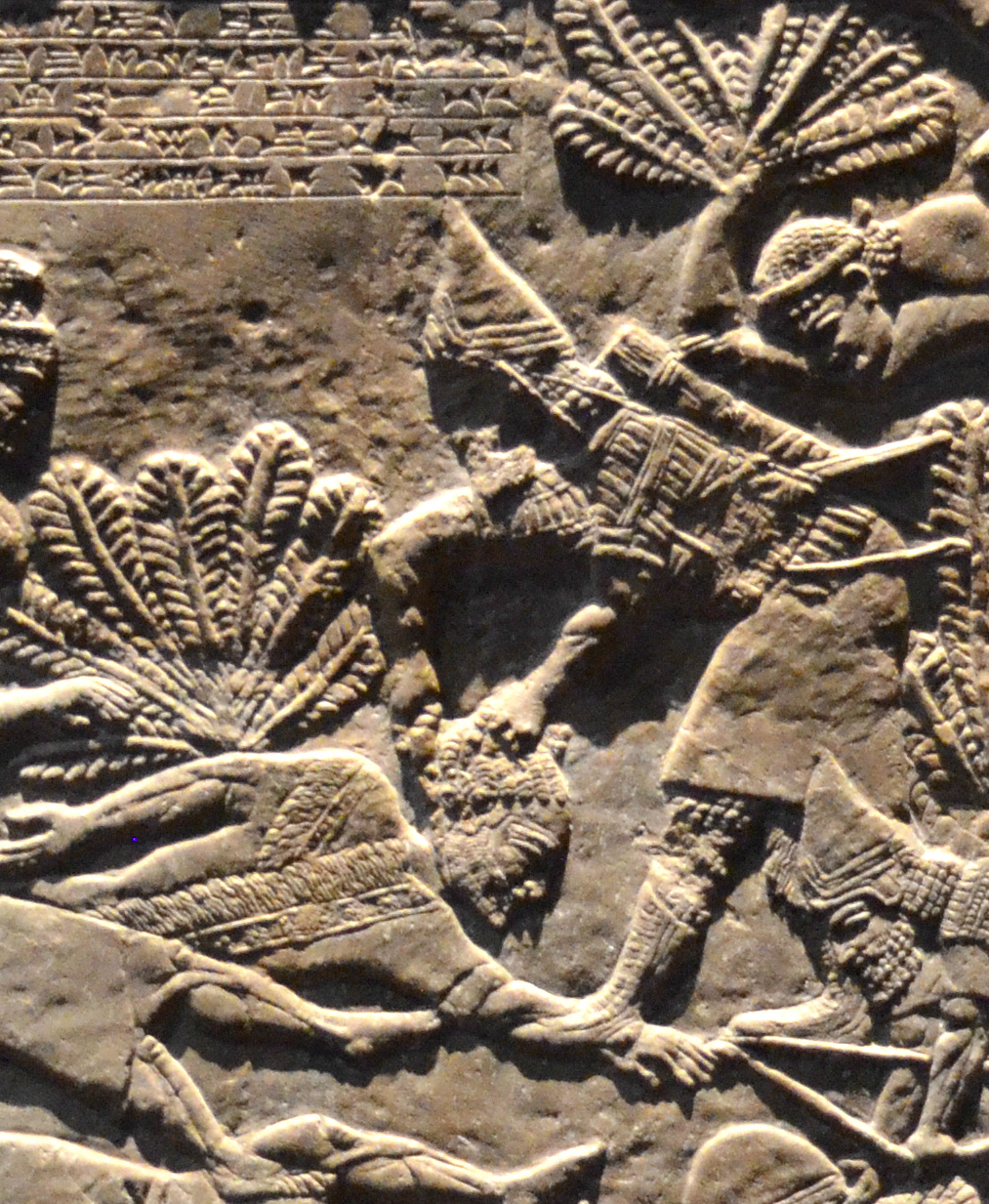
Close detail of an Assyrian palace relief carved in low relief on stone. Cuneiform inscription bands run across the top. Stylized palm or tree motifs, a figure's head and arm, and a grasping hand are visible, with a hunting or battle scene around them.Sculpture

Primary source

The Beheading of King Teumman of Elam

7th century BC

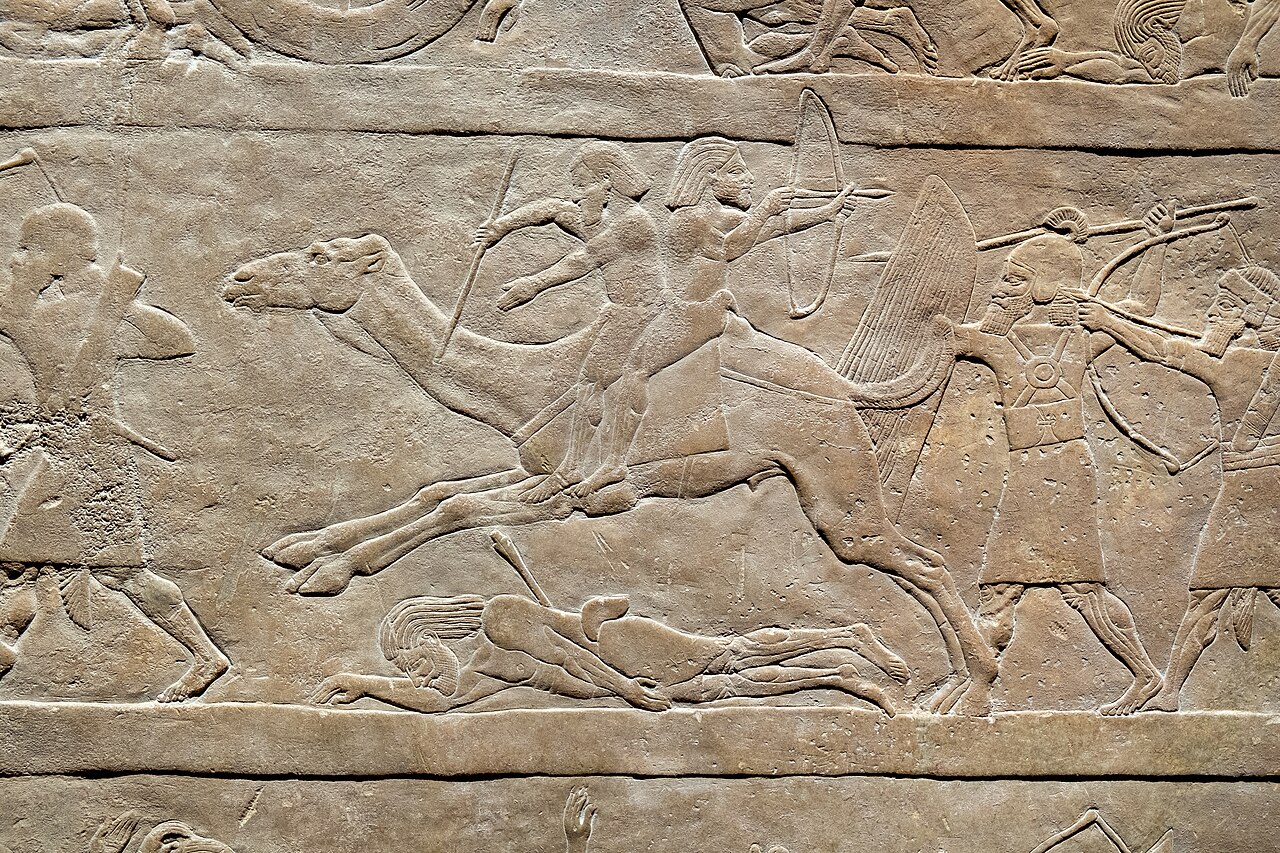
Carved stone relief of Assyrian warriors pursuing enemies on a running camel. A bearded archer on the camel draws a bow, another figure behind holds a spear, and a fallen figure lies under the camel's legs. Soldiers with shields and bows march on the right.Sculpture

Primary source

Assyrians Pursue Arabs on Camelback

Three groups of cuneiform wedge signs written in black on a light background. The left group is a dense cluster of several wedges, the middle group has a diagonal stroke with wedges, and the right group is a single horizontal wedge sign with a small tail.Document

Primary source

Rassam Cylinder, Ansharpapash Section

Theophilus Goldridge Pinches · 1907 (transcription of ancient original)

Three groups of black cuneiform wedge signs on a white background. The first two groups show horizontal and angled wedges, and the third group has several vertical and horizontal wedges stacked together.Document

Primary source

Rassam Cylinder, Tar-qu-u Section

Theophilus Goldridge Pinches · 1907 (transcription of ancient original)

Close-up scan of several cuneiform signs in black wedge-shaped strokes on a light background, arranged in a horizontal row. The signs appear to be taken from an inscription, likely the Rassam cylinder text.Document

Primary source

Rassam Cylinder, Urdamanee Section

Theophilus Goldridge Pinches · 1907 (transcription of ancient original)

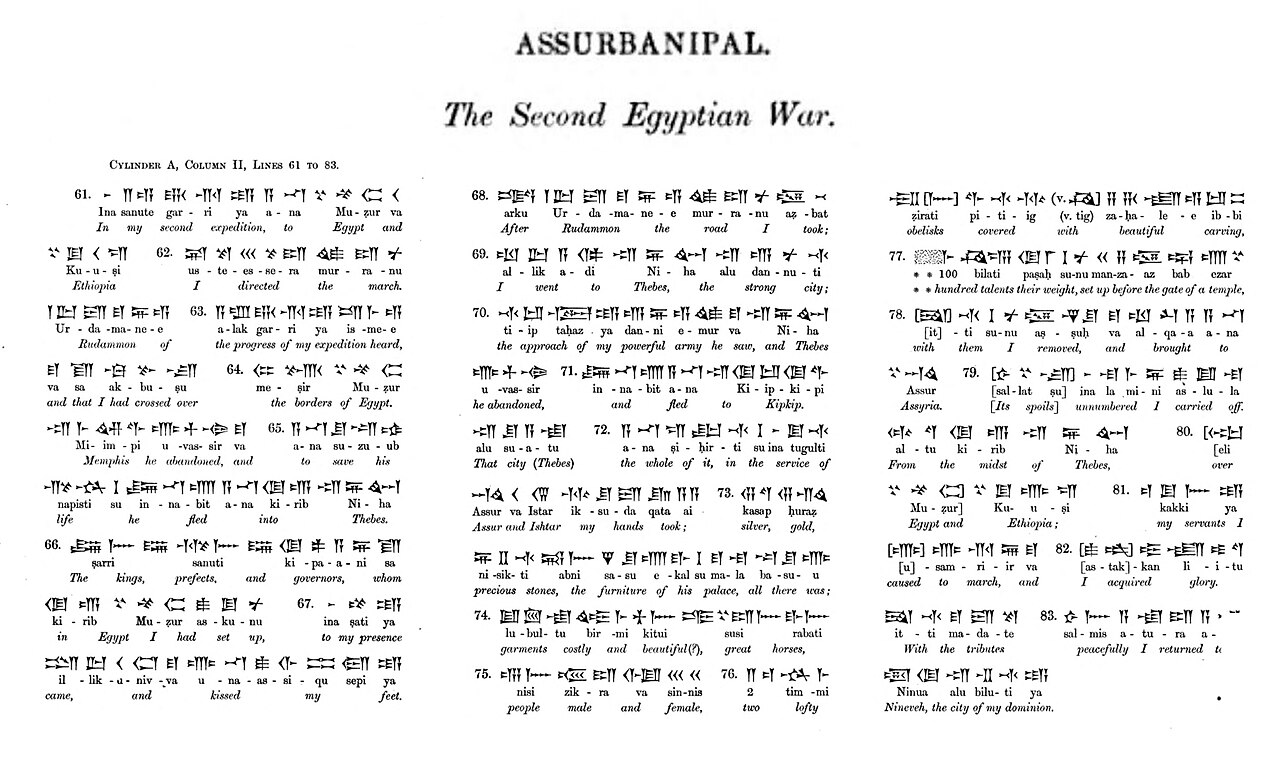
Printed page titled 'Assurbanipal: The Second Egyptian War', showing transliterated cuneiform lines in three columns with English translation beneath each line, labeled Cylinder A, Column II, Lines 61 to 83. It is a published edition transcription, not the cylinder itself.Book

Secondary source

Ashurbanipal's Second Egyptian Campaign, Rassam Cylinder Edition

George Smith · 1887 (edition of ancient text)

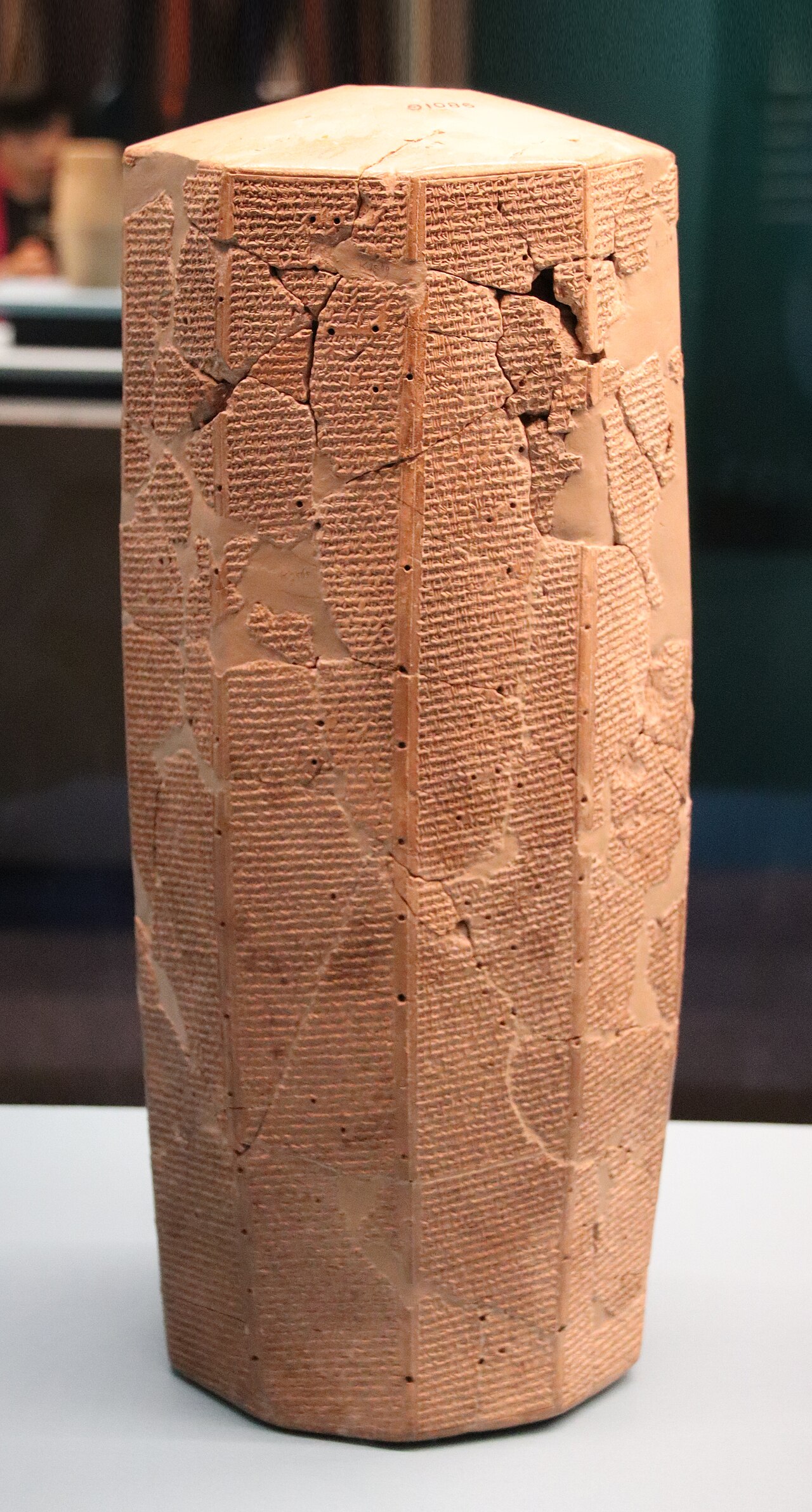
A multi-sided, prism-shaped clay cylinder with a flat top, its surfaces covered in rows of small cuneiform wedge-shaped writing. Cracks and chips are visible, and it rests on a white pedestal in a museum display.Document

Primary source

Chronicles of Ashurbanipal Clay Cylinder

668-630 BC

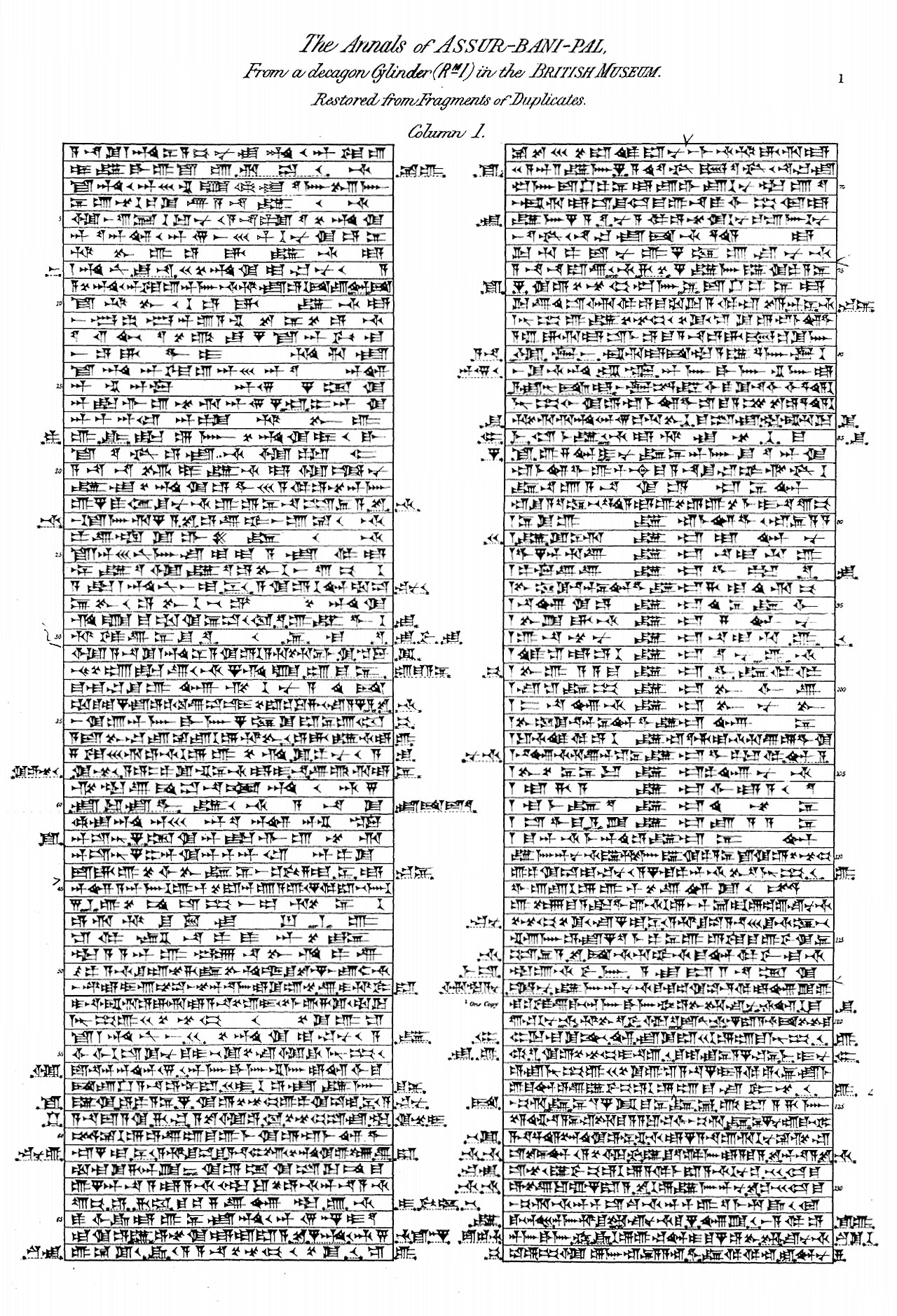
Printed transcription page titled 'The Annals of Assur-bani-pal, from a decagon cylinder (Rm.I) in the British Museum, restored from fragments of duplicates', labeled Column I. Two columns of cuneiform signs are set in typeset lines, with small annotation marks along the margins.Book

Secondary source

Rassam Cylinder, First Column Transcription

Theophilus Goldridge Pinches · 1905

Carved stone stele in a dark museum display, with cuneiform script covering both side panels. A central relief shows a figure with raised arms and a tiered headdress beneath a curved canopy, standing above a base with two stones.Sculpture

Primary source

Ashurbanipal as Restorer of the Shrine of Ea

668-655 BCE

Carved stone relief panel showing an Assyrian lion hunt on the left, with a bearded king in a fringed garment thrusting a spear, and a horse with a groom at center, and an attendant with a staff at right.Sculpture

Primary source

Lion-Hunt Relief of Ashurbanipal with Groom

7th century BCE

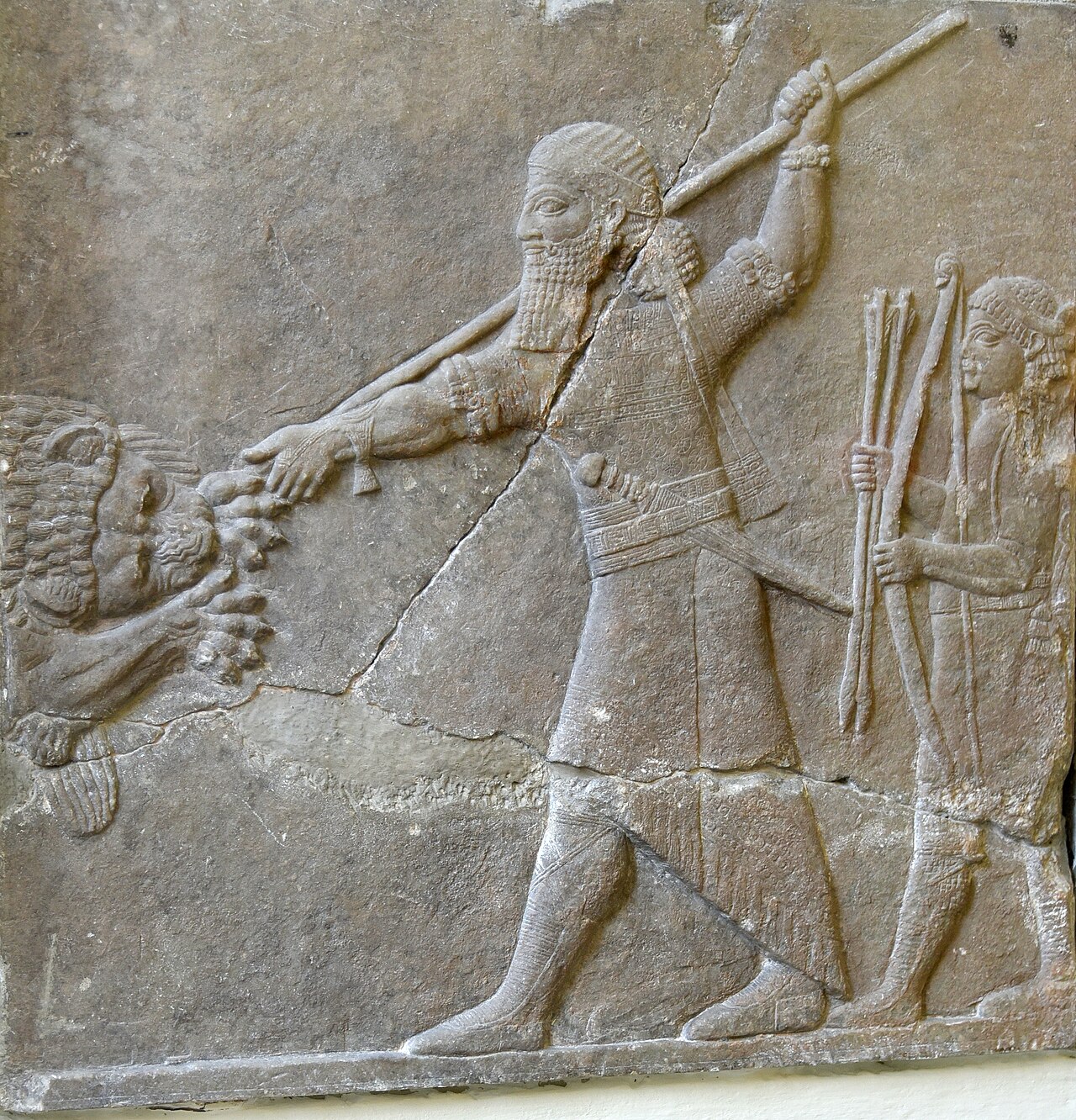
Grey stone relief of a bearded king in a fringed headdress and robes thrusting a spear down into a lion that lunges at him from the left. An attendant with a quiver and bow stands behind him on the right.Sculpture

Primary source

Ashurbanipal Thrusting a Spear into a Lion

7th century BCE

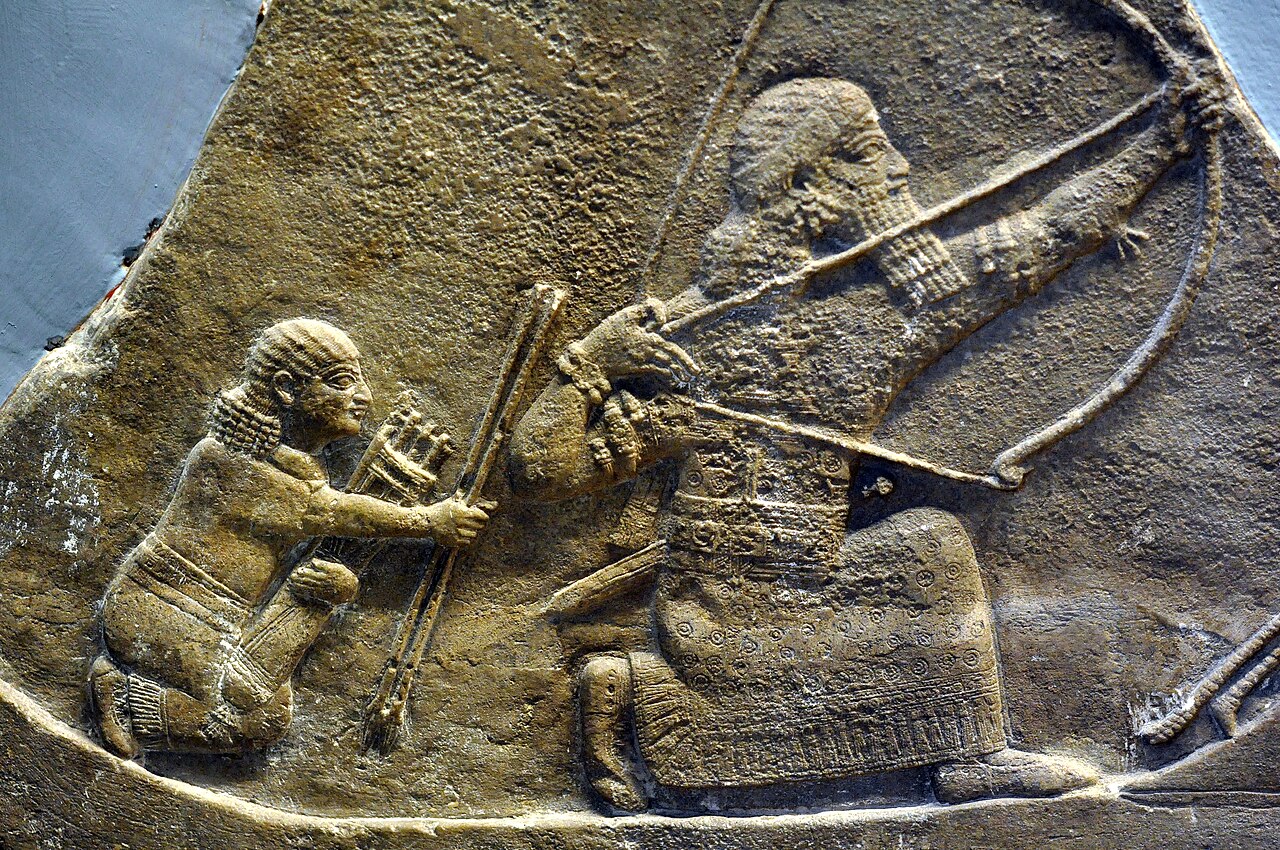
Close-up of an Assyrian alabaster relief: a bearded king in a fringed robe kneels and draws a bow to the right, while a smaller kneeling attendant to the left holds a quiver of arrows and a stick. Carved detail on the stone is visible.Sculpture

Primary source

Ashurbanipal Hunting Gazelles

645-635 BCE

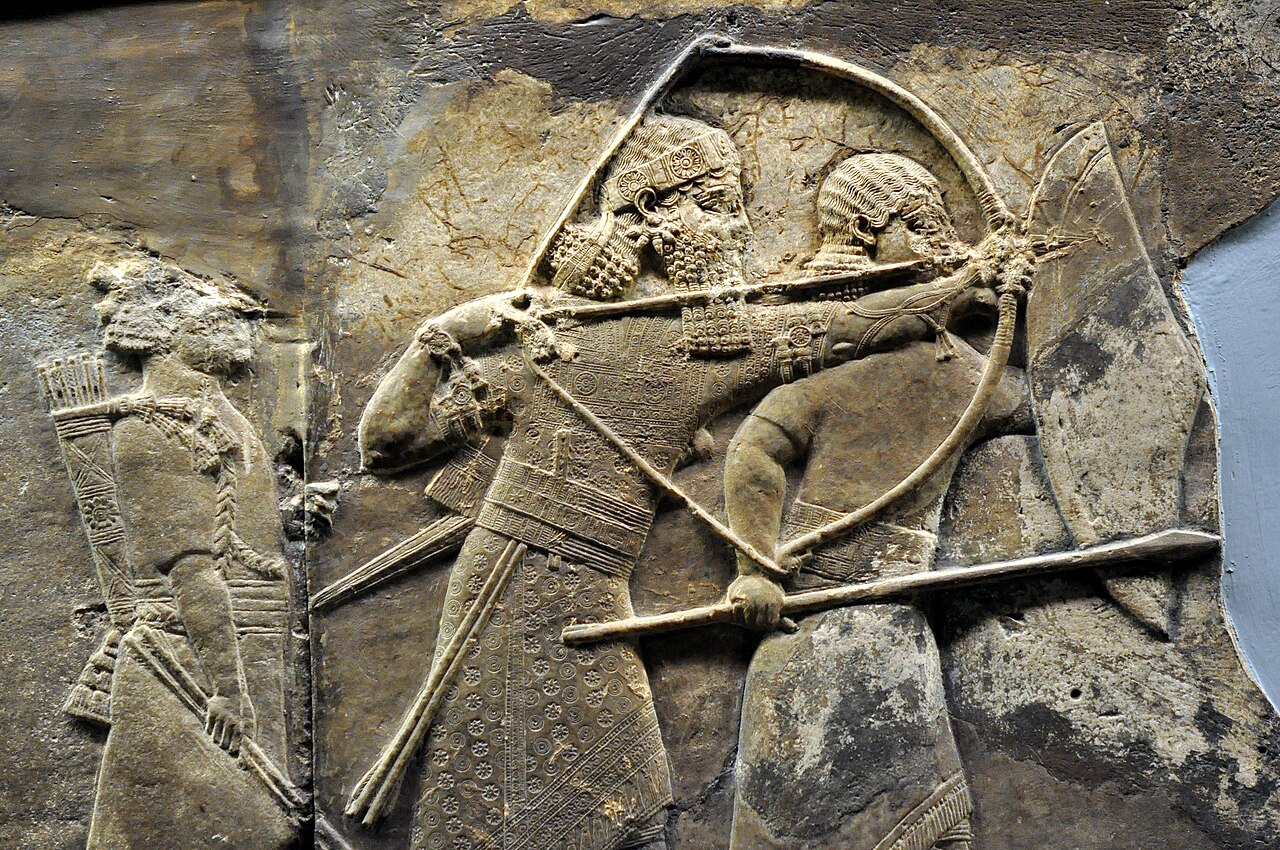
Detail of an Assyrian alabaster relief showing a bearded king drawing a bow and shooting arrows, with an attendant behind him holding a quiver. A shield bearer stands at the right edge in the same carved stone panel.Sculpture

Primary source

Ashurbanipal Hunting Wild Asses

645-635 BCE

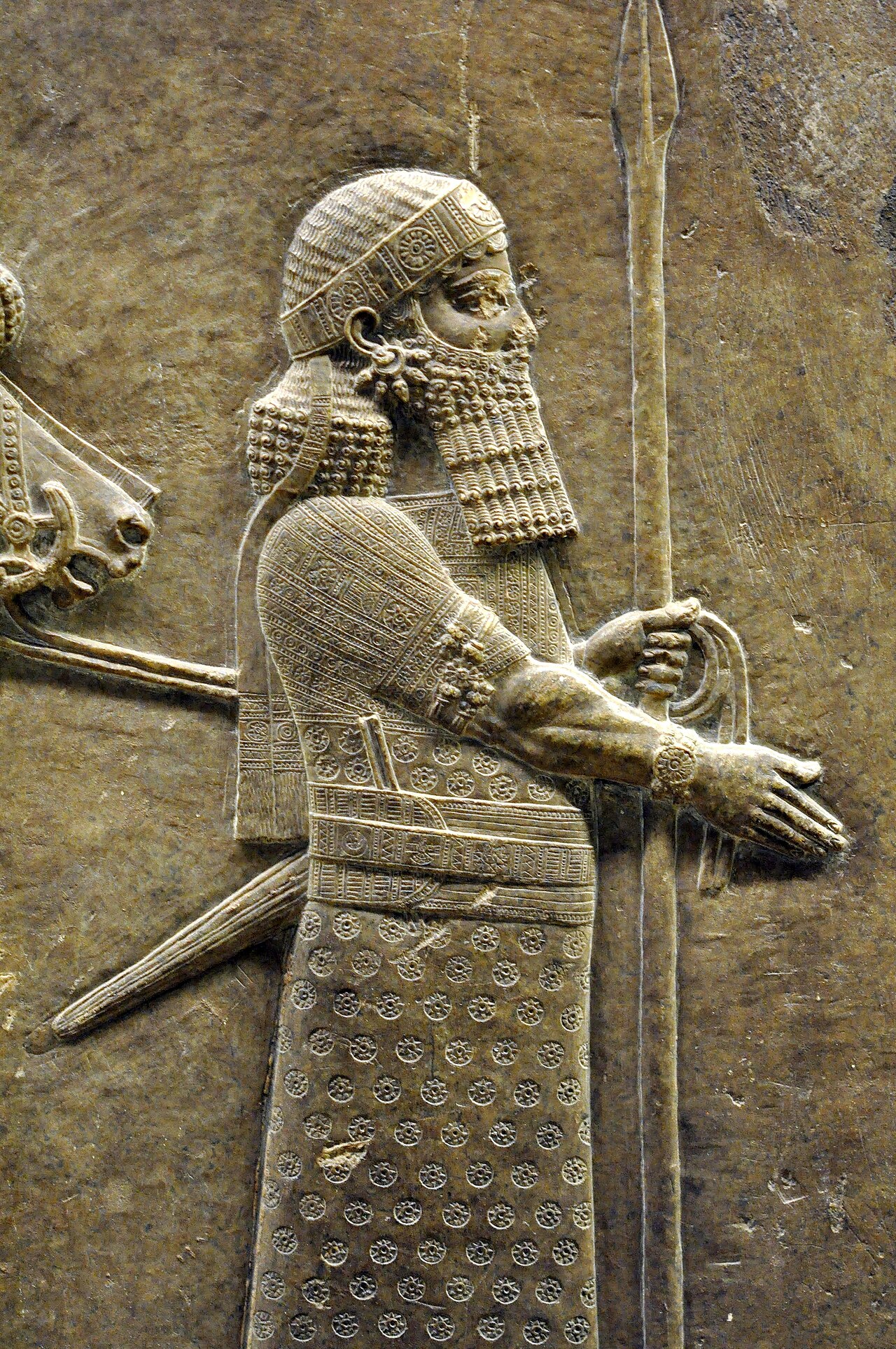
Close-up detail of an alabaster relief carving showing a bearded figure in profile with a fringed headdress, earring, and patterned robe, holding a long spear upright with one hand and extending the other forward.Sculpture

Primary source

Ashurbanipal's Lion-Hunt Scenes

645-635 BCE

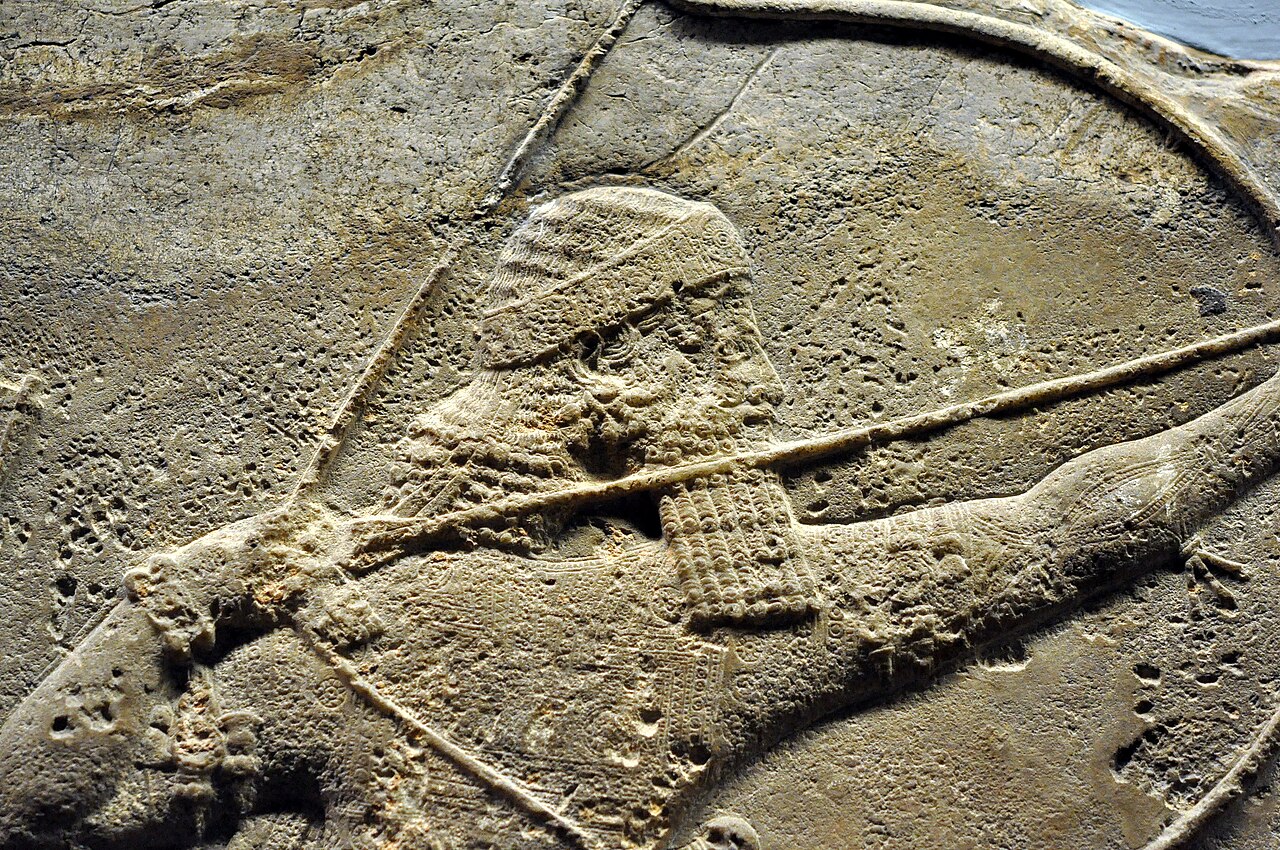
Close-up detail of a carved stone relief showing a bearded figure in a tall headdress drawing a bow, with a long arrow shaft extending across the image. Weathered, textured stone surface with incised lines surrounds the figure.Sculpture

Primary source

Ashurbanipal Shooting Lions

645-635 BCE

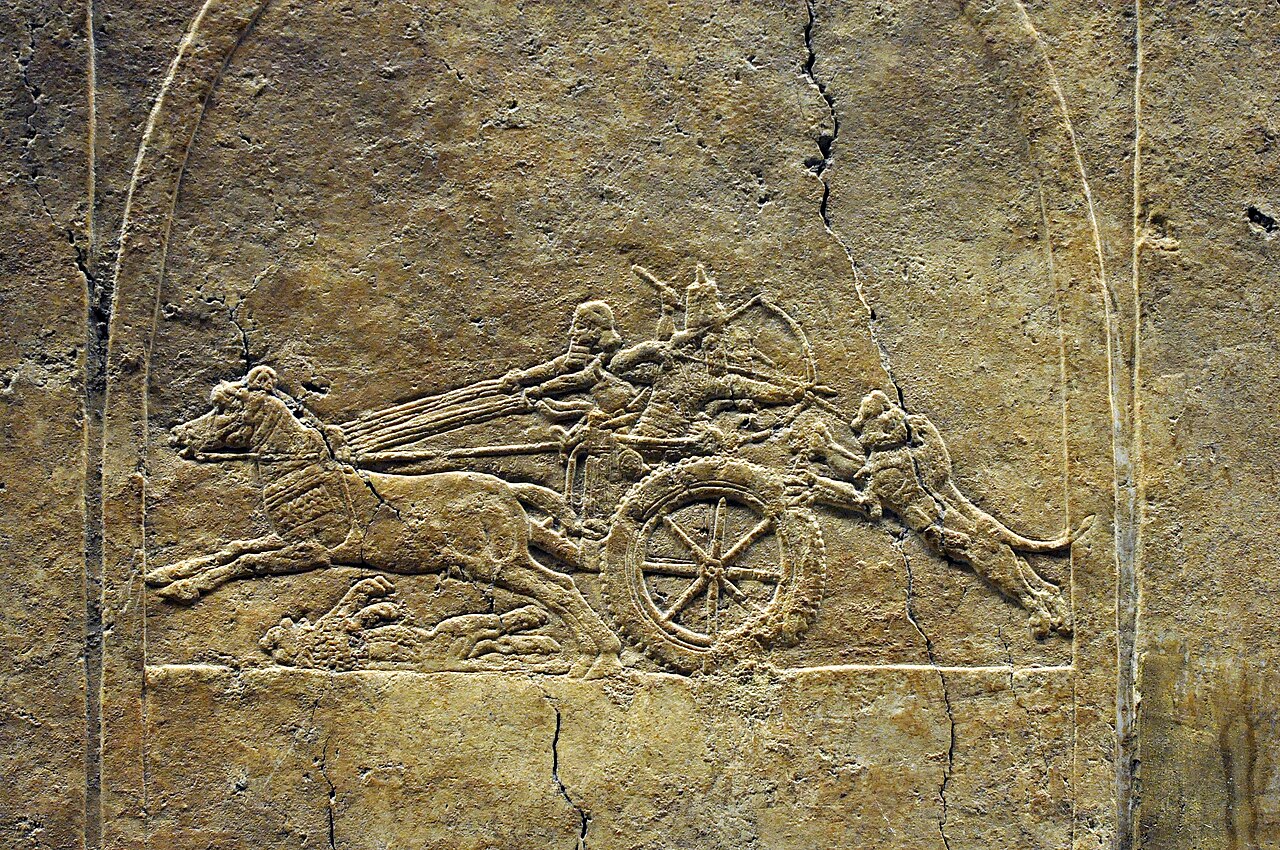
Detail of a carved relief in pale stone showing a king in a chariot pulled by galloping horses, with a lion being struck down beneath the wheels and a lion approaching from the right. Arched border lines frame the scene.Sculpture

Primary source

Ashurbanipal's Stele with Lion-Hunt Scene

645-635 BCE

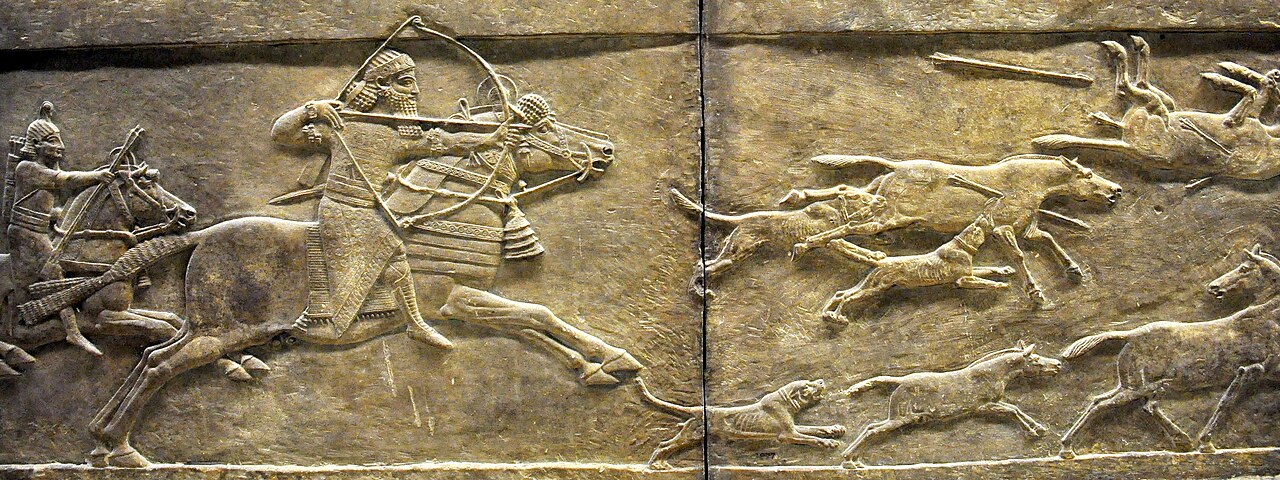
Detail of an Assyrian alabaster relief: a bearded king on horseback draws a bow to the left, pursuing wild asses and lions across the panel. Dogs and fleeing animals fill the right side.Sculpture

Primary source

Ashurbanipal Hunting Wild Asses on Horseback

645-635 BCE

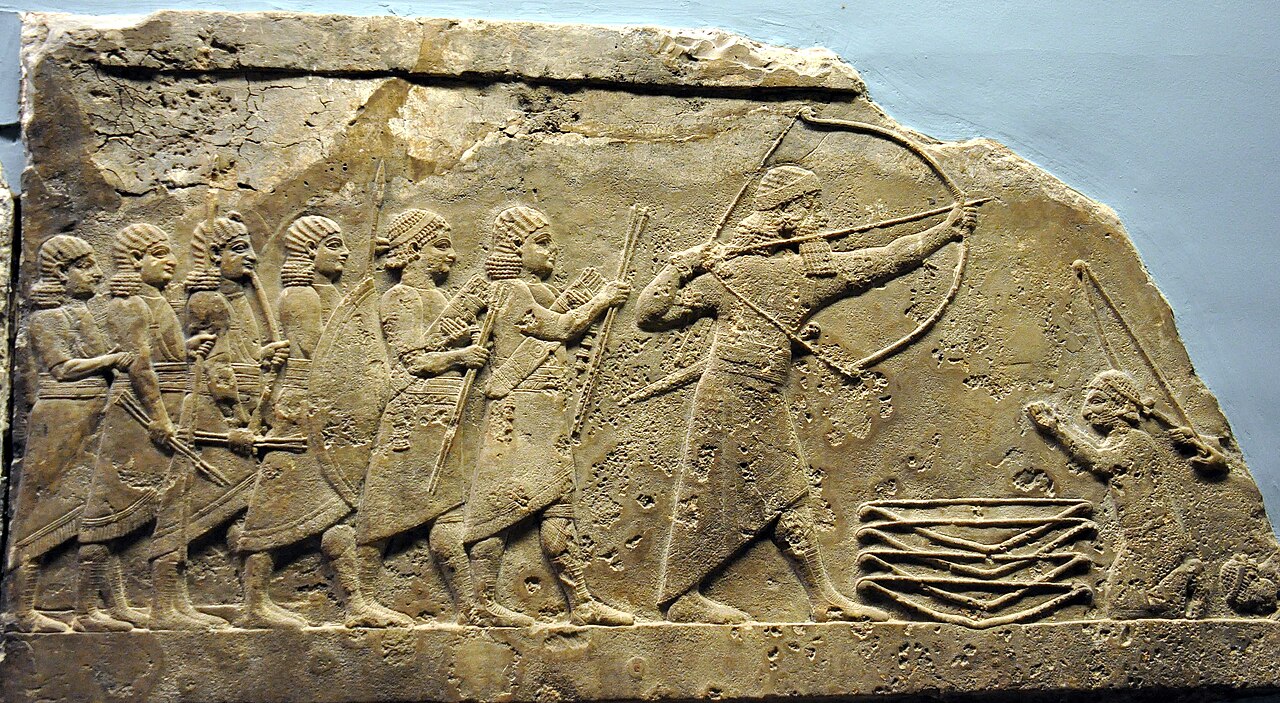
Detail of an alabaster relief showing a bearded Assyrian archer in a long robe drawing a bow toward the left, with a line of foreign men in fringed garments and headdresses following behind him. At lower right a small figure kneels beside a stack of stacked lines or nets.Sculpture

Primary source

Ashurbanipal and Foreign Princes Among Lions

645-635 BCE

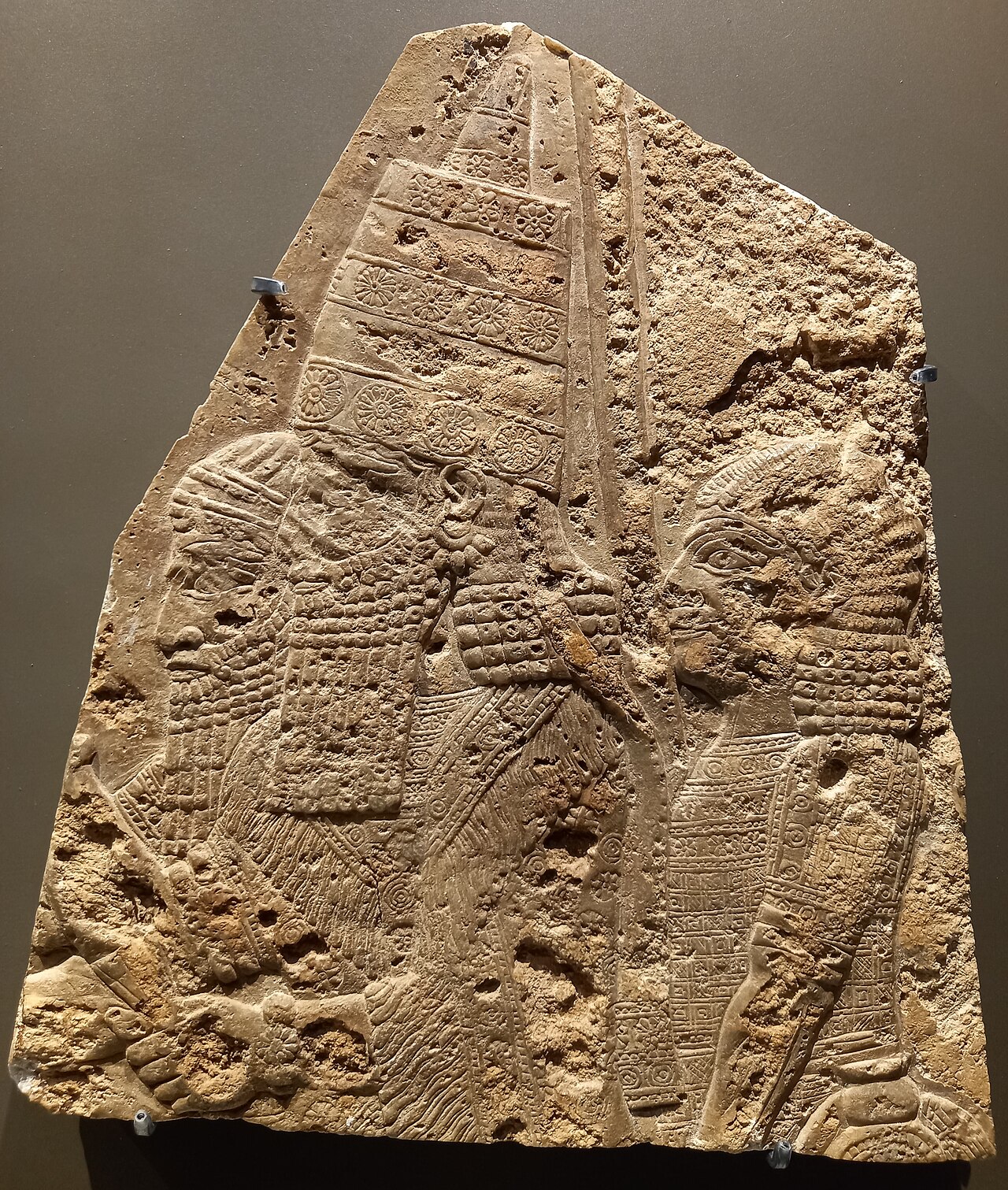
Photograph of a carved stone wall relief fragment, irregular pale limestone slab with a pointed top. Two figures in profile face each other with layered bands of rosette and patterned motifs on tall headdresses and robes, with worn, pitted surface.Sculpture

Primary source

Wall Relief Fragment of Ashurbanipal from Nineveh

645-635 BCE

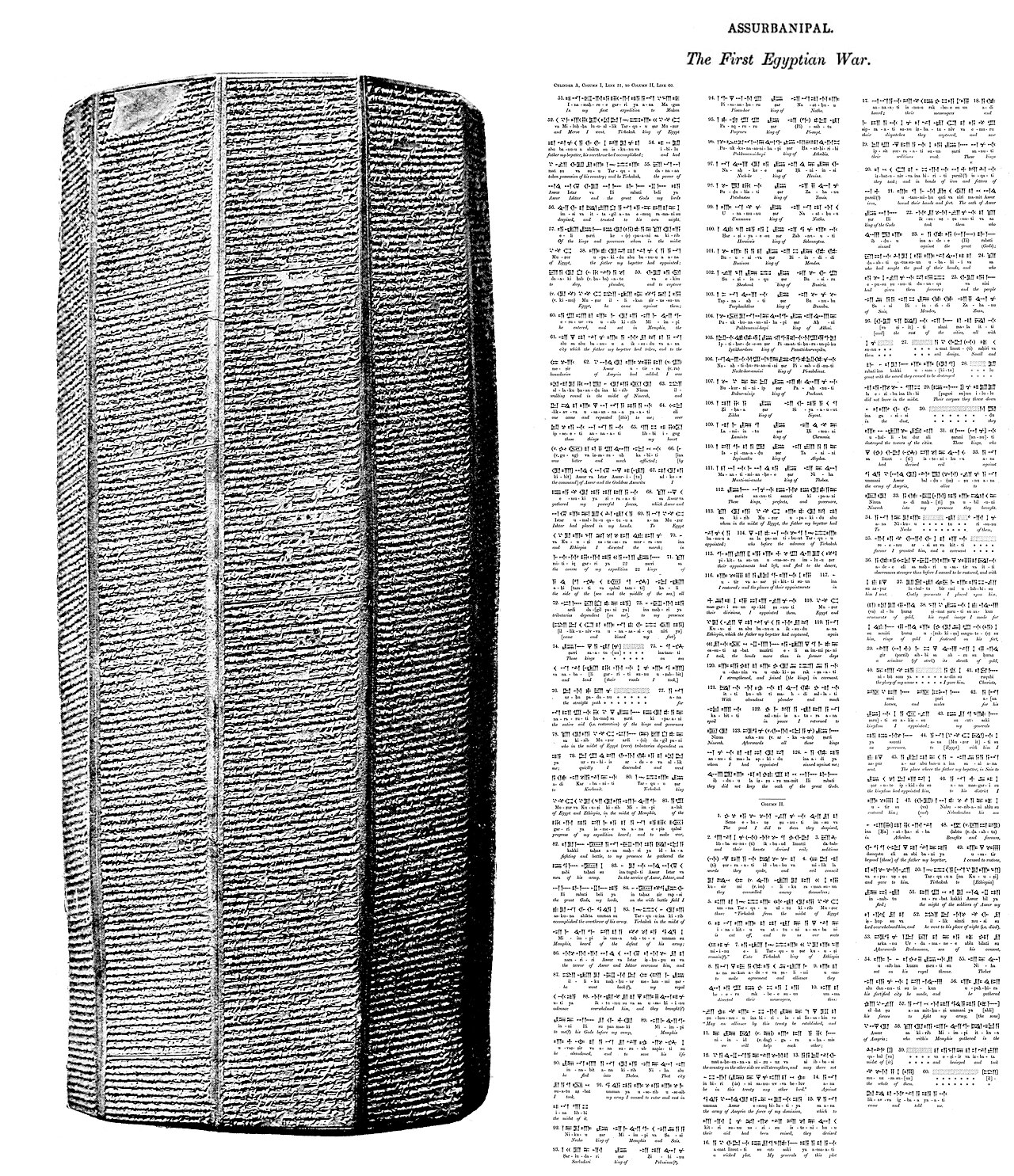
Black-and-white plate from a published book titled 'The First Egyptian War' under 'ASSURBANIPAL'. On the left, a tall six-sided clay cylinder covered in rows of cuneiform script. On the right, columns of small transliterated text with translation lines and footnote notation.Document

Secondary source

Rassam Cylinder, First Egyptian War of Ashurbanipal

E. A. Wallis Budge · 1920 (photograph of ancient cylinder)

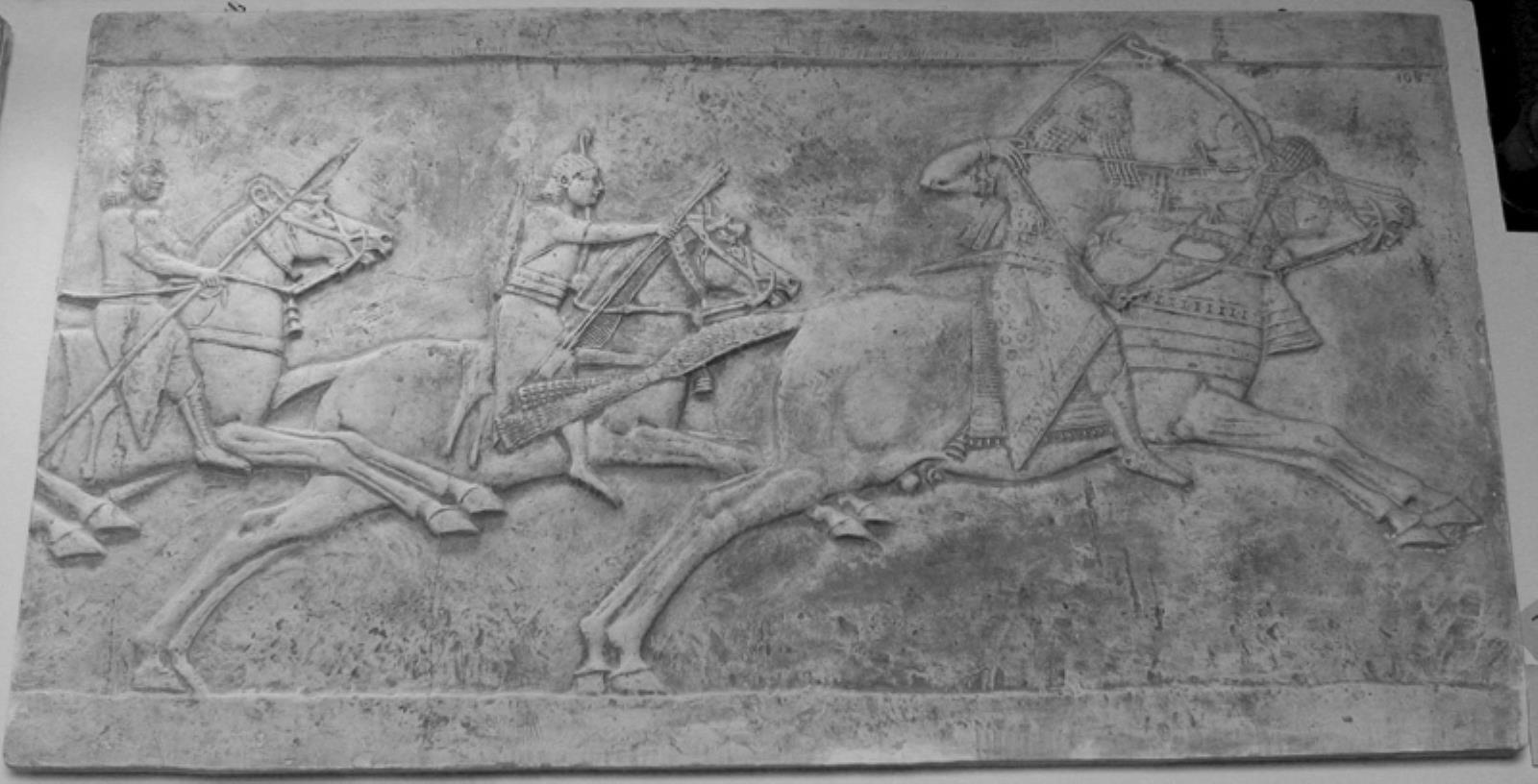
Black and white photograph of a carved stone relief panel showing a horse hunt. Three mounted figures ride left to right with horses in full gallop; the rightmost rider draws a bow. Stylized, carved in low relief on a rectangular slab.Photograph

Secondary source

Ashurbanipal Hunting Wild Asses (Danish Gallery Photograph)

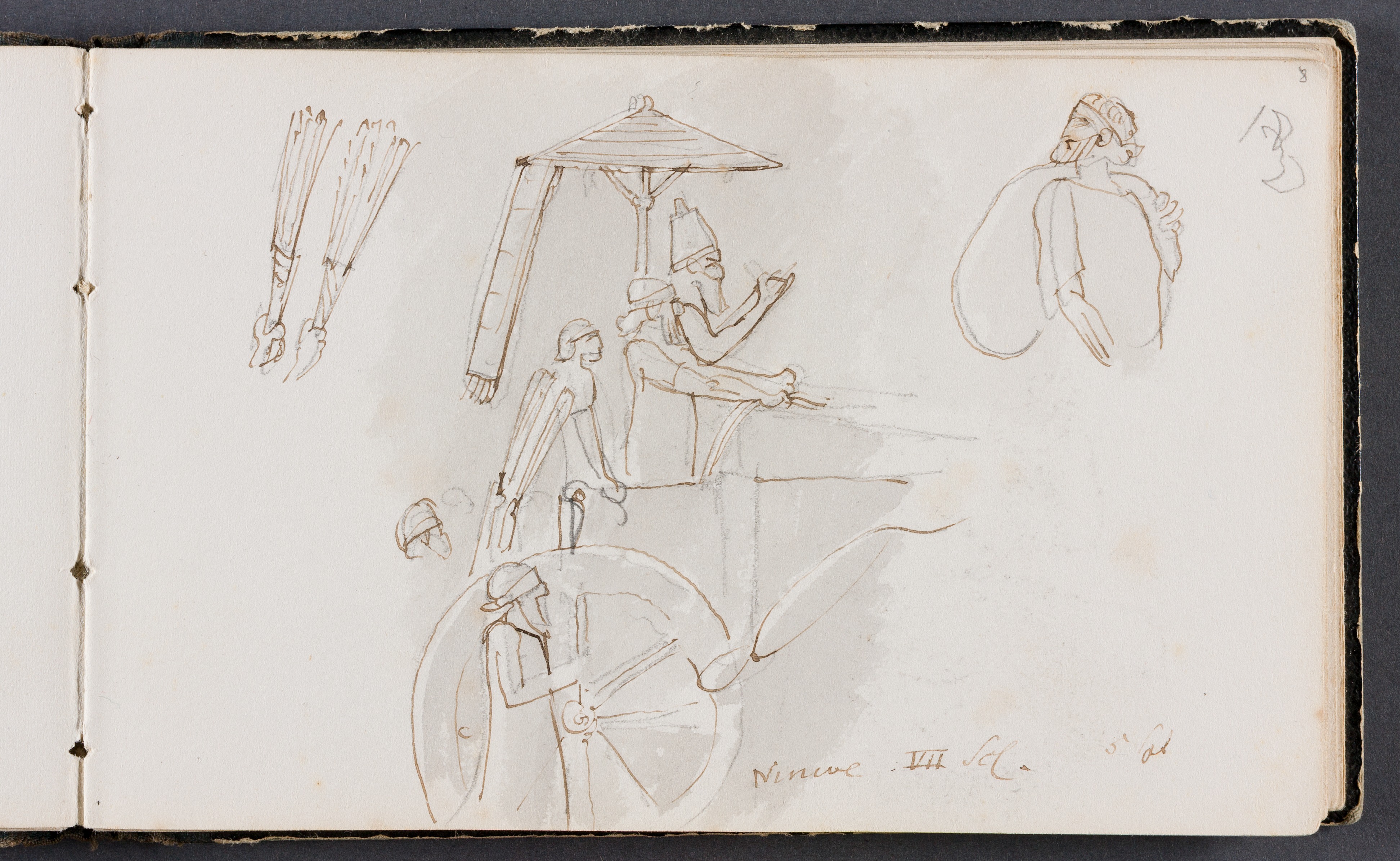
Pen and pencil sketch in a small bound sketchbook, page numbered 13 with a handwritten label reading Ninive. It depicts a bearded figure under a parasol-like canopy in a chariot, with a standing attendant and a wheel, plus studies of a sleeve-like fringe, a head, and a seated figure at upper right.Painting

Secondary source

Relief of Ashurbanipal on His Chariot with Retinue, Study Sketches

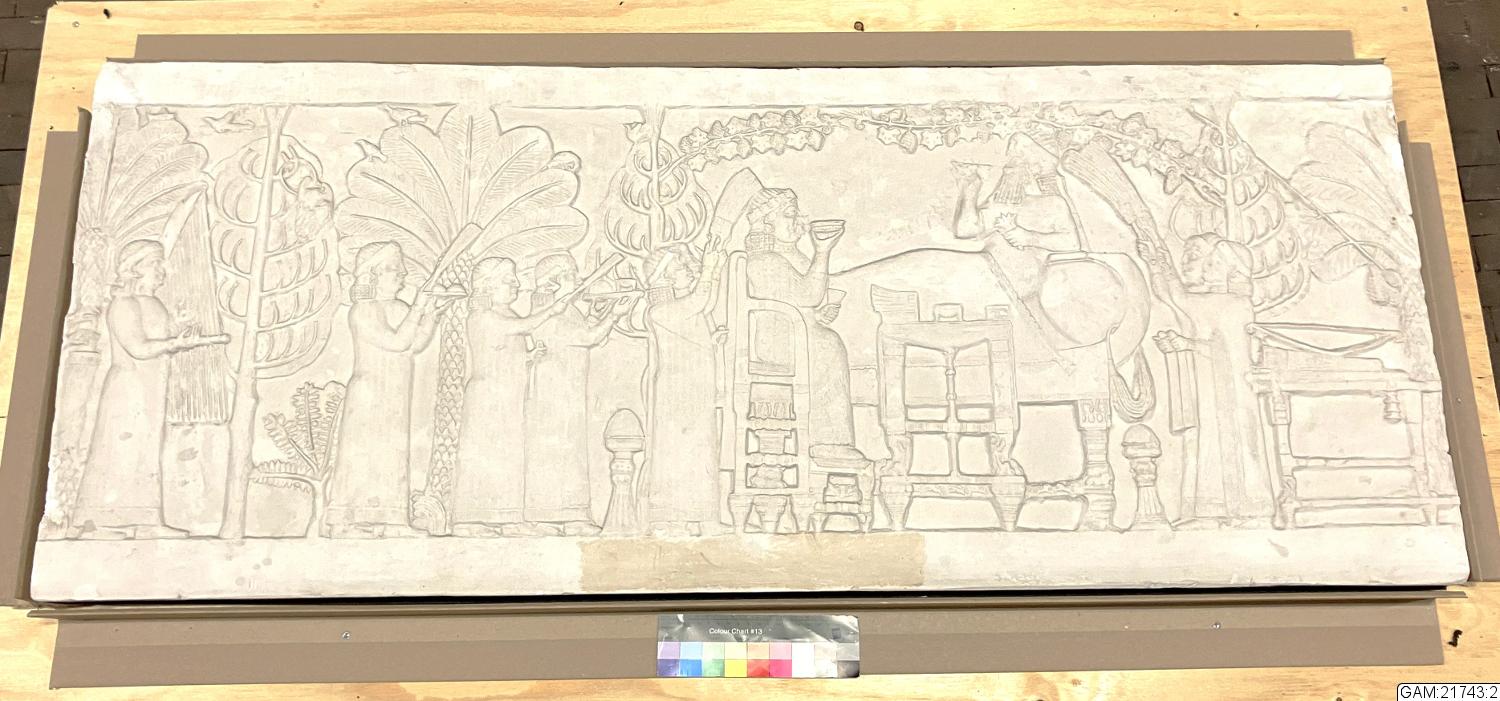
Photograph of a pale plaster cast of an Assyrian relief on a wooden board. Figures in long robes stand among stylized trees; a king reclines on a couch holding a cup while a bearded attendant and winged figures appear. A colour chart sits below.Sculpture

Secondary source

Plaster Cast of Relief Showing Ashurbanipal Reclining

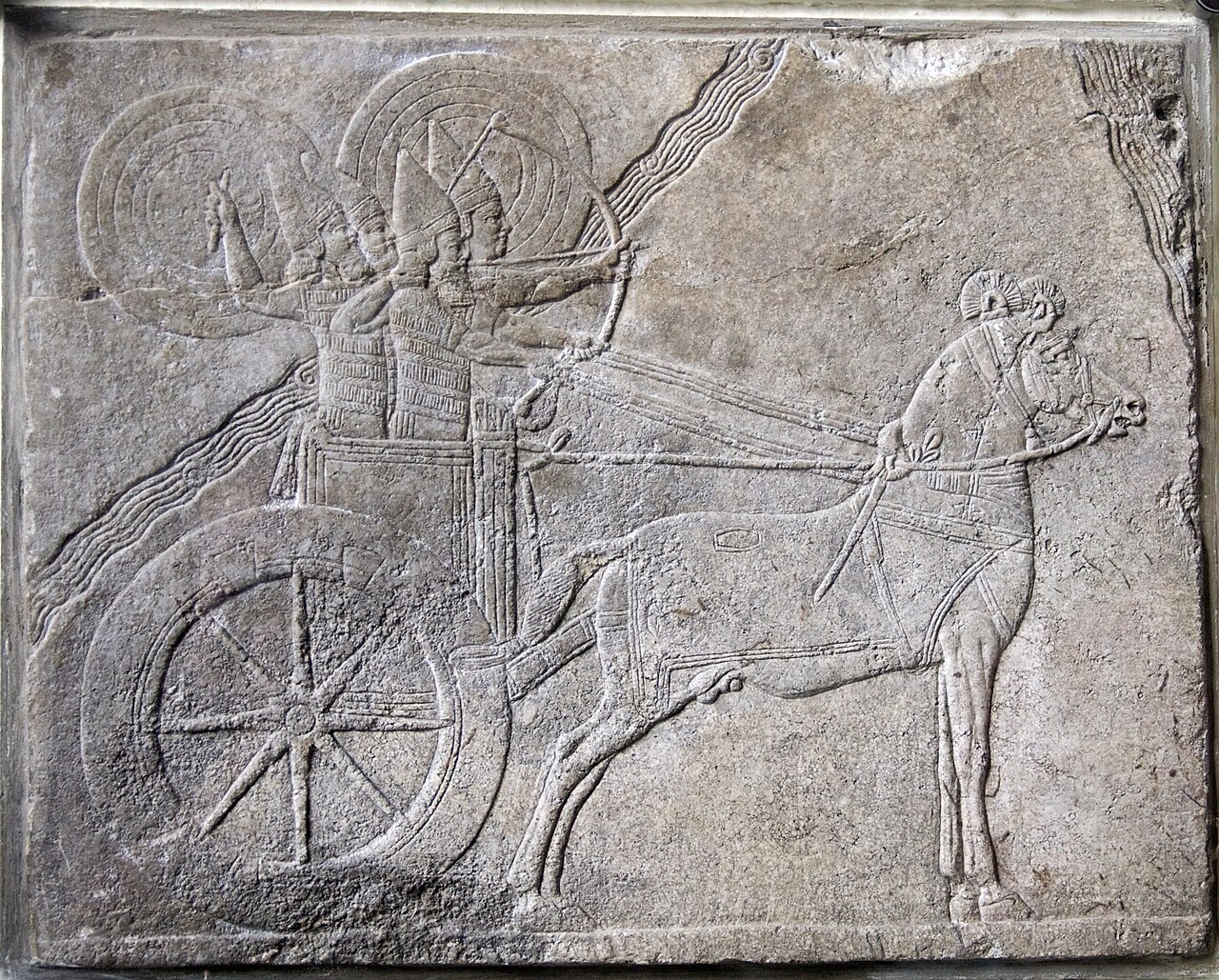
Carved stone relief showing an Assyrian chariot with two archers in the chariot, one drawing a bow, pulled by two horses with a driver; a figure with a shield and a second figure at the upper left, with a spoked wheel at lower left, in a relief panel.Artifact

Secondary source

Assyrian Relief of Ashurbanipal's Campaign Against Hamanu

c. 650 BCE

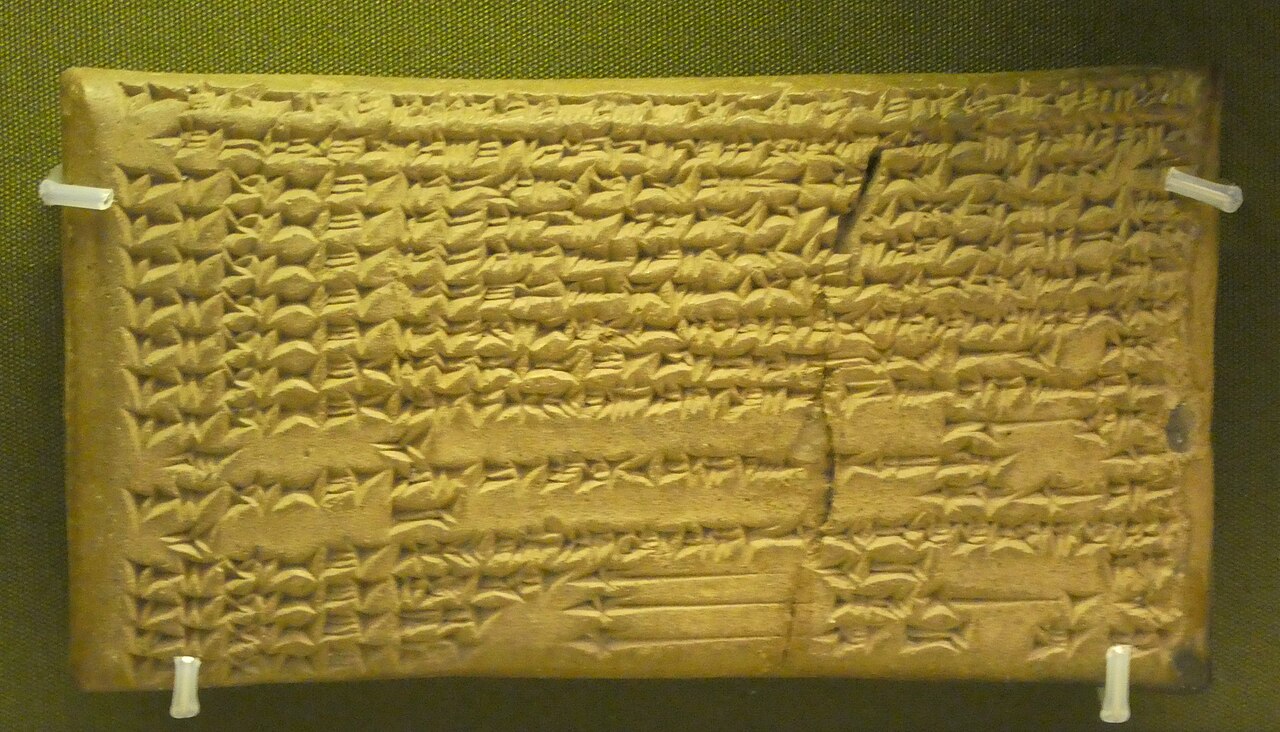
Photograph of a rectangular clay cuneiform tablet with dense rows of wedge-shaped script covering its face, with a visible crack running down the middle, displayed on small white supports against a dark green background.Document

Primary source

Shumma Alu Divinatory Tablet from the Library of Ashurbanipal

7th century BCE

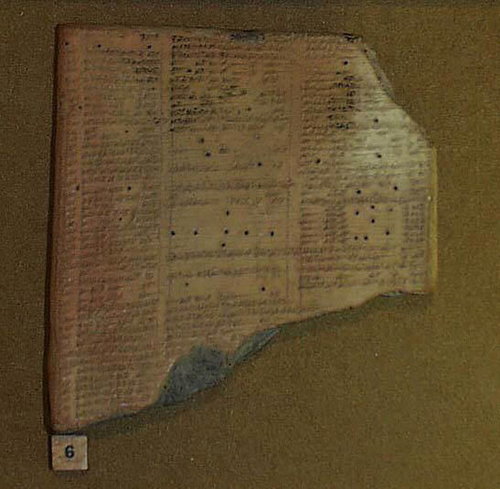
Photograph of a broken, irregularly shaped clay tablet displayed against a dark brown background, with a small numbered label '6' at its lower left. Its surface is covered in small cuneiform script arranged in columns and ruled sections, with a few dot-like marks; the lower edge is chipped and a bluish-grey patch appears at the bottom.Document

Primary source

Celestial Omen Tablet from Ashurbanipal's Library at Nineveh

669-627 BCE

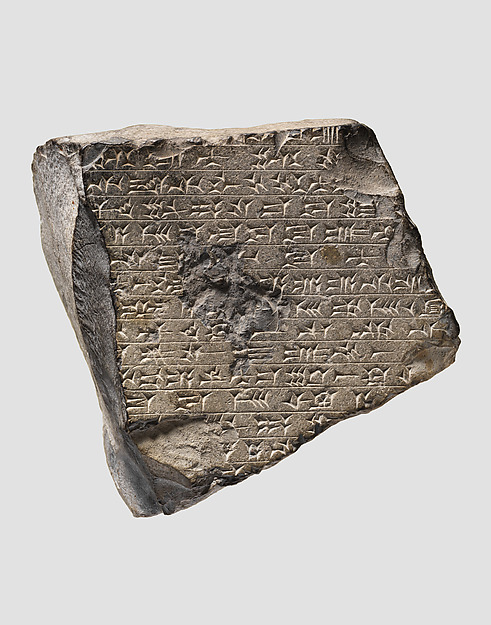
Photograph of an irregular grey stone slab fragment, angled diagonally on a light background. Its face is covered in rows of cuneiform wedge-shaped signs incised in horizontal lines; the edges are broken and uneven.Document

Primary source

Stone Slab Fragment from the Annals of Ashurbanipal

ca. 668–627 BCE

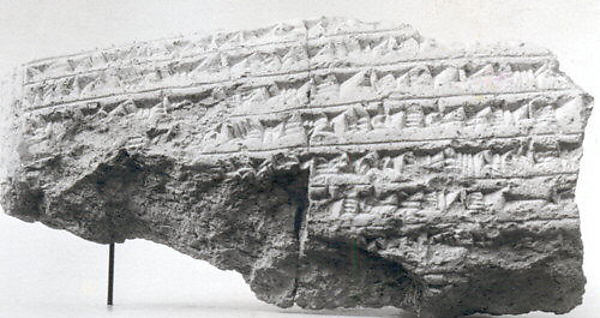
Black-and-white photograph of a broken clay object with rows of cuneiform wedge-shaped writing incised across its surface, resting on a pale background with a metal support rod beneath it.Document

Primary source

Clay Cylinder Recording Ashurbanipal's Restorations at Borsippa

ca. 668–627 BCE

Records of the Past, vol. 2Book

Secondary source

Records of the Past, vol. 2

Various · 1873

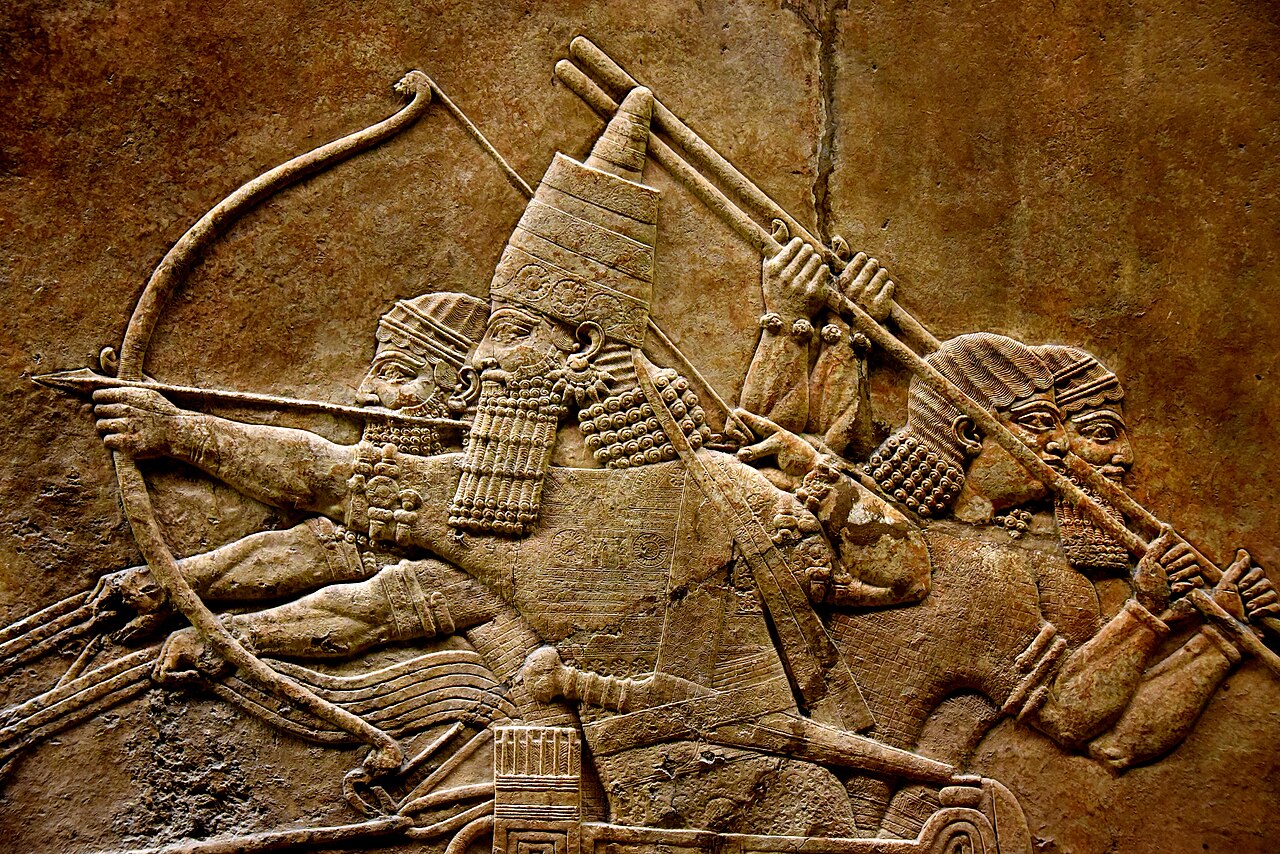
Detail of an Assyrian alabaster relief showing a king in a tall conical headdress and beard, drawing a bow from a chariot, with an attendant behind him holding reins and a shield bearer at right. Carved in low relief.Sculpture

Primary source

Ashurbanipal in a Chariot, Lion-Hunt Relief Detail

7th century BC

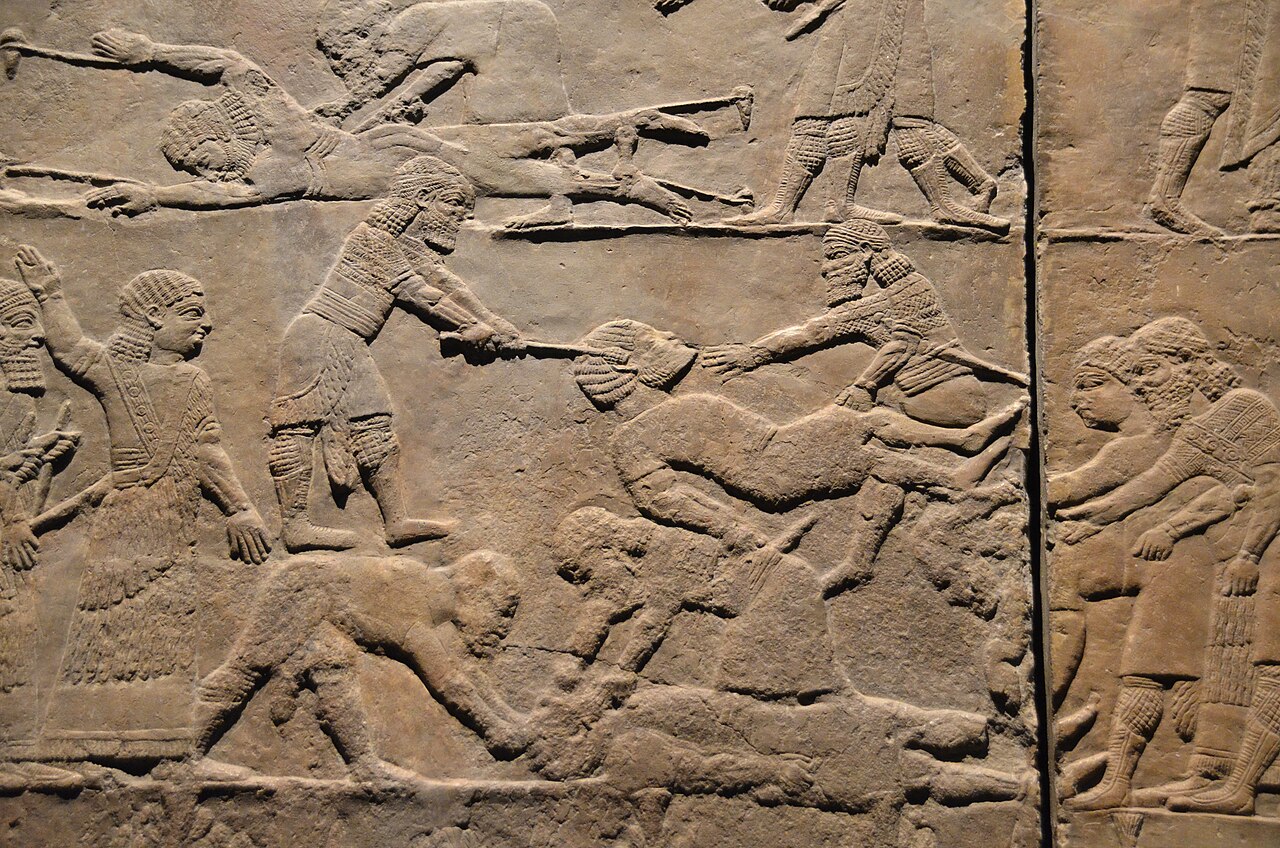
Carved stone relief from an Assyrian palace showing a violent scene. Figures with beards and headbands grip and strike captives, some lying on the ground; one captive is being pulled by the head. Carved stone detail, with a figure at the right edge.Sculpture

Primary source

Tongue Extraction and Flaying Relief

Cuneiform signs in black on a pale background, four or five wedge-shaped groups written in a horizontal row, forming the name Meluhha as recorded in the Rassam cylinder.Document

Secondary source

Meluhha passage of the Rassam cylinder

Theophilus Goldridge Pinches · 643 BCE

Book

Secondary source

The Chaldean Account of Genesis, Chapter 2 on Ashurbanipal's library

George Smith · 1876

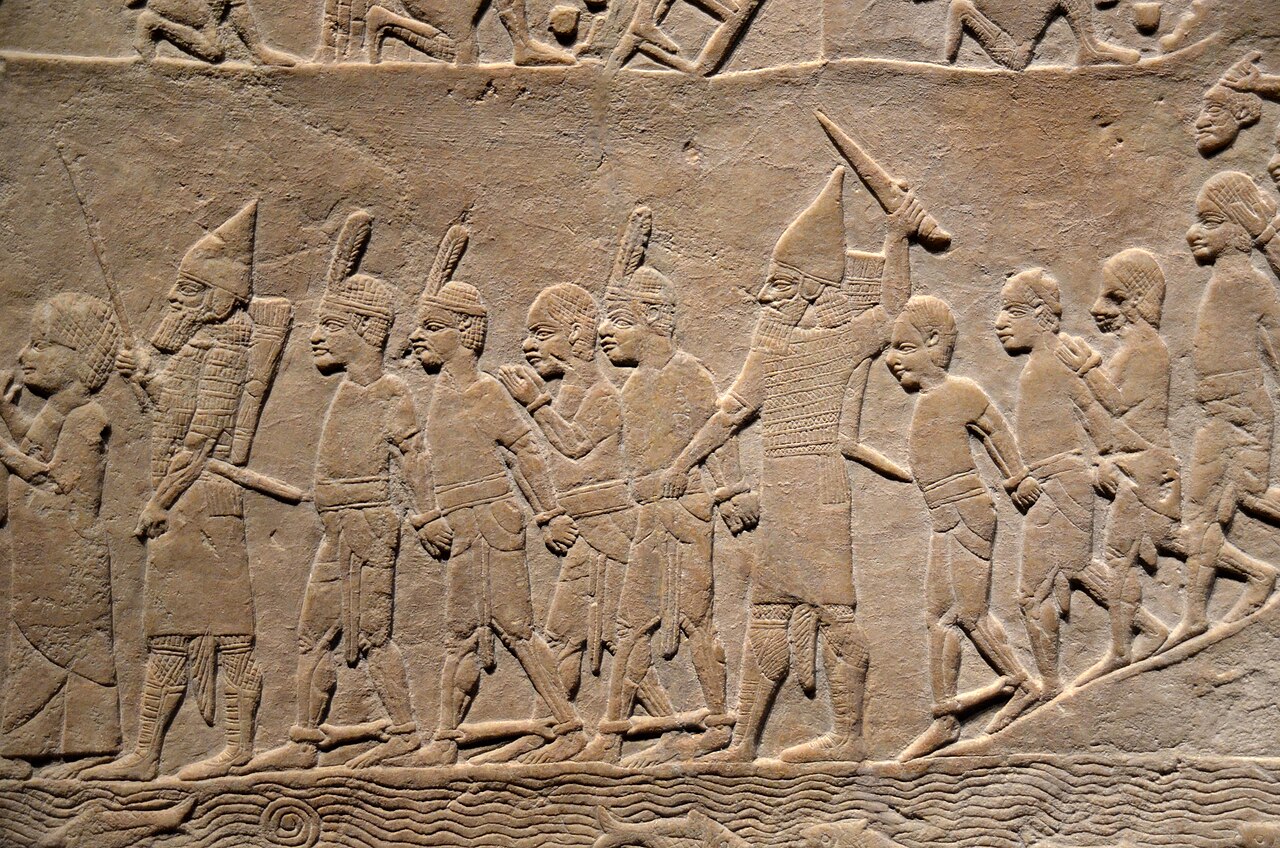
Carved relief panel of Assyrian captives in procession, displayed in a museum. Bearded men with tall pointed hats lead and are led by figures with bound or clasped hands; a sword-bearing official stands centre. Lower band shows wavy water-like pattern.Photograph

Secondary source

Exhibition 'I am Ashurbanipal, King of the World', British Museum (photo)

Carole Raddato · 18 November 2018

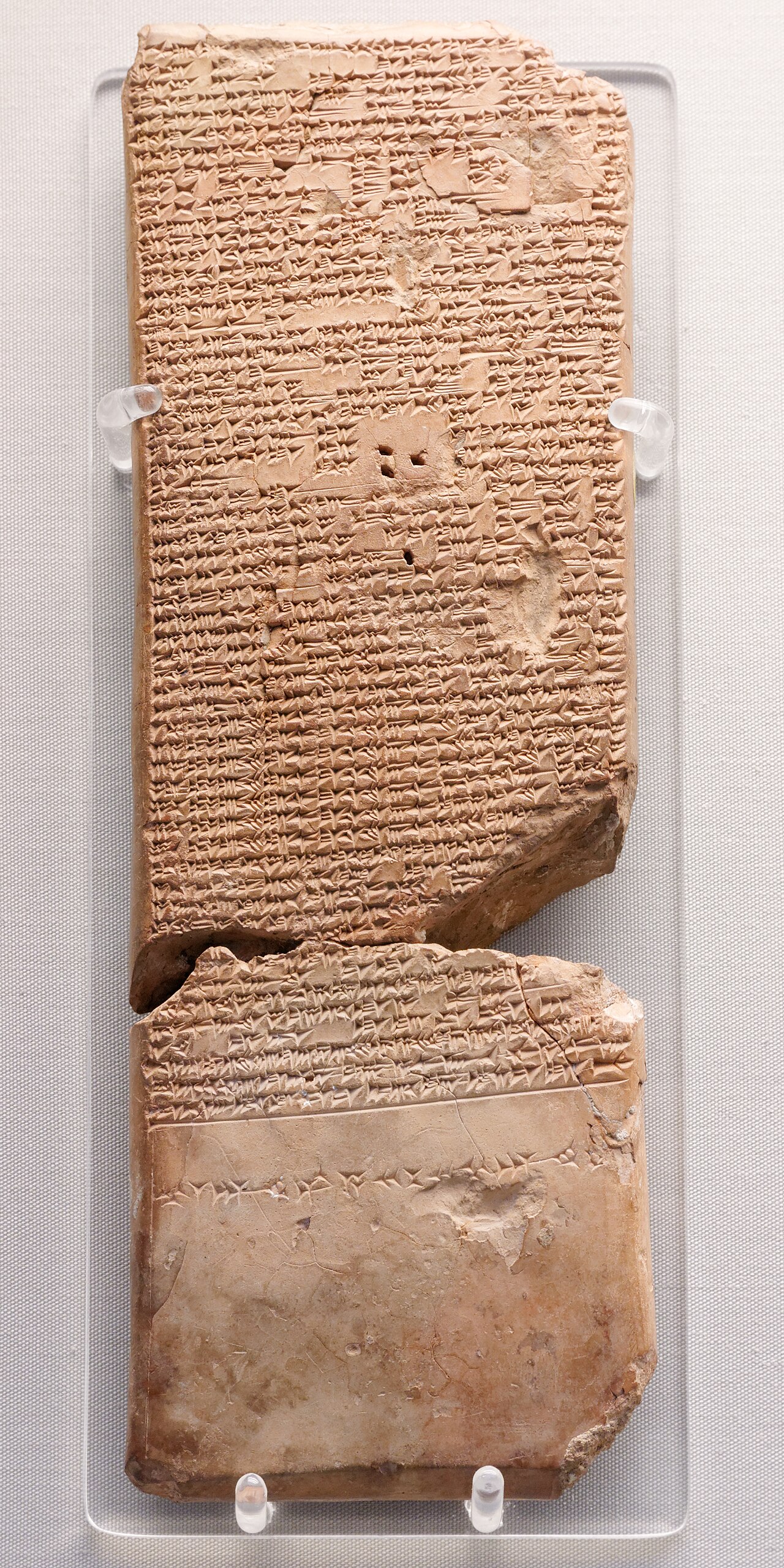
Photo of a large cuneiform clay tablet, broken into an upper and lower piece, displayed on a clear acrylic stand against a grey background. The upper section is densely covered in wedge-shaped script; the lower piece has a ruled line and fewer marks.Book

Primary source

Ishtar's Descent to the Underworld tablet

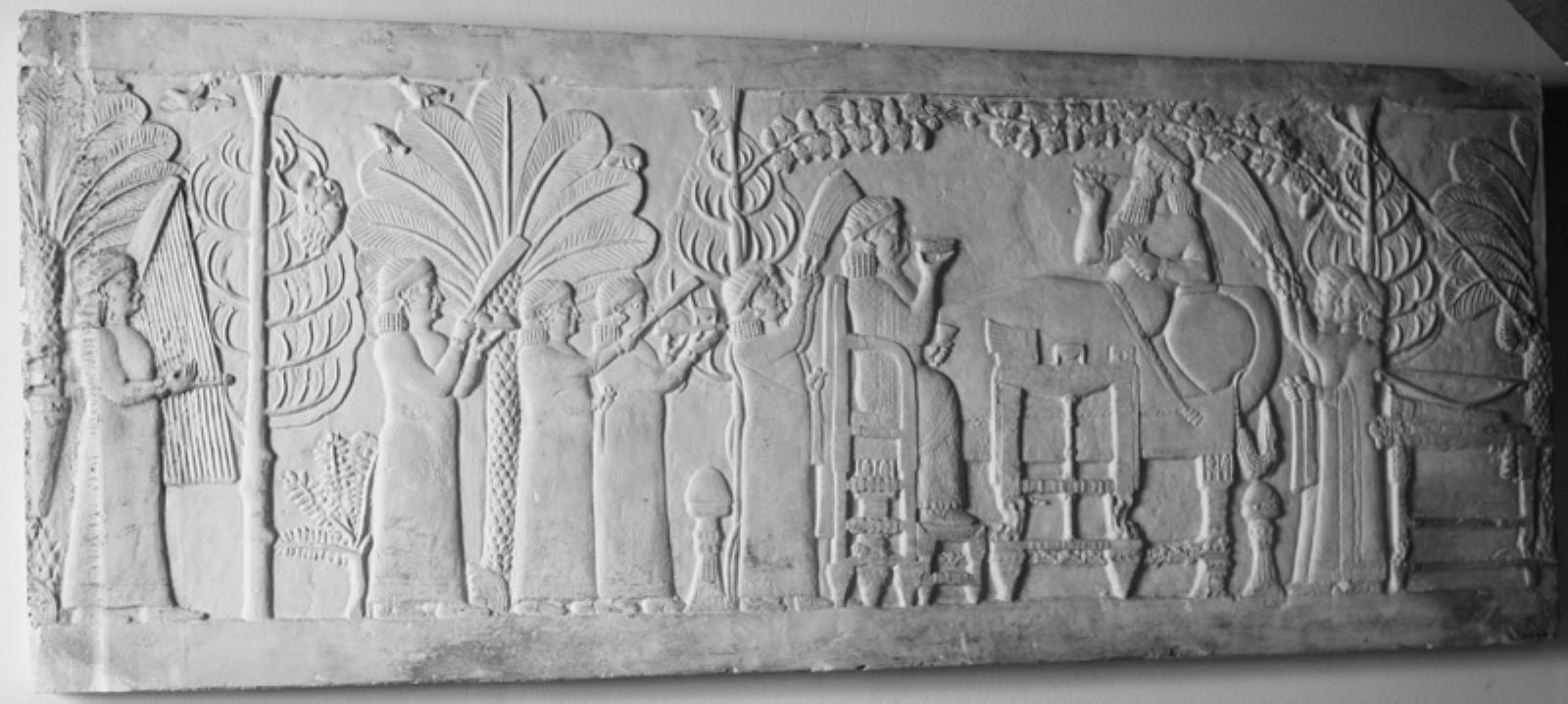
Black-and-white photograph of a long plaster cast relief panel showing an Assyrian garden scene. A figure with a harp stands at left beside a tall stylized tree. Attendants in fringed robes and headdresses stand among palm-like trees. At right, a seated king holds a cup beside a small table, and a queen sits on a stool facing him under a canopy of grape vines, with an attendant fanning behind.Sculpture

Secondary source

Cast relief of King Ashurbanipal and Queen with harp player

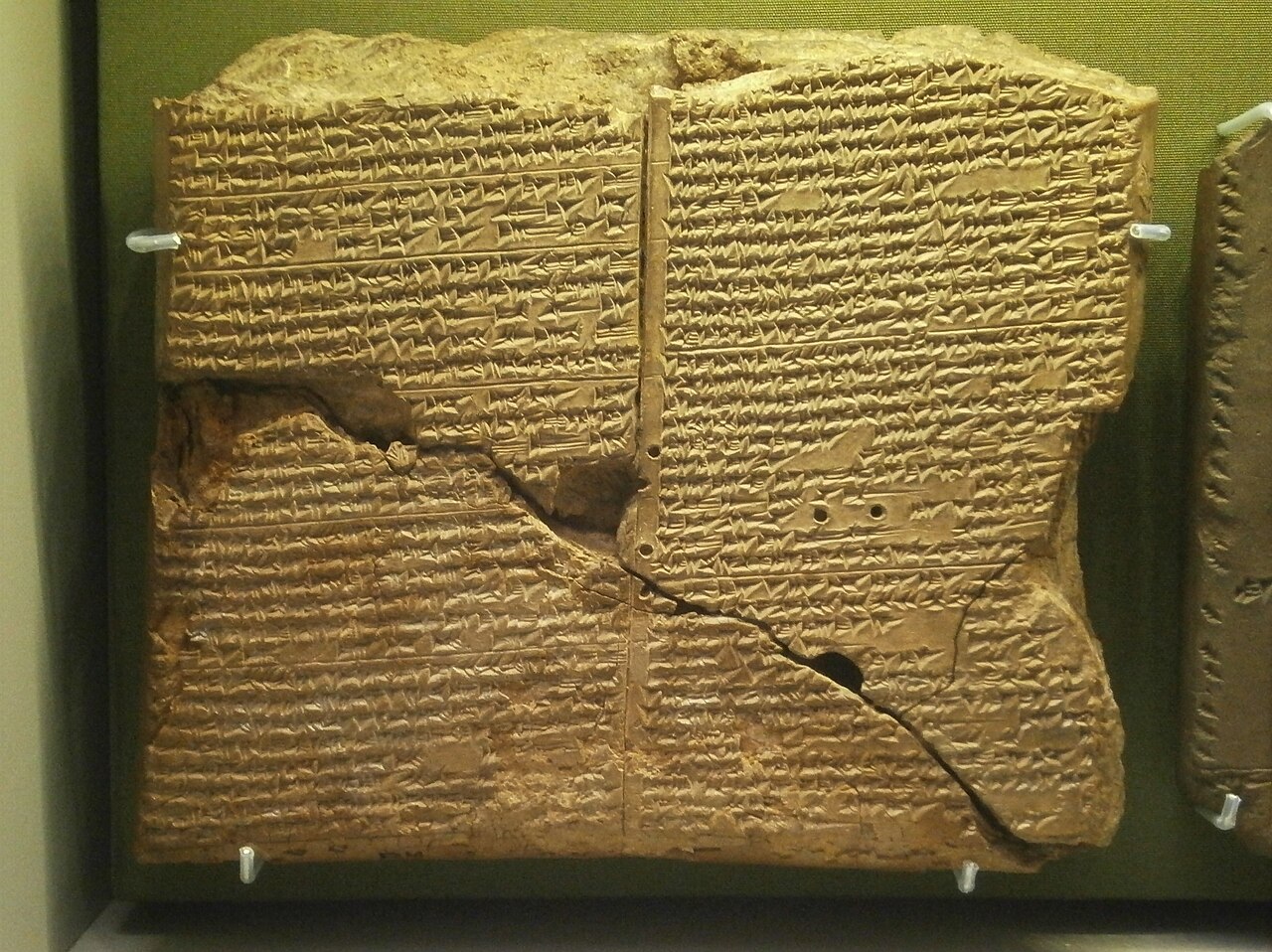
Photo of a large clay tablet fragment covered in cuneiform wedge-shaped script, displayed in a museum case against a green background. A cracked, broken edge runs across the tablet, and a smaller tablet partly visible at the right edge.Book

Primary source

Synchronistic History tablet K.4401

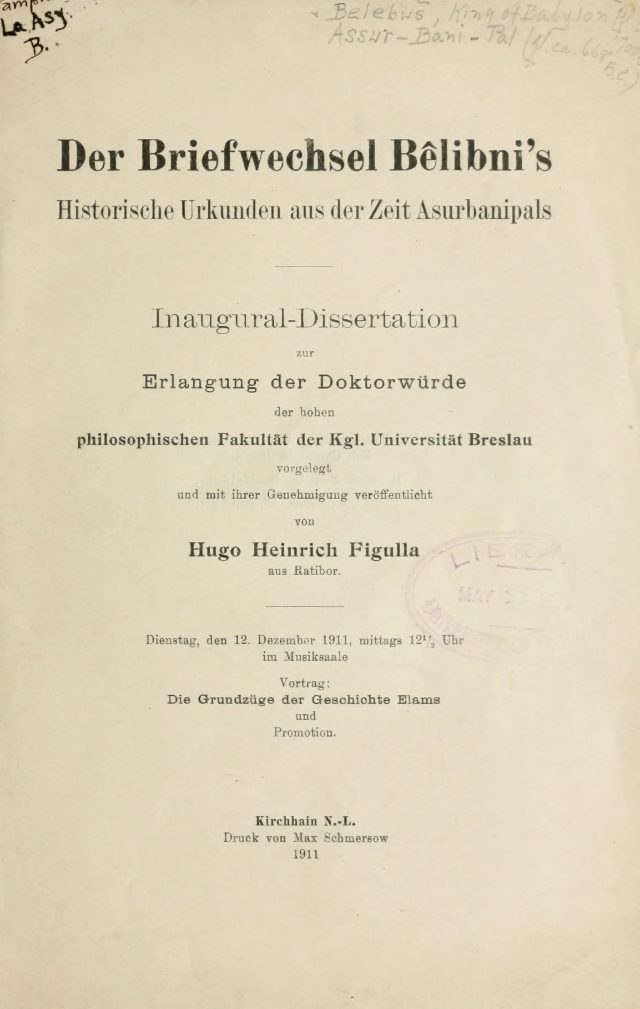
Der Briefwechsel Belibni's, historische Urkunden aus der Zeit AsurbanipalsBook

Secondary source

Der Briefwechsel Belibni's, historische Urkunden aus der Zeit Asurbanipals

Hugo Heinrich Figulla · 1911

Book

Secondary source

The Invention of Printing, Chapter 2

1876

Want the full shelf? Chat with Ashurbanipal in the app and open the Sources panel — every quote links back to the original.

Use Ashurbanipal in class

1 collection

A ready-made collection from the Humy team that features Ashurbanipal. Preview it, then try it free.

Trusted by educators worldwide

Conversations
375,000+
Real exchanges between students and historical figures
Messages exchanged
4,142,000+
Across every figure, classroom and language
Historical figures
100,000+
Each informed by a curated biography and selected sources
Languages supported
50+
From English and Spanish to Arabic and Korean

Paying customers

Used by 98 schools and universities

Partner school logo
Tecnológico de Monterrey logo
Hyper Island logo
Partner school logo
Chambersburg Area School District logo
Broward County Public Schools logo
Nebo School District logo
National Louis University logo
South Florida PBS logo
Punahou School logo
University of Wisconsin–River Falls logo
Partner school logo
Partner school logo
Archbishop Mitty High School logo
Kingsburg High School logo
Norwalk Public Schools logo
Partner school logo
Connections logo
Partner school logo
Moore Public Schools logo
Partner school logo
Partner school logo
Partner school logo
Partner school logo
Robbinsville Public Schools logo
Partner school logo
Partner school logo
Partner school logo
Tecnológico de Monterrey logo
Hyper Island logo
Partner school logo
Chambersburg Area School District logo
Broward County Public Schools logo
Nebo School District logo
National Louis University logo
South Florida PBS logo
Punahou School logo
University of Wisconsin–River Falls logo
Partner school logo
Partner school logo
Archbishop Mitty High School logo
Kingsburg High School logo
Norwalk Public Schools logo
Partner school logo
Connections logo
Partner school logo
Moore Public Schools logo
Partner school logo
Partner school logo
Partner school logo
Partner school logo
Robbinsville Public Schools logo
Partner school logo
Partner school logo

What educators are saying

“We enjoyed the program last year and used it frequently.”
“My students say it’s a welcome change of pace. I’m not a fan of the “sage on the stage” model, so I try to incorporate research-oriented and self-paced activities. With Humy, students have to take charge of their learning. They’ve become more adept at critical thinking, forming better questions, and improving their reading comprehension. The interview feature has been my go-to tool. I create assignments where students must ask historical figures a set number of questions, then summarize the responses to ensure they’re truly absorbing the material. This approach lets them actively explore the past rather than passively consuming information.”
“Humy has helped me bring historical figures, sometimes long past, to life. When my students interact with these figures in real-time, it eliminates some of the perceived “ancient” characteristics of my curriculum. This has shifted my students’ thinking away from viewing history as abstract or irrelevant. Real-time interactions make historical figures relatable, even allowing students to ask off-topic questions that help put historical lives in a more relevant context for 13-year-olds. The feature I use the most is the interview feature. After teaching a topic, most recently Gandhi and Joan of Arc, I have the students ask pointed, focused questions. We practice good conversation techniques beforehand, teaching them to listen (or read) carefully and formulate thoughtful follow-up questions rather than just interrogating. It helps students practice effective conversation skills.”

FAQ

Frequently asked questions

Who is Ashurbanipal?
Assyrian king and renowned scholar, known for his extensive library. On Humy.ai you can chat with an AI version of Ashurbanipal that draws on a short biography and 80 historical sources during the conversation — by text or voice, in 42 languages.
Is Ashurbanipal AI free?
Ashurbanipal is part of Humy's full library of more than 100,000 figures, which comes with a paid plan. A free account (no credit card) includes 20 messages a month with the free library's figures, so you can try how the conversations work first.
What sources does the Ashurbanipal AI use?
It draws on a short biography and 80 historical sources (sculptures, documents and books), including “Baked Brick Naming King Ashurbanipal”, “Lion Hunt of Ashurbanipal” and “Rassam Prism of Ashurbanipal”. Each source has its own page on Humy.ai.
How historically accurate is the AI version of Ashurbanipal?
Each figure uses a short biography and a small set of selected historical sources as context (retrieval-augmented generation), so answers stay closer to known material than the model's general knowledge alone. It isn't a citation-grade research tool — like any LLM, the AI can get details wrong or extrapolate. Treat it as a strong starting point for inquiry and cross-reference important claims.
Can I talk to Ashurbanipal by voice?
Yes. In addition to text chat, you can call Ashurbanipal and hear their voice respond in real time — useful for auditory learners, interview practice and Socratic dialogue.
Is Humy.ai safe and compliant for schools?
Yes. Humy.ai is used by more than 100 schools, universities and organisations. The platform is FERPA- and GDPR-aligned, supports SSO, and offers an IT-approval pack tailored for school procurement teams.

Ready when you are

Start chatting with Ashurbanipal now.

20 messages free · No credit card · Available in 50+ languages.