


Primary sourceArtifactc. 645 BCE
North Palace of Nineveh
Ashurbanipal · c. 645 BCE
The palace Ashurbanipal built at Nineveh, decorated with his famous lion-hunt and campaign reliefs and the site where much of his library was found.
Ashurbanipal built this palace and decorated it with reliefs celebrating his hunts and campaigns; its library was his.
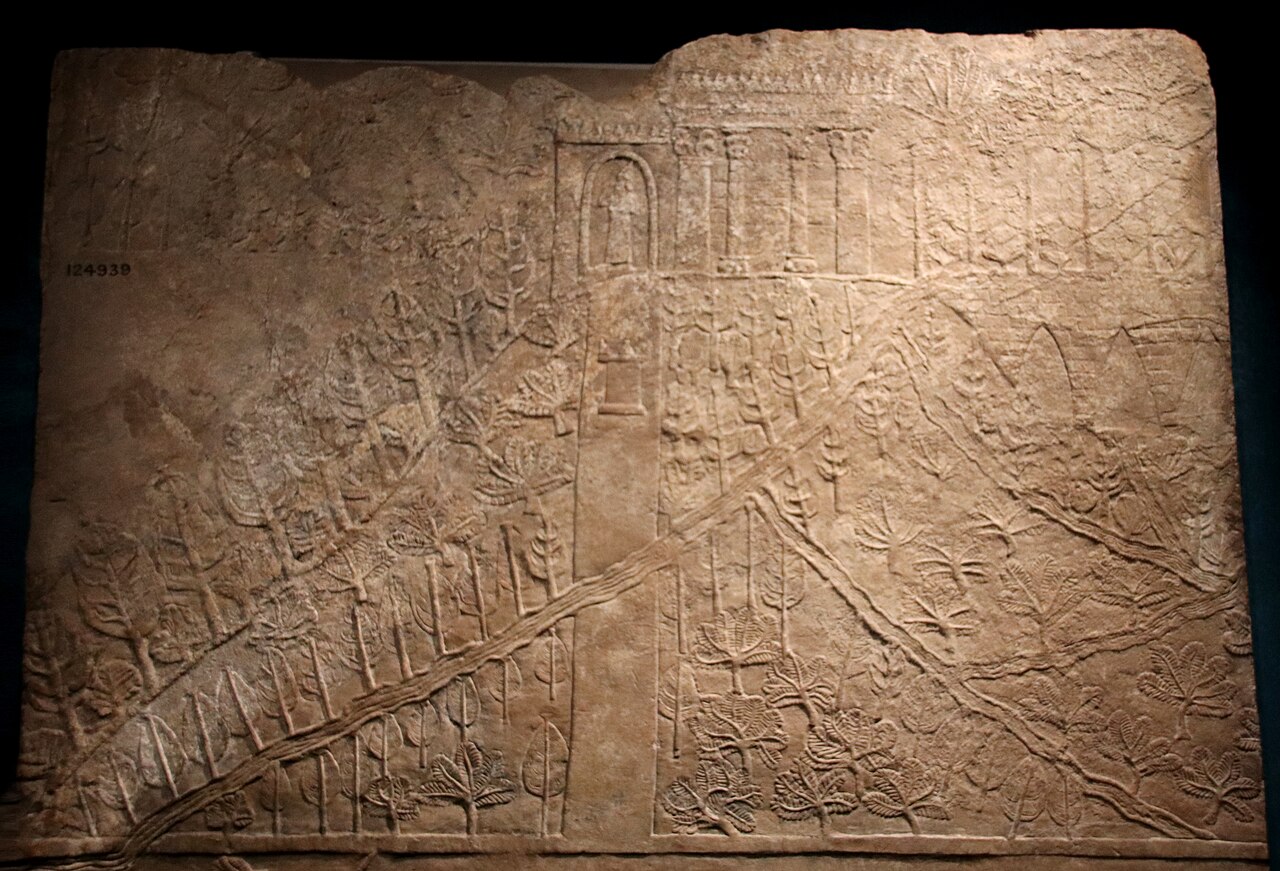
About this source
What it is
This is the North Palace at Nineveh, built by Ashurbanipal around 645 BCE, in what is now Mosul, Iraq. One surviving carved gypsum panel shows a garden landscape with trees, water channels, and a columned structure. The palace walls were covered in relief carvings, including scenes of lion hunts and military campaigns.
Why it matters
This palace was central to Ashurbanipal's self-image as a warrior and builder-king. Its excavation, carried out by Hormuzd Rassam, also uncovered much of the great library of cuneiform tablets that Ashurbanipal assembled, making the palace a key site for understanding both his rule and Mesopotamian scholarship.
Look closer
- Why would a king decorate his palace walls with hunting and war scenes rather than peaceful ones?
- What does the survival of a library alongside a palace suggest about what this king valued?
- This piece is now far from where it was carved — what does that tell you about how ancient artifacts travel and are displayed today?
This artifact is part of the curated material that grounds the AI version of Ashurbanipal on Humy.ai — when students ask about related events, the AI can quote it and cite it.
More Ashurbanipal sources
Meet the AI Ashurbanipal →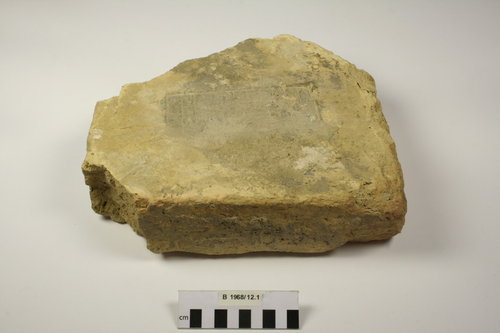 Artifact
Primary source
Baked Brick Naming King Ashurbanipal
7th century BCE
 Sculpture
Primary source
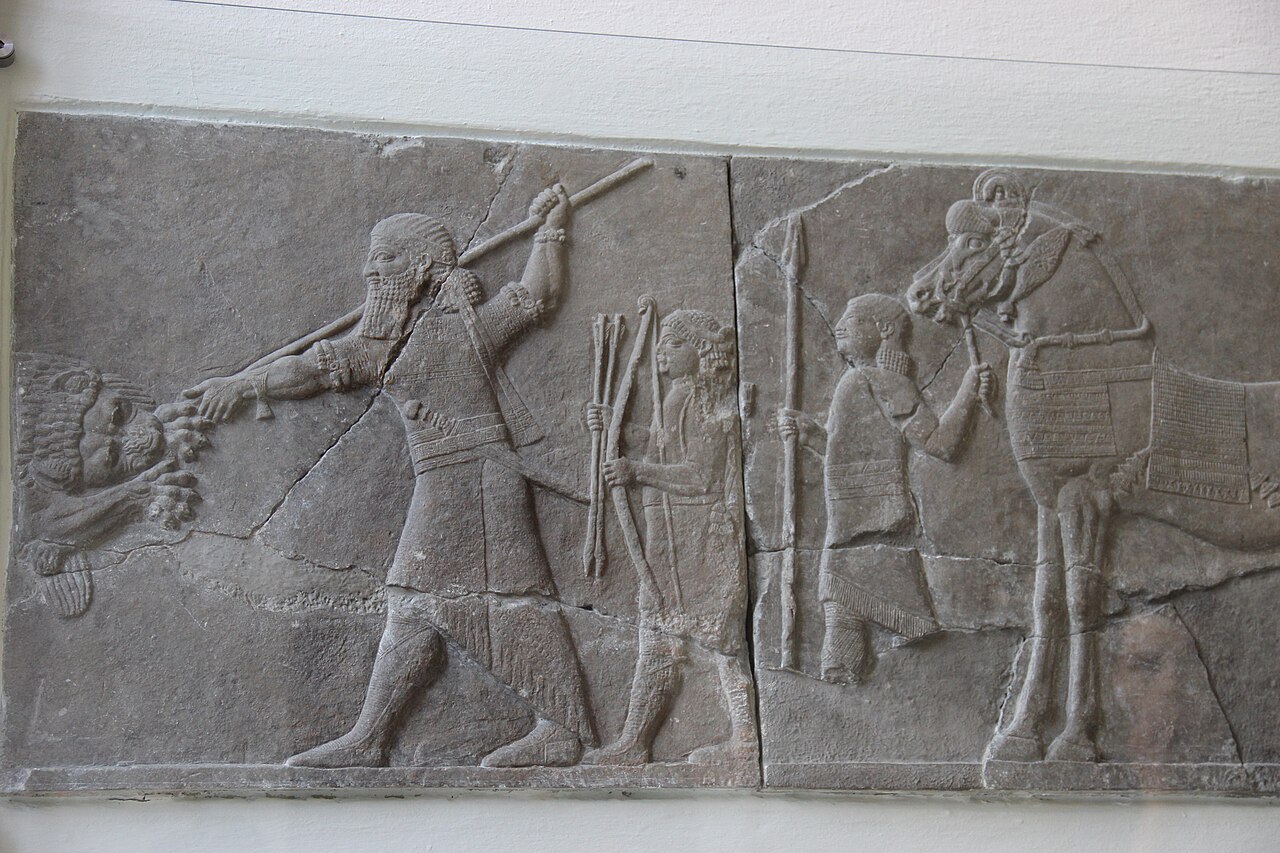
Lion Hunt of Ashurbanipal
Assyrian royal sculptors · c. 645–635 BCE
 Document
Primary source
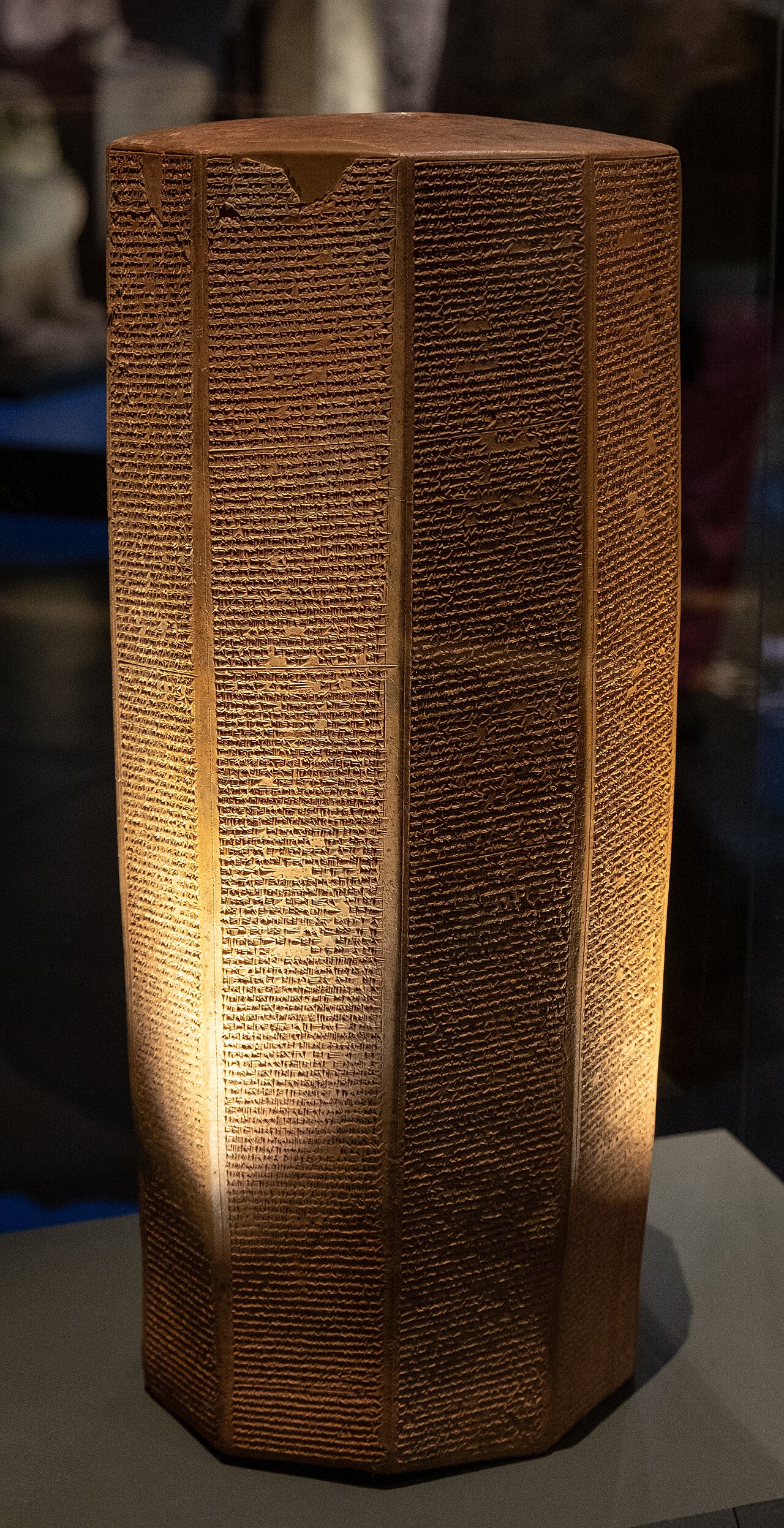
Rassam Prism of Ashurbanipal
643 BCE
 Painting
Secondary source
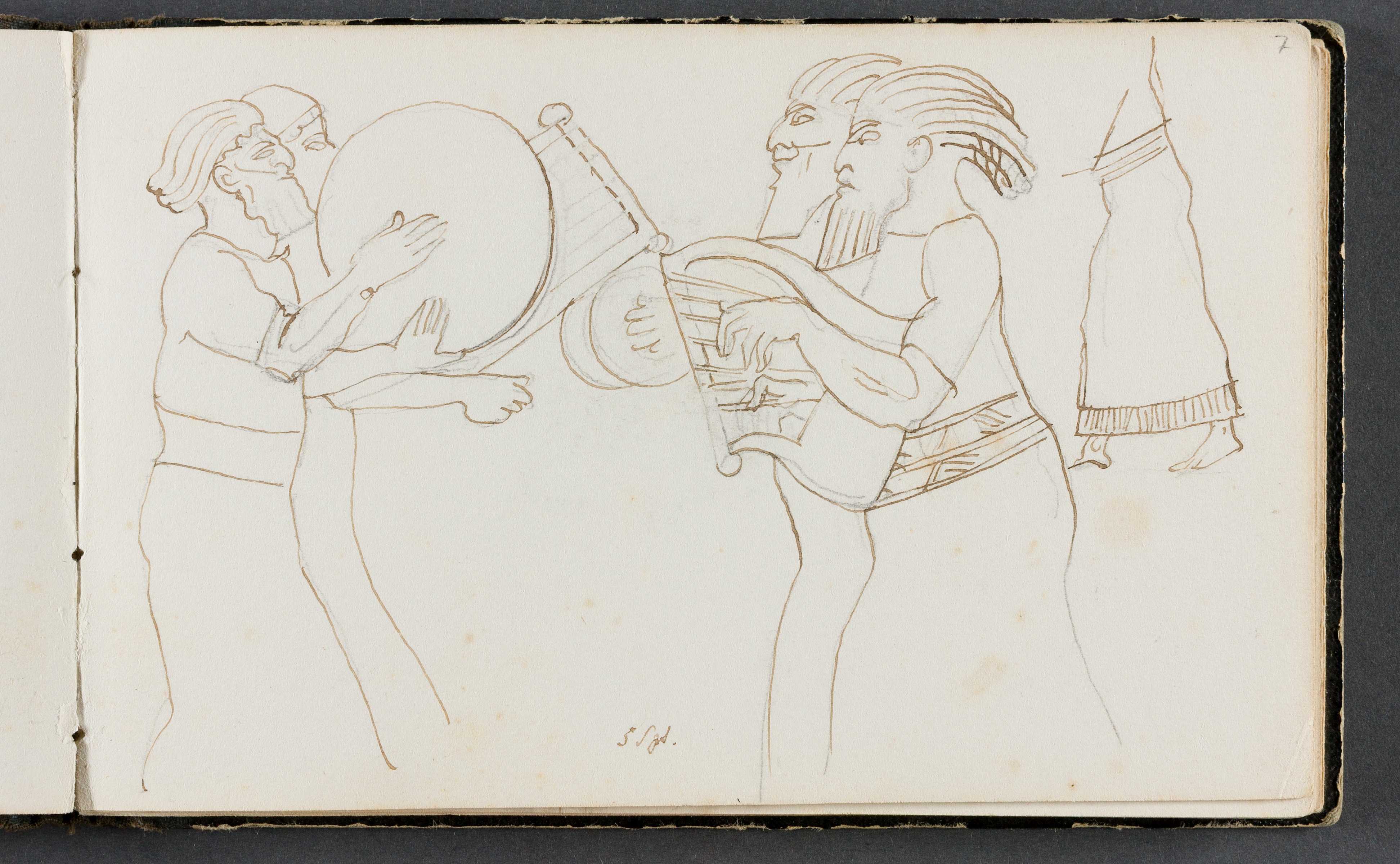
Relief with Musicians from the Palace of Ashurbanipal in Nineveh
 Document
Primary source
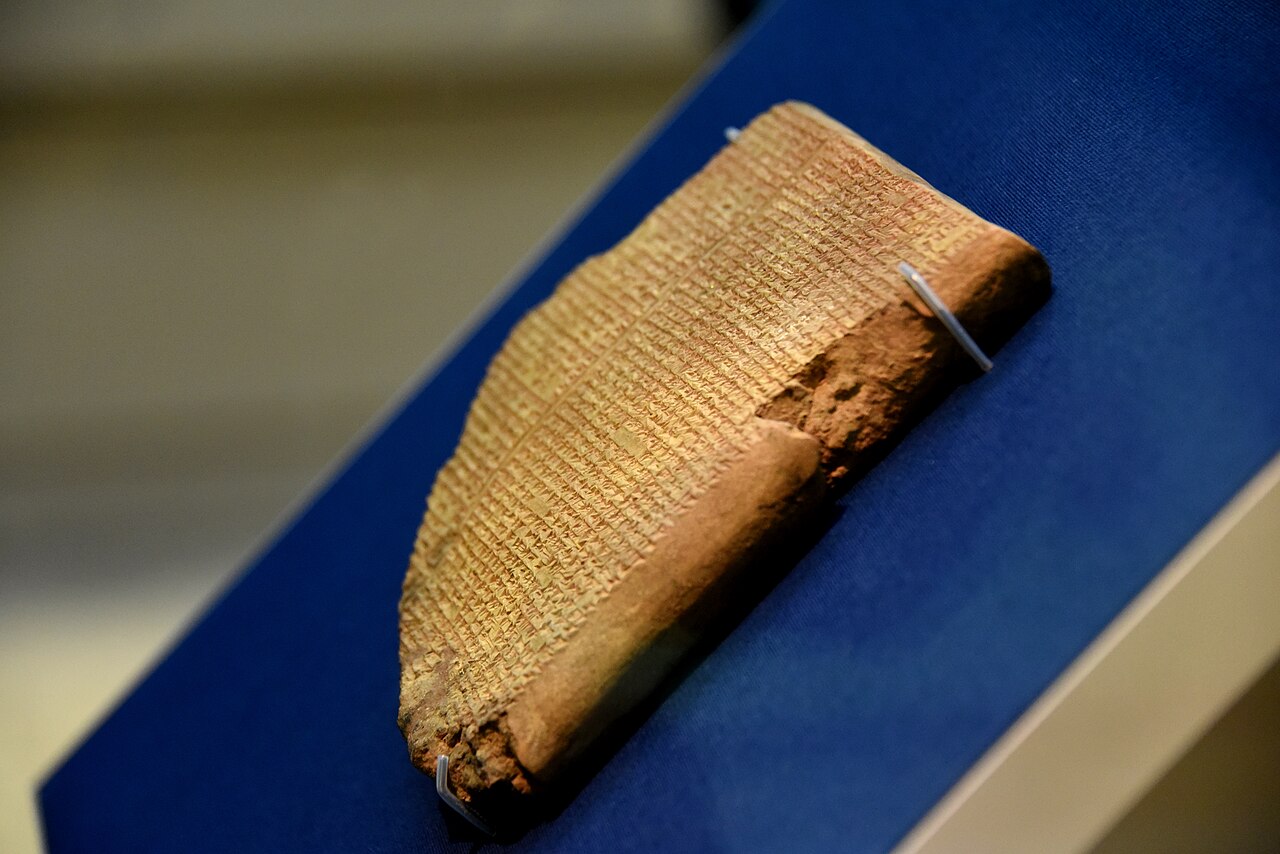
Flood Tablet
Scribes of Ashurbanipal's library · 7th century BCE
Ready when you are
Start chatting with Ashurbanipal now.
20 messages free · No credit card · Available in 50+ languages.