


Secondary sourceSculpturec. 19 BCE or later
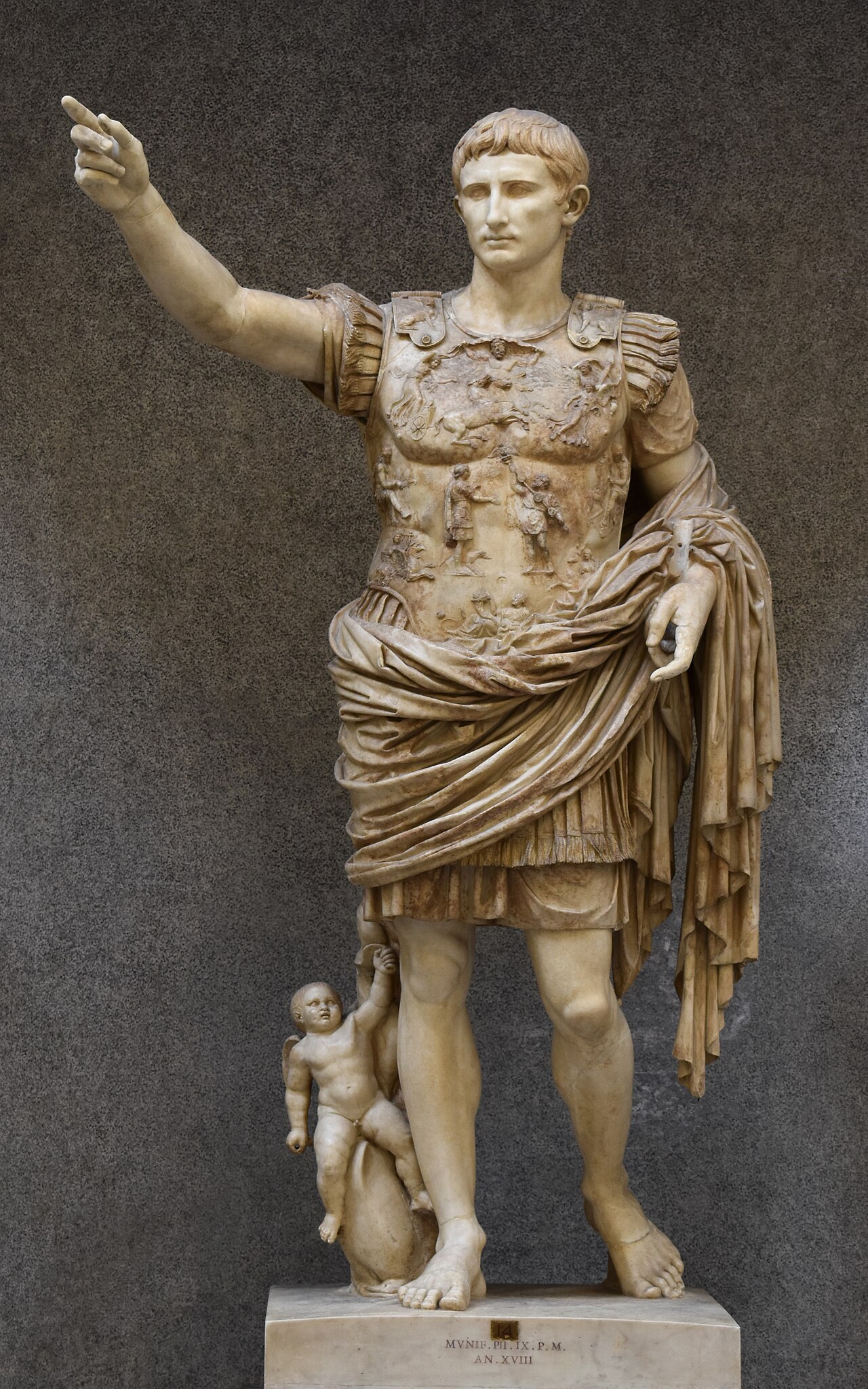
Augustus of Prima Porta
c. 19 BCE or later
A full-length marble portrait statue of Augustus as commander, found at his wife Livia's villa, showing him as both soldier and near-divine figure.
The best-known portrait statue of Augustus, blending realistic likeness with idealized, near-divine imagery of his rule.
About this source
What it is
This marble statue portrays Augustus standing in military dress, carved in the 1st century AD, likely copying a lost bronze original. It was found in 1863 at the Villa of Livia, Augustus's wife, at Prima Porta, and is now in the Vatican Museums.
Why it matters
The statue mixes realism and idealism: Augustus's face looks youthful and lifelike, but his pose borrows from Greek statues of heroes, and his bare feet signal divine status. The breastplate shows a Parthian returning captured Roman standards, turning a diplomatic success into a symbol of peace achieved through Augustus's leadership. It may have been commissioned by Tiberius or Livia after Augustus's death to link the new emperor's legitimacy to his memory.
Look closer
- Why show Augustus barefoot, and what does that suggest about how he wanted to be seen?
- What story does the breastplate tell, and why choose that scene instead of a battle?
- How does this image differ from what you know of Augustus as a real political ruler?
This sculpture is part of the curated material that grounds the AI version of Augustus and Virgil on Humy.ai — when students ask about related events, the AI can quote it and cite it.
More Augustus sources
Meet the AI Augustus →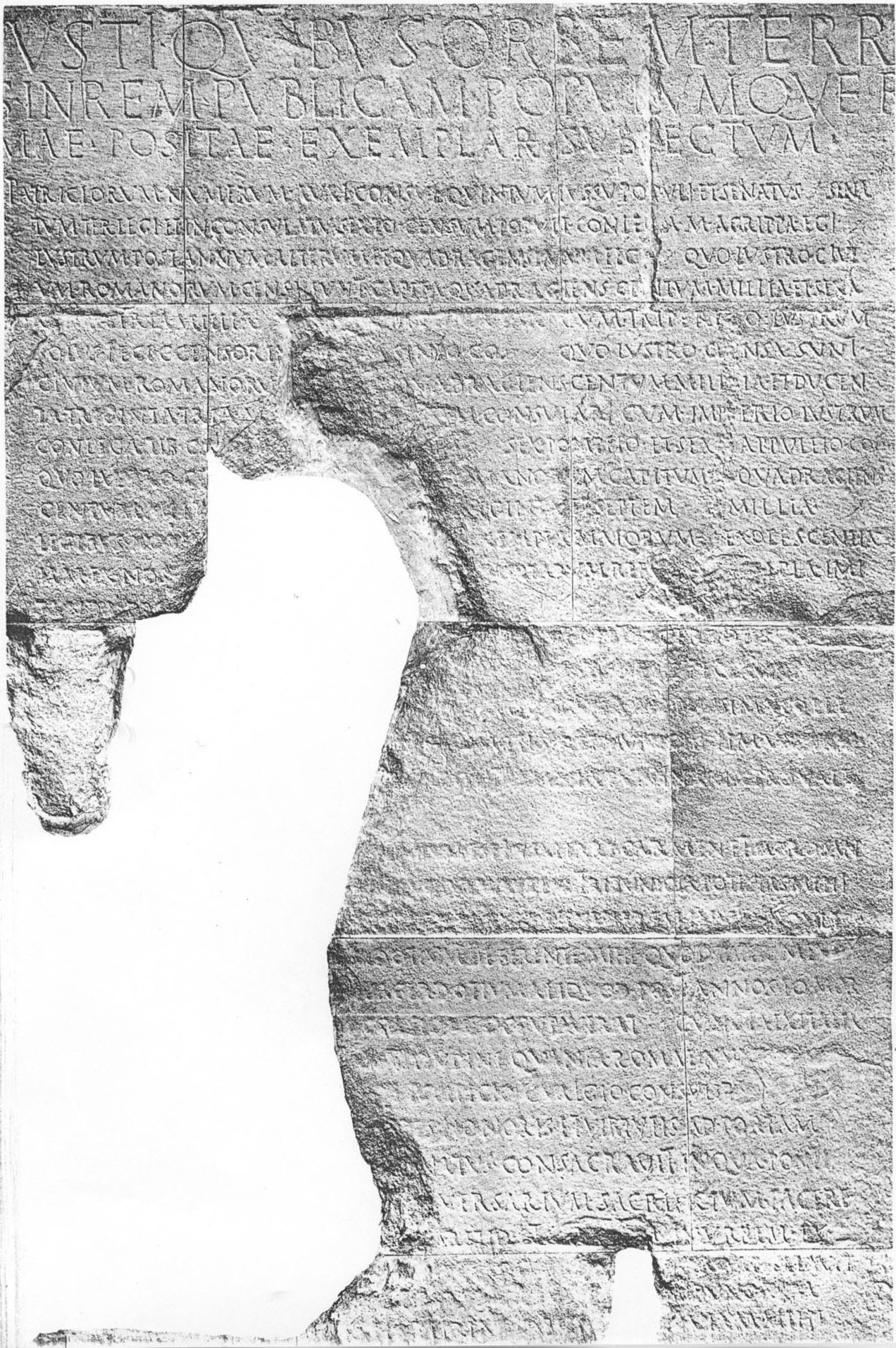 Document
Primary source
Res Gestae Divi Augusti
Augustus · 14 AD
 Painting
Secondary source
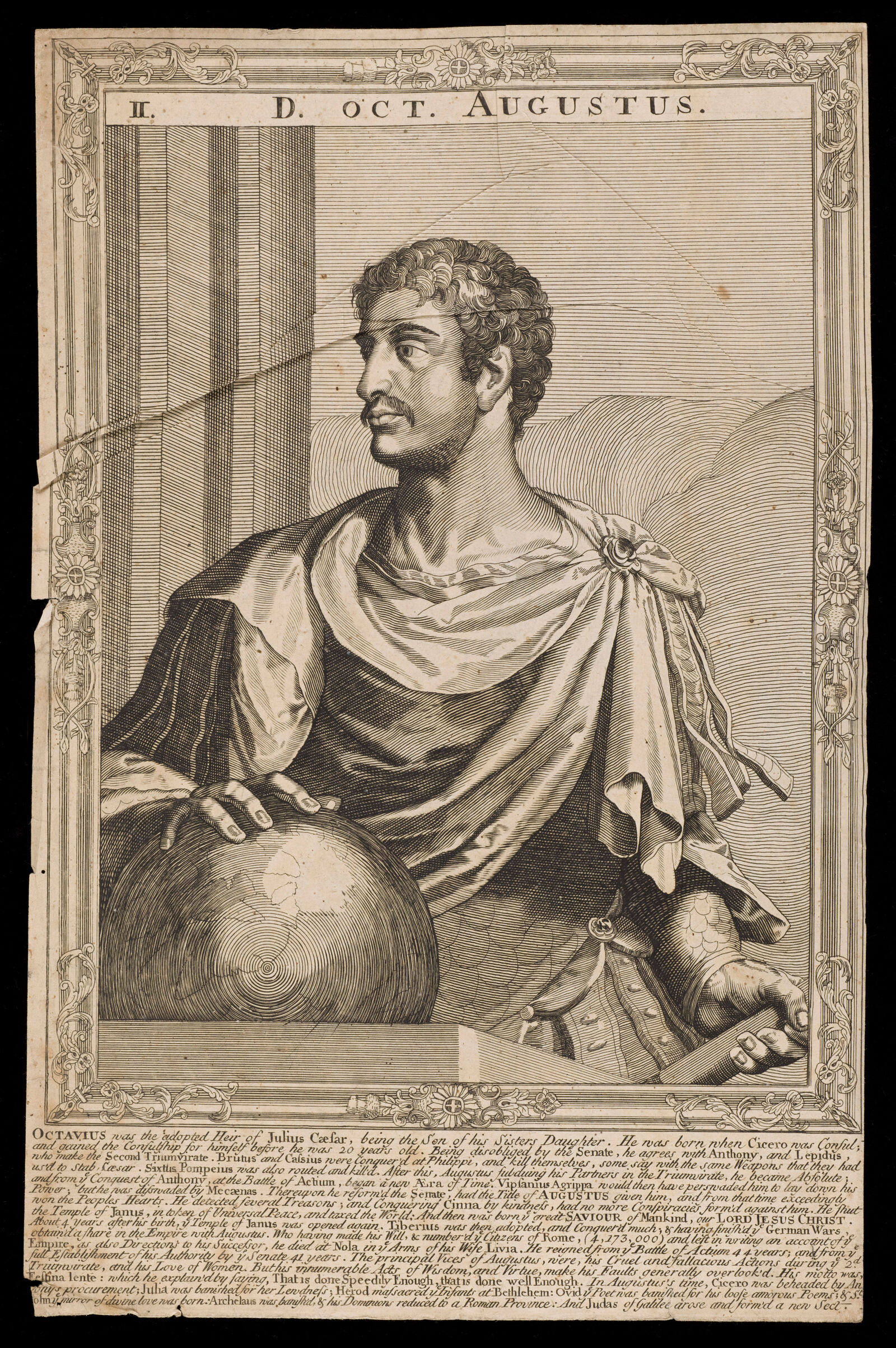
Emperor Augustus with Globe
After Titian (engraving by A. Sadeler, after Titian) · between 1700 and 1799 (possibly 17th century)
 Sculpture
Primary source
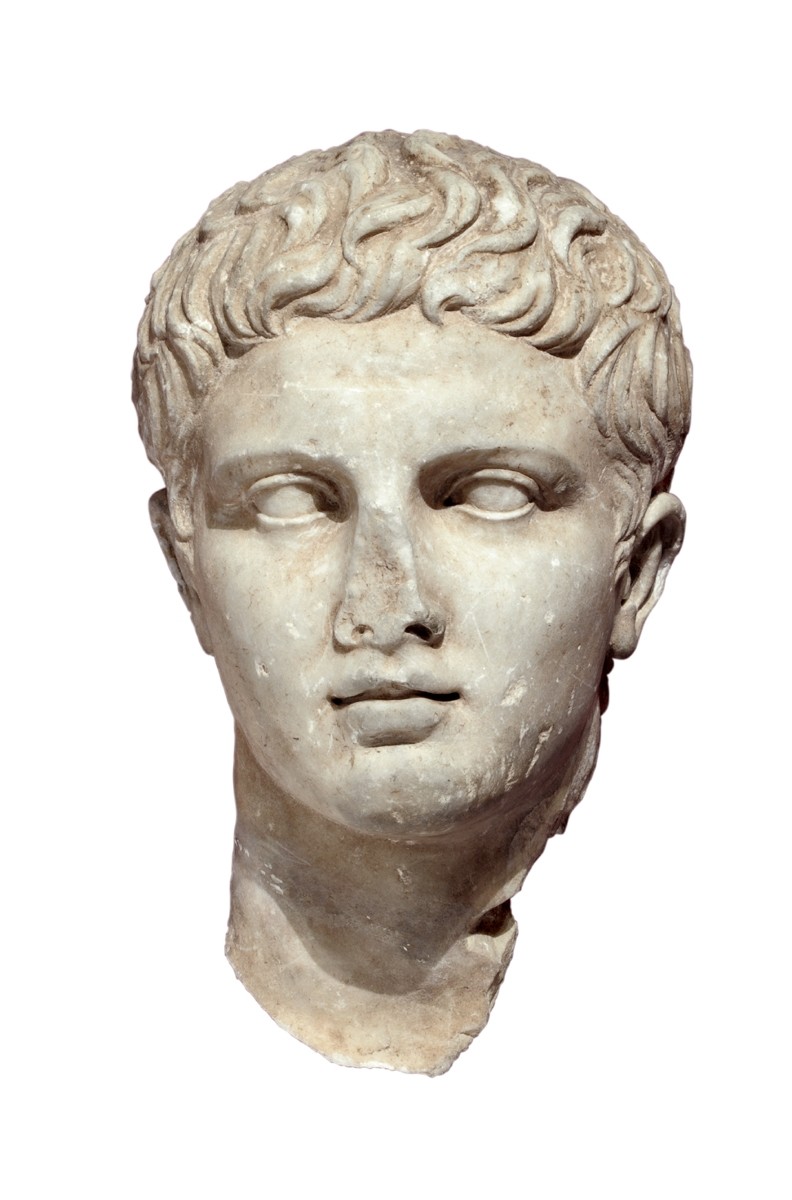
Relief Head of the Young Augustus
 Artifact
Primary source
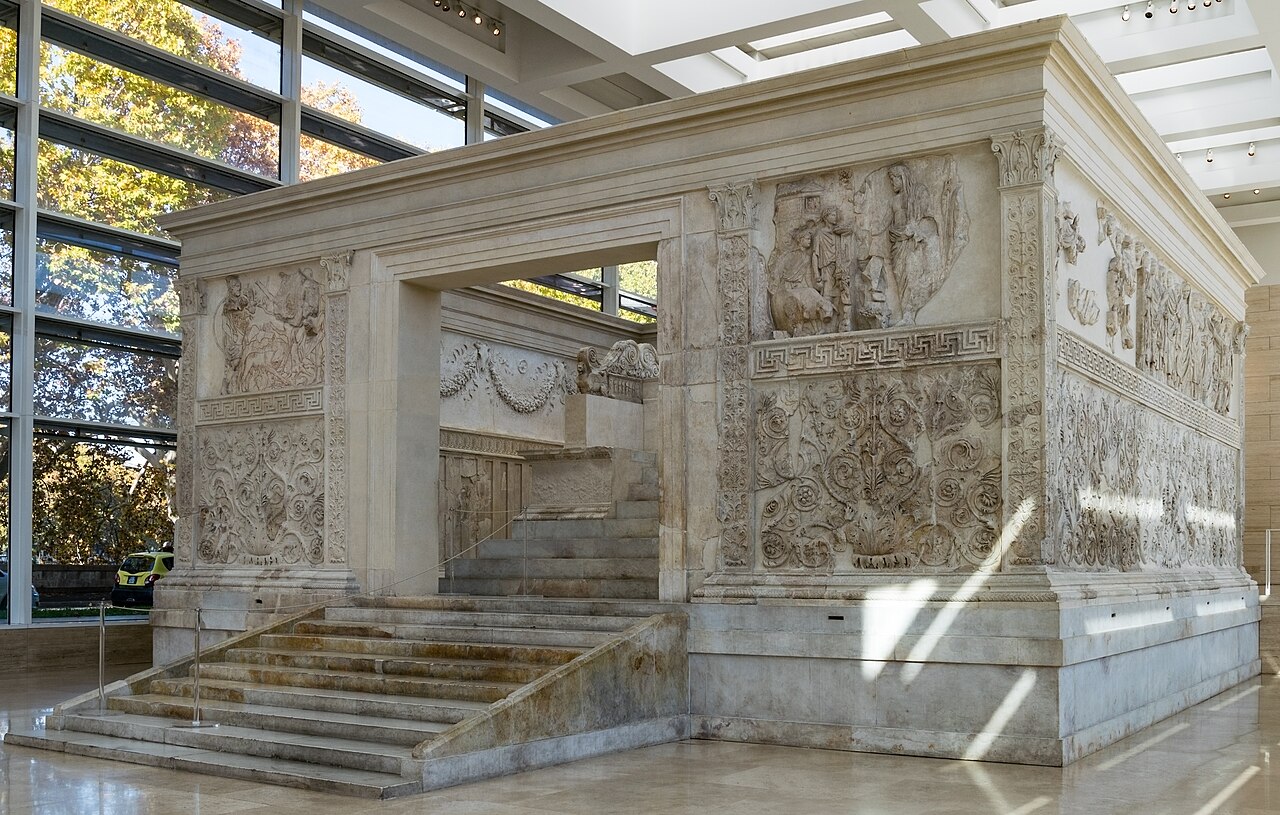
Ara Pacis
13-9 BCE
 Artifact
Primary source
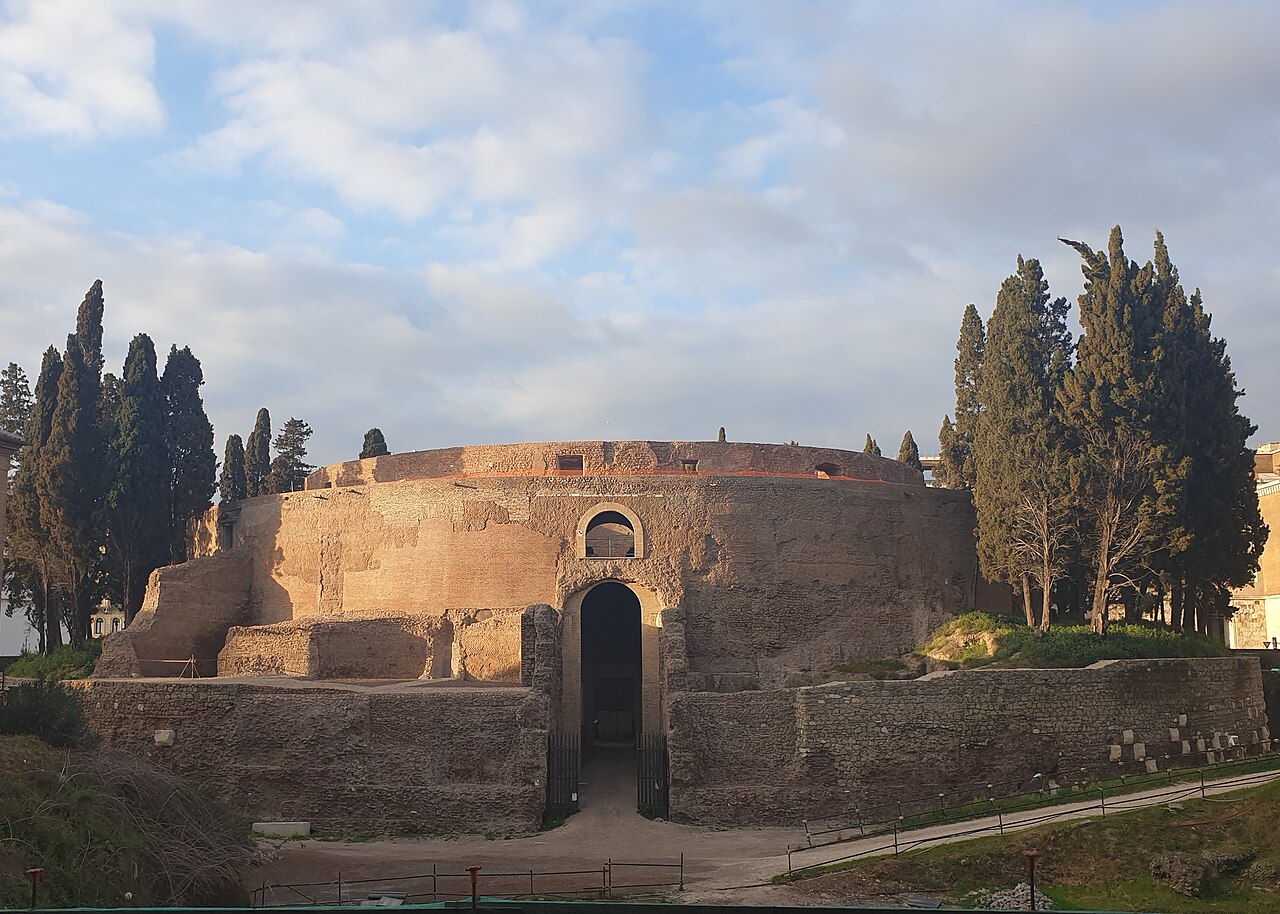
Mausoleum of Augustus
28 BCE
Ready when you are
Start chatting with Augustus now.
20 messages free · No credit card · Available in 50+ languages.