


Secondary sourceDocument1886
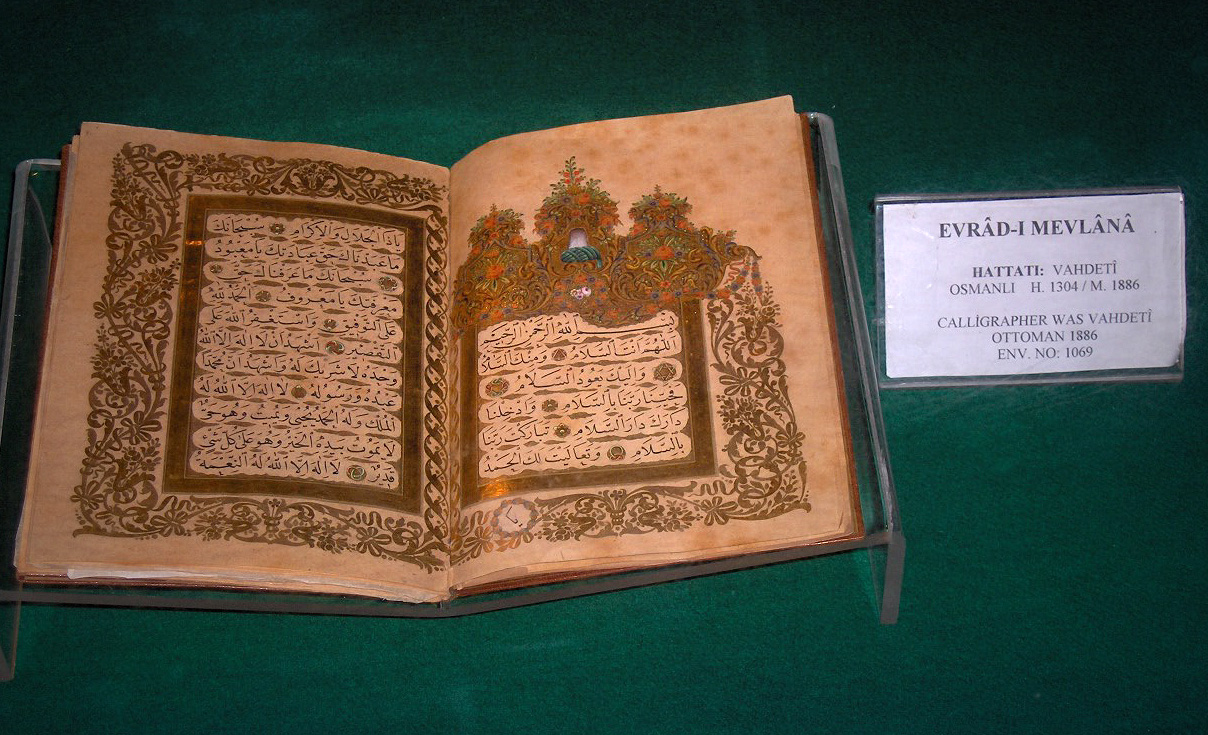
Awrad-i Mowlana, Ottoman Calligraphic Prayer Text
Vahdeti · 1886
An 1886 Ottoman calligraphic manuscript of prayers associated with Rumi's tradition, showing how his words continued to be copied and used.
This later devotional manuscript, attributed to Rumi's tradition, shows his lasting religious influence after his death.
About this source
What it is
This is an open manuscript book of Awrad-i Mowlana, prayers linked to Rumi's tradition, copied in the Ottoman period in 1886 by the calligrapher Vahdeti. It is displayed in a museum case, with gold-brown floral borders decorating both pages and a framed panel of Arabic-script calligraphy.
Why it matters
Centuries after Rumi's death, his teachings inspired devotional texts that were still being carefully copied by skilled calligraphers like Vahdeti. This manuscript shows how Rumi's influence spread beyond his own poetry into prayer traditions practiced within the Ottoman Empire.
Look closer
- What does the decoration on these pages tell you about how the text was valued?
- Why might prayers be attributed to Rumi's name even if he did not write them himself?
- What does the museum label add that the manuscript itself does not show?
This document is part of the curated material that grounds the AI version of Rumi (Jalāl ad-Dīn Muhammad Rūmī) on Humy.ai — when students ask about related events, the AI can quote it and cite it.
More Rumi (Jalāl ad-Dīn Muhammad Rūmī) sources
Meet the AI Rumi (Jalāl ad-Dīn Muhammad Rūmī) → Book
Primary source
Masnavi
Rumi · c. 1258-1273
 Book
Primary source
Diwan-e Shams-e Tabrizi
Rumi · c. 1247 onward
 Artifact
Secondary source
Grave of Rumi
soon after 1273
 Book
Primary source
Fihi Ma Fihi
Rumi · c. 1260-1273
 Artifact
Secondary source
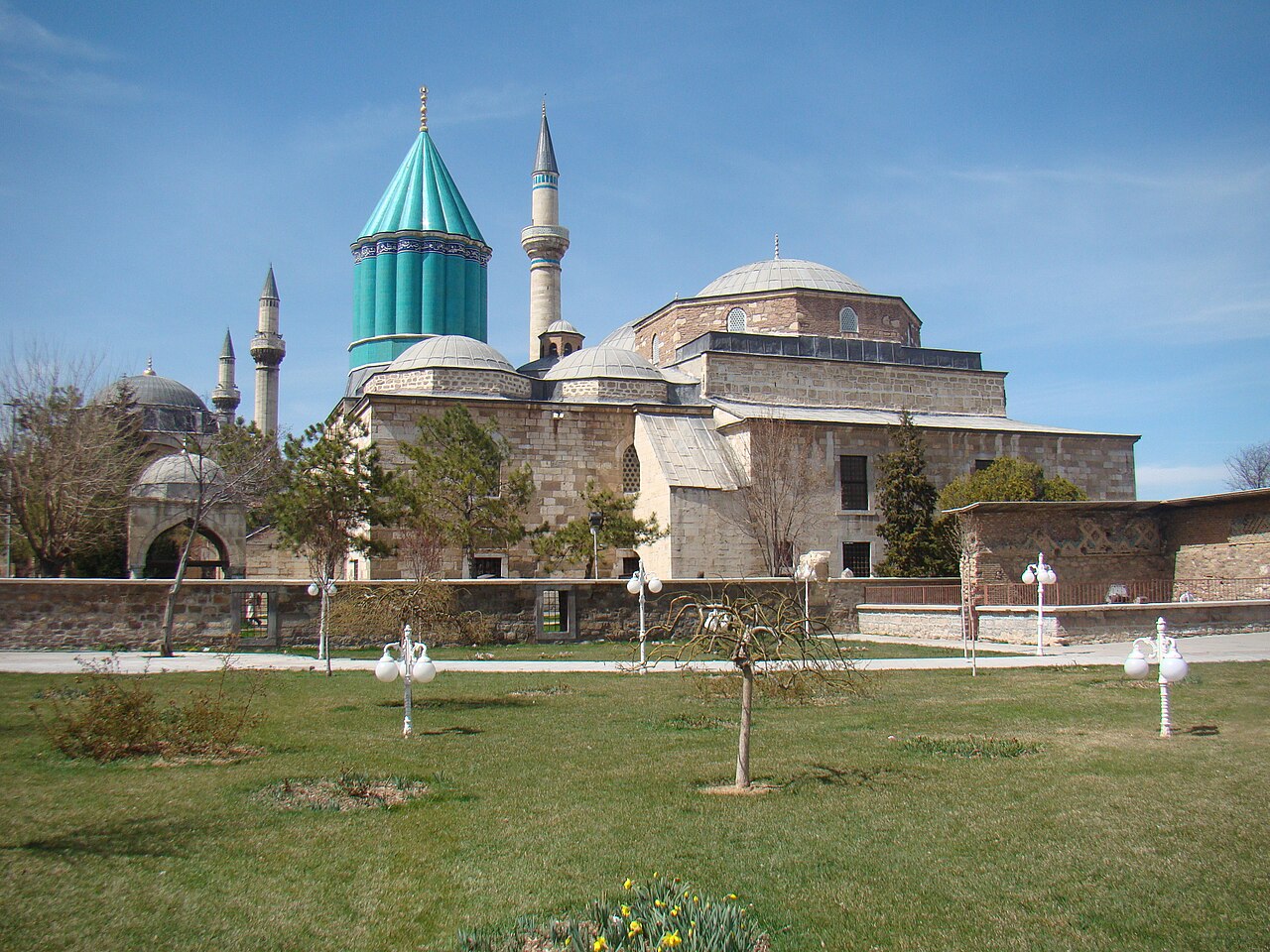
Mevlâna Museum
Badr al-Din Tabrizi (architect) · built soon after 1273; museum since 1926
Ready when you are
Start chatting with Rumi (Jalāl ad-Dīn Muhammad Rūmī) now.
20 messages free · No credit card · Available in 50+ languages.