


Secondary sourceSculptureHadrianic period (2nd century CE copy of 4th century BCE original)
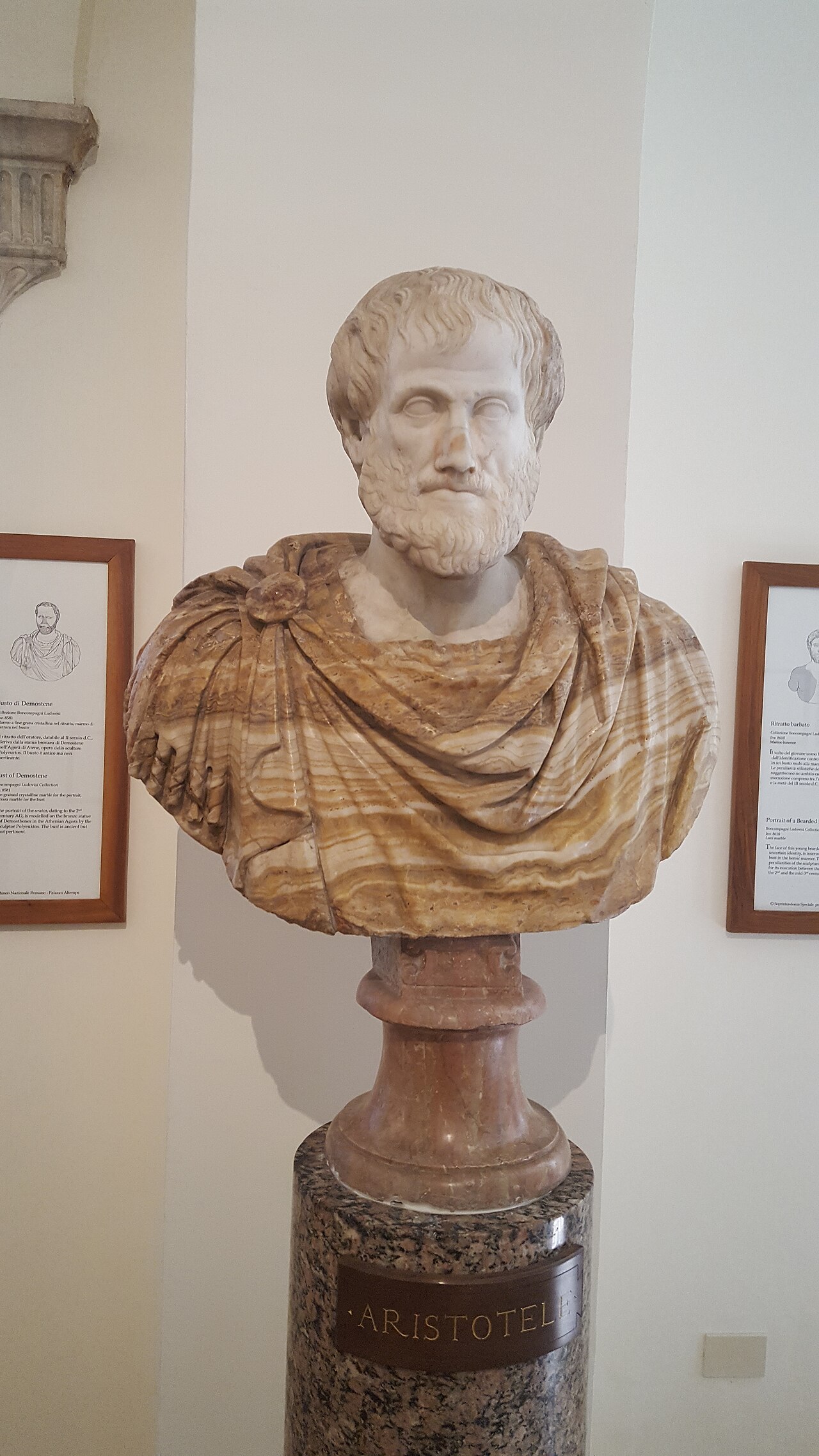
Bust of Aristotle
After Lysippos · Hadrianic period (2nd century CE copy of 4th century BCE original)
A Roman marble copy of a lost bronze portrait of Aristotle, considered the best record of his real appearance.
This bust is the best-known surviving depiction of Aristotle's actual appearance, copied from a lost bronze original.
About this source
What it is
This marble bust depicts Aristotle as a bearded man with curly hair. It is a Roman copy, made during the reign of Hadrian, of an earlier bronze portrait attributed to the sculptor Lysippos. The cloak was added later during modern restoration. It is held in the National Roman Museum of the Altemps Palace.
Why it matters
Because the original bronze portrait by Lysippos has been lost, this Roman copy is our best surviving record of what Aristotle may have actually looked like. It shows how important figures from Greek culture continued to be honoured and reproduced centuries later by Roman collectors.
Look closer
- Why do you think Romans made copies of Greek bronze statues rather than keeping only the originals?
- What parts of this bust are ancient and what parts were added later during restoration — does that change how we should read it?
- What can and can't a sculpted portrait tell us about a person's actual appearance?
This sculpture is part of the curated material that grounds the AI version of Aristotle on Humy.ai — when students ask about related events, the AI can quote it and cite it.
More Aristotle sources
Meet the AI Aristotle →
Ready when you are
Start chatting with Aristotle now.
20 messages free · No credit card · Available in 50+ languages.