


Secondary sourceArtifactc. 1320
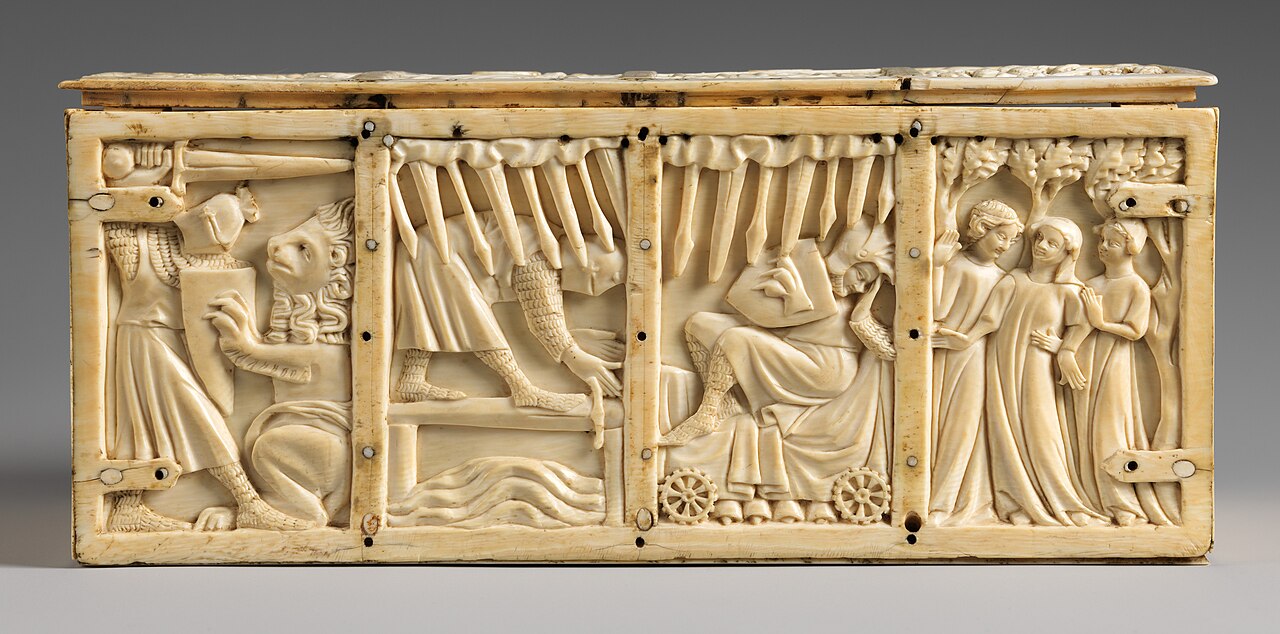
Casket with Scenes from Romances
c. 1320
A Parisian ivory casket from around 1320 carved with courtly romance scenes, including the legend of Aristotle ridden by Phyllis.
Includes a carved scene of Aristotle being ridden by Phyllis, showing his fame in secular medieval storytelling.
About this source
What it is
This ivory casket was made in Paris around 1320 and is held by the Metropolitan Museum of Art. Its carved panels show scenes from courtly romances, including the popular legend of Aristotle being ridden by Phyllis.
Why it matters
The casket shows that the Aristotle and Phyllis story was not only a moral warning but also entertainment, carved onto a luxury object alongside other romantic tales. It demonstrates how widely known and visually popular the legend about the philosopher had become in secular, courtly medieval culture.
Look closer
- Why might a wealthy owner want this legend carved onto a personal object like a casket?
- What other stories are shown alongside the Aristotle scene, and what do they have in common?
- What does the craftsmanship of the ivory suggest about who owned objects like this?
This artifact is part of the curated material that grounds the AI version of Aristotle on Humy.ai — when students ask about related events, the AI can quote it and cite it.
More Aristotle sources
Meet the AI Aristotle →
Ready when you are
Start chatting with Aristotle now.
20 messages free · No credit card · Available in 50+ languages.