


Primary sourceBook
Categories
Aristotle
Aristotle's treatise classifying the basic kinds of being, which shaped the study of logic for centuries.
This is Aristotle's own classification of the kinds of being, central to his logical system.
About this source
What it is
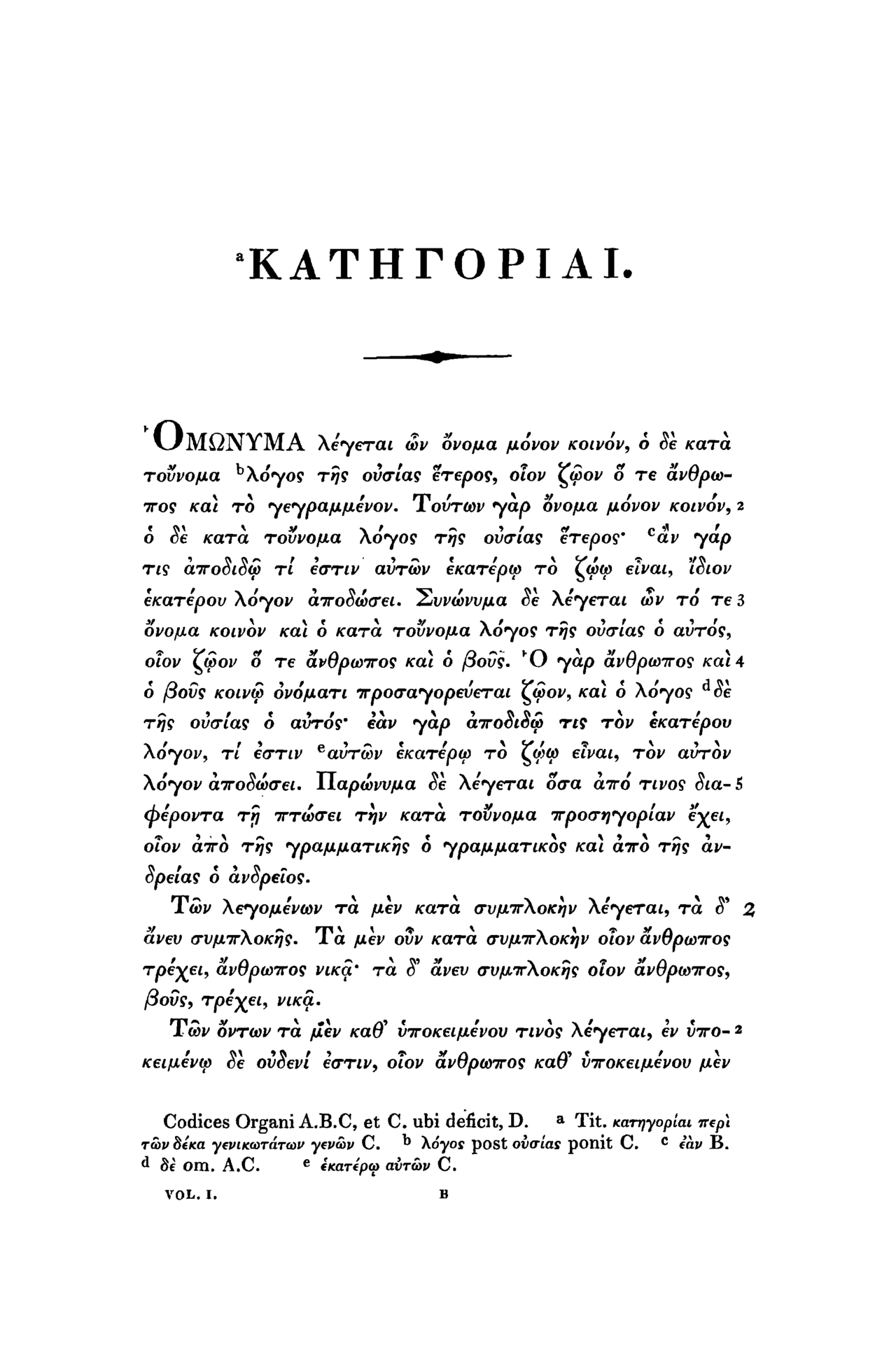
This is a work by Aristotle, part of the Organon, dividing into fifteen short chapters. It sets out ten categories, such as substance, quantity and quality, under which Aristotle believed everything that can be a subject or predicate of a statement must fall.
Why it matters
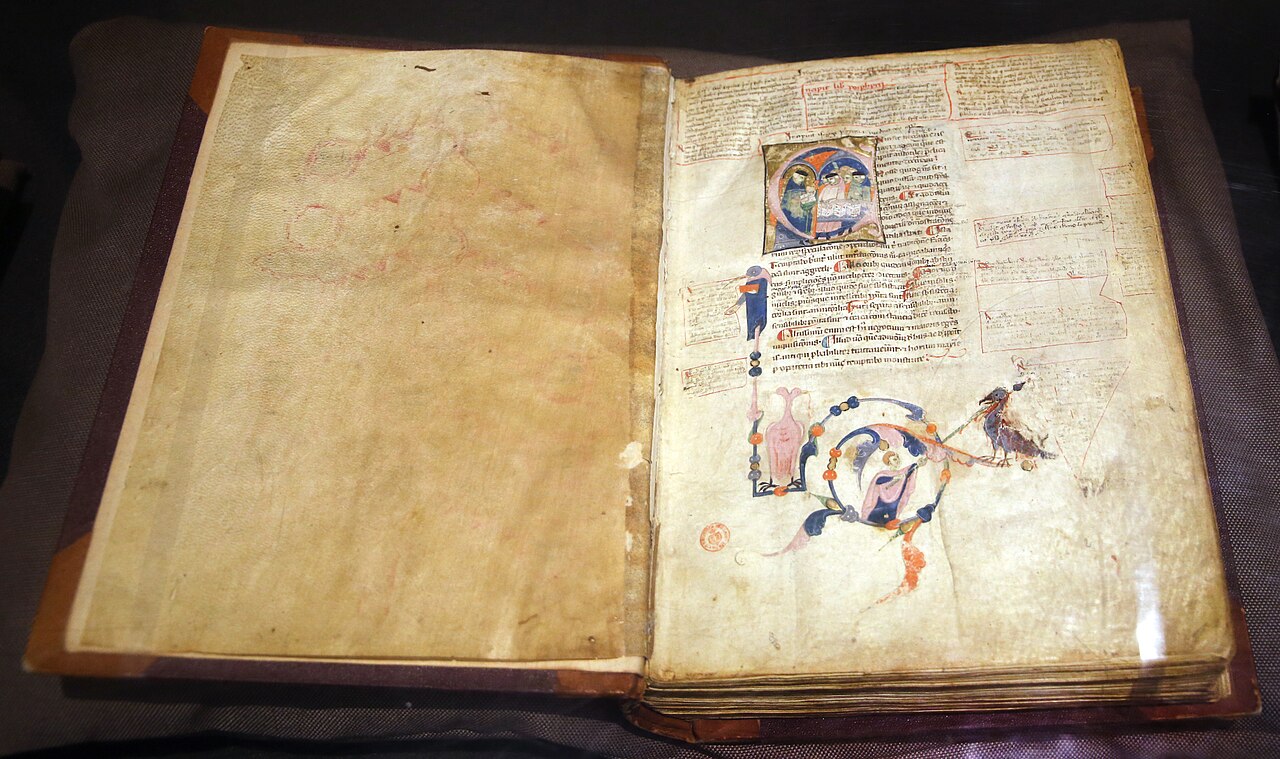
The Categories became one of the most discussed texts in the history of philosophy, opening the study of logic for students for many centuries afterward. It shows how Aristotle tried to organize all of reality and language into a clear system, an approach that deeply influenced medieval scholars. The page shown here comes from a 19th-century printed edition prepared by the scholar Immanuel Bekker, not from Aristotle's own hand.
Look closer
- Why might dividing the world into categories like 'substance' and 'quantity' have been useful to ancient thinkers?
- What does it mean that this text survives only through later copies and printed editions, not an original manuscript?
- Can you think of modern examples where people still try to sort things into fixed categories?
This book is part of the curated material that grounds the AI version of Aristotle on Humy.ai — when students ask about related events, the AI can quote it and cite it.
More Aristotle sources
Meet the AI Aristotle →

Ready when you are
Start chatting with Aristotle now.
20 messages free · No credit card · Available in 50+ languages.