


Primary sourceBookc. 56-64 AD
De Beneficiis
Seneca · c. 56-64 AD
Seneca's long treatise on giving and receiving favours, examining the ethics of gratitude among the Roman elite.
Seneca's treatise on favours and gratitude, reflecting his place within the Roman social and political elite.
About this source
What it is
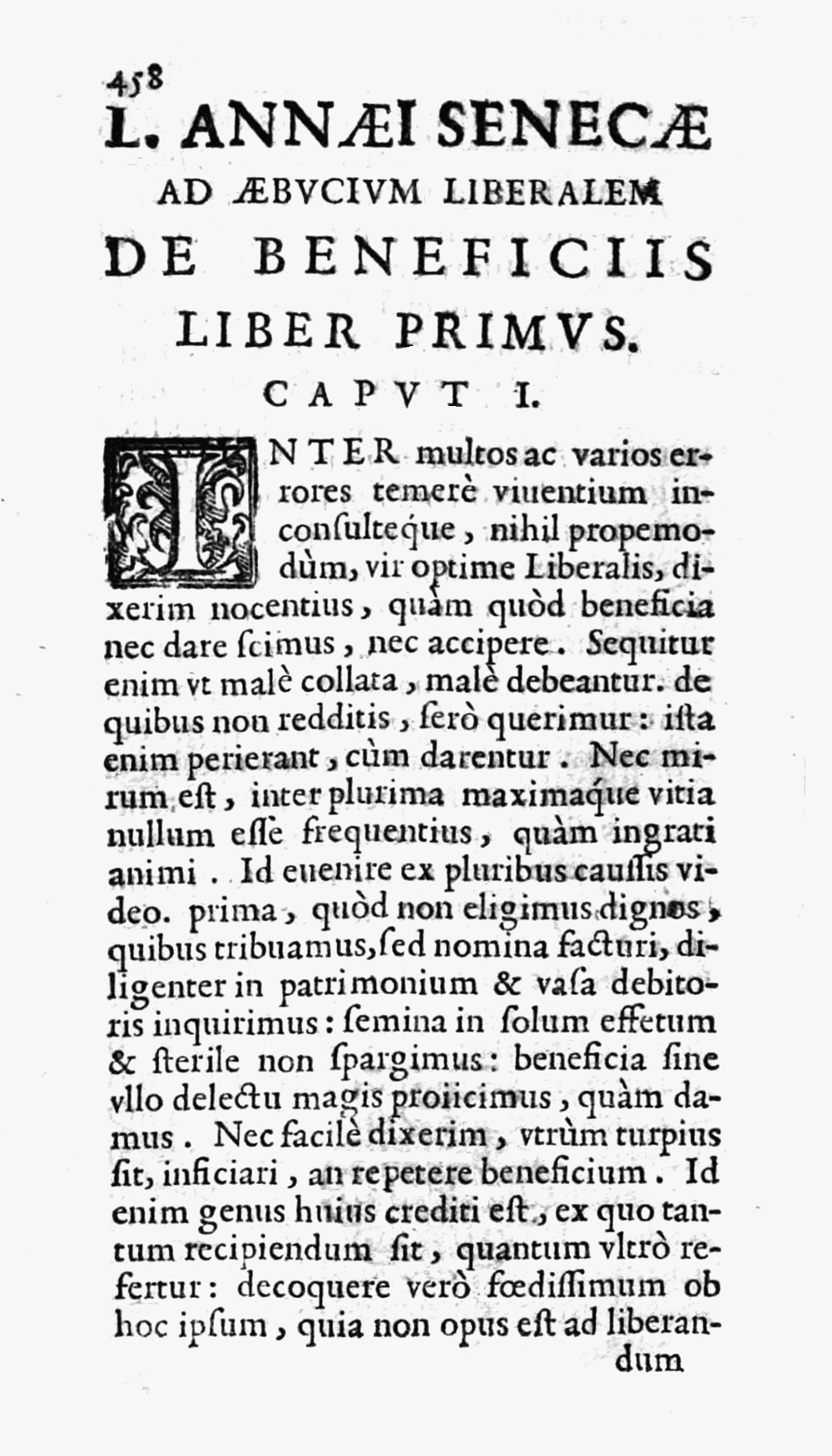
De Beneficiis (On Benefits) is a first-century work by Seneca, part of his series of moral essays, dedicated to Aebutius Liberalis. The page shown is from a 1643 printed edition of his collected works, and the oldest surviving copy of the text dates from the late 8th or early 9th century.
Why it matters
The work examines how giving and receiving favours bound Roman society together, especially among elite men of equal social standing. It shows Seneca thinking carefully about the obligations and etiquette that structured relationships among Rome's ruling class, and the work was later influential with Christian thinkers and later writers such as Montaigne.
Look closer
- Why might gratitude and gift-giving have mattered so much to Roman aristocrats like Seneca?
- What does the long history of translations and copies tell you about how valued this text was?
- How might Seneca's own position in Nero's court have shaped his views on gratitude and favour?
This book is part of the curated material that grounds the AI version of Seneca on Humy.ai — when students ask about related events, the AI can quote it and cite it.
More Seneca sources
Meet the AI Seneca → Letter
Primary source
Epistulae Morales ad Lucilium
Seneca · c. 62-65 CE
 Book
Primary source
De Brevitate Vitae
Seneca · c. 49 CE
 Book
Secondary source
Annals
Tacitus · c. AD 116 or later
 Book
Primary source
De Clementia
Seneca · 55-56 CE
 Sculpture
Secondary source
Double Herm of Socrates and Seneca
first half of the 3rd century AD
Ready when you are
Start chatting with Seneca now.
20 messages free · No credit card · Available in 50+ languages.