


Primary sourceBookc. 49-62 AD
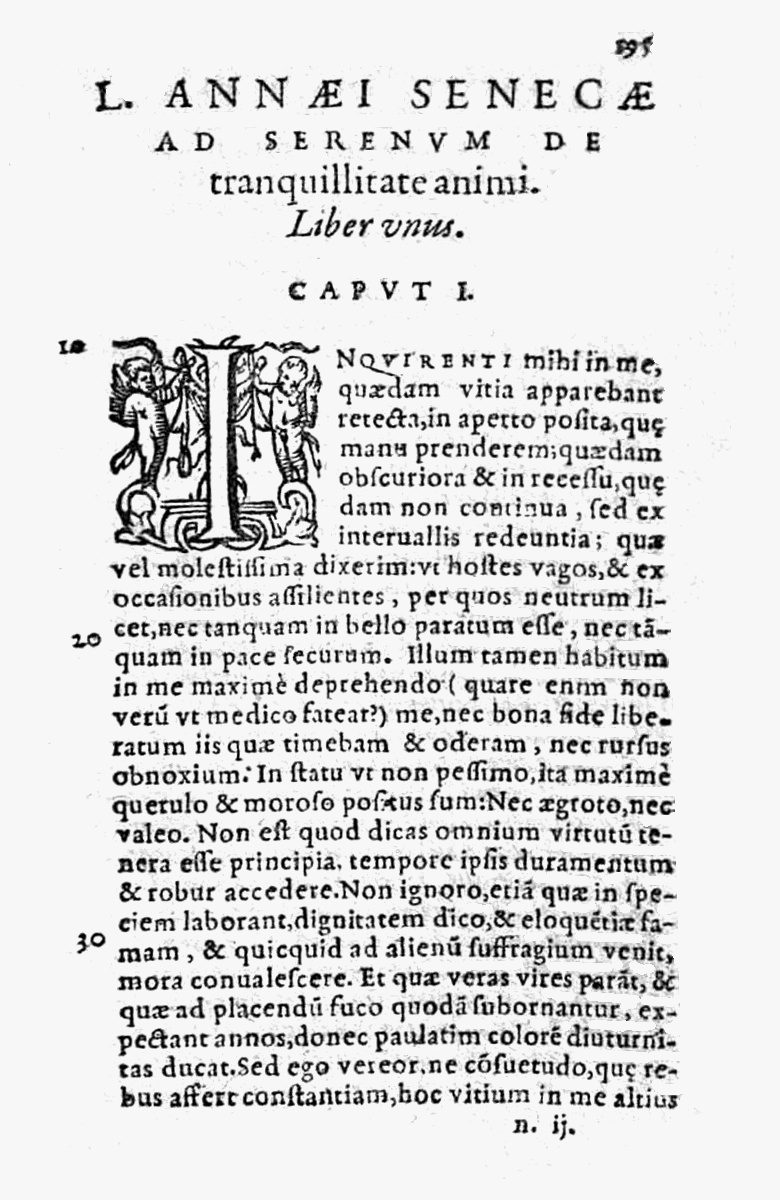
De tranquillitate animi
Seneca · c. 49-62 AD
A dialogue in which Seneca advises his friend Serenus on how to achieve peace of mind and cope with anxiety.
Seneca's dialogue advising his friend Serenus, showing him as a practical counsellor on anxiety and public life.
About this source
What it is
De Tranquillitate Animi (On the Tranquility of the Mind) is a Latin dialogue by Seneca, addressed to his friend Annaeus Serenus, who is troubled by anxiety and discontent with life. The earliest surviving copy dates from the 11th century; the page shown here is from a 1594 printed edition.
Why it matters
Seneca uses the dialogue to offer practical Stoic advice, recommending an austere life, careful choice of companions, and a balance between solitude and society, labour and leisure. It shows Seneca as a counsellor trying to help a real friend struggling with the tension between a quiet life and political engagement, a tension Seneca himself faced.
Look closer
- What kind of advice does Seneca give, and does it still sound relevant today?
- Why might Seneca have chosen the dialogue form, addressing a real friend, rather than writing a plain essay?
- What does this text suggest about the pressures of public life in Seneca's own time?
This book is part of the curated material that grounds the AI version of Seneca on Humy.ai — when students ask about related events, the AI can quote it and cite it.
More Seneca sources
Meet the AI Seneca → Letter
Primary source
Epistulae Morales ad Lucilium
Seneca · c. 62-65 CE
 Book
Primary source
De Brevitate Vitae
Seneca · c. 49 CE
 Book
Secondary source
Annals
Tacitus · c. AD 116 or later
 Book
Primary source
De Clementia
Seneca · 55-56 CE
 Sculpture
Secondary source
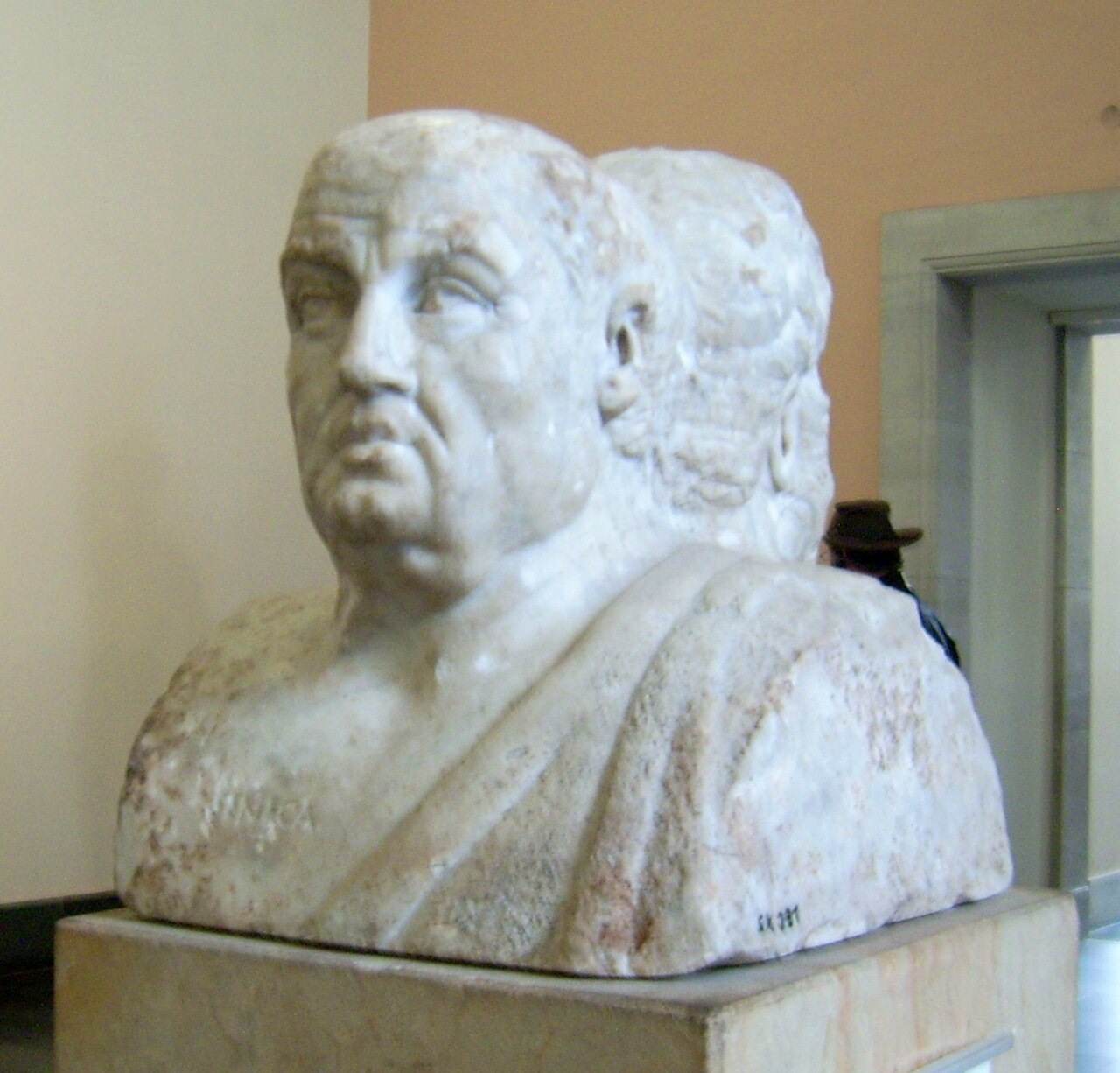
Double Herm of Socrates and Seneca
first half of the 3rd century AD
Ready when you are
Start chatting with Seneca now.
20 messages free · No credit card · Available in 50+ languages.