


Secondary sourceBook14th century
Ethicques de Aristote manuscript
14th century
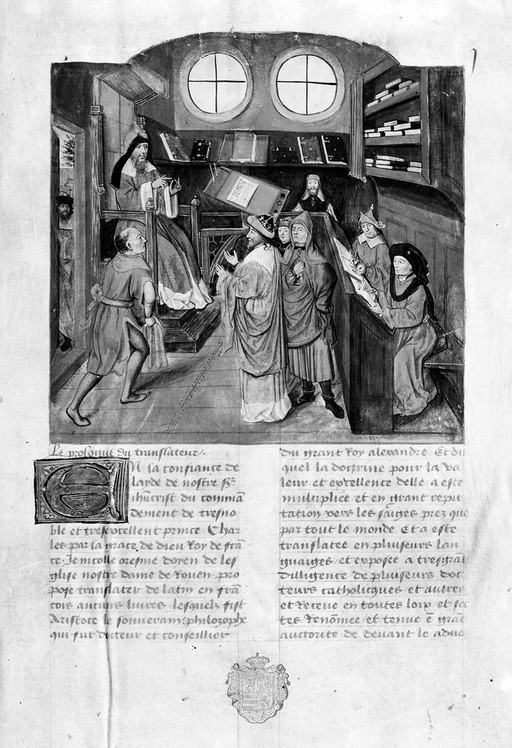
A 14th-century manuscript of Aristotle's Ethics, written in French. It is a later copy of his work, not a text from his own lifetime.
A later medieval copy of Aristotle's Ethics, showing how his work was preserved and read long after he wrote it.
About this source
What it is
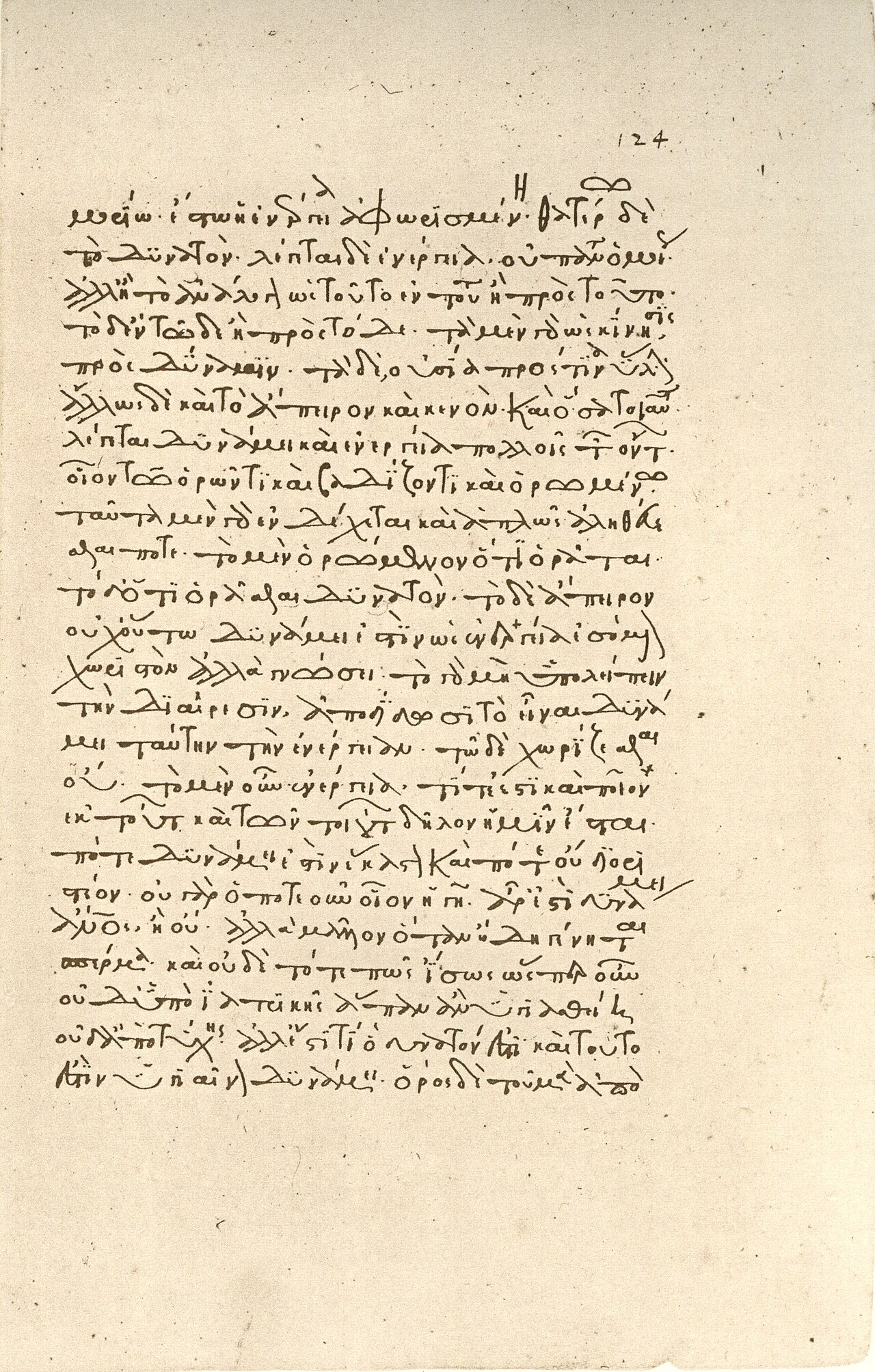
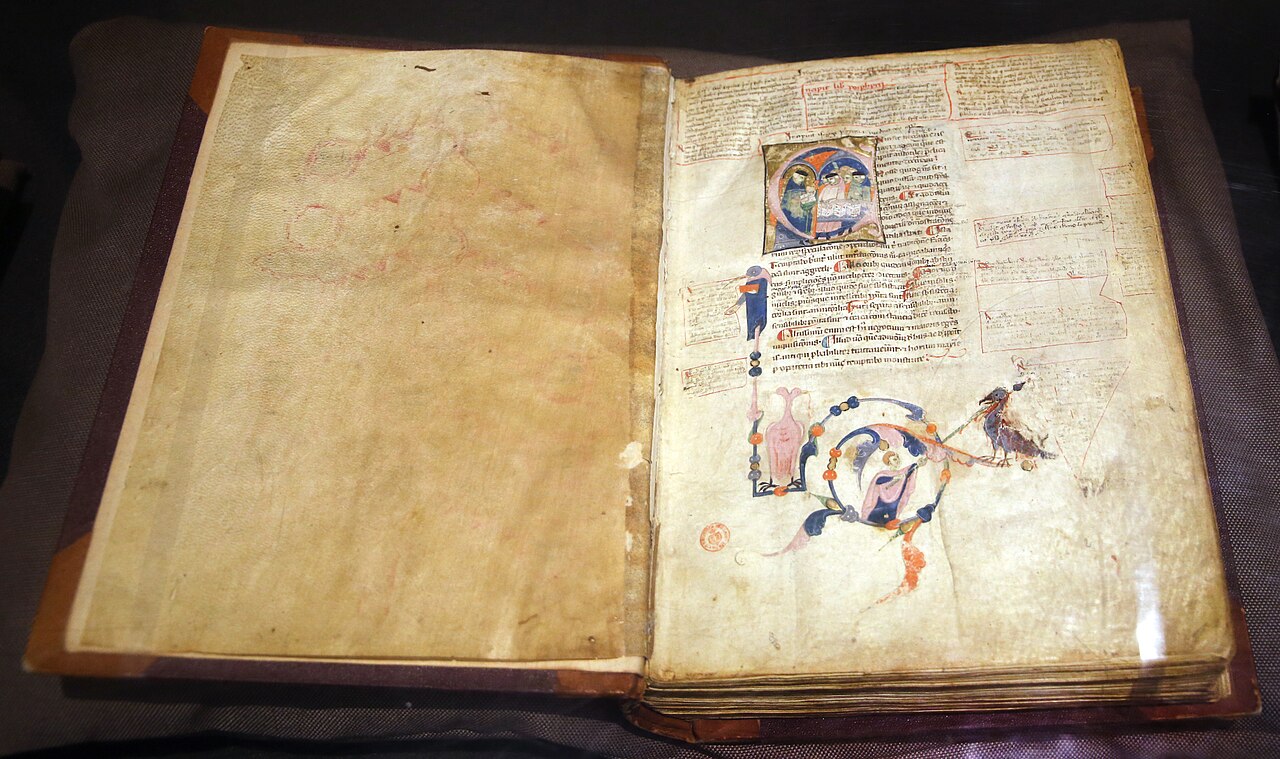
This is a manuscript titled Ethicques de Aristote, dated to the 14th century and held by the Wellcome Collection in the United Kingdom. Its text is in French. The media description shows a black-and-white scan of a page with a miniature painting of a scholarly scene: a bearded man in a tall hat sits at a desk, robed figures and a standing man gesture, and bookshelves and books fill a room with round windows. Below the picture are a decorated initial and columns of French text.
Why it matters
Aristotle lived in the 4th century BCE, so this manuscript was made almost two thousand years after his death. Copies like this one carried his ideas about ethics and character into medieval Europe, where scholars read them in new languages. The page shows how a medieval book was made, with its painted pictures and decorated letters, and how Aristotle's ideas were shaped by the people who copied and read them.
Look closer
- What do the painted figures and the room around them tell you about how medieval readers imagined a scholar?
- Who copied this text and for what kind of reader? What clues on the page might answer that?
- What does a French copy leave out about Aristotle's original Greek words and the world he wrote in?
This book is part of the curated material that grounds the AI version of Aristotle on Humy.ai — when students ask about related events, the AI can quote it and cite it.
More Aristotle sources
Meet the AI Aristotle →
Ready when you are
Start chatting with Aristotle now.
20 messages free · No credit card · Available in 50+ languages.