


Primary sourceDocument1st century CE
Hawara Papyrus 24
1st century CE
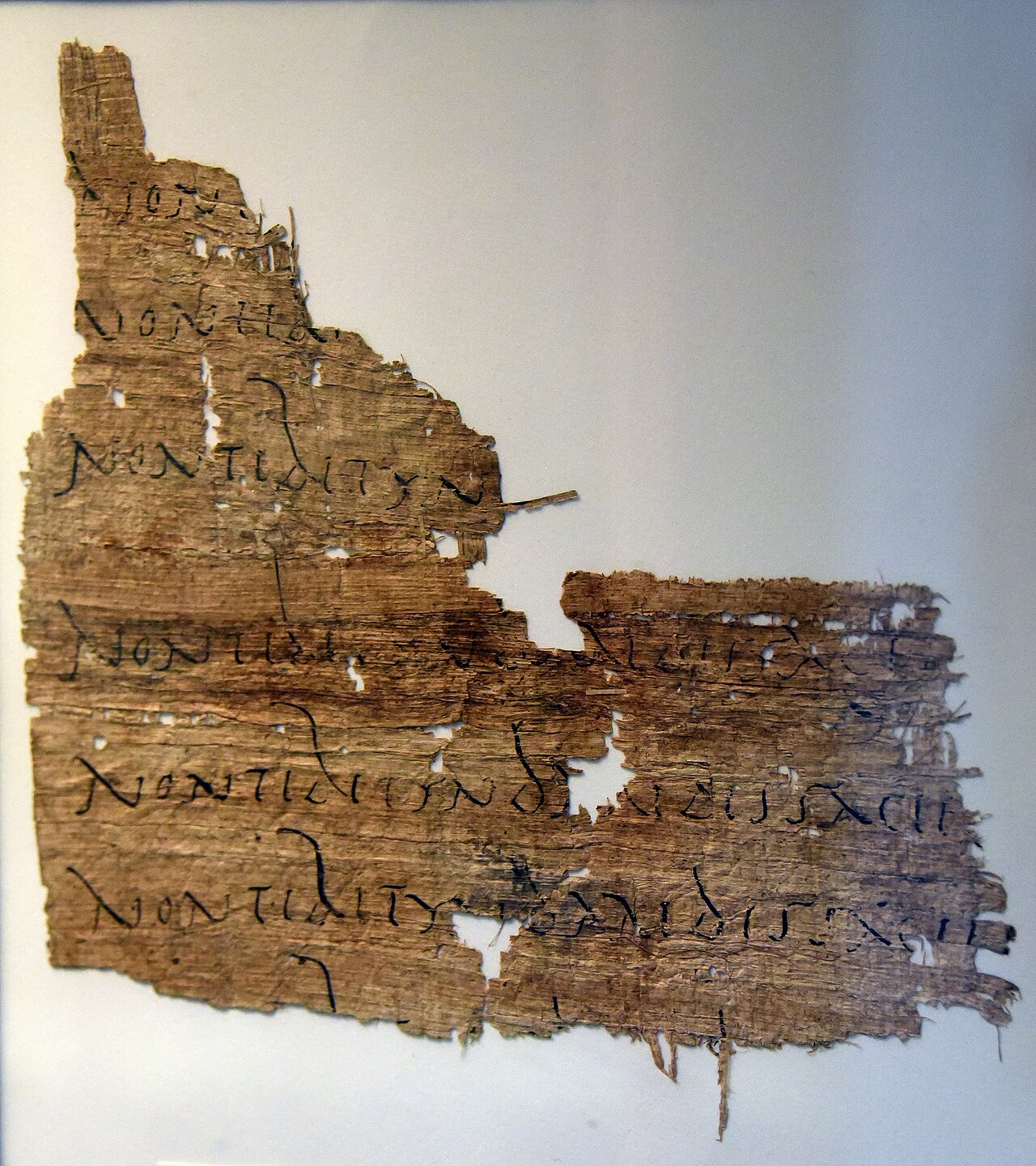
A 1st-century writing exercise from Egypt repeating a line from Virgil's Aeneid seven times.
This fragment copies a line from Virgil's Aeneid, showing how his poetry was used to teach writing far from Rome.
About this source
What it is
This torn papyrus fragment from Hawara, Egypt, dates to the 1st century CE and repeats a single line from Book 2 of Virgil's Aeneid seven times. It is now on display at the British Museum, lent by University College, London.
Why it matters
This was probably a school writing exercise, not a copy made for reading. It shows how quickly Virgil's poetry, written in Rome, spread across the Roman world and became part of everyday education, even far away in Egypt. It is one of the two earliest surviving manuscripts of any part of Virgil's work.
Look closer
- Why might a student copy the same line over and over instead of writing a whole passage?
- What does this object tell us about how Roman education worked, even outside Italy?
- What is missing from this fragment that would help us know more about who wrote it and why?
This document is part of the curated material that grounds the AI version of Virgil on Humy.ai — when students ask about related events, the AI can quote it and cite it.
Ready when you are
Start chatting with Virgil now.
20 messages free · No credit card · Available in 50+ languages.