


Secondary sourcePainting1663 AD (1073 AH)
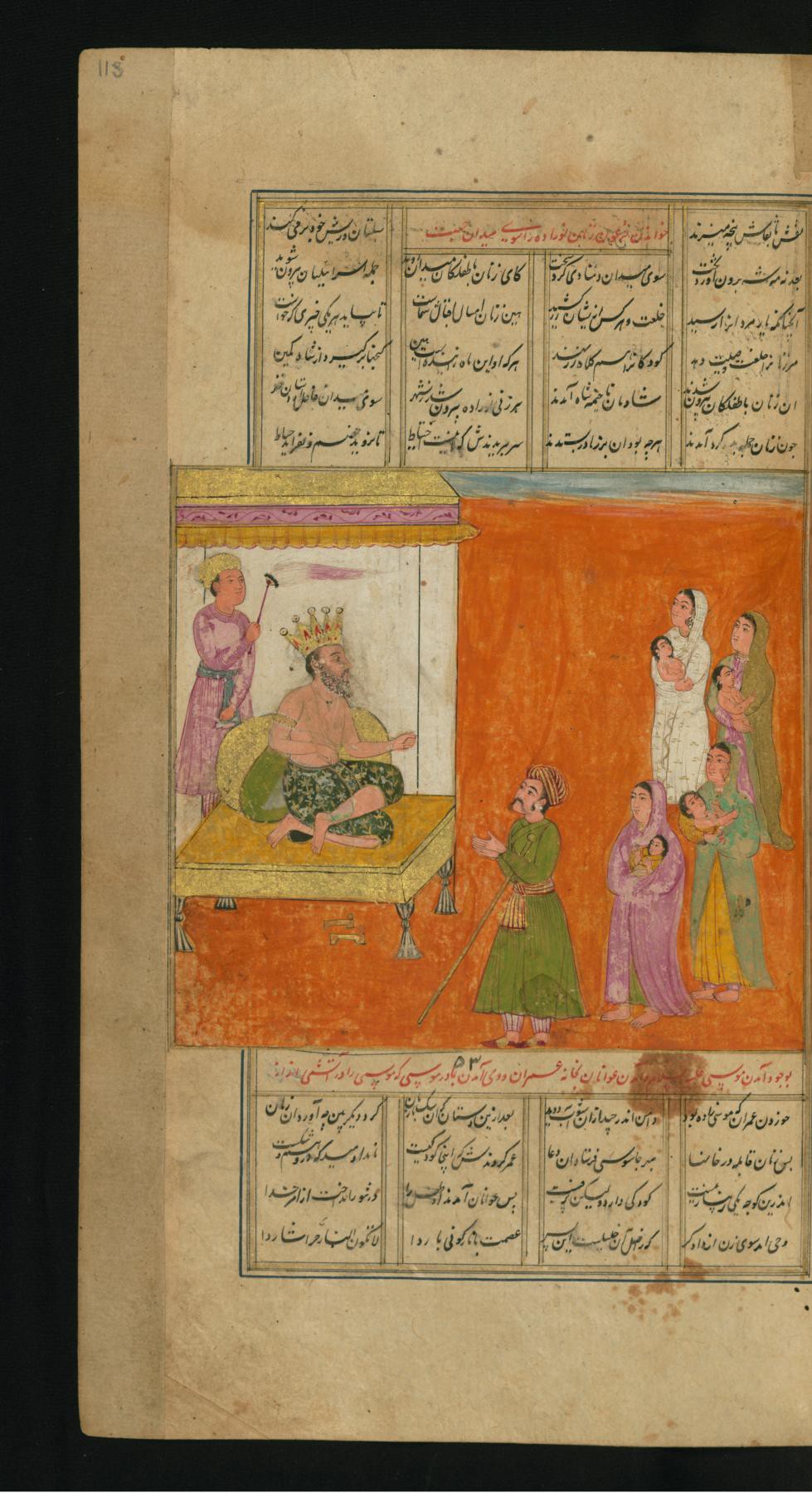
Hebrew mothers with babies before Pharaoh, Masnavi folio
1663 AD (1073 AH)
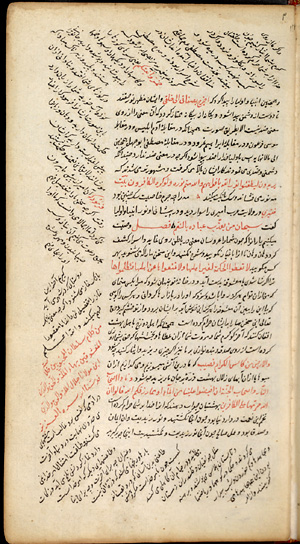
An illustrated folio from a 1663 manuscript of Rumi's Masnavi, showing the Pharaoh story. It shows how Rumi's retold Moses-era narrative was copied and painted in later centuries.
Shows Rumi's Masnavi in later manuscript form, illustrating a Moses-era story he retold in the poem.
About this source
What it is
This is a folio from a 1663 illustrated manuscript of the Masnavi, the long narrative poem written by Rumi. The page is from Walters manuscript W.626, held by the Walters Art Museum. Its written text is in Persian nastaliq script, set in columns above and below a painting. The painting shows a crowned, bearded ruler on a gold throne under a canopy, with an attendant holding a fly whisk. A man in green robes with a staff gestures before him, and several women in veils hold infants against an orange-red field.
Why it matters
The folio shows how Rumi's poem about the Pharaoh story was read and illustrated long after his death in 1273. The museum's record says the scene depicts Hebrew mothers with their babies before the Pharaoh, who intends to kill them. Copyists and painters who made this manuscript were part of a tradition that kept Rumi's stories alive across Persian-speaking courts.
Look closer
- What do the gestures and positions of the figures suggest about the power between the Pharaoh and the mothers?
- Who do you think commissioned this manuscript, and why would they want the poem illustrated?
- What parts of the story does the painting show, and what might it leave out?
This painting is part of the curated material that grounds the AI version of Rumi (Jalāl ad-Dīn Muhammad Rūmī) on Humy.ai — when students ask about related events, the AI can quote it and cite it.
More Rumi (Jalāl ad-Dīn Muhammad Rūmī) sources
Meet the AI Rumi (Jalāl ad-Dīn Muhammad Rūmī) →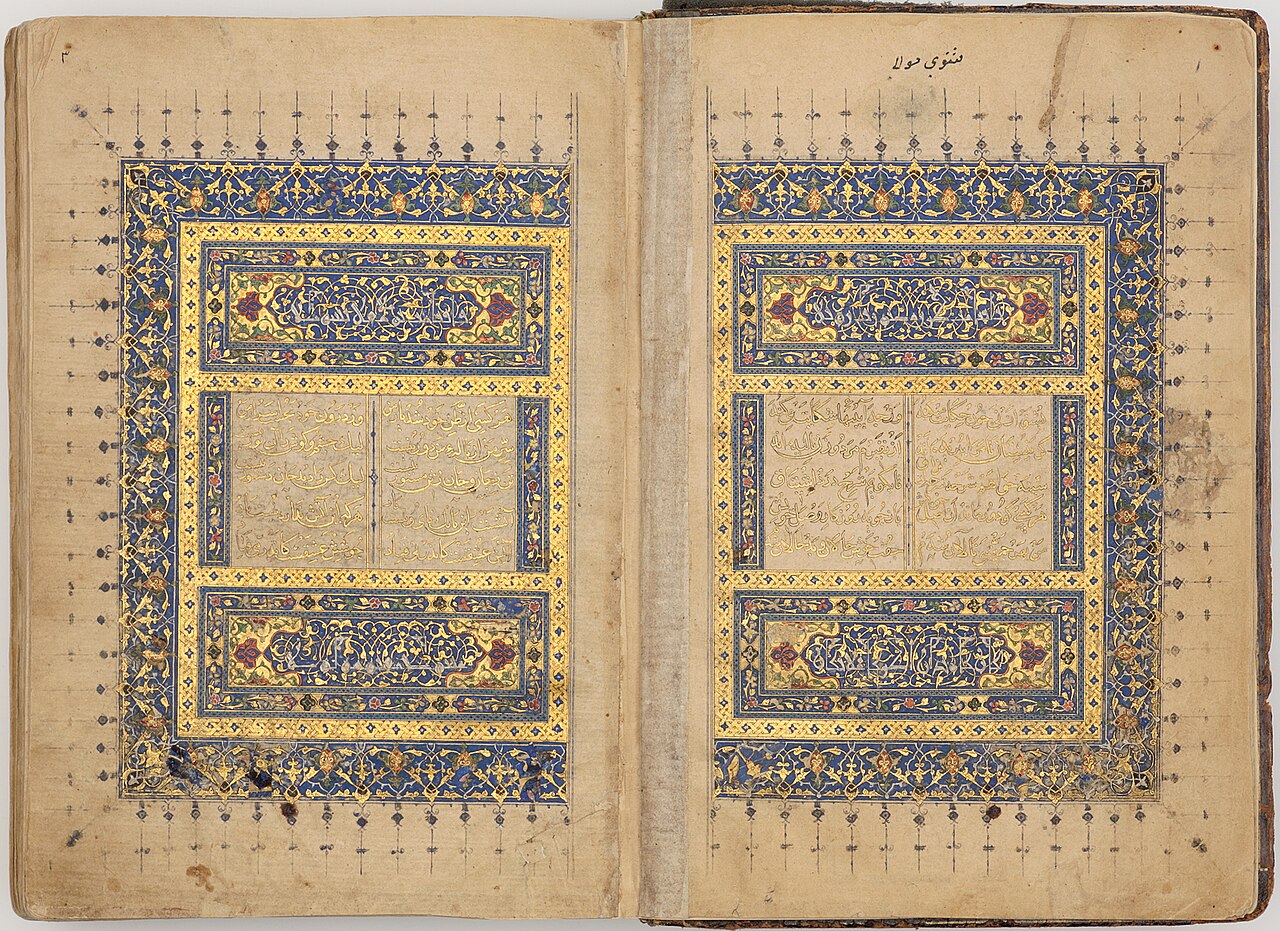 Book
Primary source
Masnavi
Rumi · c. 1258-1273
 Book
Primary source
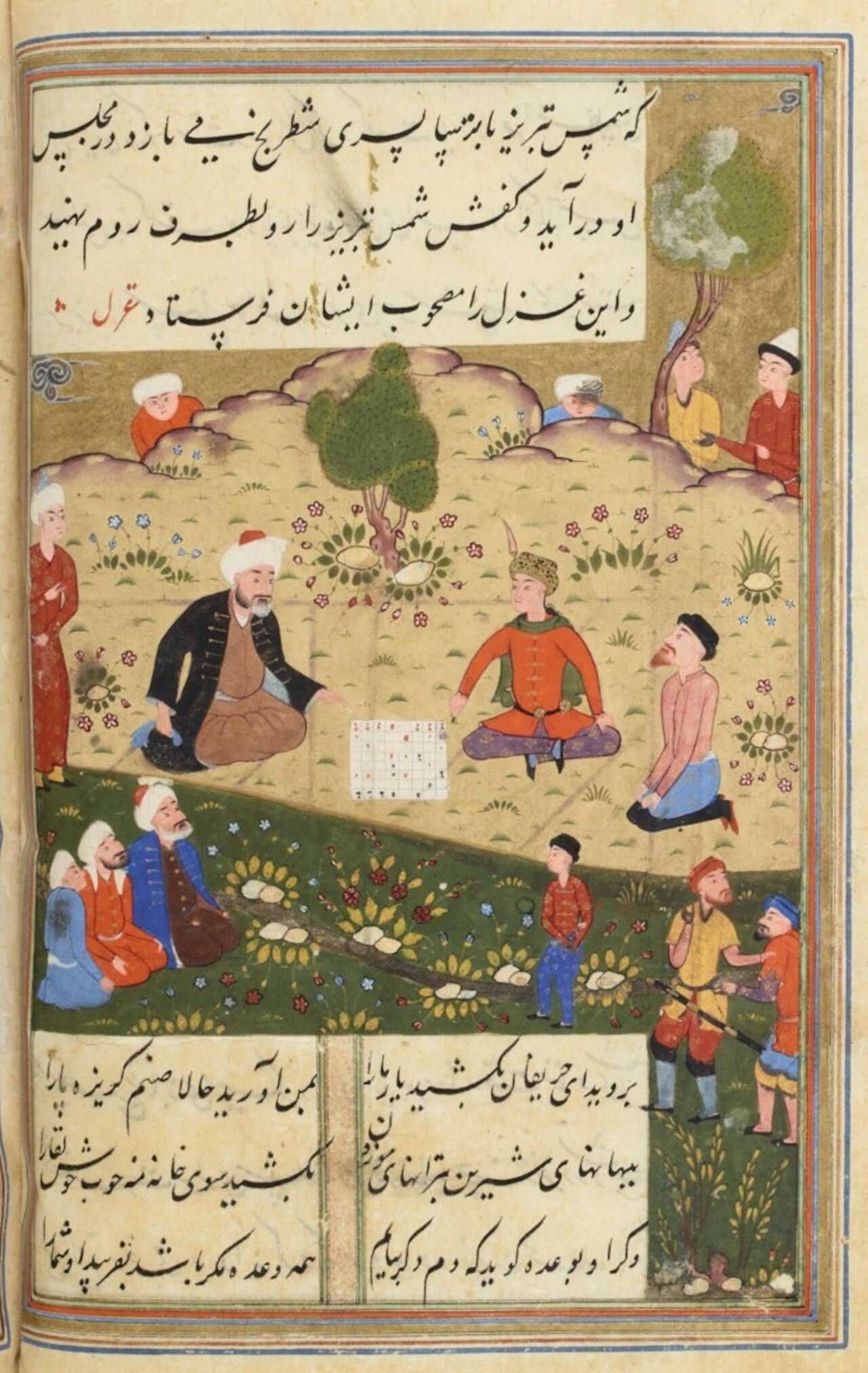
Diwan-e Shams-e Tabrizi
Rumi · c. 1247 onward
 Artifact
Secondary source
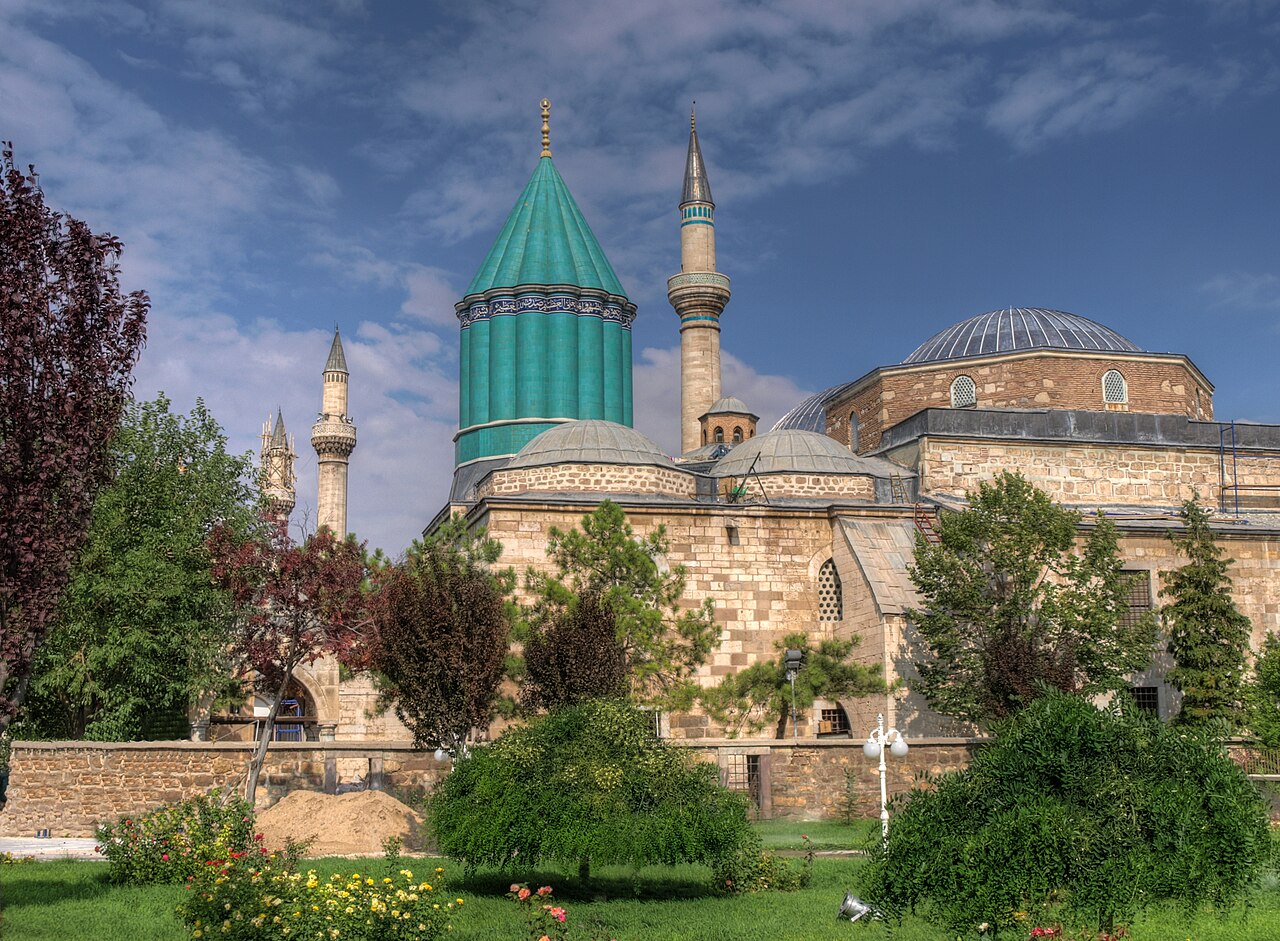
Grave of Rumi
soon after 1273
 Book
Primary source
Fihi Ma Fihi
Rumi · c. 1260-1273
 Artifact
Secondary source
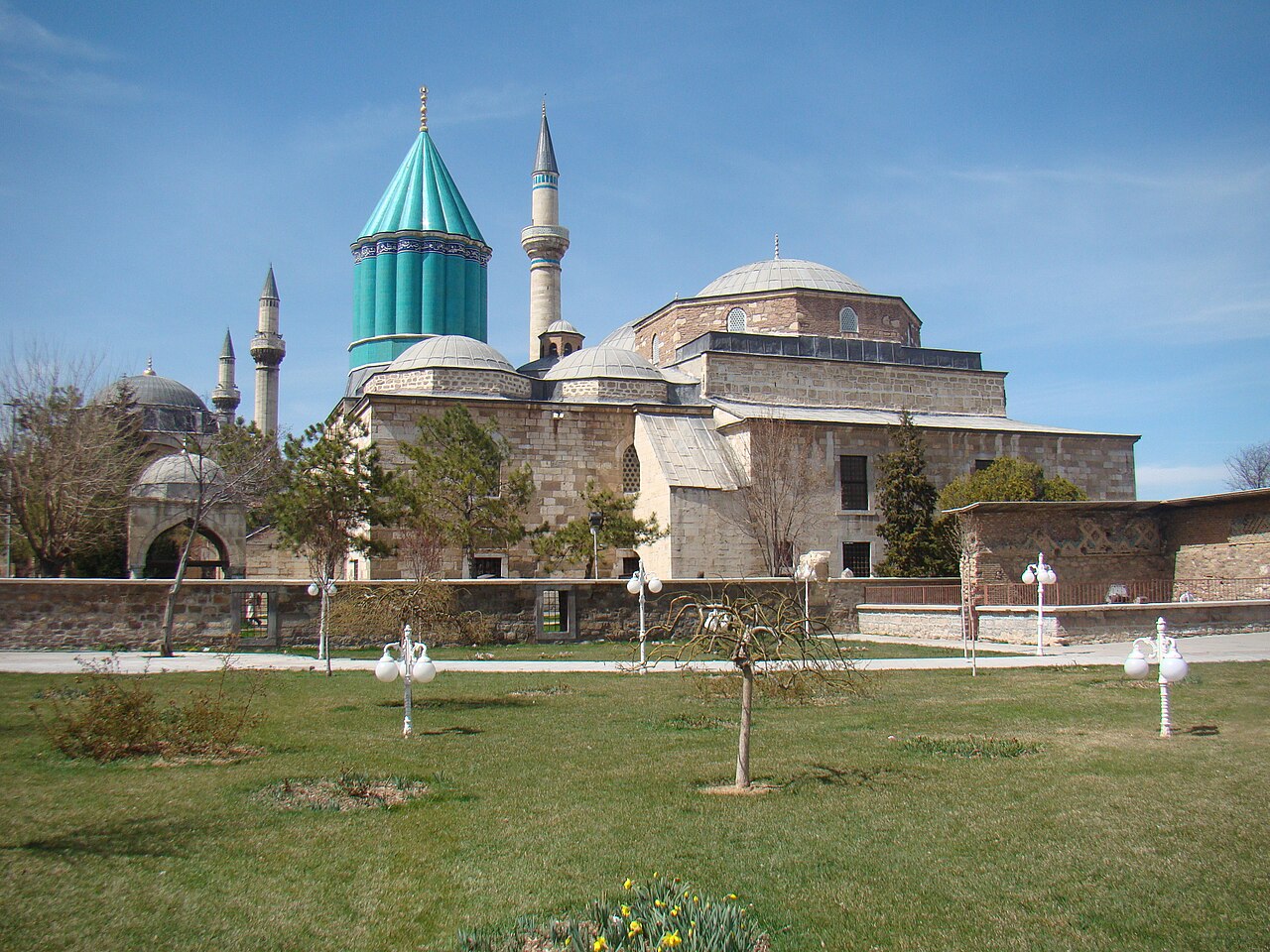
Mevlâna Museum
Badr al-Din Tabrizi (architect) · built soon after 1273; museum since 1926
Ready when you are
Start chatting with Rumi (Jalāl ad-Dīn Muhammad Rūmī) now.
20 messages free · No credit card · Available in 50+ languages.