


Primary sourceBook4th century BCE
History of Animals
Aristotle · 4th century BCE
Aristotle's major biological text recording detailed observations of animals, many made on the island of Lesbos.
Aristotle's own careful observations of animals, especially around Lesbos, show him founding the empirical study of biology.
About this source
What it is
The History of Animals is one of Aristotle's major biological texts, written sometime between the mid-4th century BCE and his death in 322 BCE. It records differences between animals in their body parts, ways of life and behaviour.
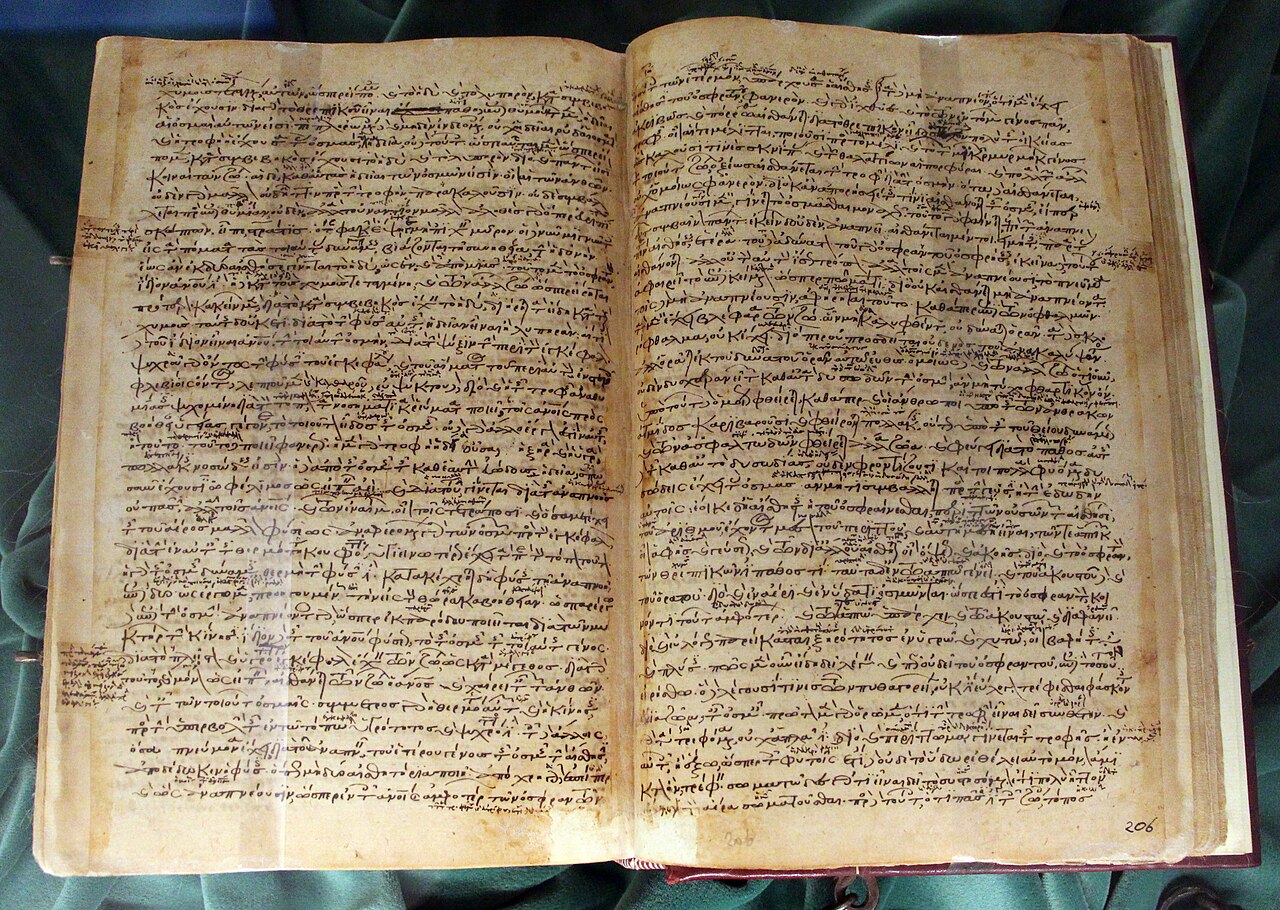
The image shows a page from a Greek manuscript containing one of Aristotle's works on the soul and senses, an example of how his writings were copied by hand for centuries.
Why it matters
Aristotle based much of this work on his own eyewitness observations, especially of marine life around Lesbos, describing things like the octopus's colour-changing ability that were only confirmed by scientists centuries later. This makes him one of the earliest natural historians whose work survives, and the book remained a central reference in zoology for roughly two thousand years.
Look closer
- What does it tell us that some of Aristotle's claims, once doubted, were later proven true?
- Why might direct observation have mattered so much to Aristotle's method?
- What are the risks of relying on travellers' and beekeepers' reports instead of firsthand observation?
This book is part of the curated material that grounds the AI version of Aristotle on Humy.ai — when students ask about related events, the AI can quote it and cite it.
More Aristotle sources
Meet the AI Aristotle →


Ready when you are
Start chatting with Aristotle now.
20 messages free · No credit card · Available in 50+ languages.