


Secondary sourceBook1663
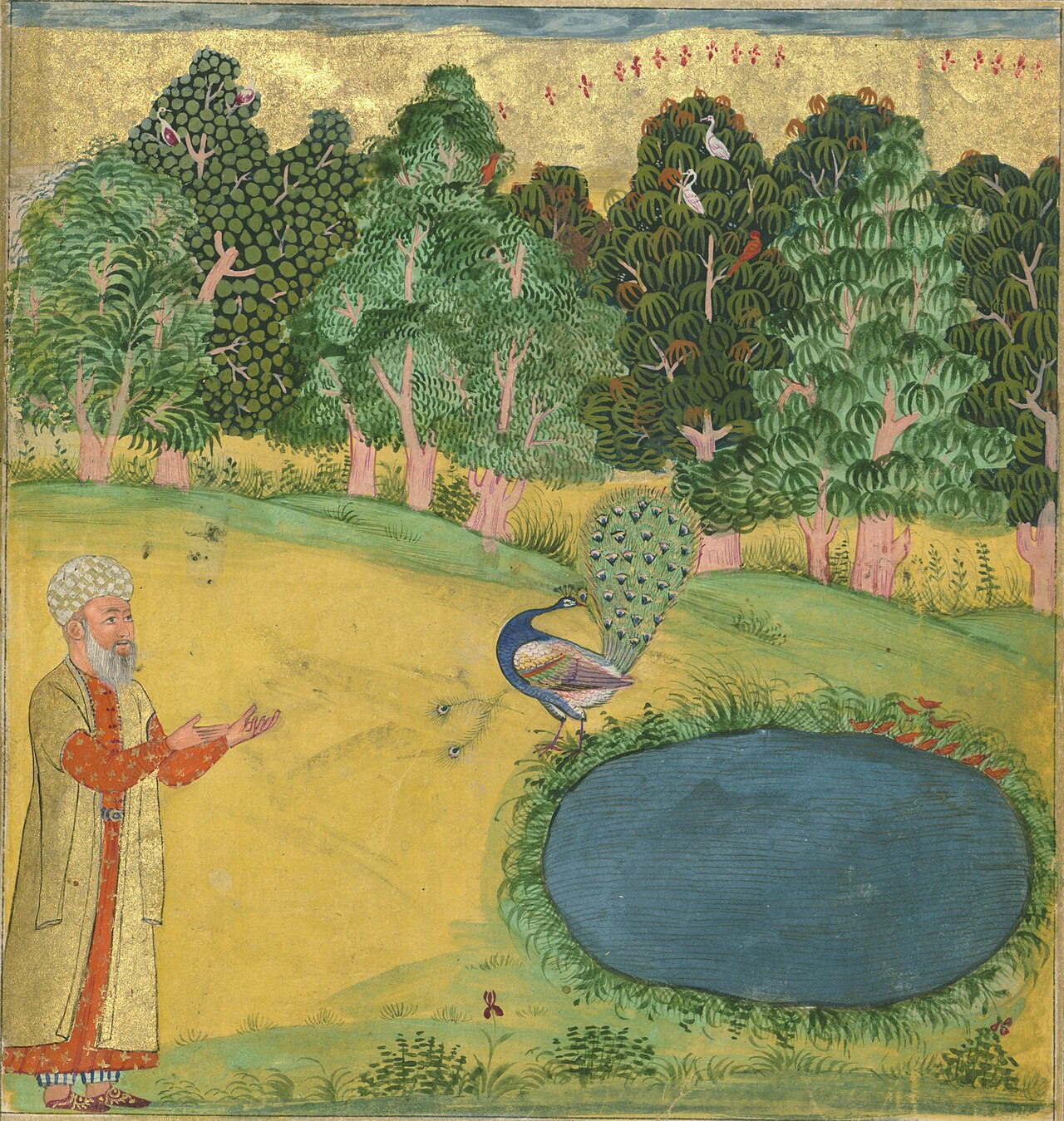
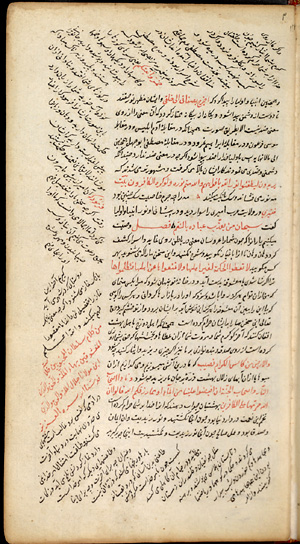
Illustrated Masnavi Page: The Wise Man and the Peacock
Rumi (text); unknown illustrator · 1663
An illustrated page from a 17th-century copy of Rumi's Masnavi, showing one of his moral fables.
This page illustrates one of Rumi's own fables from the Masnavi, copied and painted centuries after he wrote it.
About this source
What it is
This is a page from an illustrated and illuminated manuscript of the Masnavi-i Ma'navi, the collection of poems by Jalal al-Din Rumi. According to its colophon, the text was completed in India in 1663. The page shows a painted scene illustrating one of Rumi's fables, in which a wise man questions a peacock plucking its own feathers.
Why it matters
This manuscript shows how Rumi's poetry travelled far beyond Konya, being copied and illustrated centuries later in India. It reveals how his parables were valued as teaching stories and given visual form by later artists and scribes across the Persianate world.
Look closer
- What is happening between the man and the peacock in the painting?
- Why might a scribe in India, centuries after Rumi's death, choose to copy and illustrate his poems?
- What does this manuscript suggest about how far Rumi's ideas spread?
This book is part of the curated material that grounds the AI version of Rumi (Jalāl ad-Dīn Muhammad Rūmī) on Humy.ai — when students ask about related events, the AI can quote it and cite it.
More Rumi (Jalāl ad-Dīn Muhammad Rūmī) sources
Meet the AI Rumi (Jalāl ad-Dīn Muhammad Rūmī) →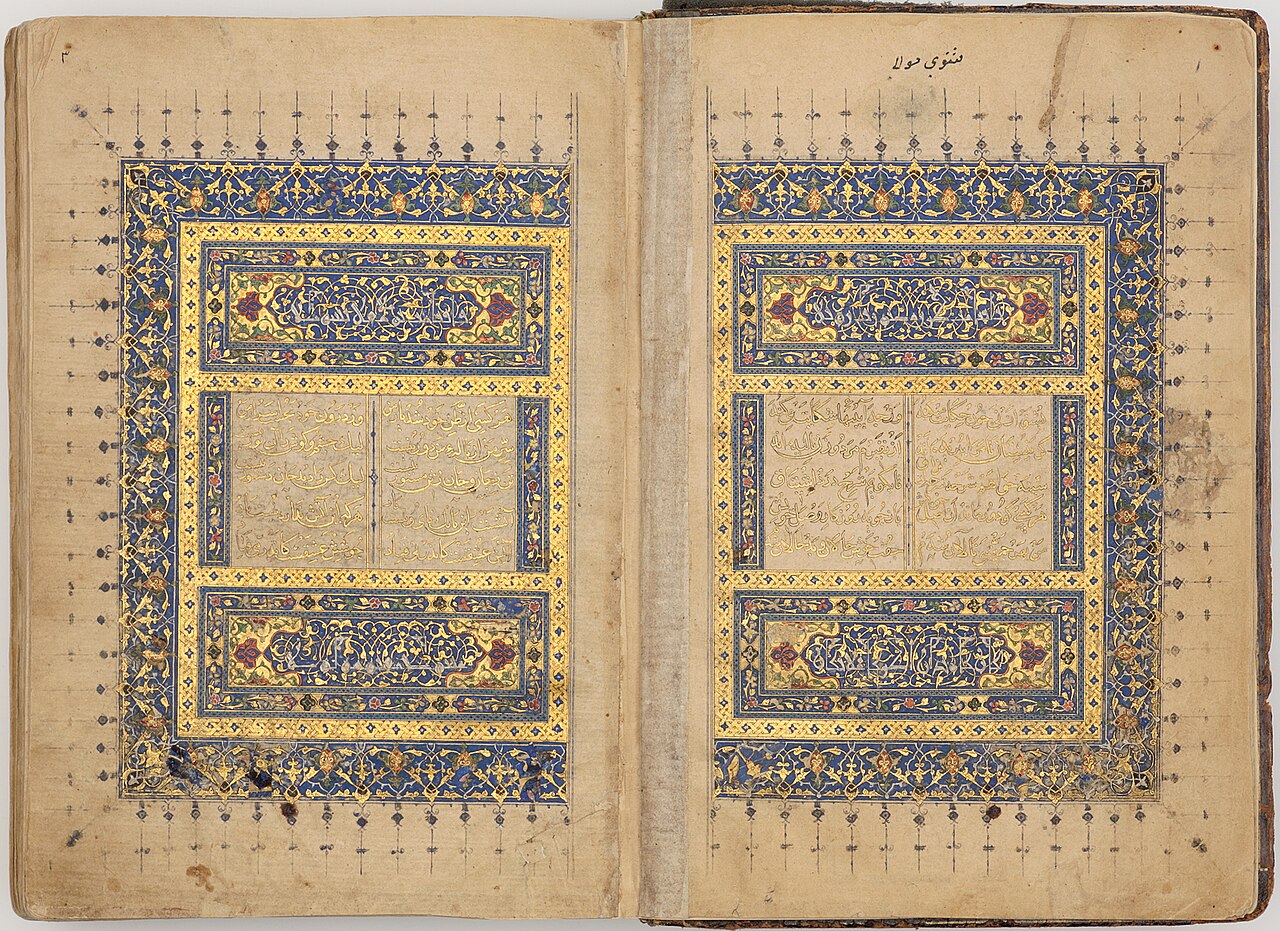 Book
Primary source
Masnavi
Rumi · c. 1258-1273
 Book
Primary source
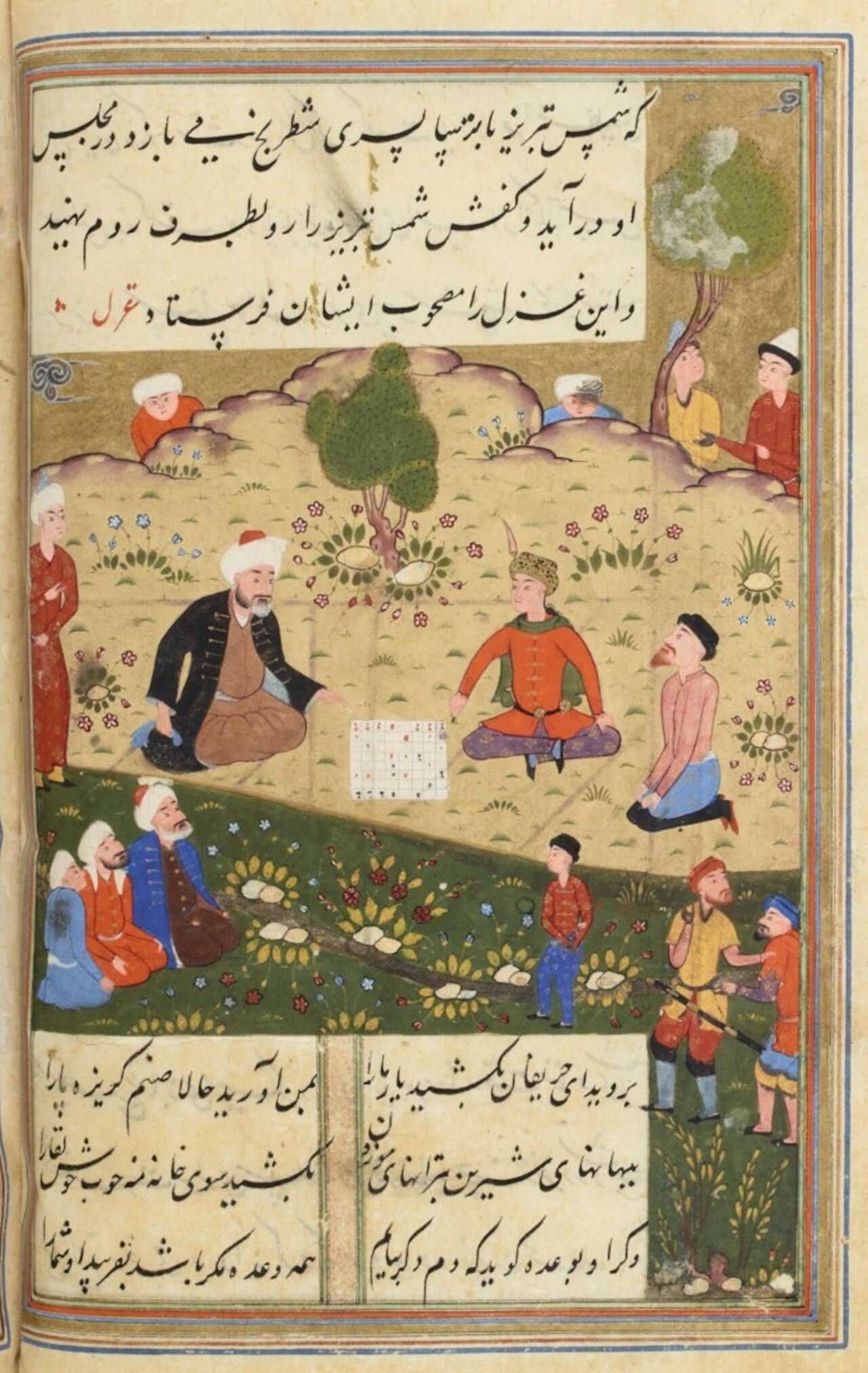
Diwan-e Shams-e Tabrizi
Rumi · c. 1247 onward
 Artifact
Secondary source
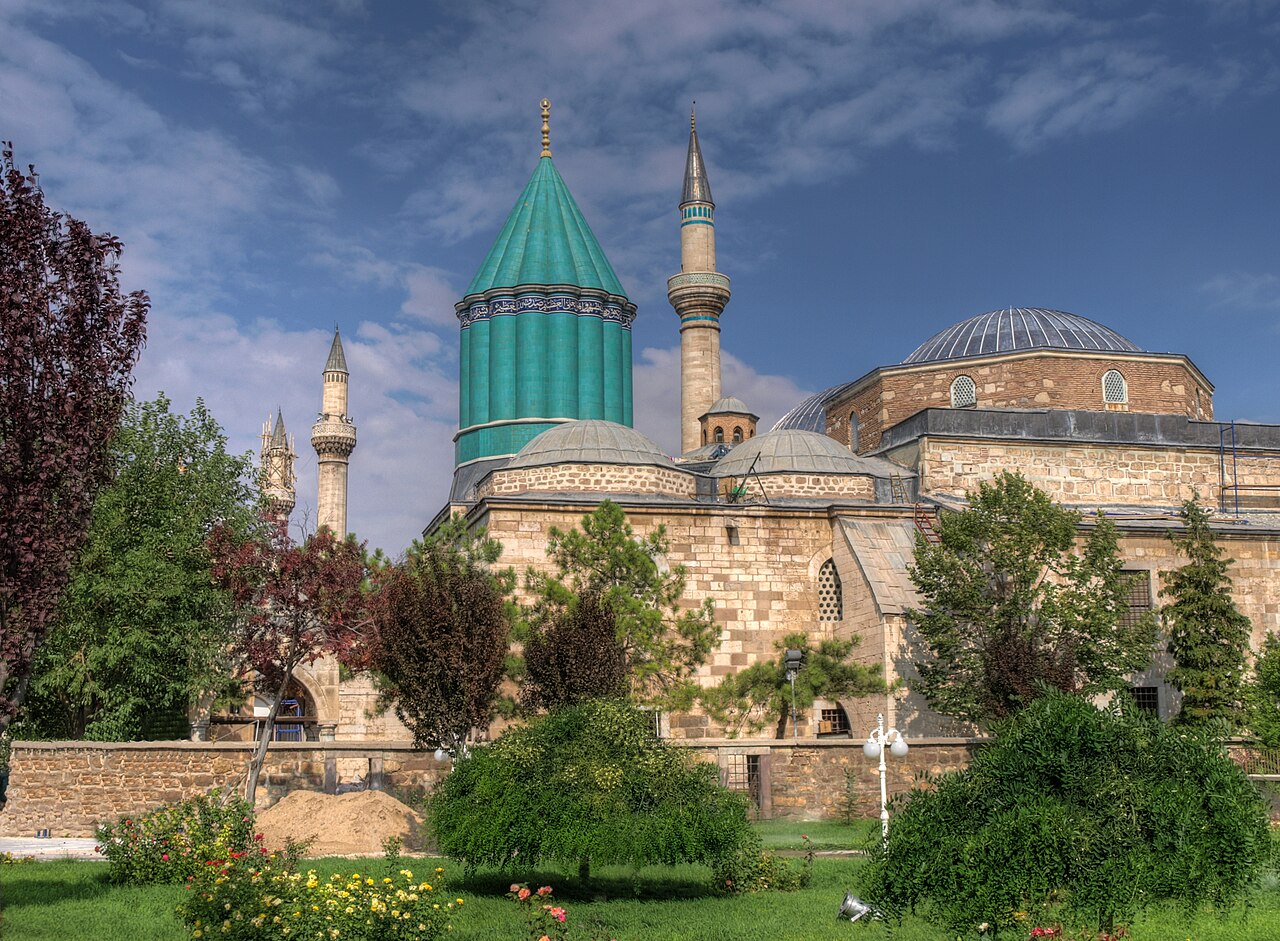
Grave of Rumi
soon after 1273
 Book
Primary source
Fihi Ma Fihi
Rumi · c. 1260-1273
 Artifact
Secondary source
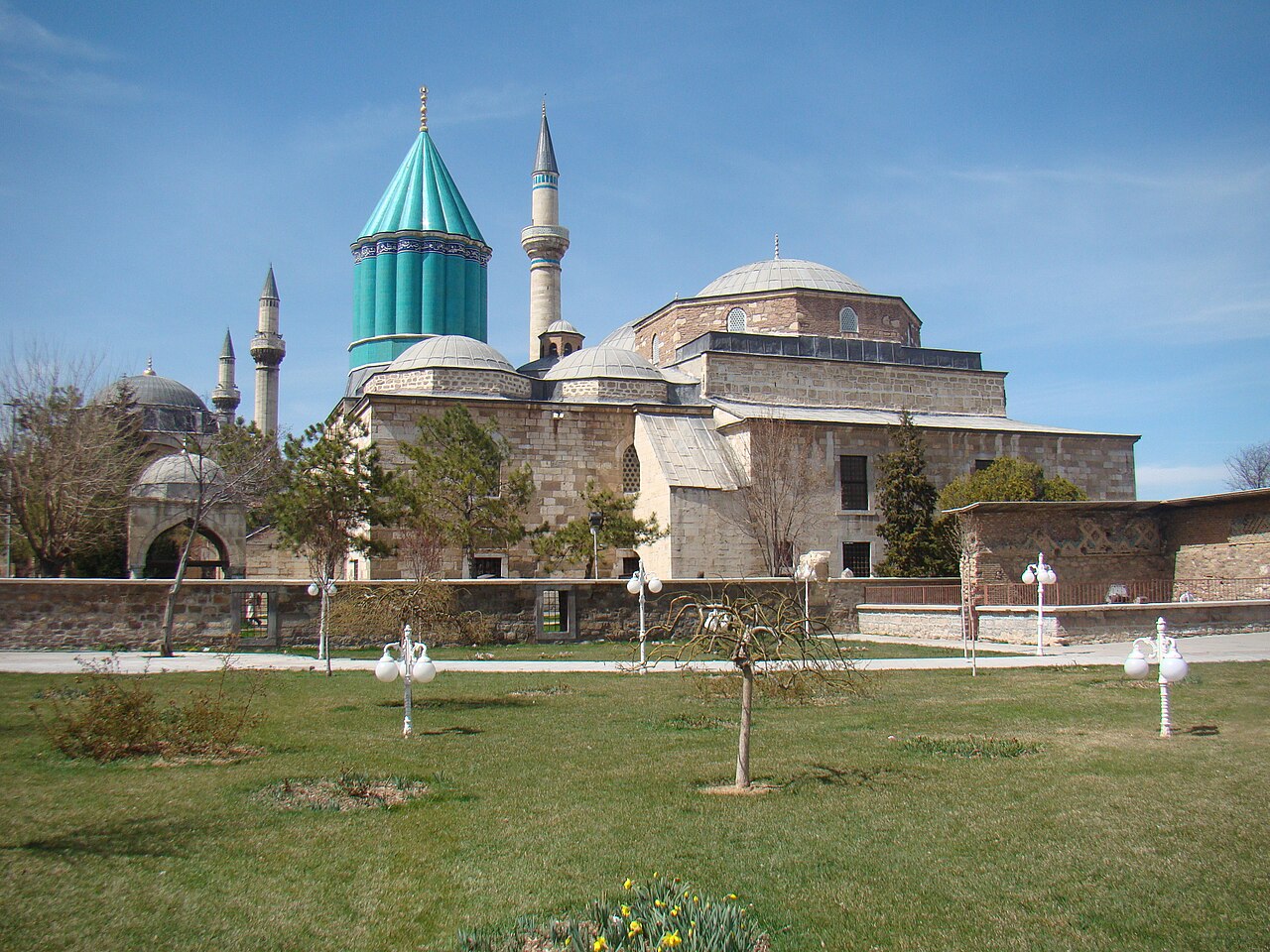
Mevlâna Museum
Badr al-Din Tabrizi (architect) · built soon after 1273; museum since 1926
Ready when you are
Start chatting with Rumi (Jalāl ad-Dīn Muhammad Rūmī) now.
20 messages free · No credit card · Available in 50+ languages.