


Secondary sourceArtifact1265 (photographed 1956)
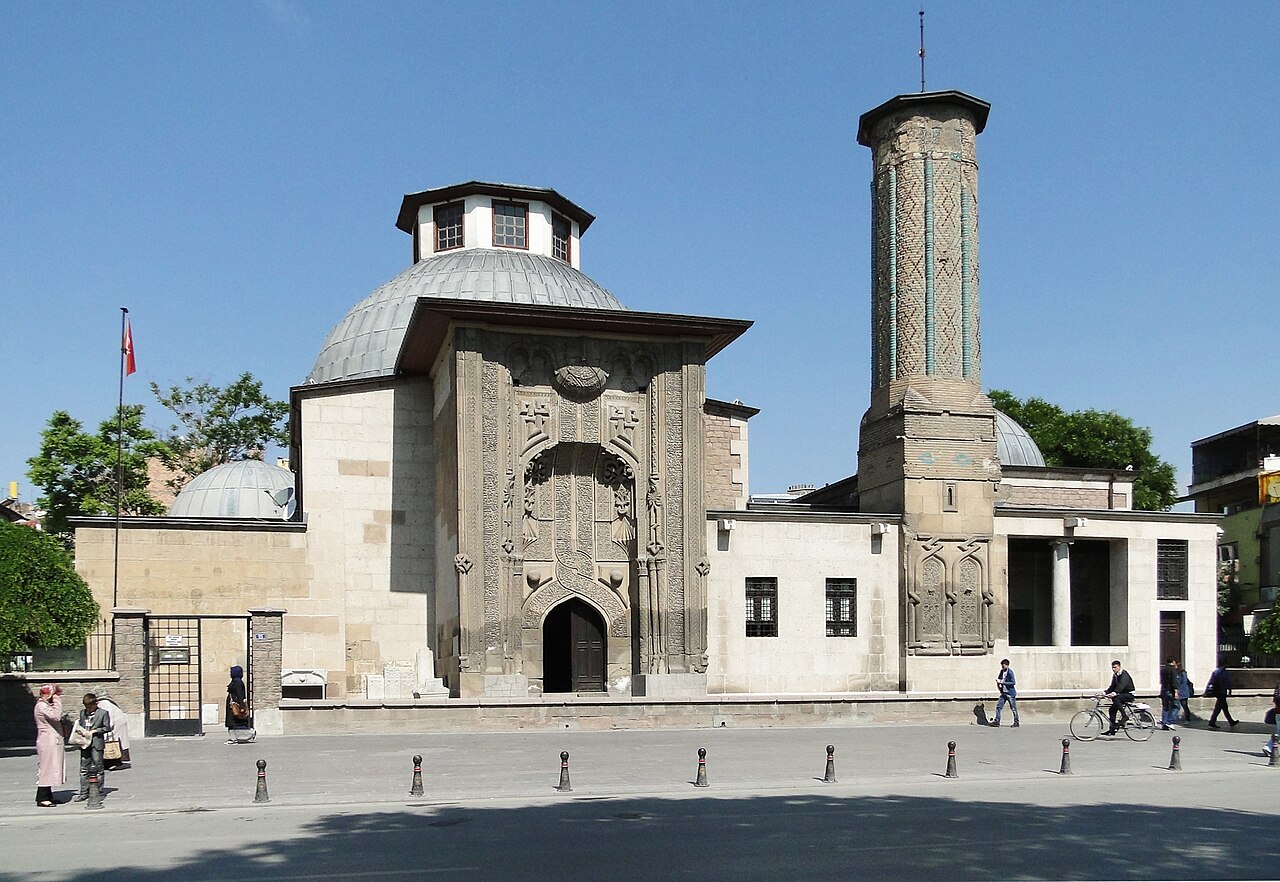
Ince Minaret Medrese
Kölük bin Abdullah · 1265 (photographed 1956)
A 13th-century madrasa in Konya built by Rumi's patron, showing the learned city where he lived and taught.
This madrasa, built by Rumi's patron in his lifetime, shows the learned Konya in which Rumi lived and taught.
About this source
What it is
The İnce Minareli Medrese (Slender Minaret Madrasa) is a 13th-century Islamic school in Konya, Turkey, now a museum of stone and wood art. It was commissioned in 1265 by the Seljuk vizier Sahib Ata Fakhr al-Din Ali and designed by the architect Kölük bin Abdullah. It has an ornate carved portal, a domed courtyard, and a tall minaret covered in turquoise tiles, partly destroyed by lightning in 1901.
Why it matters
This building shows the city of Konya during Rumi's own lifetime, built by one of his admirers among the Seljuk elite. It reveals how religious learning, calligraphy and architecture flourished together in the Konya where Rumi taught and wrote.
Look closer
- What does the decoration on the portal tell you about what the builders valued?
- Why might a vizier have wanted to build a school like this?
- What has changed about the building since it was first built?
This artifact is part of the curated material that grounds the AI version of Rumi (Jalāl ad-Dīn Muhammad Rūmī) on Humy.ai — when students ask about related events, the AI can quote it and cite it.
More Rumi (Jalāl ad-Dīn Muhammad Rūmī) sources
Meet the AI Rumi (Jalāl ad-Dīn Muhammad Rūmī) →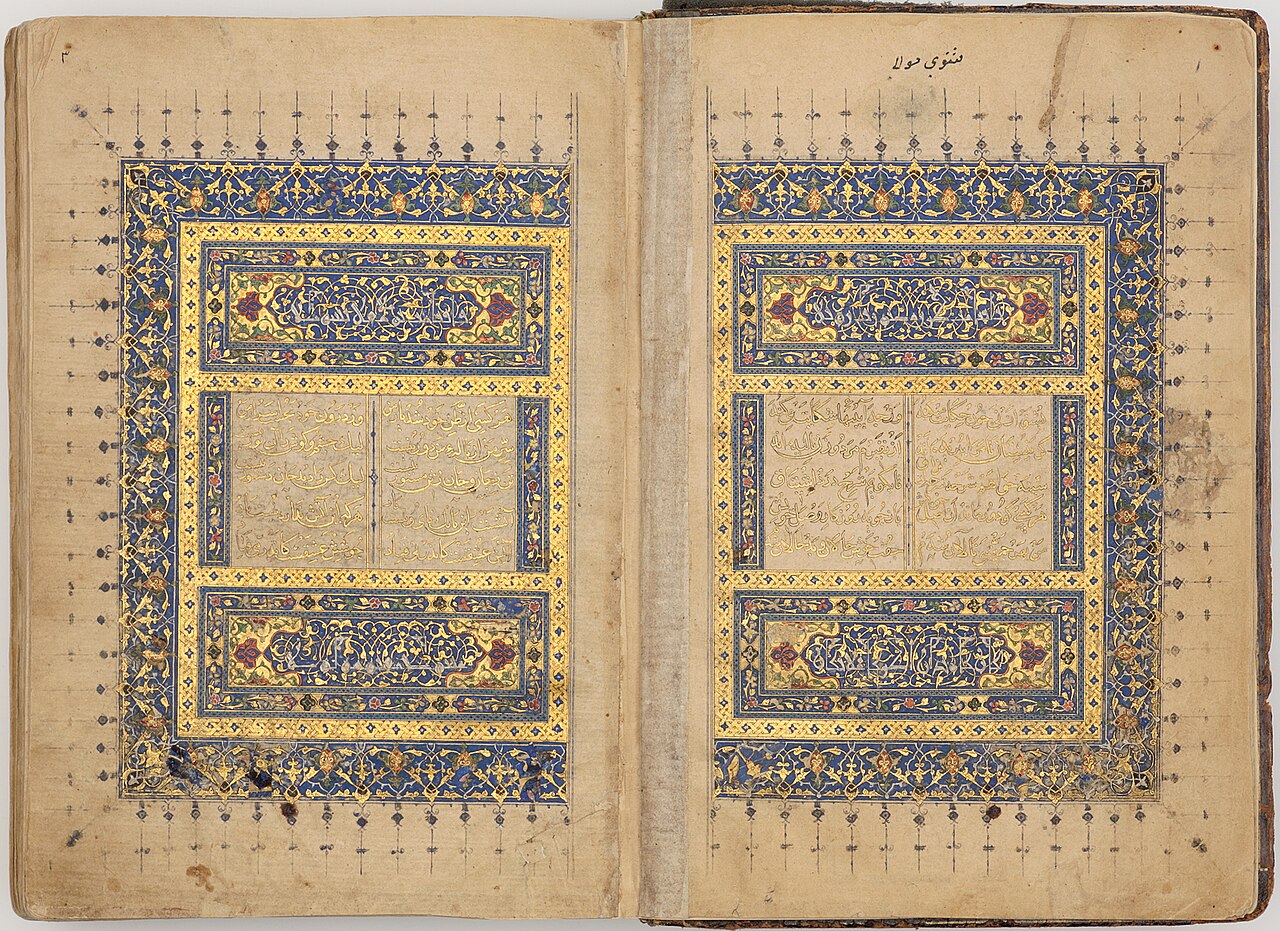 Book
Primary source
Masnavi
Rumi · c. 1258-1273
 Book
Primary source
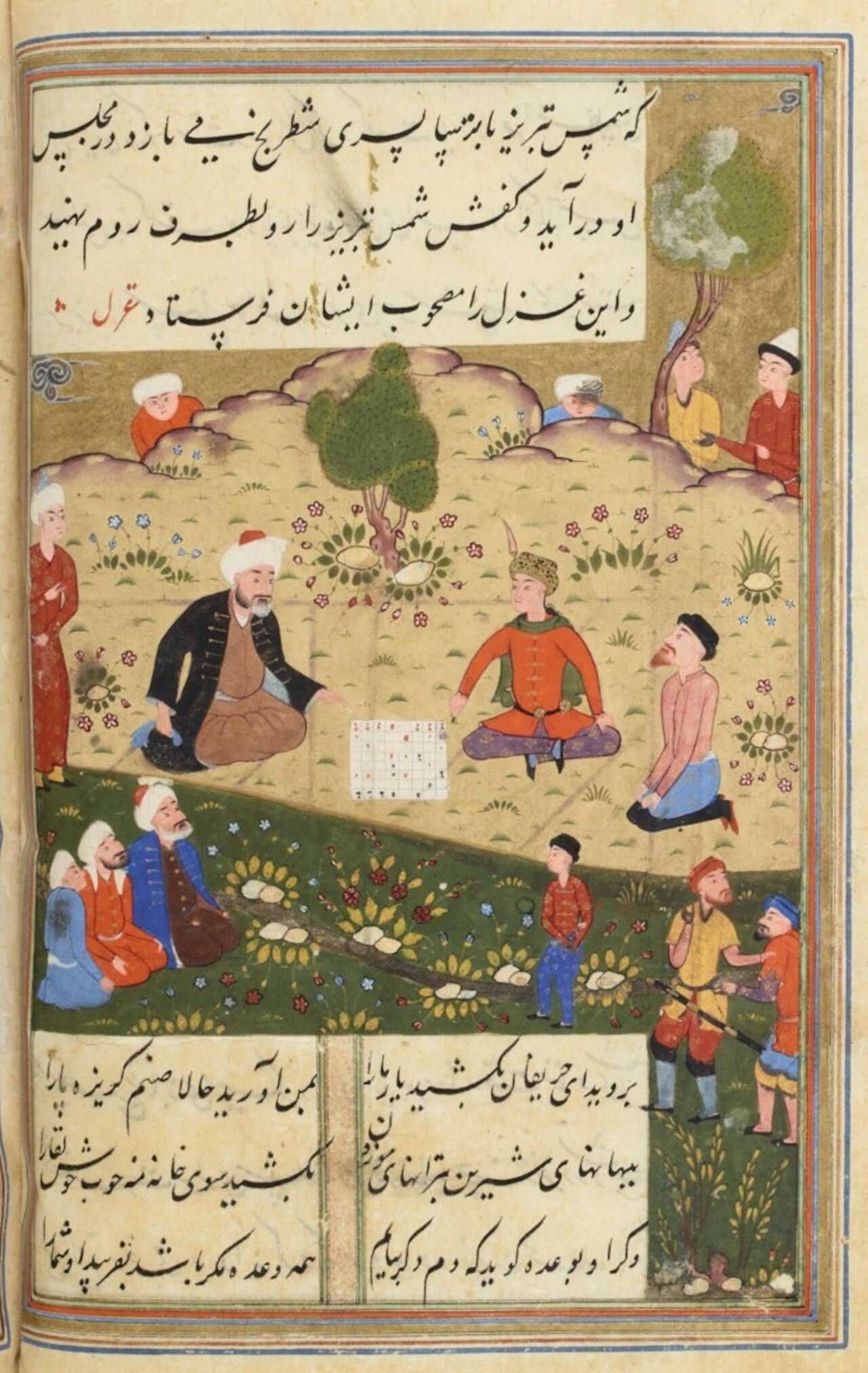
Diwan-e Shams-e Tabrizi
Rumi · c. 1247 onward
 Artifact
Secondary source
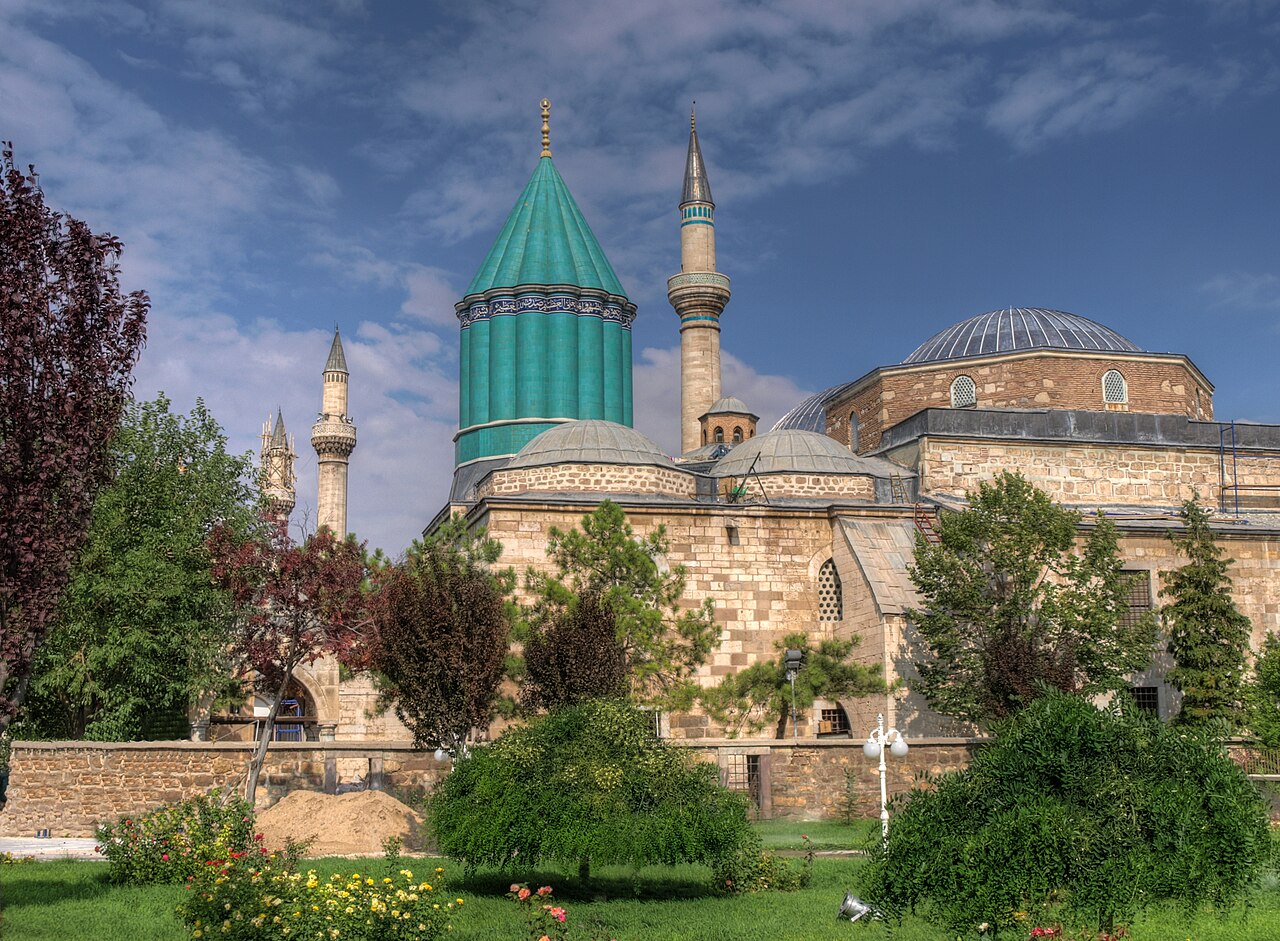
Grave of Rumi
soon after 1273
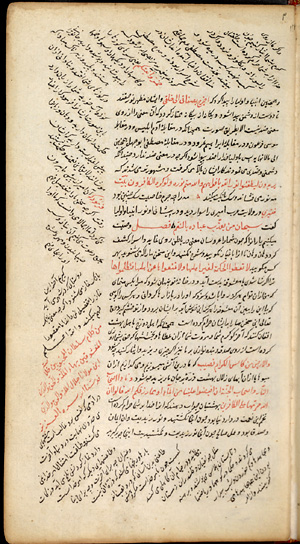 Book
Primary source
Fihi Ma Fihi
Rumi · c. 1260-1273
 Artifact
Secondary source
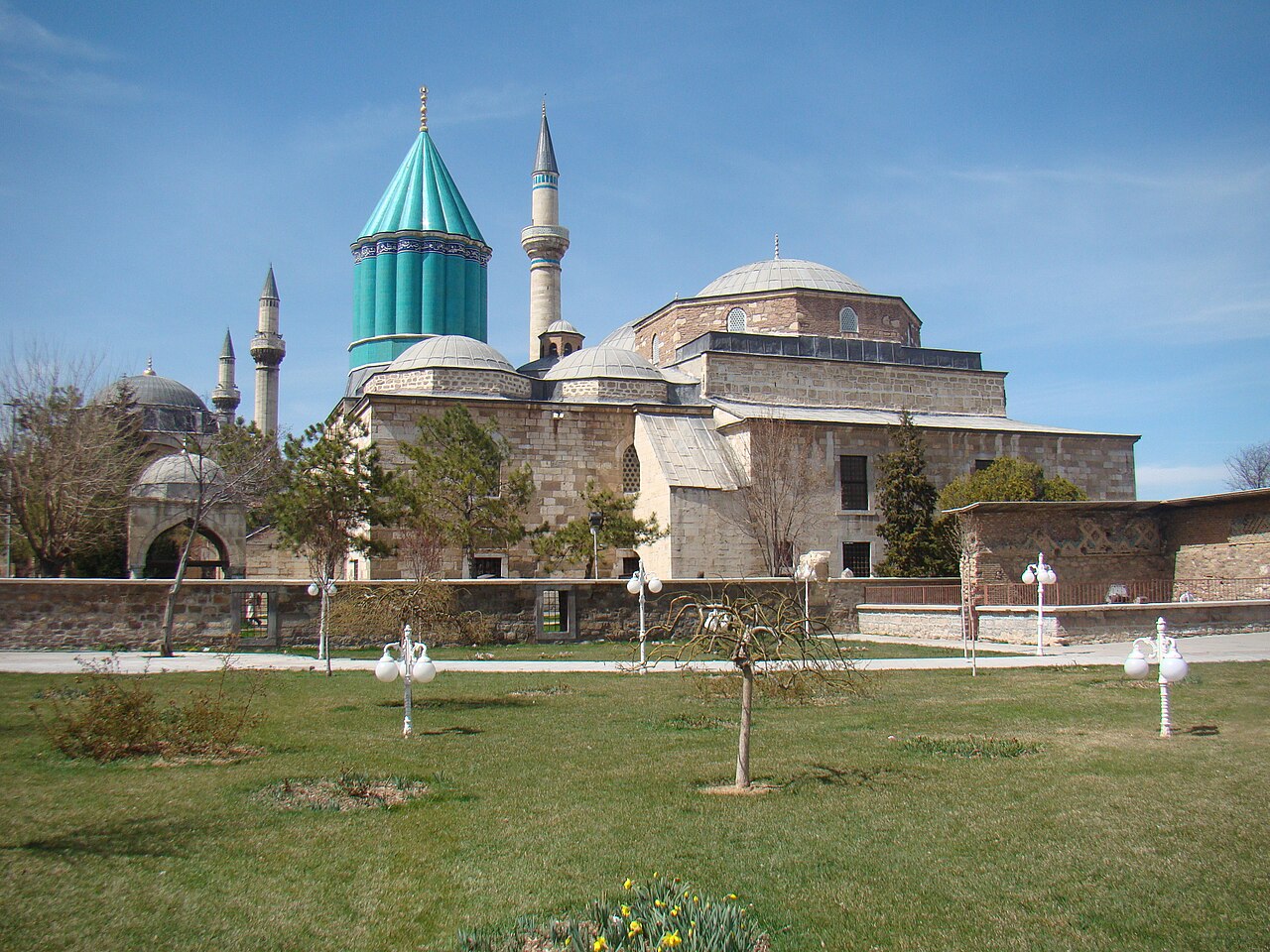
Mevlâna Museum
Badr al-Din Tabrizi (architect) · built soon after 1273; museum since 1926
Ready when you are
Start chatting with Rumi (Jalāl ad-Dīn Muhammad Rūmī) now.
20 messages free · No credit card · Available in 50+ languages.