


Secondary sourceBook1915
Magna Moralia (LibriVox audio reading)
Aristotle (attribution disputed) · 1915
A volunteer audio reading, in English, of the ethical treatise Magna Moralia, which is attributed to Aristotle but whose authorship is disputed. It shows how ancient ideas about friendship and virtue reached listeners today.
The treatise is attributed to Aristotle, though his authorship is disputed, and this recording shows how his name is linked to a text on ethics and virtue.
About this source
What it is
This is a LibriVox audio recording, read in English by a volunteer named Geoffrey Edwards. It reads the text of Magna Moralia, often called Great Ethics, in the translation by St. George William Joseph Stock. The printed source is volume 9 of the Works of Aristotle, edited by W. D. Ross and published at Oxford in 1915. The recording was made recently. It is a modern reading of the text, not the voice of Aristotle.
Why it matters
The work discusses friendship, virtue, happiness and God. Its authorship is disputed, so it may not be Aristotle's own writing. The Oxford volume was prepared with the help of the Oxford Aristotelian Society, which shows how English scholars of the early twentieth century worked together to make ancient philosophy readable. The recording adds a modern voice to a text first written in ancient Greek.
Look closer
- Whose voice does this recording use, and how is that different from the author named in the title?
- Why might scholars question whether Aristotle wrote this treatise?
- What does an audio reading gain or lose compared with reading the printed Oxford text?
This book is part of the curated material that grounds the AI version of Aristotle on Humy.ai — when students ask about related events, the AI can quote it and cite it.
More Aristotle sources
Meet the AI Aristotle →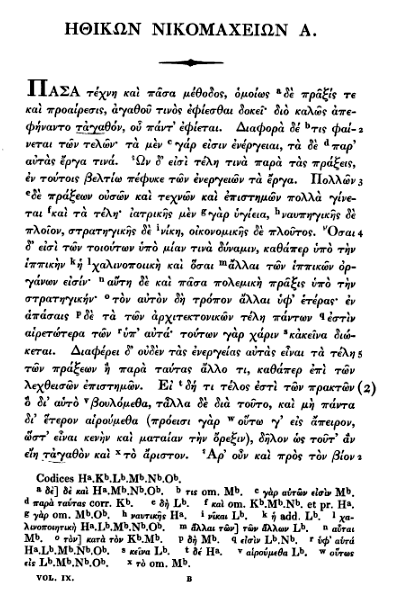
Ready when you are
Start chatting with Aristotle now.
20 messages free · No credit card · Available in 50+ languages.