


Primary sourcePainting1603
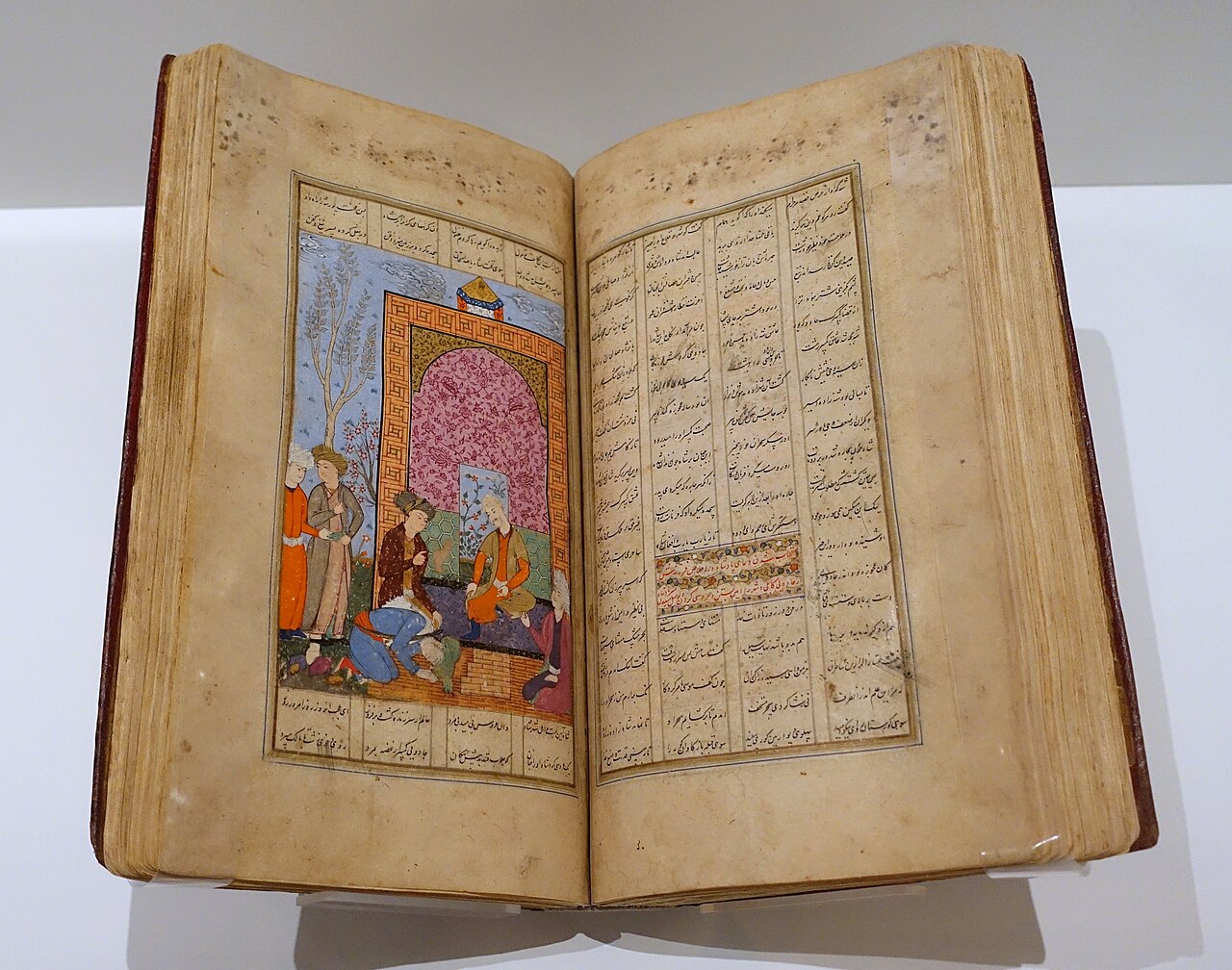
Masnavi-e Maanavi Manuscript, Iran, 1603
1603
An illuminated 1603 Persian manuscript of Rumi's Masnavi, displayed open at the Aga Khan Museum in Toronto.
A preserved copy of Rumi's own poem, now displayed in a museum as evidence of its long history of transmission.
About this source
What it is
This photograph shows an open illuminated manuscript of Rumi's Masnavi-e Maanavi, dated 1603, on display at the Aga Khan Museum in Toronto. One page has a painted miniature of figures in a garden, the other is filled with Persian calligraphy.
Why it matters
The manuscript is one of many copies made long after Rumi's death, showing how his poetry continued to be reproduced, decorated and treasured across the centuries. Museums today preserve and display such copies so audiences can see how his words were physically transmitted.
- What differences do you notice between the illustrated page and the text-only page?
- Why might a museum choose to display this manuscript open rather than closed?
- What does seeing the manuscript in a glass case, rather than reading the poem itself, add to or take away from your understanding of Rumi?
This painting is part of the curated material that grounds the AI version of Rumi (Jalāl ad-Dīn Muhammad Rūmī) on Humy.ai — when students ask about related events, the AI can quote it and cite it.
More Rumi (Jalāl ad-Dīn Muhammad Rūmī) sources
Meet the AI Rumi (Jalāl ad-Dīn Muhammad Rūmī) →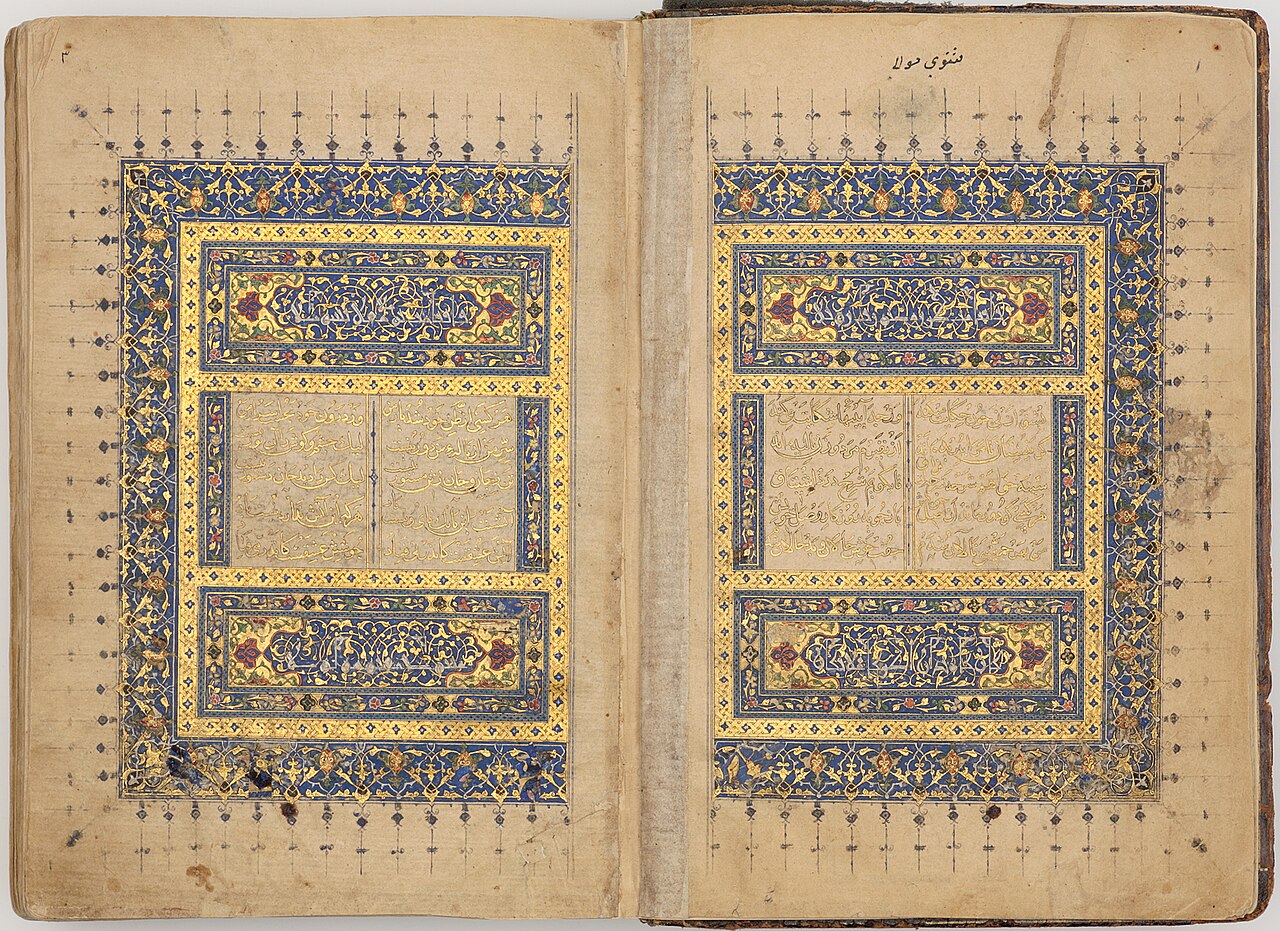 Book
Primary source
Masnavi
Rumi · c. 1258-1273
 Book
Primary source
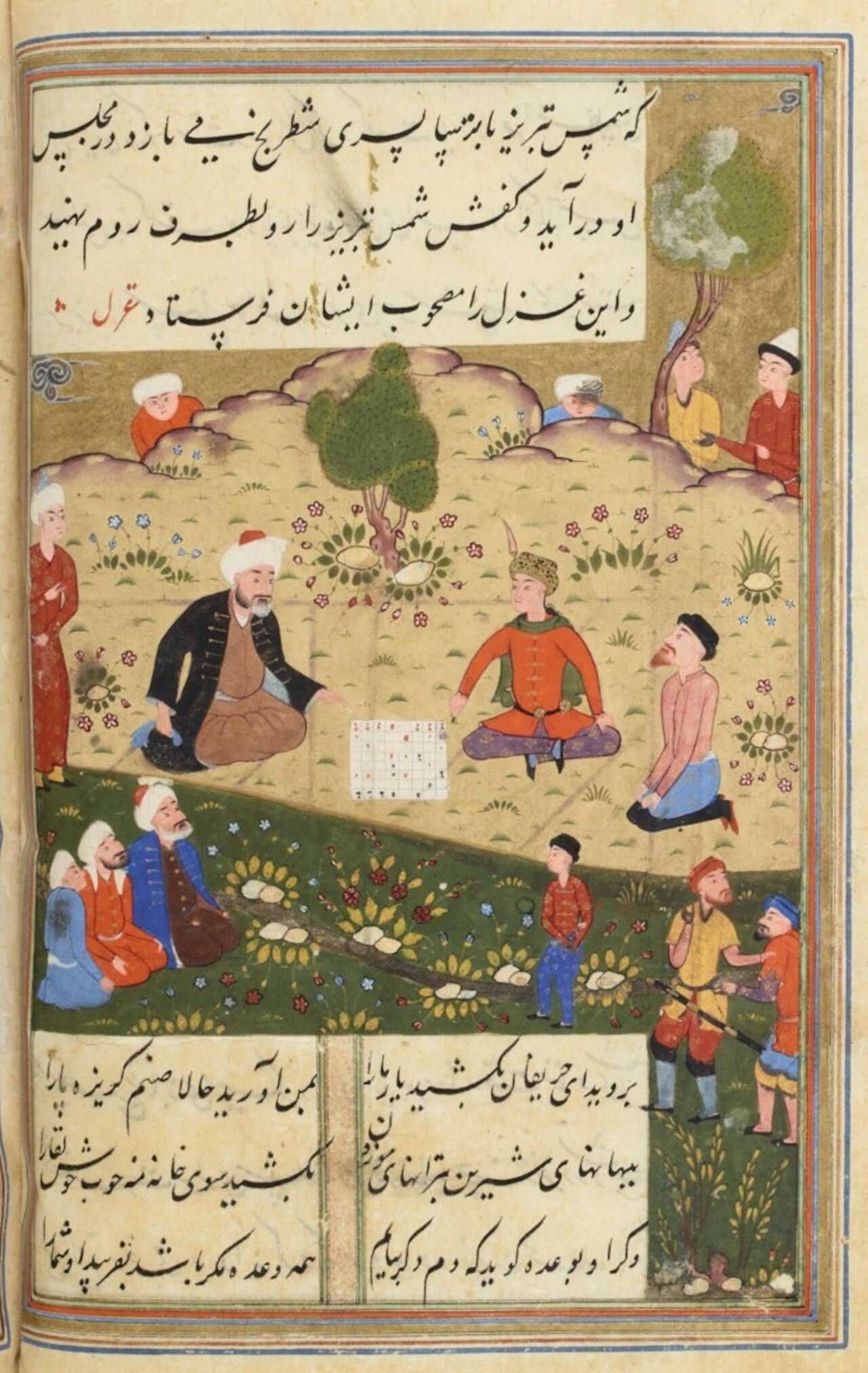
Diwan-e Shams-e Tabrizi
Rumi · c. 1247 onward
 Artifact
Secondary source
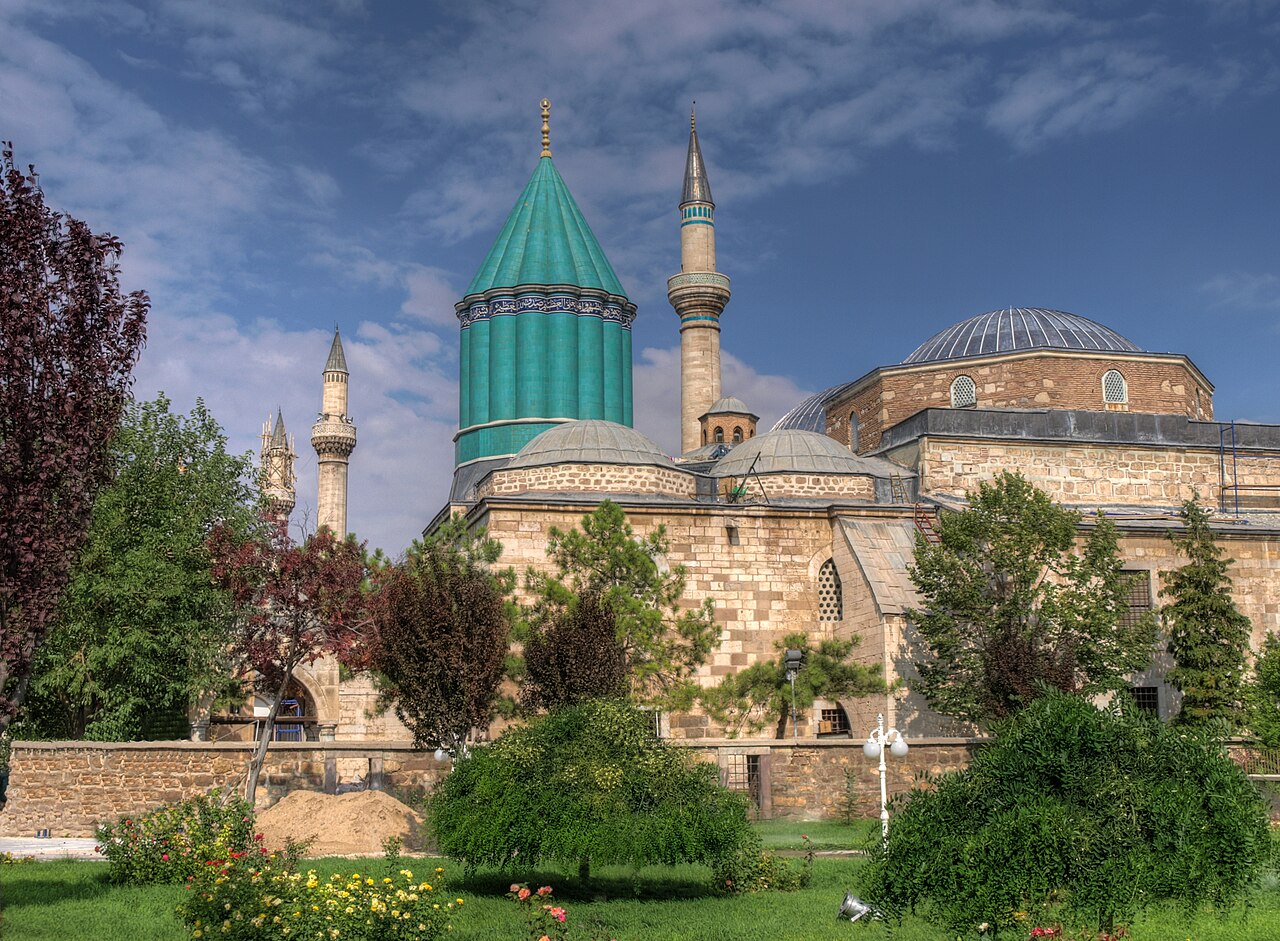
Grave of Rumi
soon after 1273
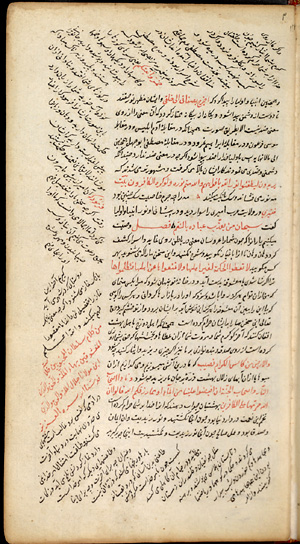 Book
Primary source
Fihi Ma Fihi
Rumi · c. 1260-1273
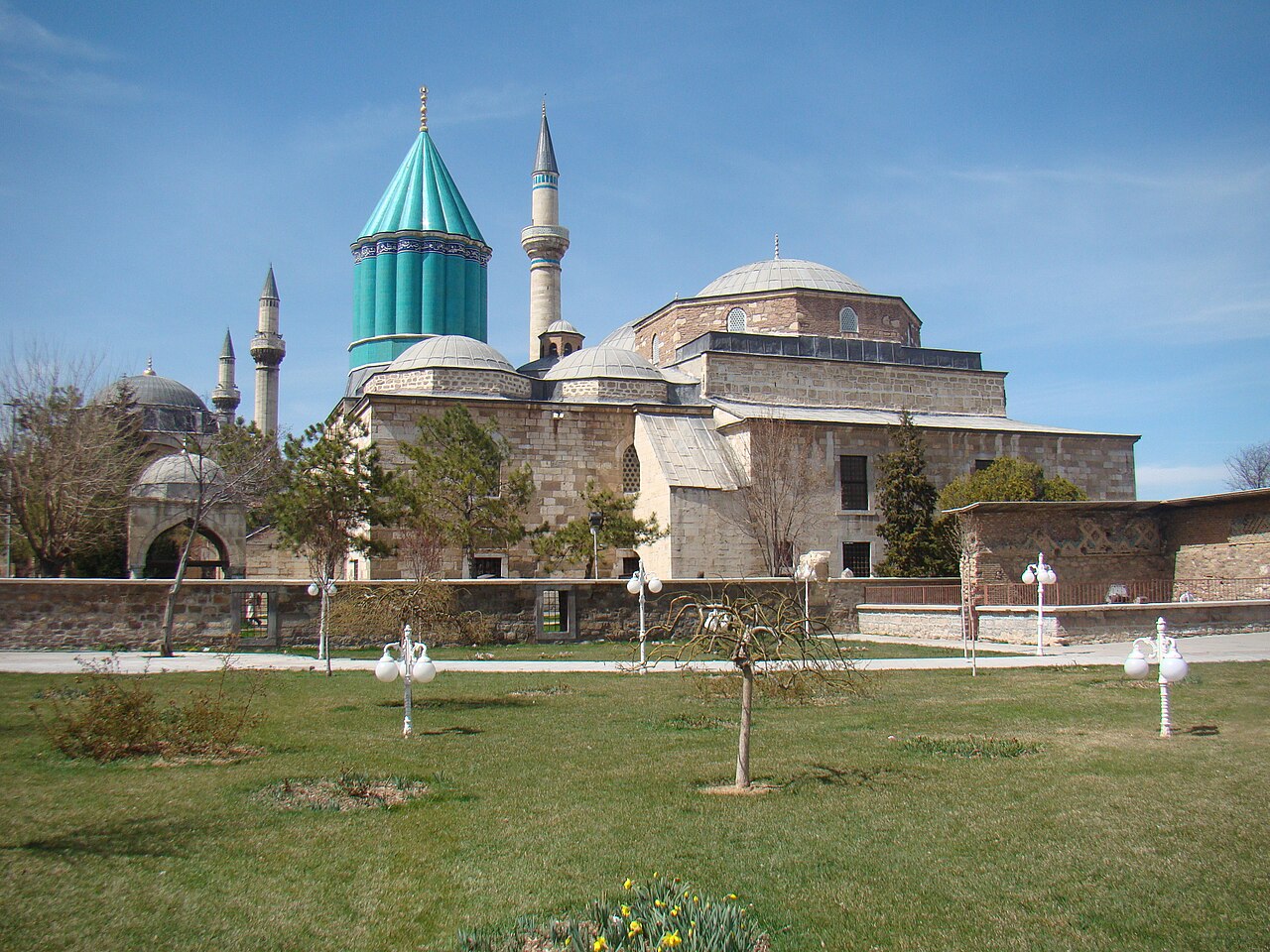 Artifact
Secondary source
Mevlâna Museum
Badr al-Din Tabrizi (architect) · built soon after 1273; museum since 1926
Ready when you are
Start chatting with Rumi (Jalāl ad-Dīn Muhammad Rūmī) now.
20 messages free · No credit card · Available in 50+ languages.