


Primary sourceBook1479
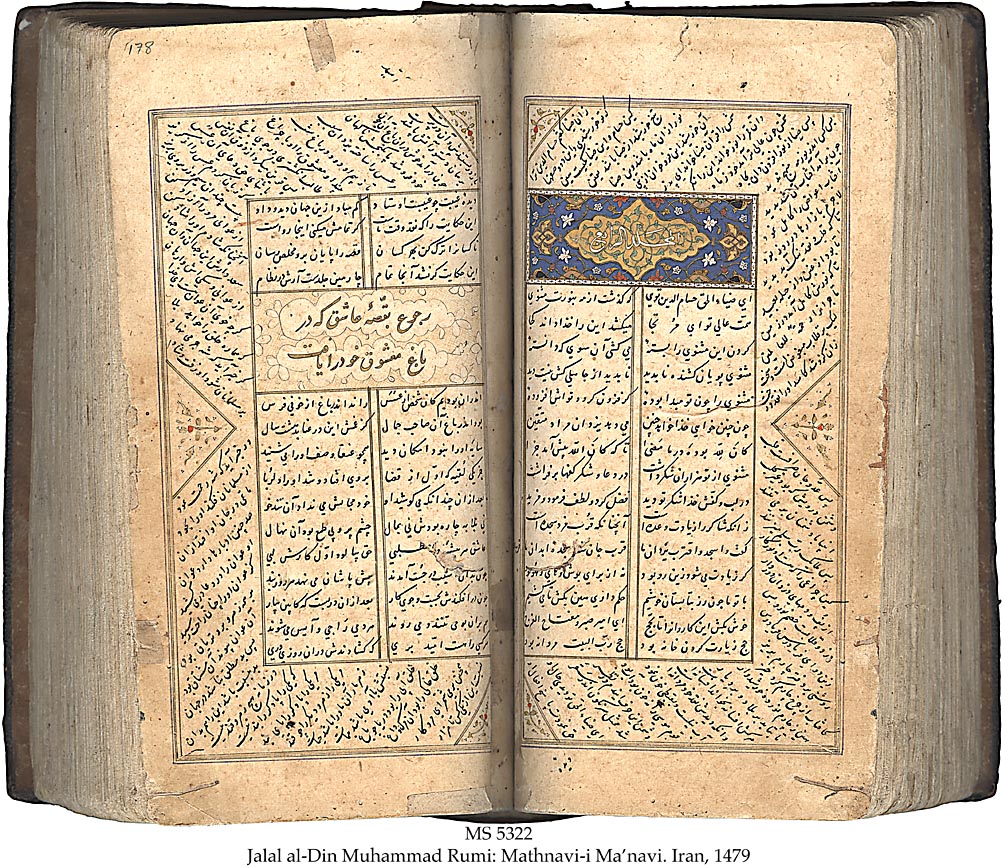
Masnavi-i Ma'navi Manuscript, Shiraz 1479
Hussain ibn Shaikh 'Ali (scribe) · 1479
A complete 1479 Persian manuscript of Rumi's Masnavi, handwritten in elegant Nasta'liq script with gold decoration.
This manuscript preserves Rumi's poem in its original Persian, copied over two centuries after his death.
About this source
What it is
This is a complete manuscript of Rumi's Masnavi-i Ma'navi, copied on paper in Shiraz in 1479 by the scribe Hussain ibn Shaikh 'Ali. It has 358 folios written in Nasta'liq and Naskhi scripts, with gold-ruled margins and illuminated headings.
Why it matters
This manuscript shows how Rumi's poetry was copied and treasured for centuries after his death in the 13th century. The gold decoration, ownership inscriptions, and seal impressions—including some from the Imperial Mughal Library—show how prized the work was among later owners and rulers.
- What does the careful gold decoration suggest about how valuable this book was considered?
- Why might later owners have added their own seals and inscriptions to the manuscript?
- What does the survival of a complete manuscript like this tell us about how texts were preserved before printing?
This book is part of the curated material that grounds the AI version of Rumi (Jalāl ad-Dīn Muhammad Rūmī) on Humy.ai — when students ask about related events, the AI can quote it and cite it.
More Rumi (Jalāl ad-Dīn Muhammad Rūmī) sources
Meet the AI Rumi (Jalāl ad-Dīn Muhammad Rūmī) →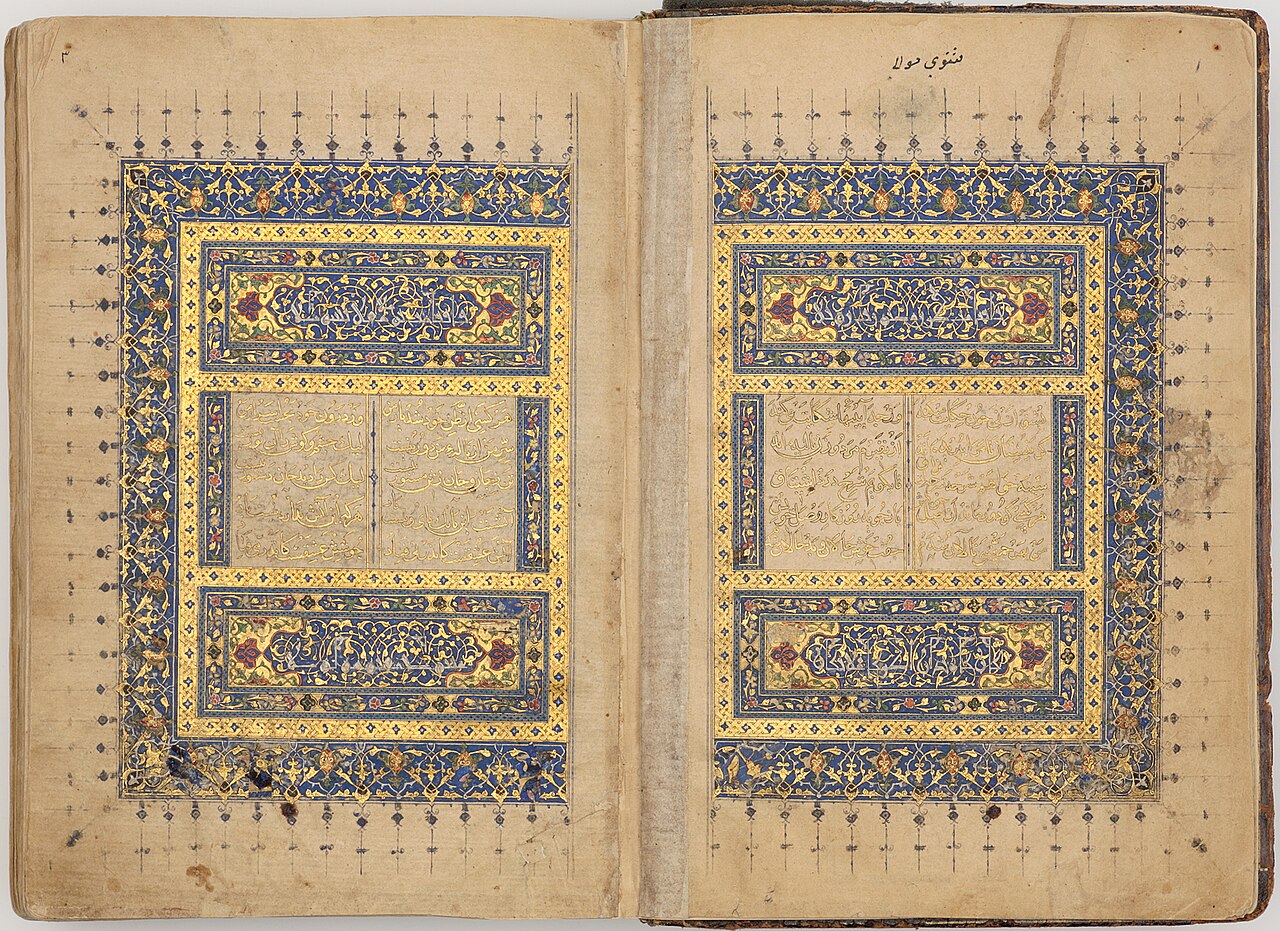 Book
Primary source
Masnavi
Rumi · c. 1258-1273
 Book
Primary source
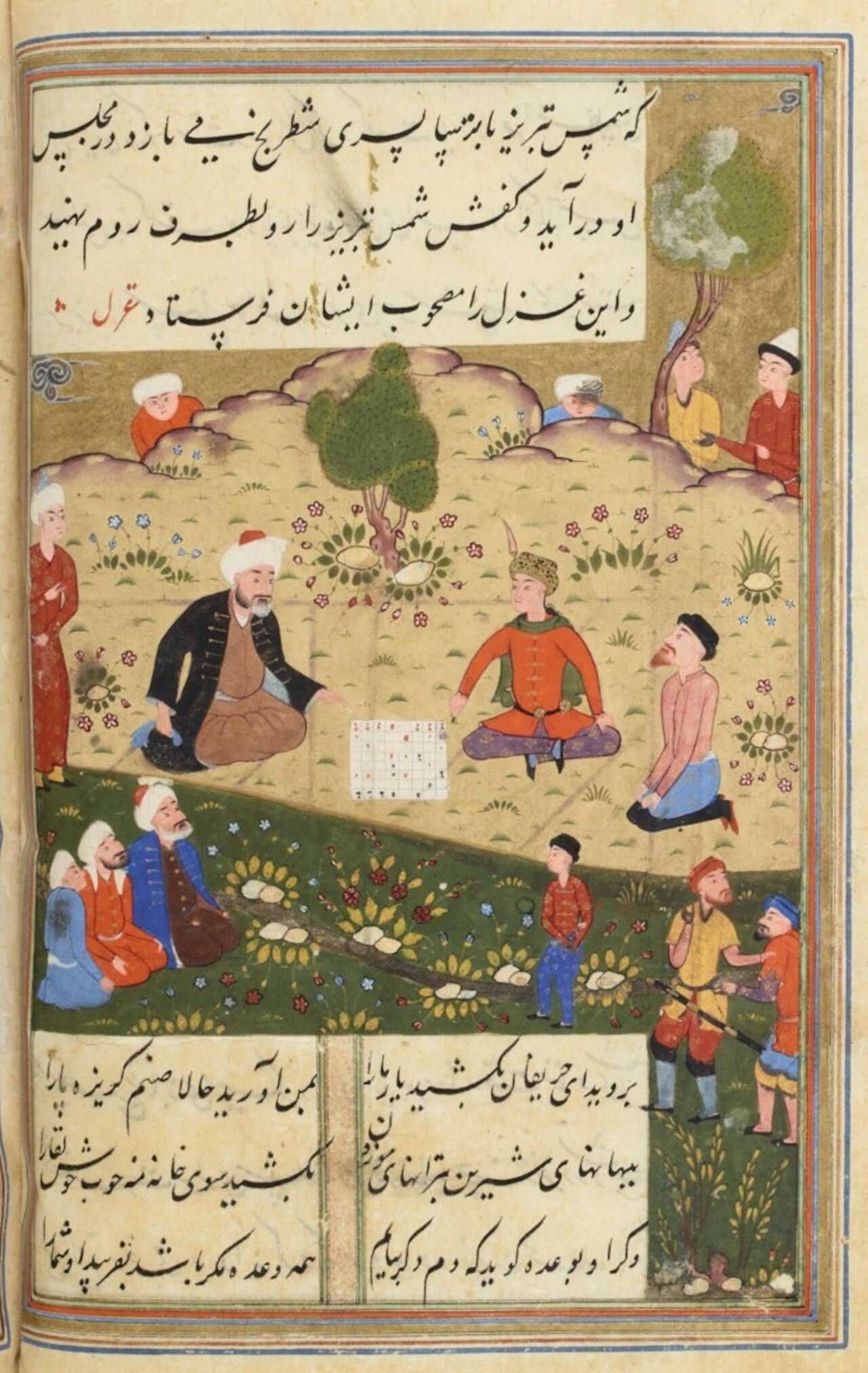
Diwan-e Shams-e Tabrizi
Rumi · c. 1247 onward
 Artifact
Secondary source
Grave of Rumi
soon after 1273
 Book
Primary source
Fihi Ma Fihi
Rumi · c. 1260-1273
 Artifact
Secondary source
Mevlâna Museum
Badr al-Din Tabrizi (architect) · built soon after 1273; museum since 1926
Ready when you are
Start chatting with Rumi (Jalāl ad-Dīn Muhammad Rūmī) now.
20 messages free · No credit card · Available in 50+ languages.