


Secondary sourcePaintingearly 19th century
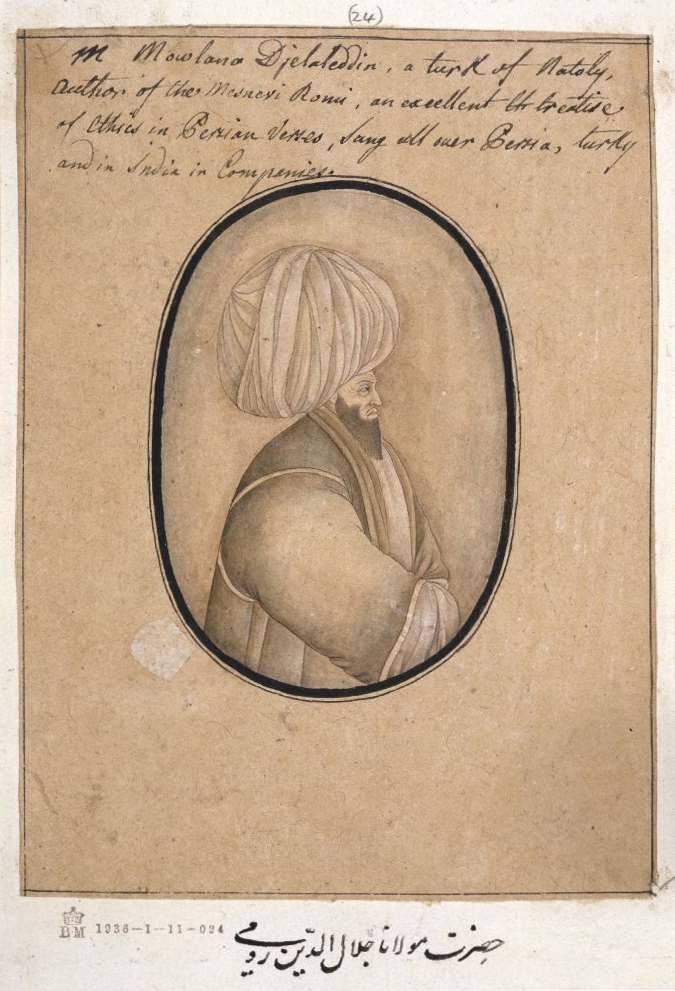
Mauláná Jalál al-Dín
Unknown · early 19th century
An early 19th-century album drawing giving an idealized posthumous portrait of Rumi, paired with the poet Hafiz.
This idealized posthumous portrait shows how later artists imagined Rumi's appearance, using conventional symbols rather than a real likeness.
About this source
What it is
This is a tinted ink and watercolour drawing on paper from an early 19th-century Mughal Indian album, placed alongside a portrait of the poet Hafiz. It shows a bearded man in profile with a large turban and long robe, inscribed as Rumi. The artist is unknown.
Why it matters
Because Rumi died centuries before this was made, it cannot show his real appearance. Instead it shows how later artists imagined him, using traits such as an enormous turban, sleeves, profile pose and wrinkled face that commonly appear in posthumous portraits of him. It reveals how Rumi was remembered and honoured as a mystical poet long after his death.
Look closer
- Since this was made centuries after Rumi died, what can it tell us, and what can't it tell us, about him?
- What details made contemporaries recognize this as a portrait of Rumi rather than of Hafiz?
- Why might an album place two famous Persian poets side by side?
This painting is part of the curated material that grounds the AI version of Rumi (Jalāl ad-Dīn Muhammad Rūmī) on Humy.ai — when students ask about related events, the AI can quote it and cite it.
More Rumi (Jalāl ad-Dīn Muhammad Rūmī) sources
Meet the AI Rumi (Jalāl ad-Dīn Muhammad Rūmī) →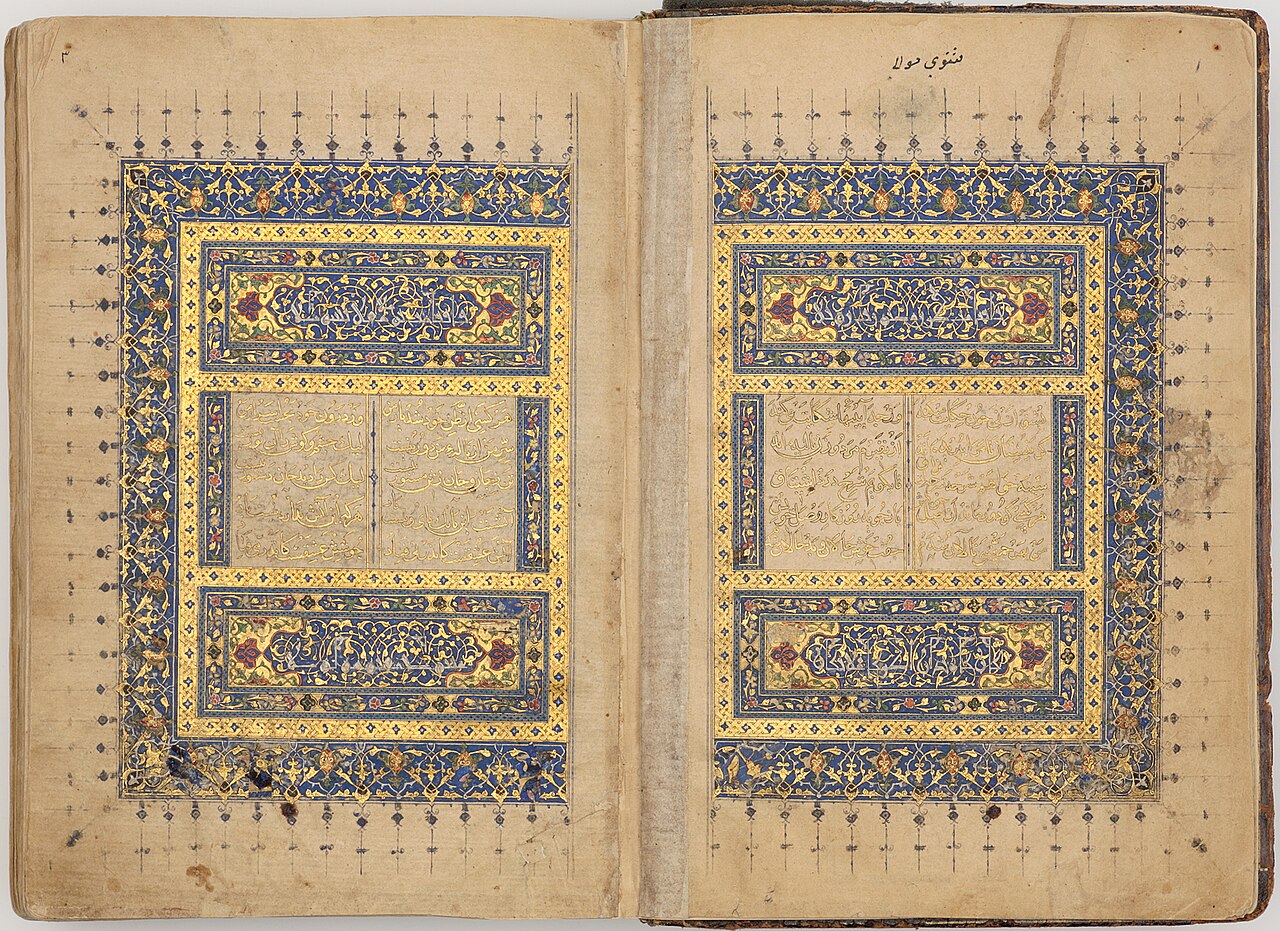 Book
Primary source
Masnavi
Rumi · c. 1258-1273
 Book
Primary source
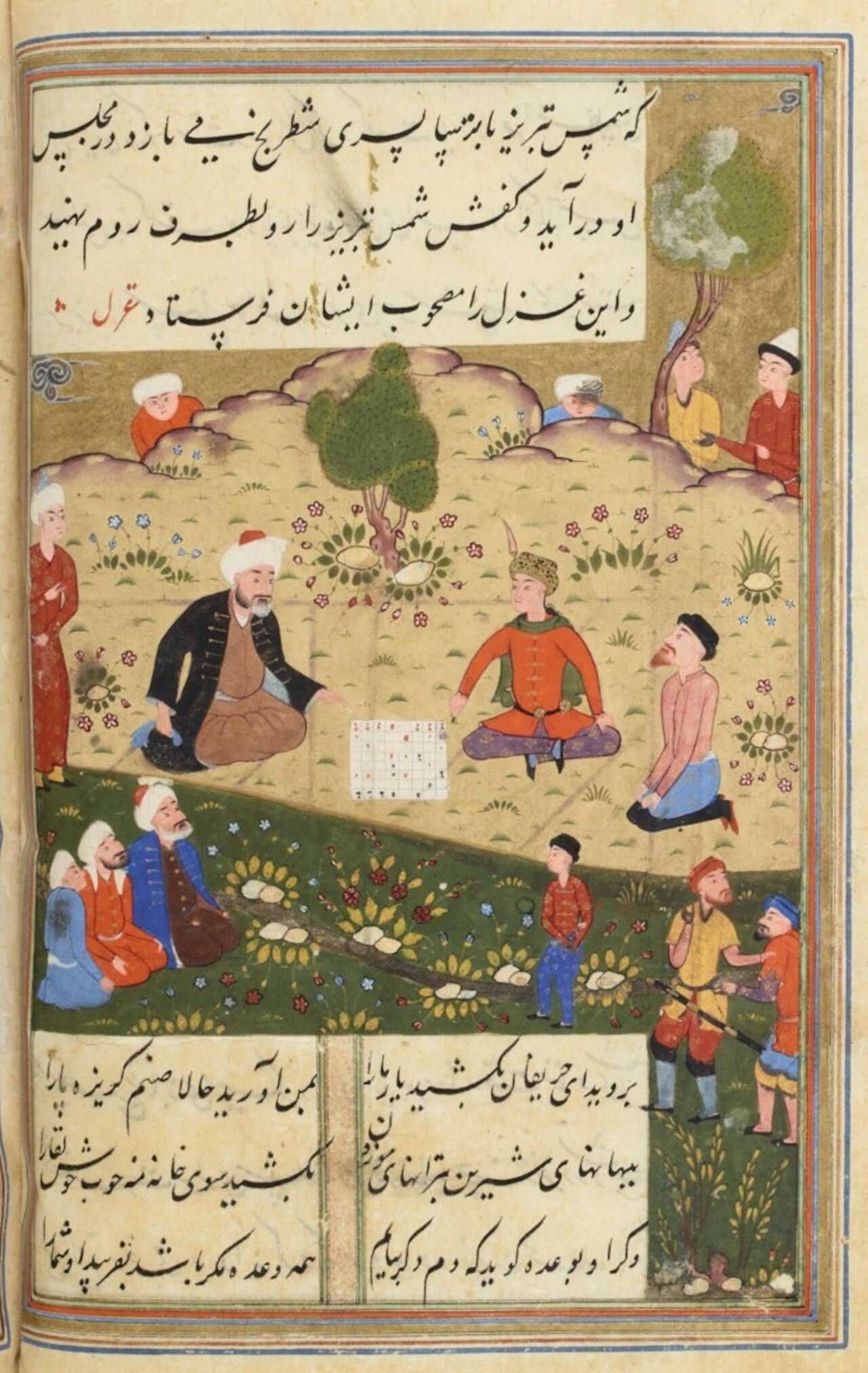
Diwan-e Shams-e Tabrizi
Rumi · c. 1247 onward
 Artifact
Secondary source
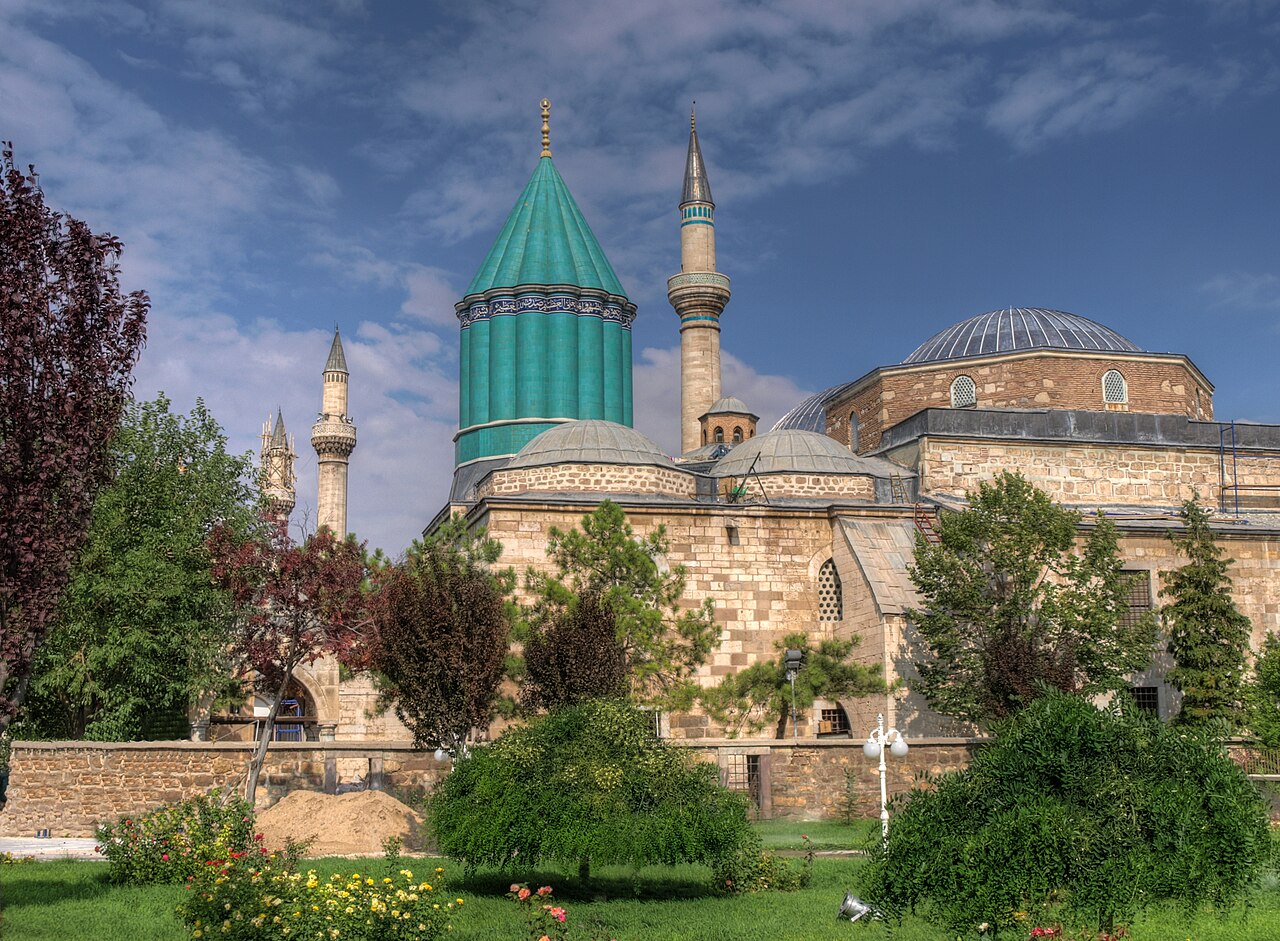
Grave of Rumi
soon after 1273
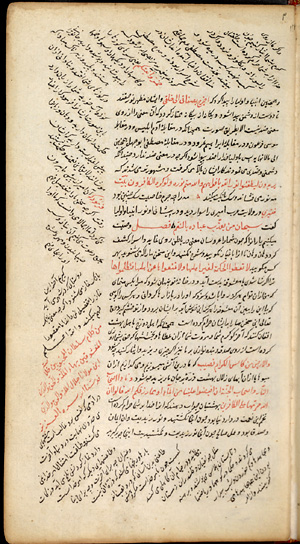 Book
Primary source
Fihi Ma Fihi
Rumi · c. 1260-1273
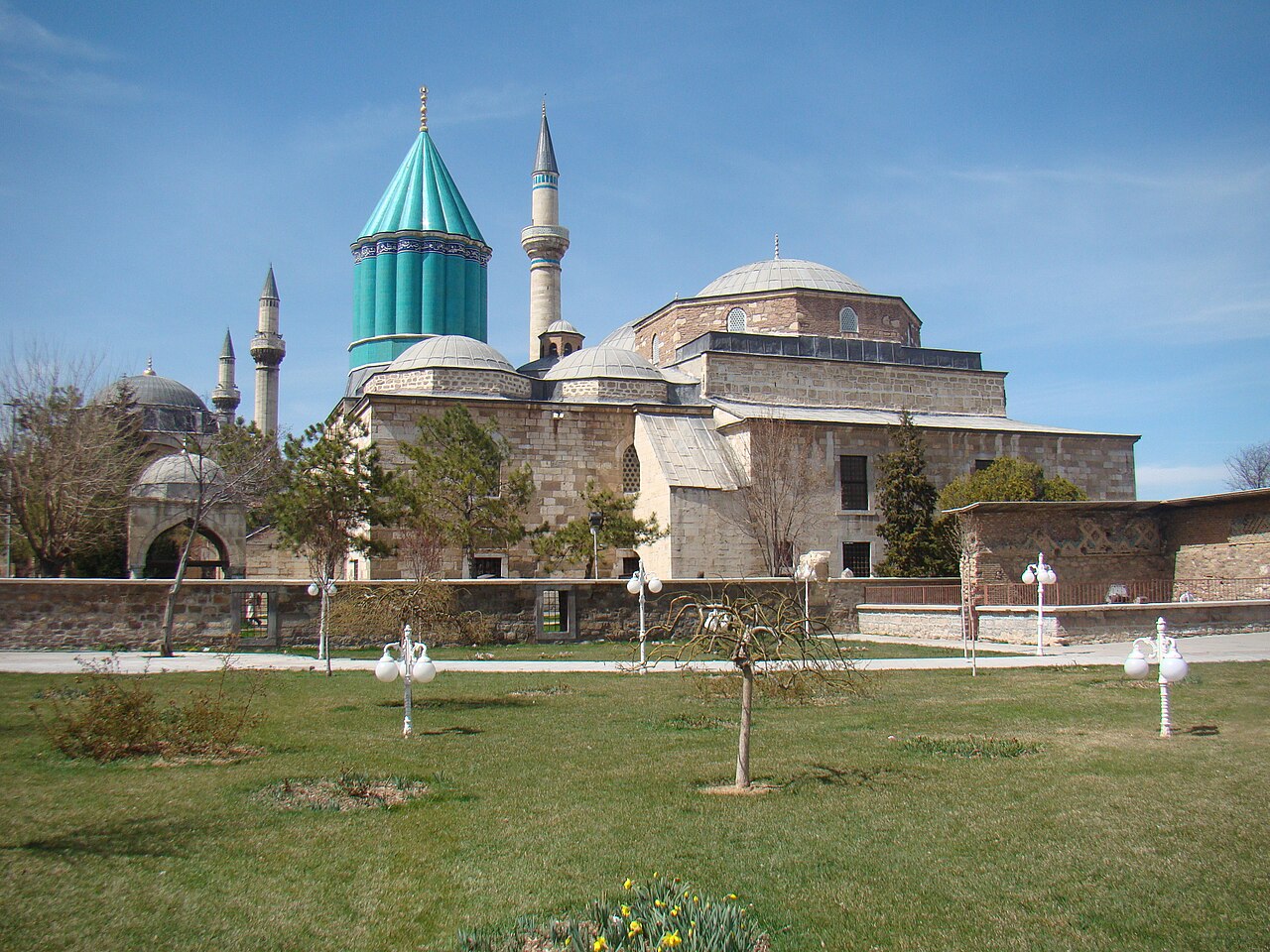 Artifact
Secondary source
Mevlâna Museum
Badr al-Din Tabrizi (architect) · built soon after 1273; museum since 1926
Ready when you are
Start chatting with Rumi (Jalāl ad-Dīn Muhammad Rūmī) now.
20 messages free · No credit card · Available in 50+ languages.