


Primary sourceDocument
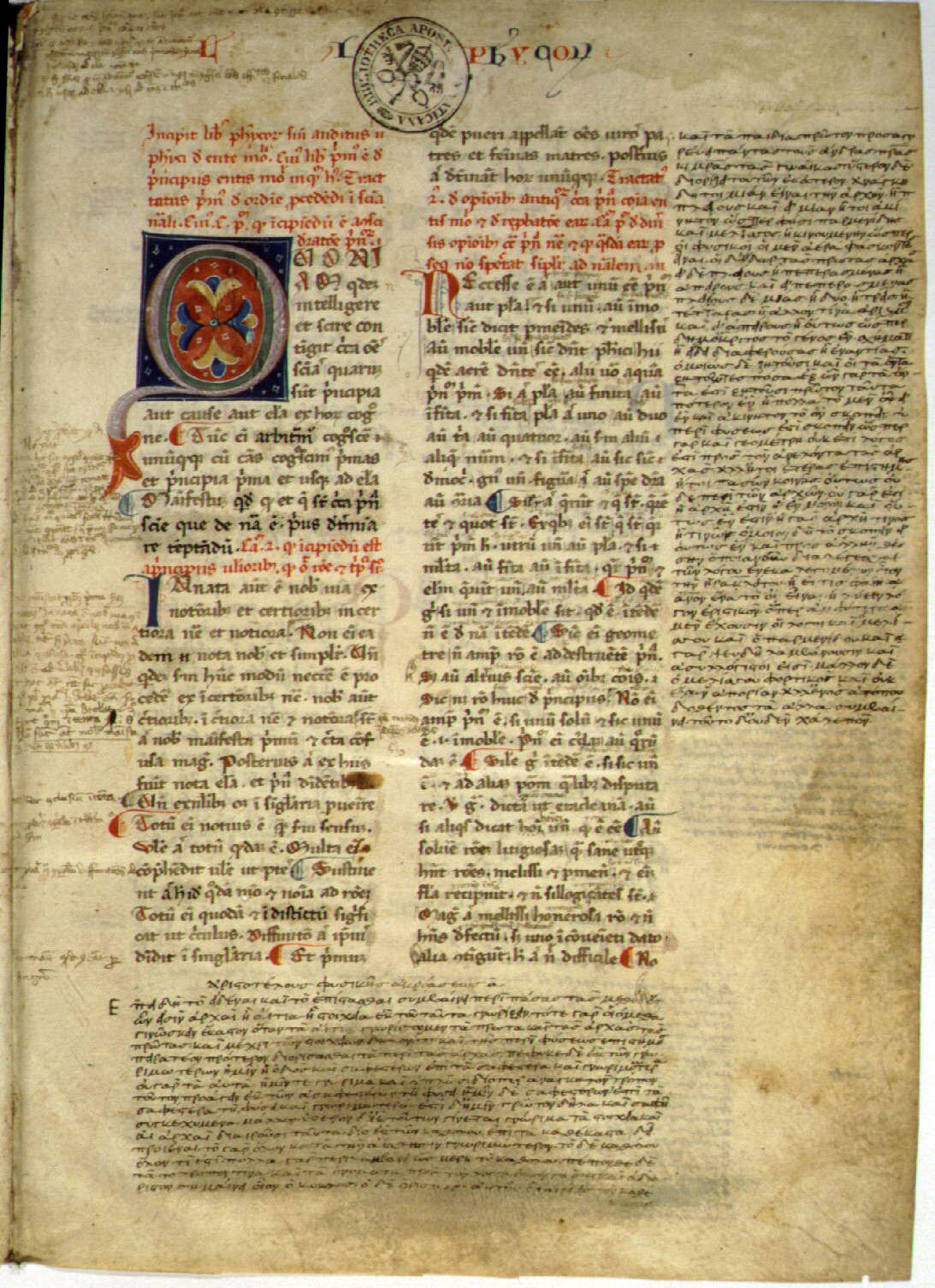
Medieval Latin Manuscript of Aristotle's Physics
Aristotle
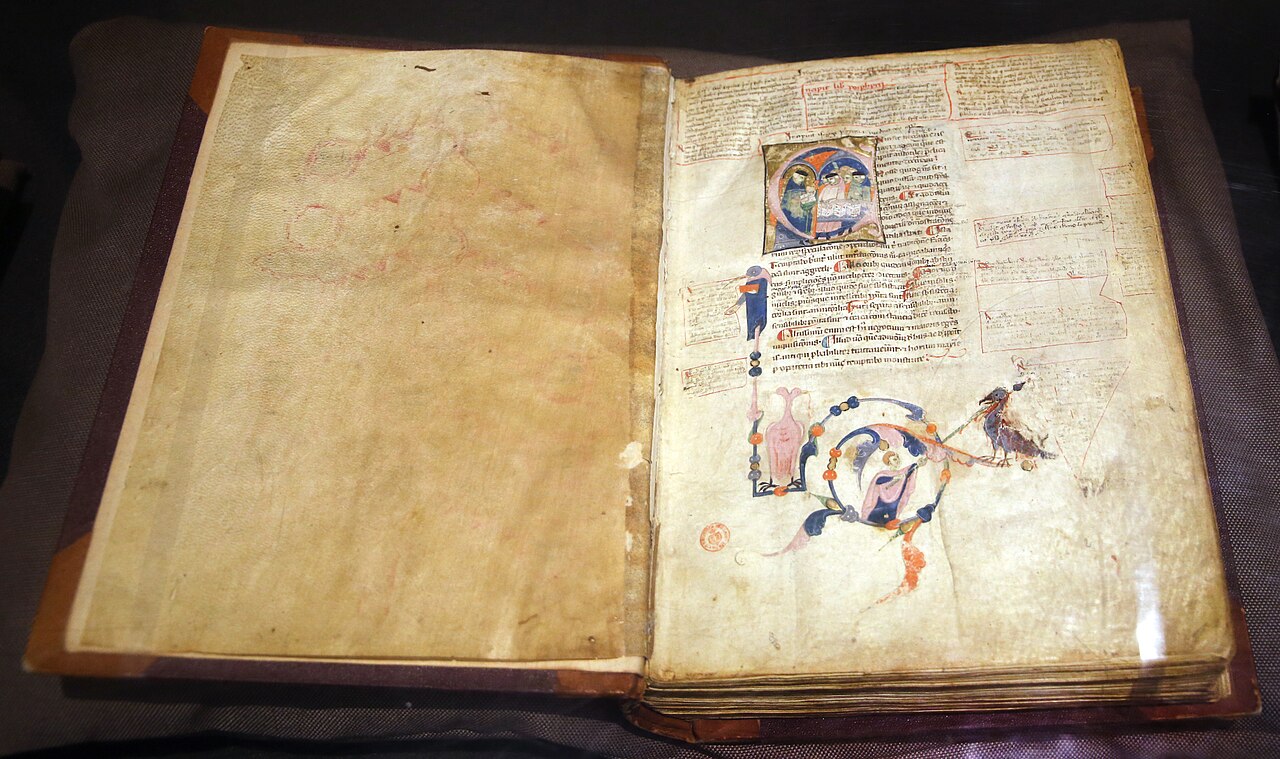
A medieval manuscript copy of the opening of Aristotle's Physics, with Latin text and Greek notes added in the margins.
This manuscript preserves Aristotle's own philosophical text, copied and annotated long after his life.
About this source
What it is
This is a page from a medieval manuscript containing the beginning of Aristotle's Physics, written in Latin with the original Greek text added in the margins. It is held in the Vatican Library (Bibliotheca Apostolica Vaticana) in Rome.
Why it matters
This manuscript shows how Aristotle's works were copied and studied by monks and scholars long after his death, as they were translated and preserved through the Middle Ages. It reflects the long chain of copying that kept ancient Greek philosophy alive for later generations.
Look closer
- Why do you think Greek text was added in the margins of a Latin copy?
- What does the care given to decoration (initials, rubrics) suggest about how this text was valued?
- What might be lost or changed when a text is copied by hand over many centuries?
This document is part of the curated material that grounds the AI version of Aristotle on Humy.ai — when students ask about related events, the AI can quote it and cite it.
More Aristotle sources
Meet the AI Aristotle →

Ready when you are
Start chatting with Aristotle now.
20 messages free · No credit card · Available in 50+ languages.