


Primary sourceBookc. 1780-1820
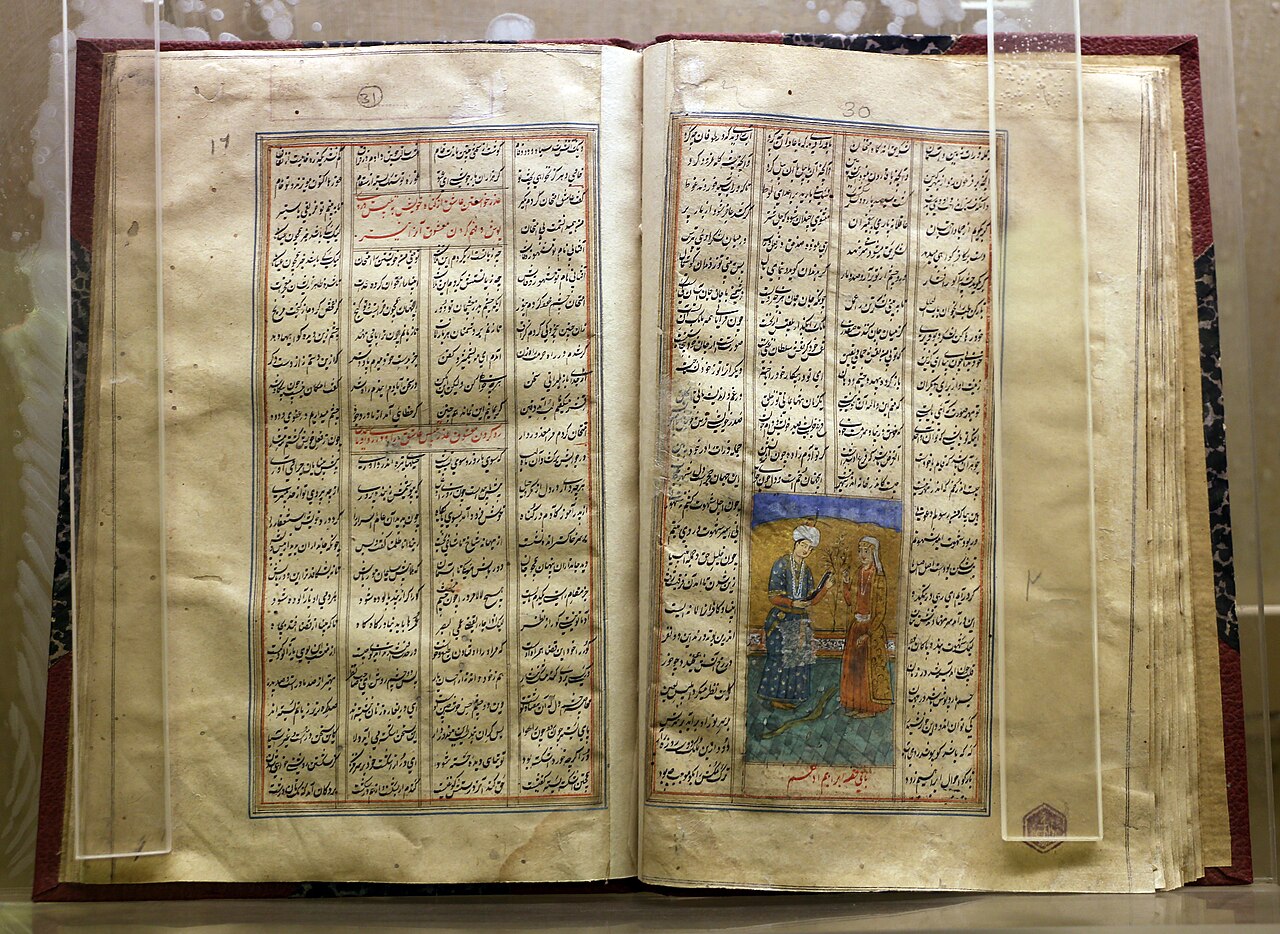
Nastaliq Calligraphy and Miniature of Mathnavi Verses
c. 1780-1820
A page of Persian calligraphy and miniature painting showing verses from Rumi's Mathnavi, in an album from the Salar Jung Museum.
A later copy of Rumi's Mathnavi verses, showing how his poetry was still being illustrated centuries after his death.
About this source
What it is
This is a page from a manuscript album, written in Persian nastaliq script, containing verses from Rumi's long poem the Mathnavi, with a small painted miniature beside the text. It is held in the Salar Jung Museum and dates from roughly 1780 to 1820.
Why it matters
This page shows how Rumi's most famous poem, the Mathnavi, continued to be copied and illustrated for centuries after his death, carried far from where he lived into courts and collections in India. The pairing of calligraphy with miniature painting reflects a long tradition of Persian book arts built around his poetry.
Look closer
- What might the garden setting and figures in the miniature be illustrating from the text beside them?
- Why do you think artists paired paintings with poetry rather than leaving the page as plain text?
- What does the long gap between Rumi's life and this manuscript's creation tell us about his lasting influence?
This book is part of the curated material that grounds the AI version of Rumi (Jalāl ad-Dīn Muhammad Rūmī) on Humy.ai — when students ask about related events, the AI can quote it and cite it.
More Rumi (Jalāl ad-Dīn Muhammad Rūmī) sources
Meet the AI Rumi (Jalāl ad-Dīn Muhammad Rūmī) →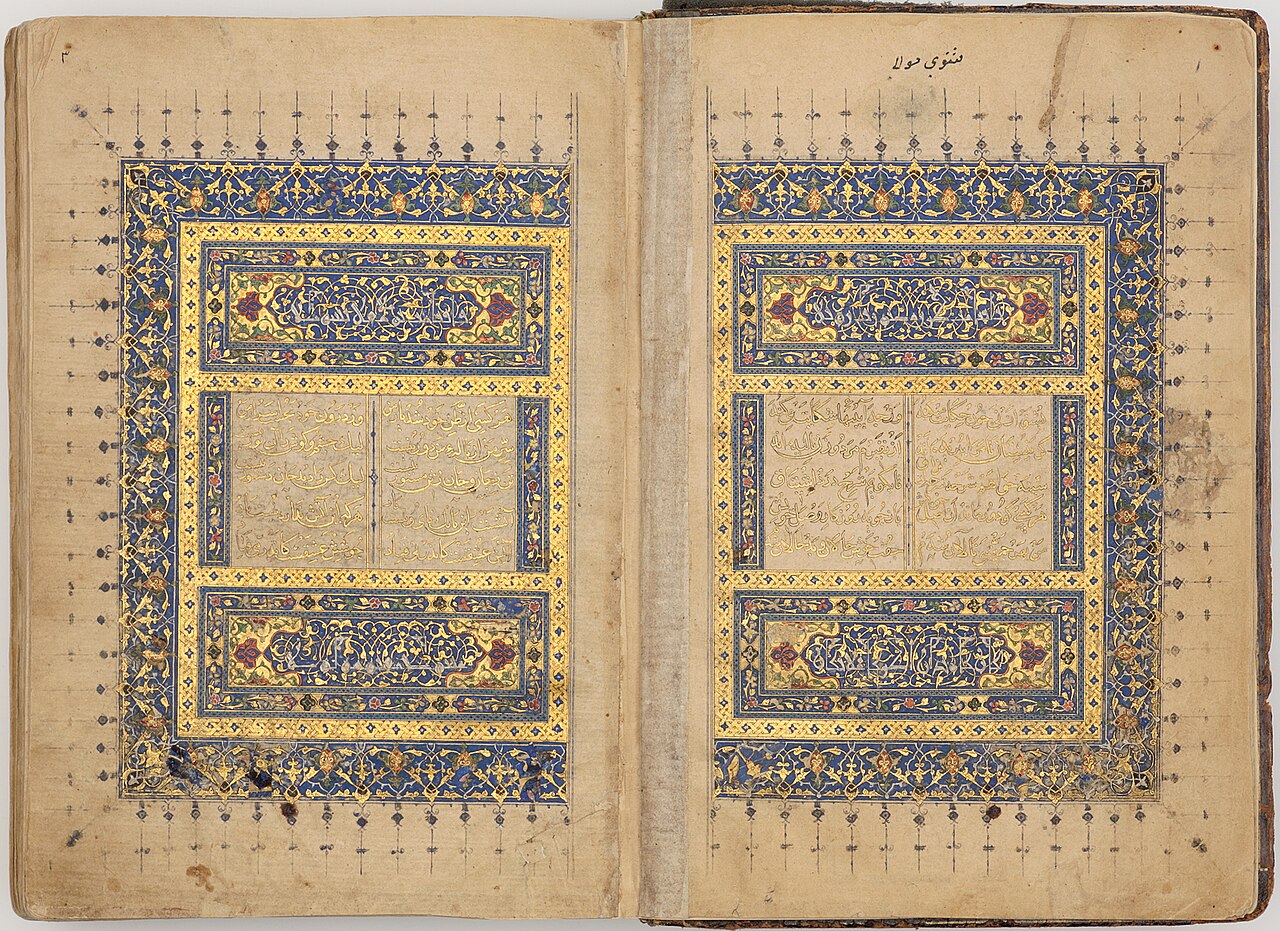 Book
Primary source
Masnavi
Rumi · c. 1258-1273
 Book
Primary source
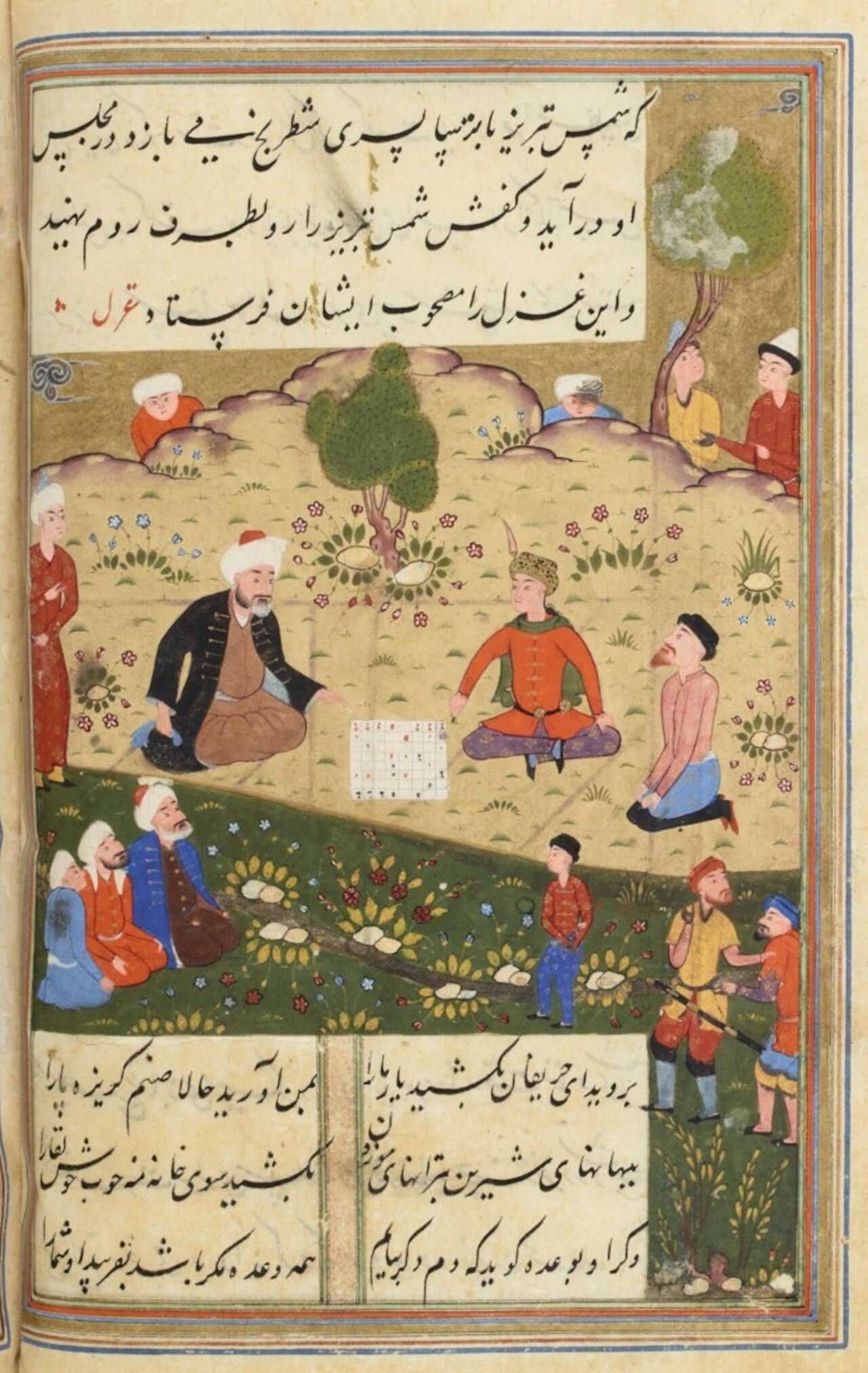
Diwan-e Shams-e Tabrizi
Rumi · c. 1247 onward
 Artifact
Secondary source
Grave of Rumi
soon after 1273
 Book
Primary source
Fihi Ma Fihi
Rumi · c. 1260-1273
 Artifact
Secondary source
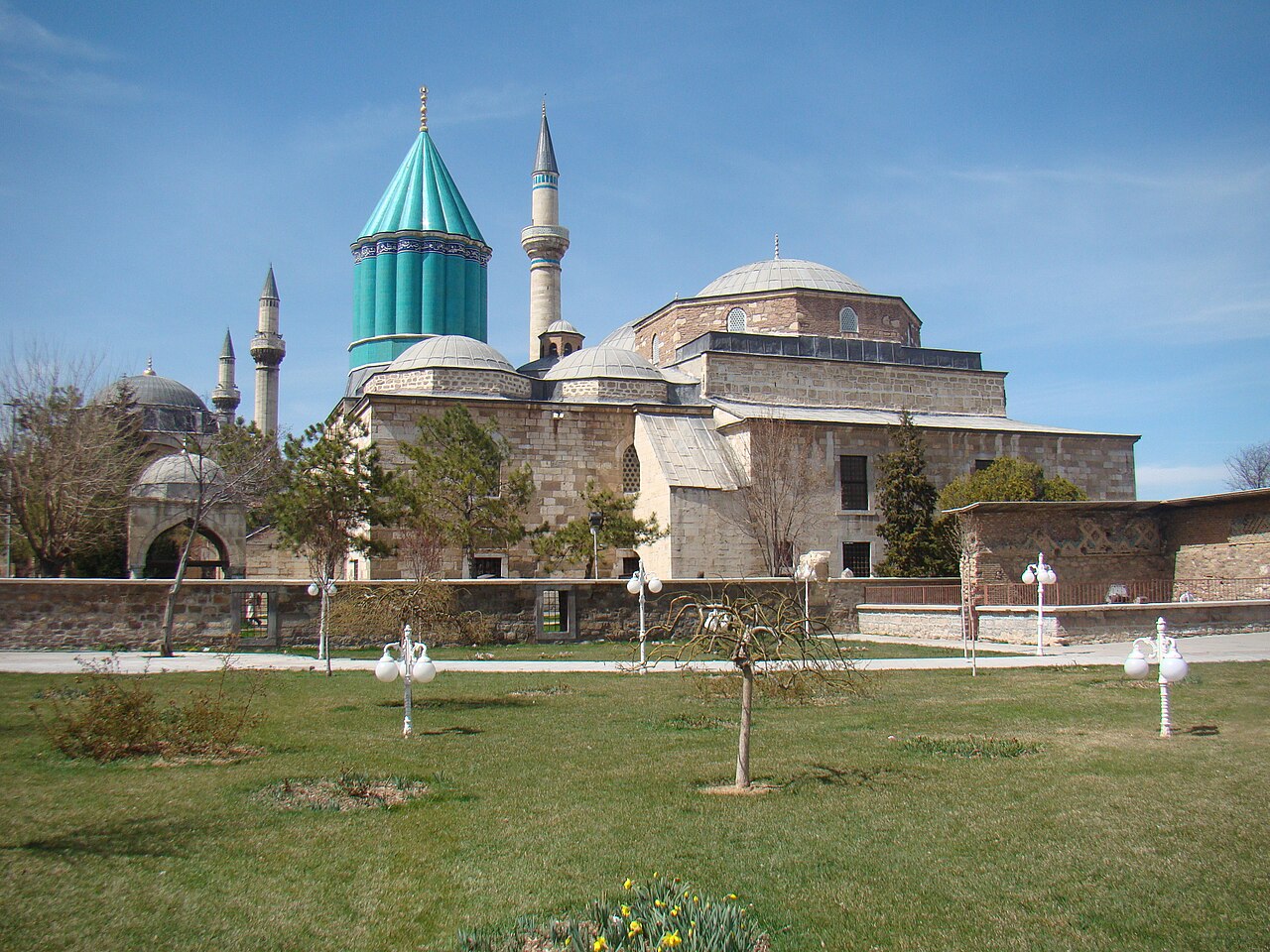
Mevlâna Museum
Badr al-Din Tabrizi (architect) · built soon after 1273; museum since 1926
Ready when you are
Start chatting with Rumi (Jalāl ad-Dīn Muhammad Rūmī) now.
20 messages free · No credit card · Available in 50+ languages.