


Primary sourceBookc. 60-65 AD
Naturales quaestiones
Seneca · c. 60-65 AD
Seneca's Latin study of natural phenomena such as earthquakes, comets and the Nile, linking science to Stoic ethics.
Seneca's late work on natural philosophy, showing him as both scientist and moral philosopher.
About this source
What it is
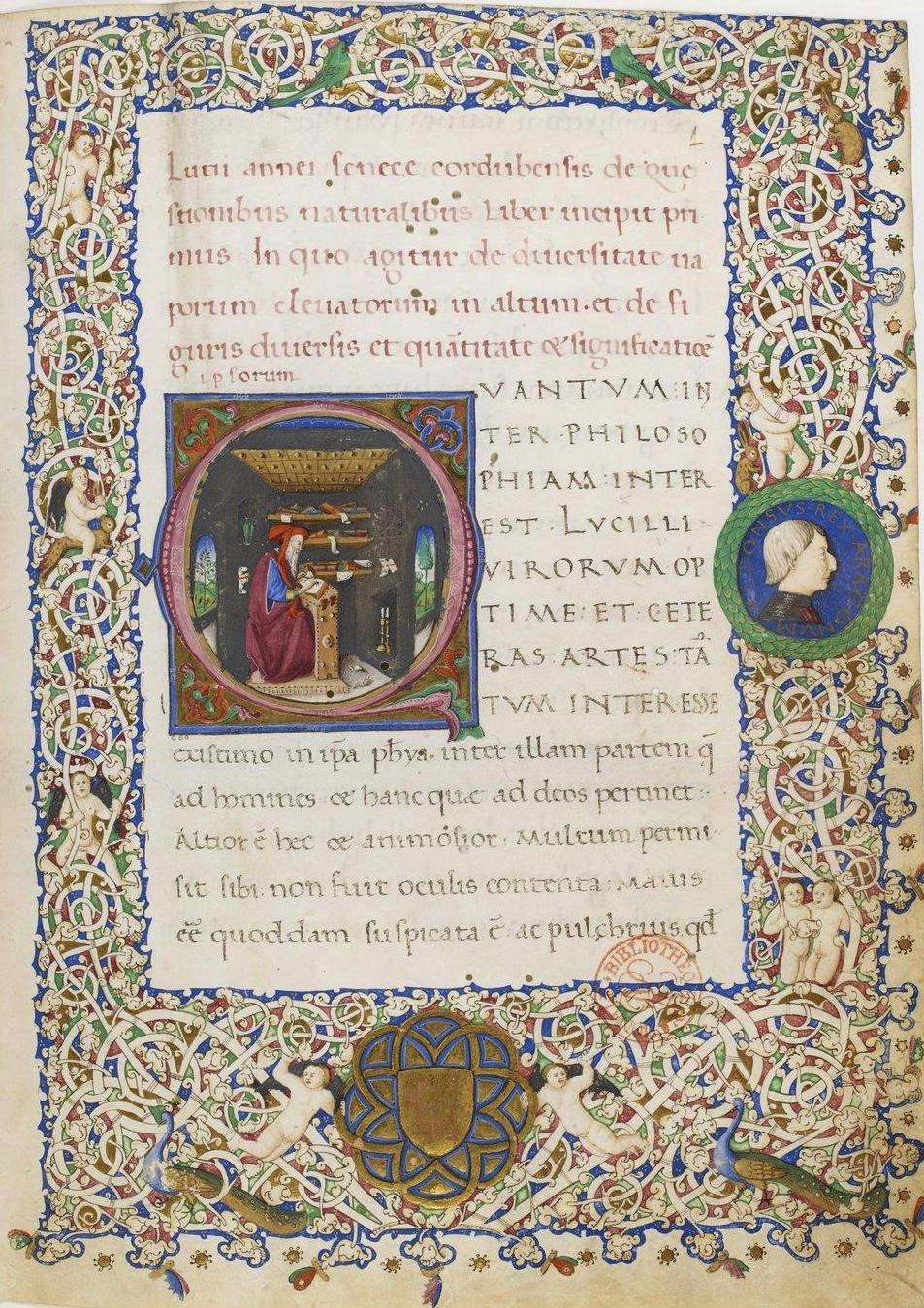
Naturales Quaestiones (Natural Questions) is a Latin work of natural philosophy written by Seneca around AD 60-65 and addressed to his friend Lucilius. It covers topics such as meteors, thunder and lightning, the Nile, hail and snow, winds, earthquakes and comets. The page shown is from an illuminated manuscript made for the Catalan-Aragonese crown.
Why it matters
Written late in Seneca's life while he had fallen out of favour with Emperor Nero, the work weaves scientific investigation together with moral reflection, showing how Stoics connected understanding nature with living virtuously. It is one of the few surviving Roman works dedicated to studying the natural world.
Look closer
- Why might Seneca have mixed moral lessons into a work about nature?
- What does the illuminated manuscript page tell you about how later readers valued this text?
- What subjects did Seneca think were worth explaining, and what might he have left out?
This book is part of the curated material that grounds the AI version of Seneca on Humy.ai — when students ask about related events, the AI can quote it and cite it.
More Seneca sources
Meet the AI Seneca → Letter
Primary source
Epistulae Morales ad Lucilium
Seneca · c. 62-65 CE
 Book
Primary source
De Brevitate Vitae
Seneca · c. 49 CE
 Book
Secondary source
Annals
Tacitus · c. AD 116 or later
 Book
Primary source
De Clementia
Seneca · 55-56 CE
 Sculpture
Secondary source
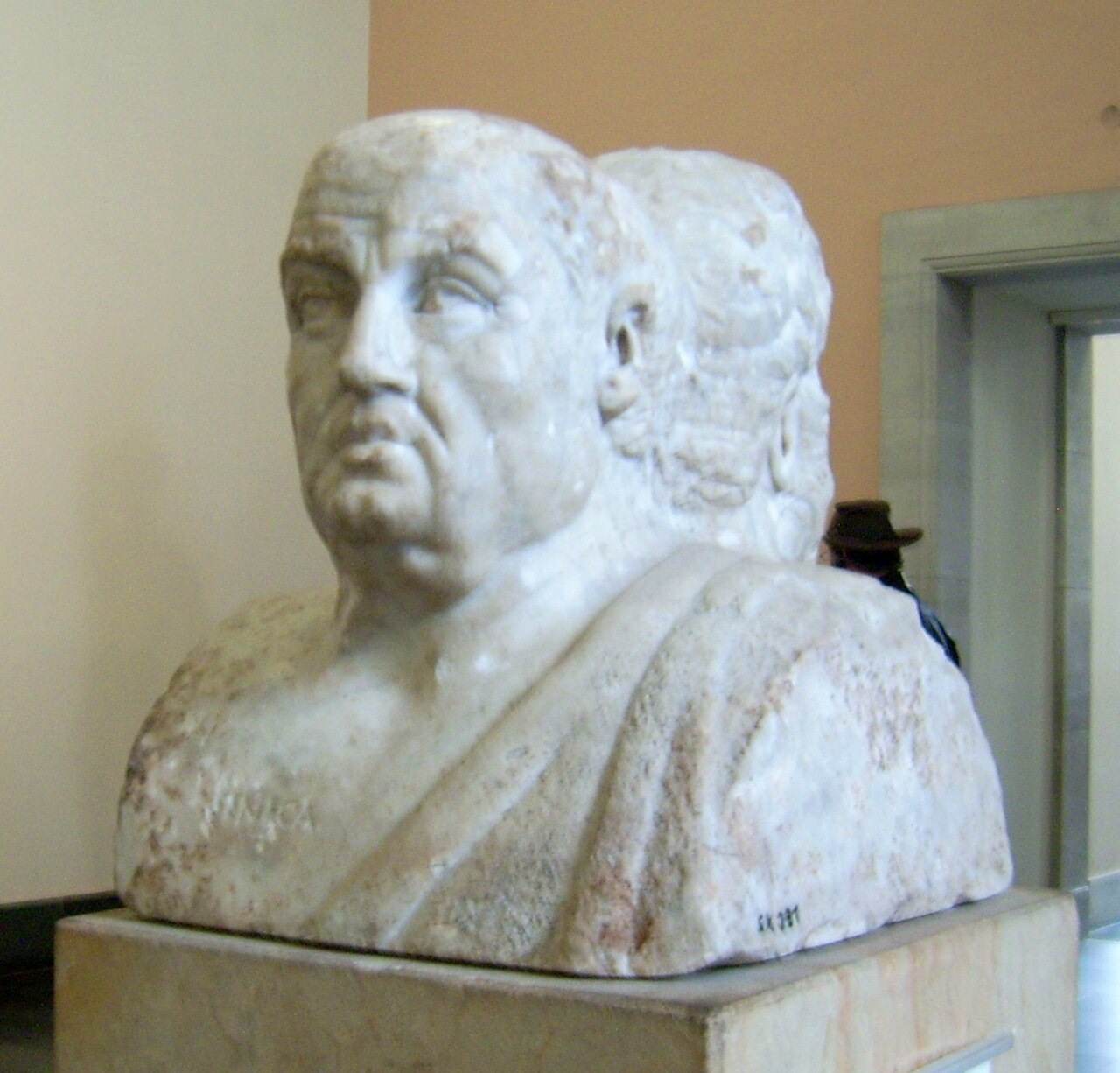
Double Herm of Socrates and Seneca
first half of the 3rd century AD
Ready when you are
Start chatting with Seneca now.
20 messages free · No credit card · Available in 50+ languages.