


Primary sourceDocument2016-01-09
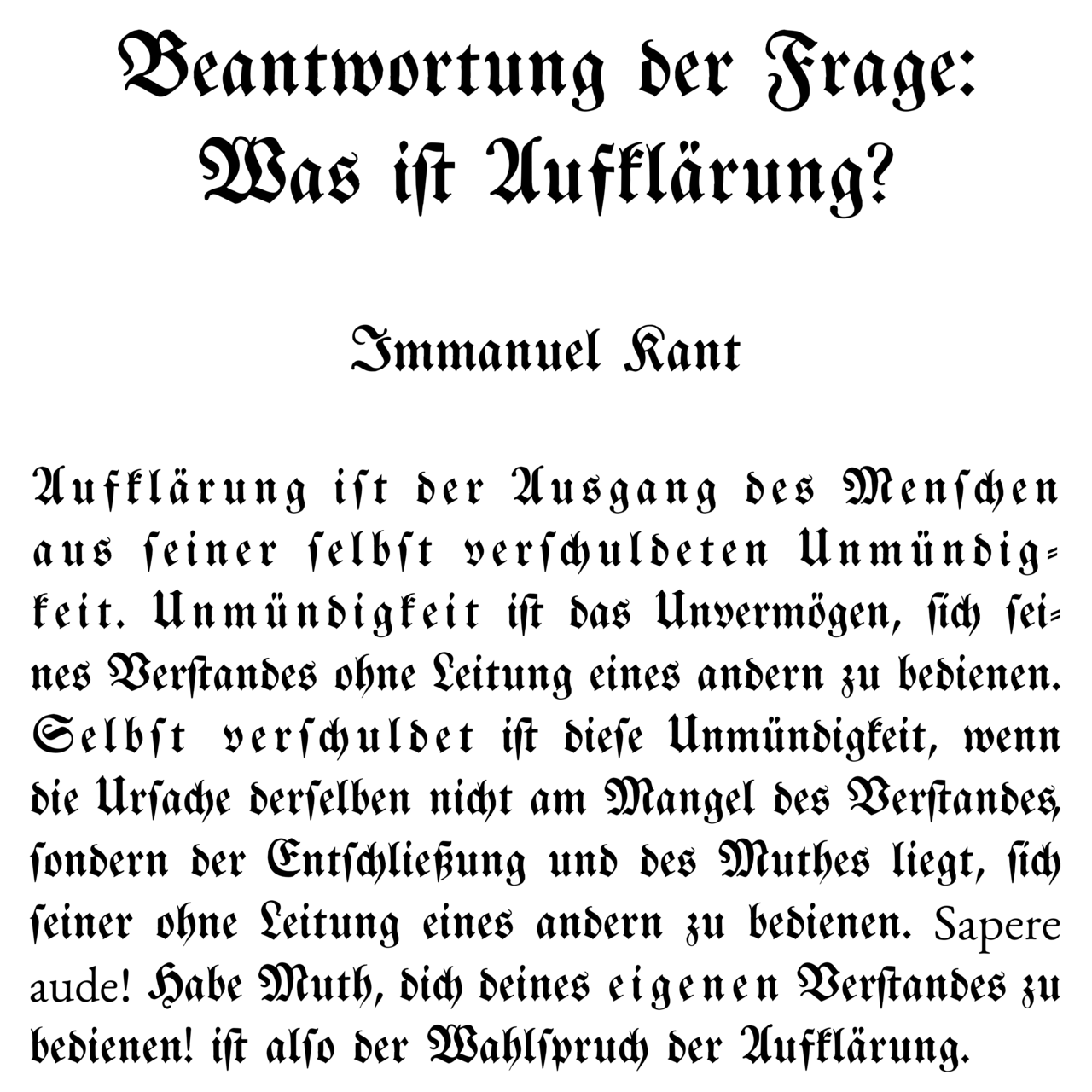
Opening of Kant's What Is Enlightenment? in Breitkopf Fraktur
Immanuel Kant · 2016-01-09
A modern typesetting of the opening lines of Kant's essay What Is Enlightenment?, set in the blackletter typeface Breitkopf Fraktur. The words are Kant's own.
Presents the opening of Kant's own essay, the text that defines his idea of enlightenment, though this copy is a modern typesetting.
Free Humy account · No credit card · 88,505 sources to read
About this source
What it is
This is a modern image of the opening of Kant's essay Beantwortung der Frage: Was ist Aufklärung? (What Is Enlightenment?), set in Dieter Steffmann's Breitkopf Fraktur, a blackletter typeface. It shows the title, the author name Immanuel Kant, and the opening paragraph in German, ending with the phrase Sapere aude! The file was uploaded to Wikimedia Commons in 2016 by Gorlingor. It is a typeface specimen, so it is a modern typesetting rather than the original printed page.
Why it matters
The essay defines enlightenment as humanity's way out of self-imposed immaturity, which means thinking for oneself without guidance from others. The phrase Sapere aude, meaning dare to know, became one of the best-known slogans of the Enlightenment. Reading the opening helps students see the ideas that Kant's readers debated in the late eighteenth century.
Look closer
- What does Kant say enlightenment is, and what does he say stands in its way?
- Why might a designer choose a blackletter typeface for a text from the eighteenth century?
- Does seeing a modern typesetting change how you read the words compared with an original printed page?
This document is part of the curated material that grounds the AI version of Immanuel Kant on Humy.ai — when students ask about related events, the AI can quote it and cite it.
More Immanuel Kant sources
Browse all 78 →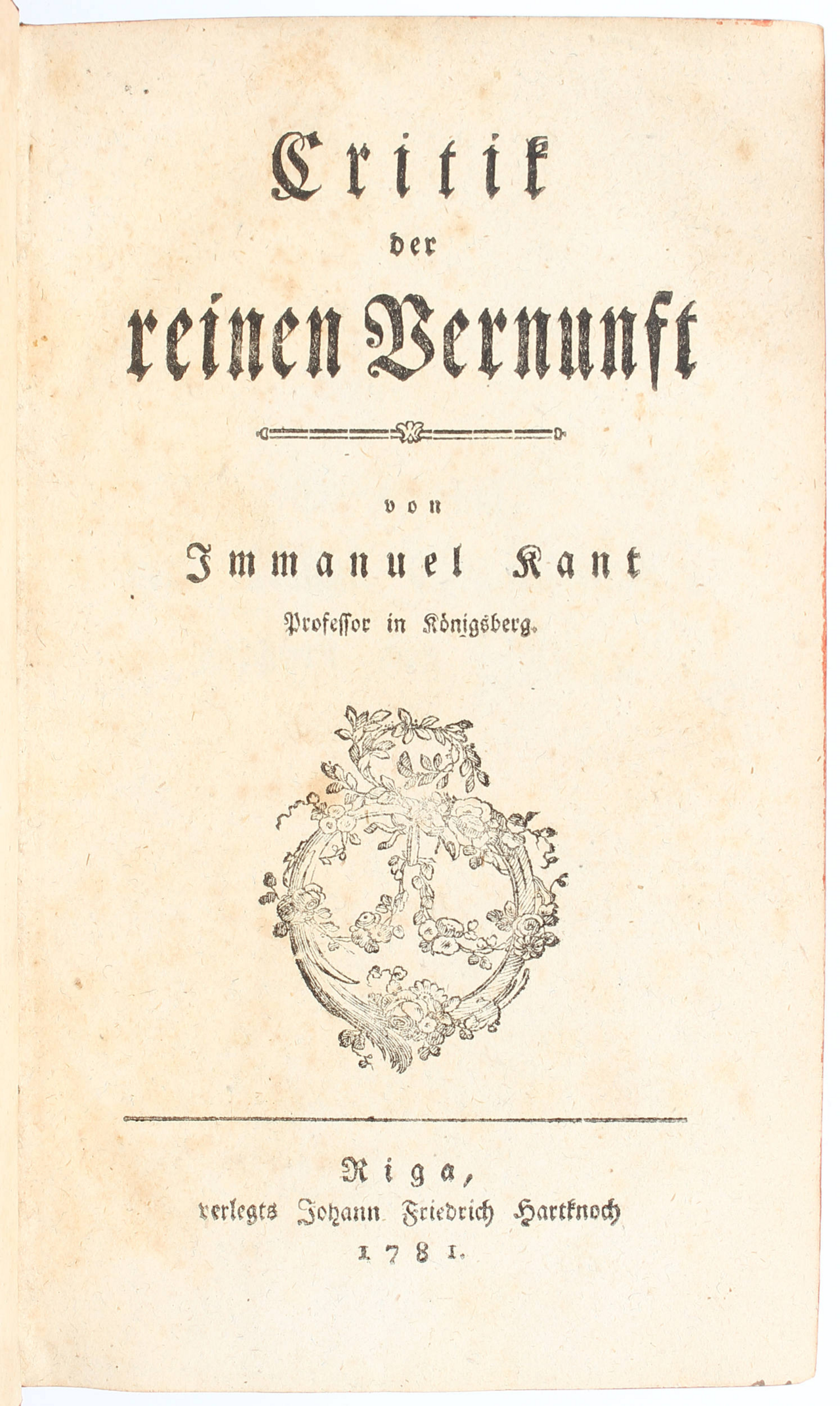 Book
Primary source
Critique of Pure Reason
Immanuel Kant · 1781 (revised 1787)
 Book
Primary source
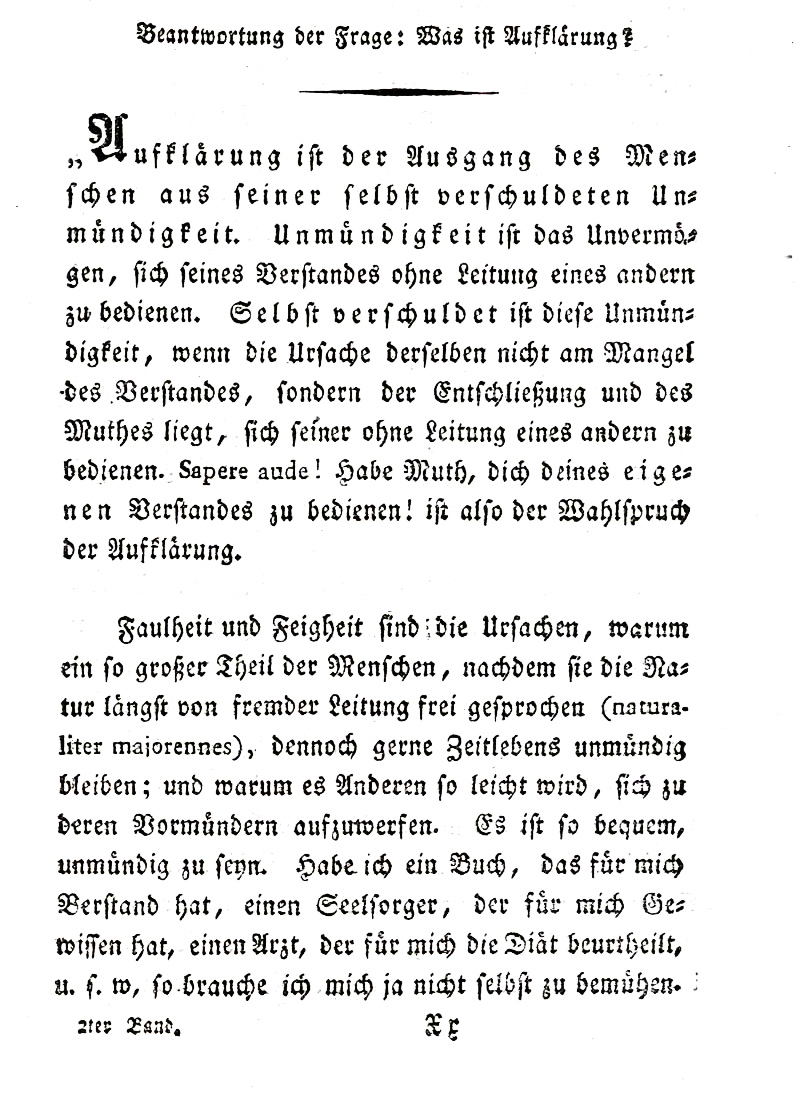
Answering the Question: What Is Enlightenment?
Immanuel Kant · 1784
 Book
Primary source
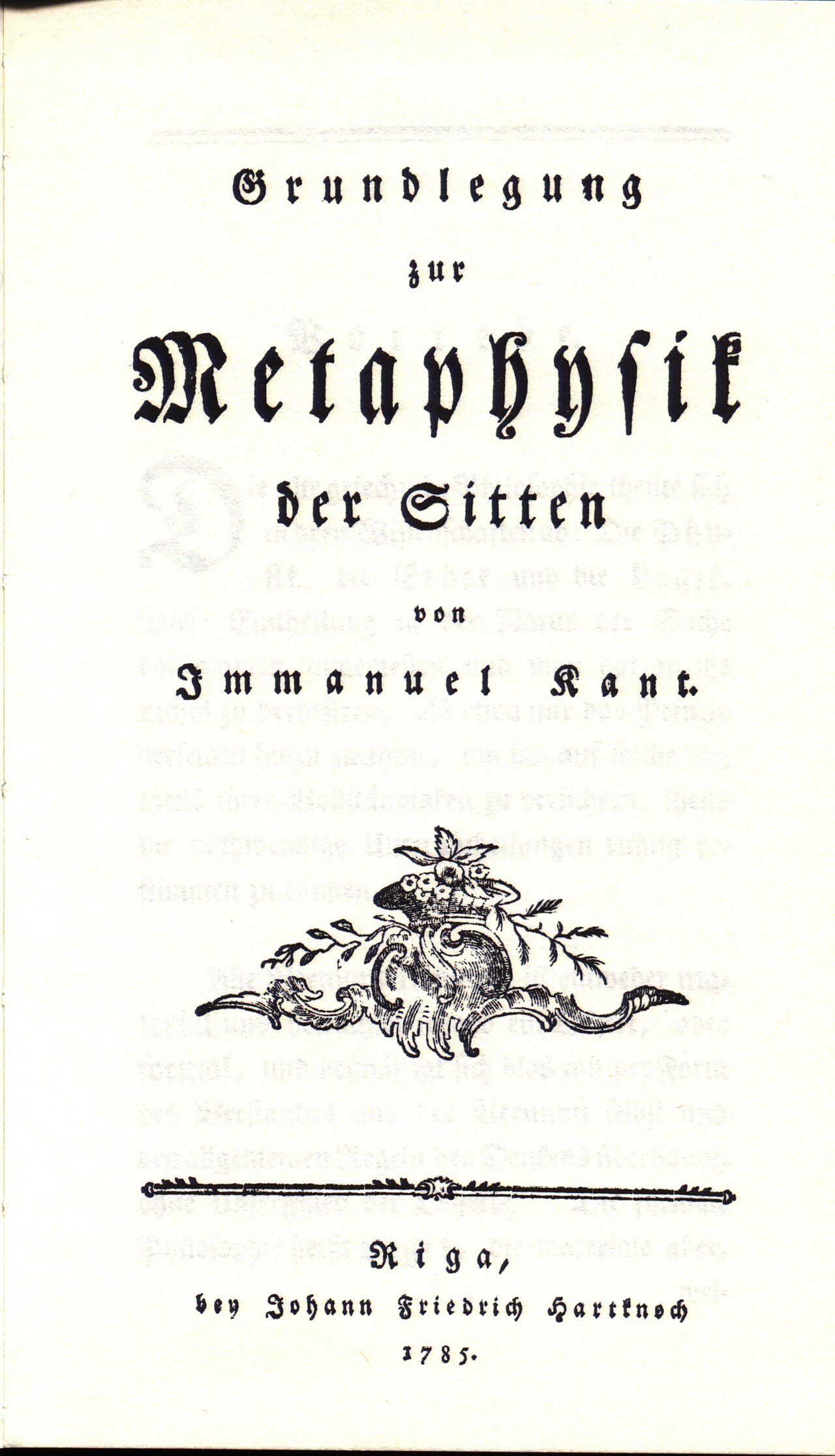
Groundwork of the Metaphysic of Morals
Immanuel Kant · 1785
 Book
Primary source
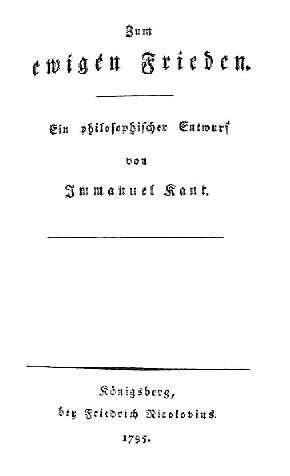
Perpetual Peace: A Philosophical Sketch
Immanuel Kant · 1795
Free account
Read every Immanuel Kant source
Sign up free →
Ready when you are
Start chatting with Immanuel Kant now.
20 messages free · No credit card · Available in 50+ languages.