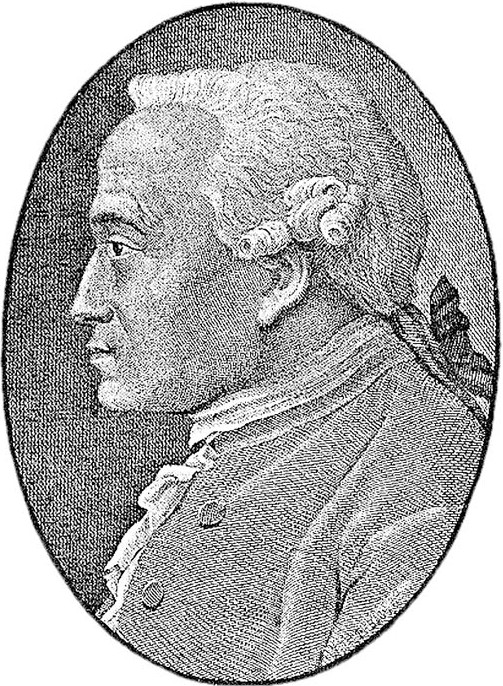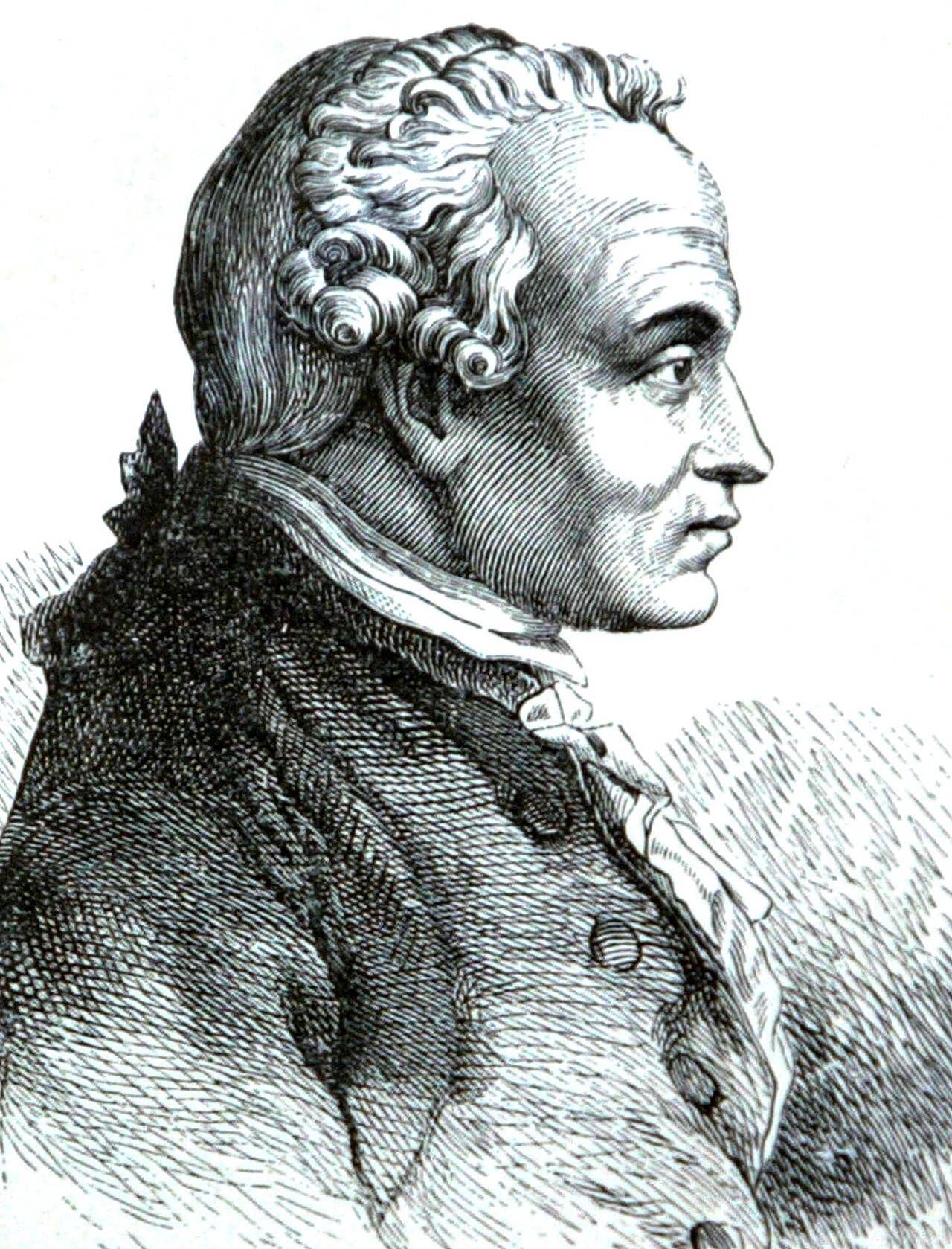

Portrait of Immanuel Kant

AI Historical Figure

Immanuel Kant

Enlightenment philosopher known for his work on ethics and metaphysics.

Chat with Immanuel Kant via text or voice — in 42 languages, drawing on a curated biography and 80 historical sources. Available 24/7.

Start chatting with Immanuel Kant20 messages free · No credit card
Lived
1724–1804
From
Germany
Known for
Philosophy
Immanuel Kant

Immanuel Kant

Online · responds in seconds

Hello — I'm Immanuel Kant. Enlightenment philosopher known for his work on ethics and metaphysics. What would you like to ask me?

20 messages free · No credit card · Powered by Humy.ai

Live preview · Switch between 42 languages above · Send a message to continue in the app

Multilingual

Talk to Immanuel Kant in 42 languages

Ask Immanuel Kant questions in any language below, and the rest of Humy's app speaks it too. Pick yours to open the chat in that language.

Also in German (Austria), German (Switzerland), English (UK), English (Australia), English (Canada).

The sources behind this AI

80 sources · 45 books · 17 paintings · 6 documents · 4 artifacts · 3 newspaper articles · 3 sculptures · 1 letter · 1 photograph

Immanuel Kant doesn’t improvise from thin air. The AI is grounded in 80 curated historical sources students can inspect. Open any of them to see what informs the conversation.

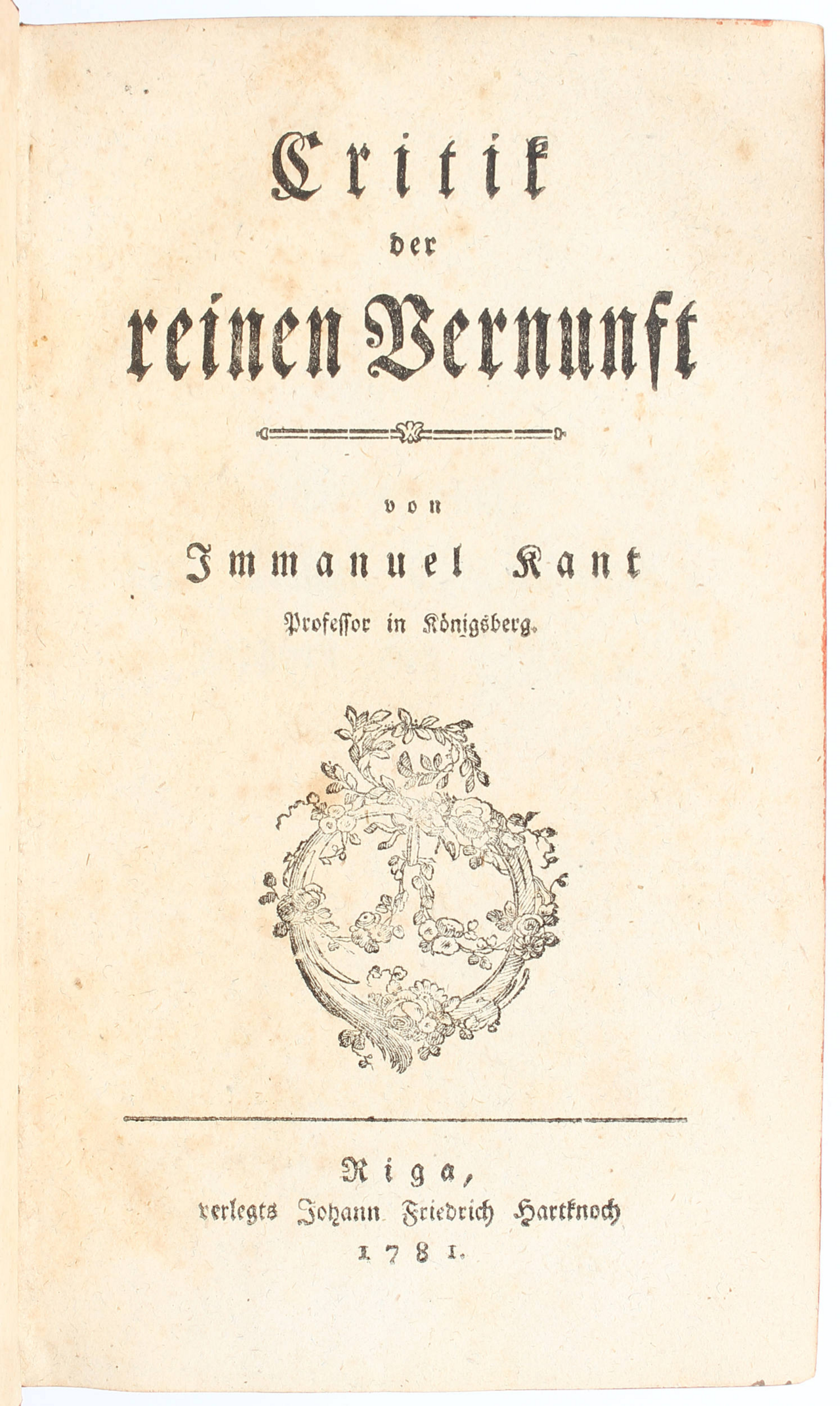
Title page of the 1781 first edition of Kant's Critique of Pure Reason. Blackletter title reads Critik der reinen Vernunft, von Immanuel Kant, Professor in Königsberg. Below: Riga, verlegts Johann Friedrich Hartknoch, 1781, with a floral wreath ornament.Book

Primary source

Critique of Pure Reason

Immanuel Kant · 1781 (revised 1787)

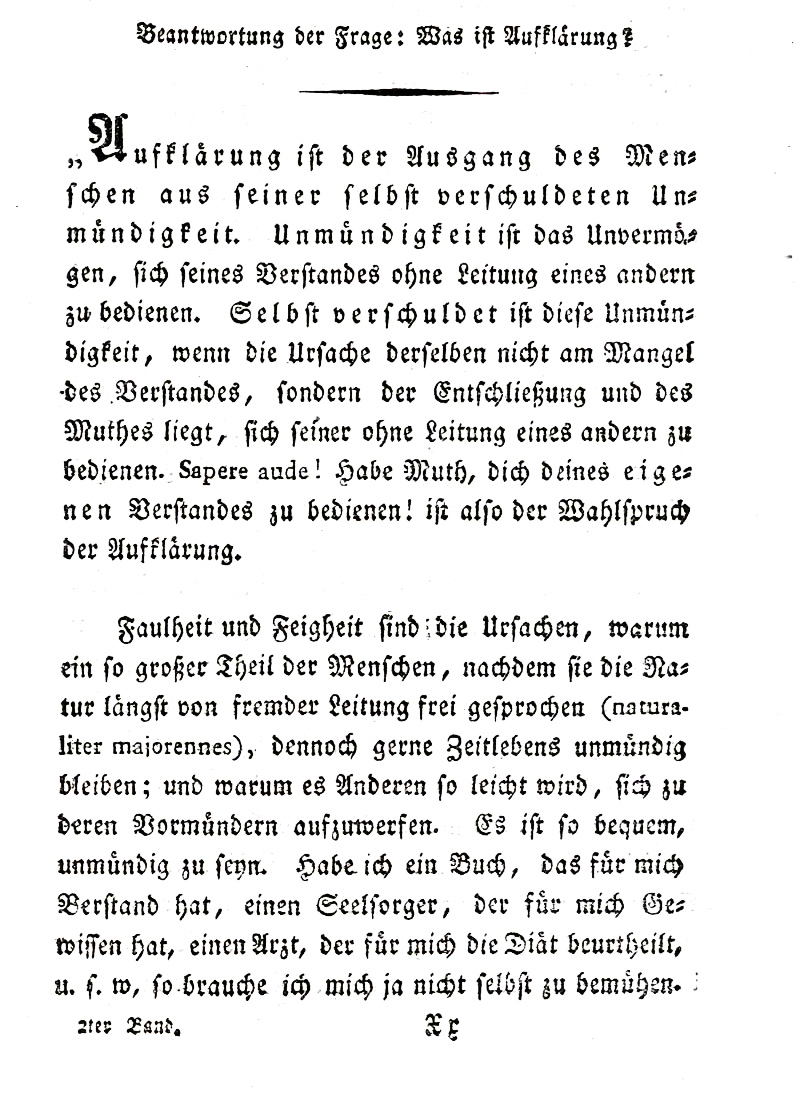
Printed page in German blackletter type headed 'Beantwortung der Frage: Was ist Aufklärung?' with the opening lines of Kant's essay, beginning 'Aufklärung ist der Ausgang des Menschen aus seiner selbst verschuldeten Unmündigkeit.' Page footer reads '2ter Band'.Book

Primary source

Answering the Question: What Is Enlightenment?

Immanuel Kant · 1784

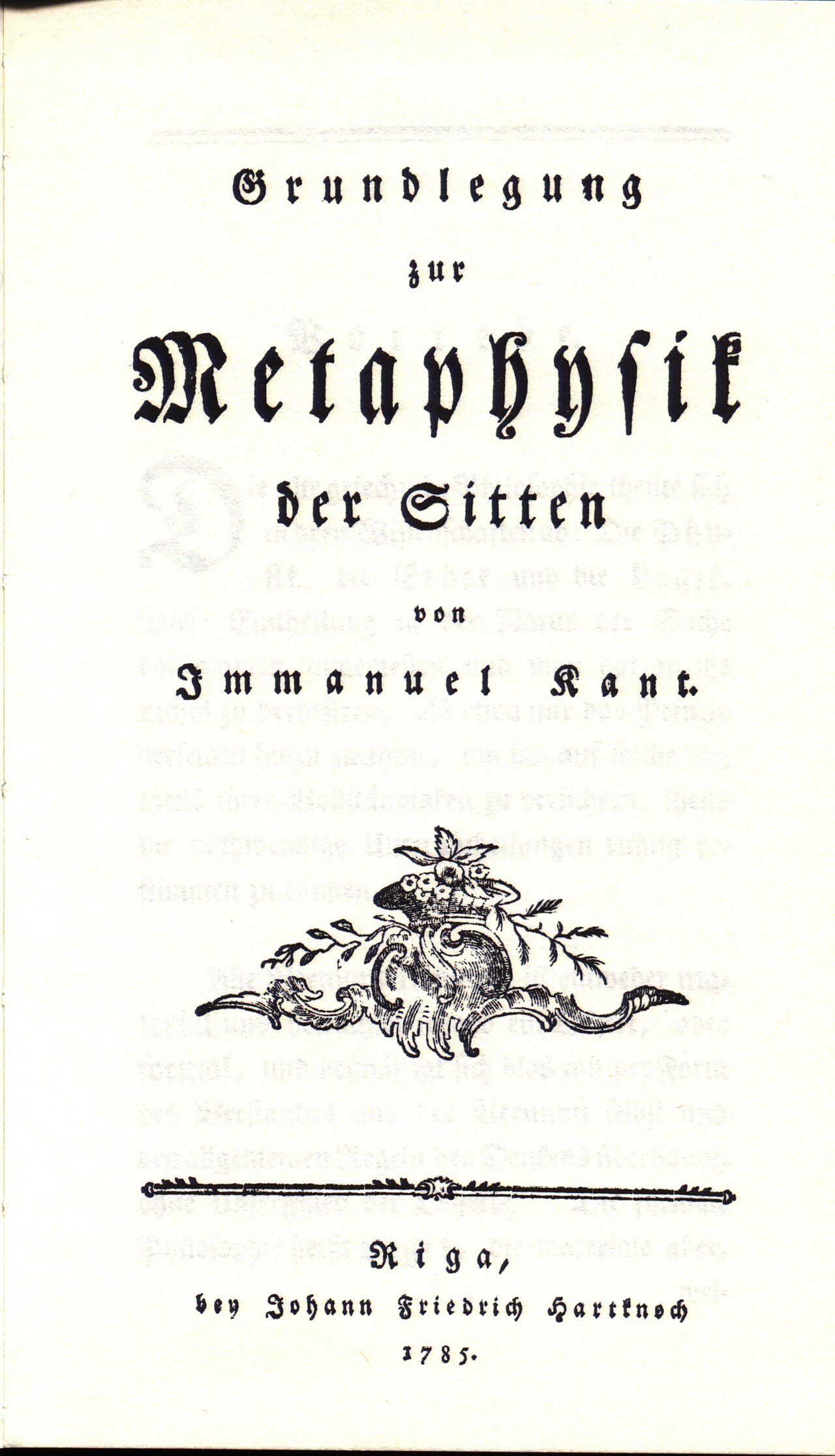
Title page of Kant's Grundlegung zur Metaphysik der Sitten, printed in black Fraktur blackletter: 'Grundlegung zur Metaphysik der Sitten, von Immanuel Kant', with a decorative rococo ornament, a rule, and 'Riga, bey Johann Friedrich Hartknoch 1785' on a cream page.Book

Primary source

Groundwork of the Metaphysic of Morals

Immanuel Kant · 1785

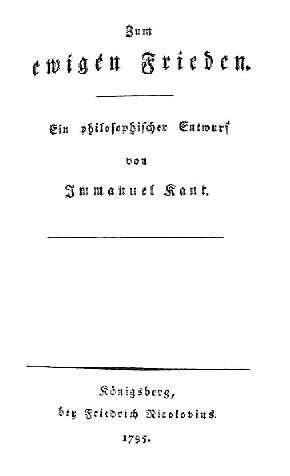
Title page of Kant's 'Zum ewigen Frieden' printed in black Fraktur type. Text reads 'Zum ewigen Frieden. Ein philosophischer Entwurf von Immanuel Kant', with publication line 'Königsberg, bey Friedrich Nicolovius, 1795' at the bottom.Book

Primary source

Perpetual Peace: A Philosophical Sketch

Immanuel Kant · 1795

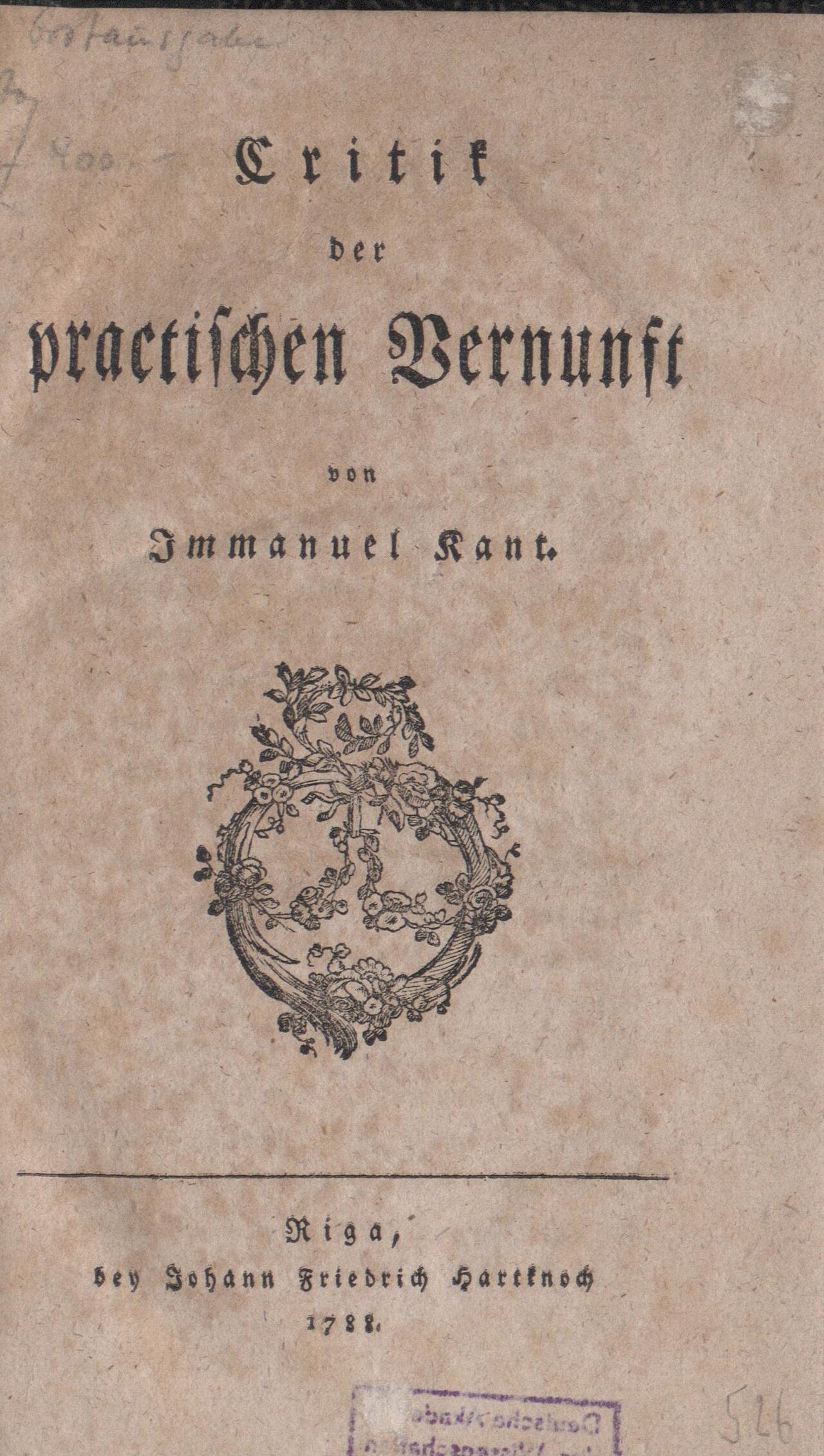
Title page of the 1788 German edition of Kant's Critique of Practical Reason: 'Critik der practischen Vernunft von Immanuel Kant', with a floral wreath ornament, 'Riga, bey Johann Friedrich Hartknoch 1788', and a purple library stamp at bottom right.Book

Primary source

Critique of Practical Reason

Immanuel Kant · 1788 (completed 1787)

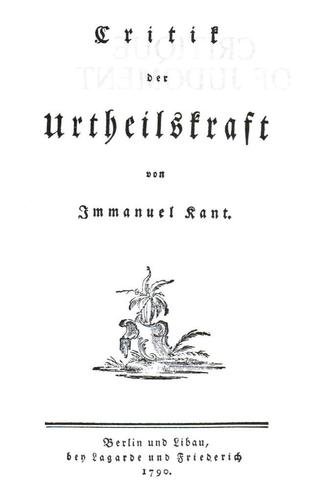
Title page of the 1790 German edition of Kant's Critik der Urtheilskraft. Large black gothic-style heading 'Critik der Urtheilskraft', 'von Immanuel Kant', a vignette of a small figure and plant engraving, and imprint 'Berlin und Libau, bey Lagarde und Friederich, 1790'. Faint English title 'Critique of Judgment' appears in the background.Book

Primary source

Critique of Judgment

Immanuel Kant · 1790

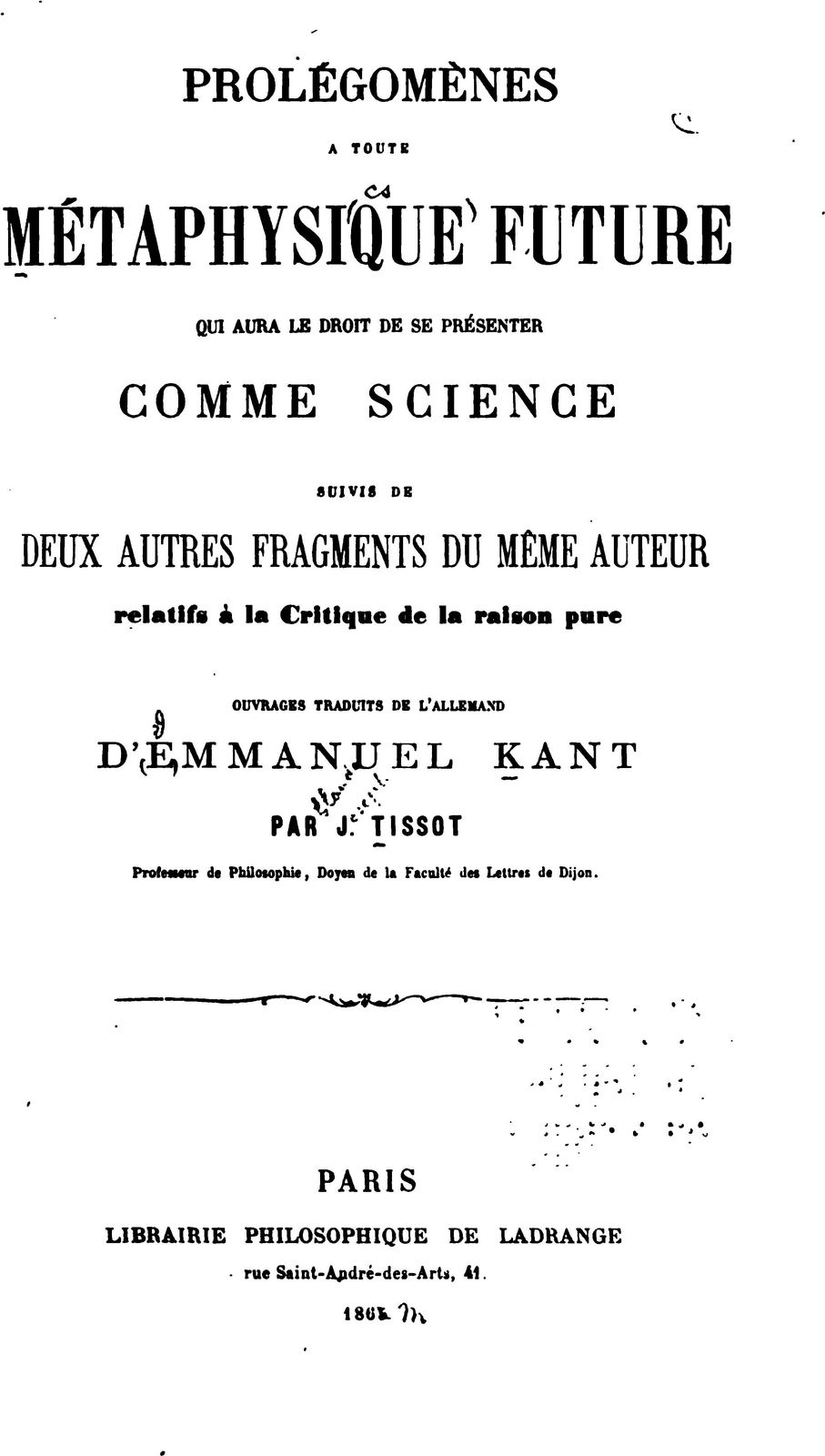
Title page of the French 1866 translation by J. Tissot: 'Prolégomènes à toute métaphysique future qui aura le droit de se présenter comme science', with Kant's name and publisher Librairie Philosophique de Ladrange, Paris.Book

Primary source

Prolegomena to Any Future Metaphysics

Immanuel Kant · 1783

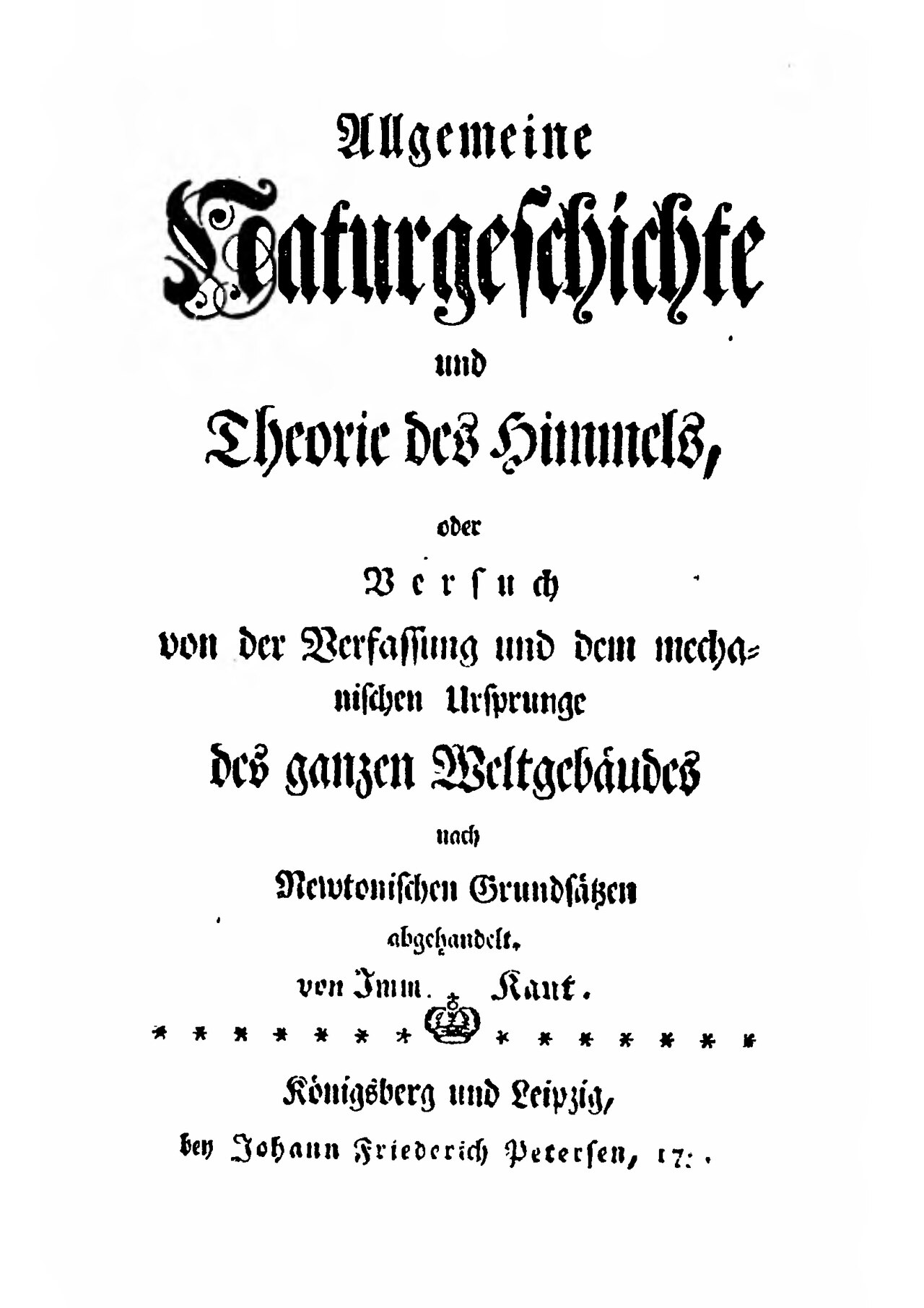
Title page of Allgemeine Naturgeschichte und Theorie des Himmels in black-letter German type. Large heading reads Allgemeine Naturgeschichte und Theorie des Himmels, followed by subtitle about the constitution and mechanical origin of the whole world system after Newtonian principles, by Imm. Kant. Below an ornamental crown divider: Königsberg und Leipzig, bey Johann Friedrich Petersen, 1755.Book

Primary source

Universal Natural History and Theory of the Heavens

Immanuel Kant · 1755

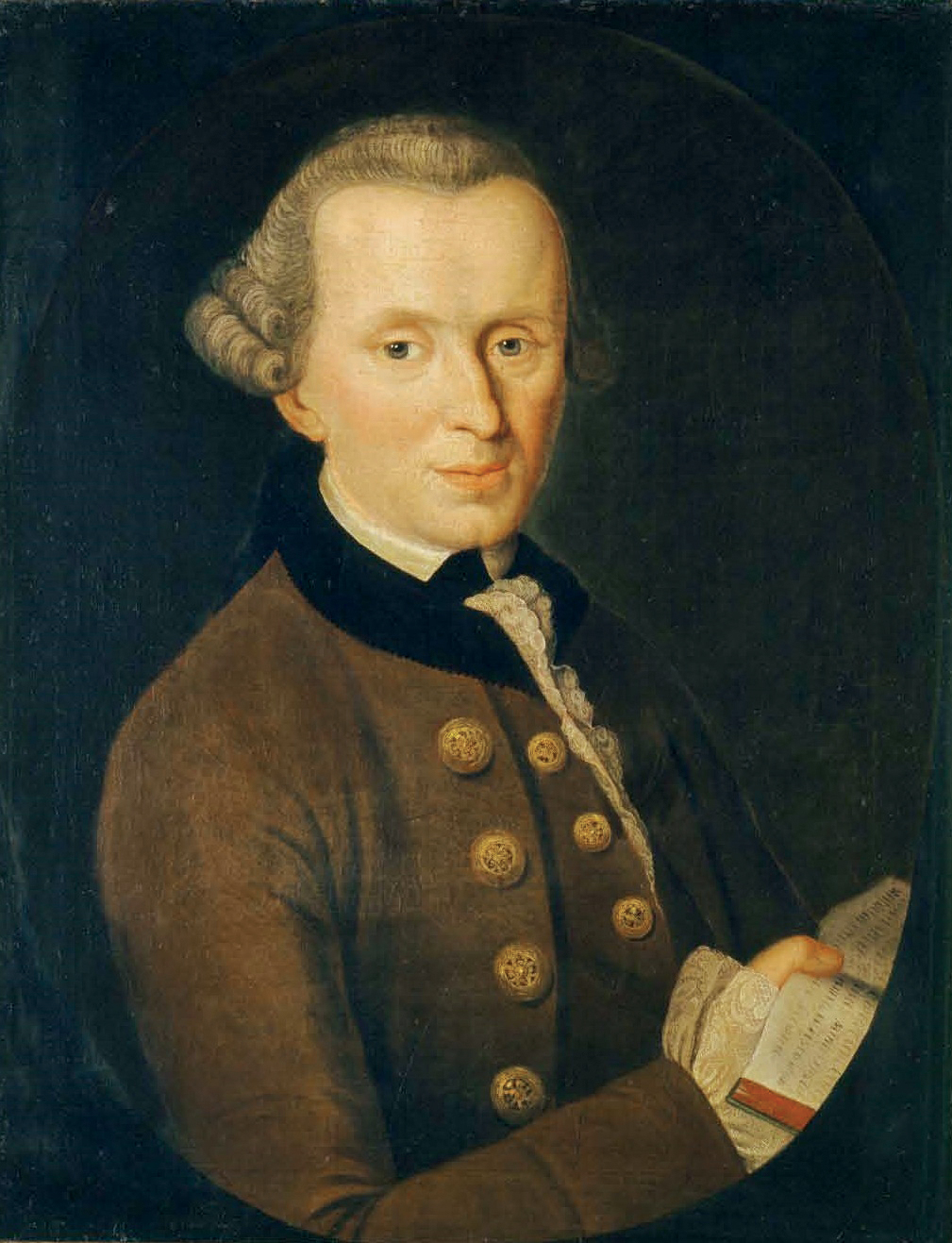
Oval-framed oil portrait of a man with powdered grey hair tied back, wearing a brown coat with gold buttons, black velvet collar, and white lace jabot. He holds a folded letter in his right hand against a dark background.Painting

Primary source

Portrait of Immanuel Kant

Johann Gottlieb Becker · 1768

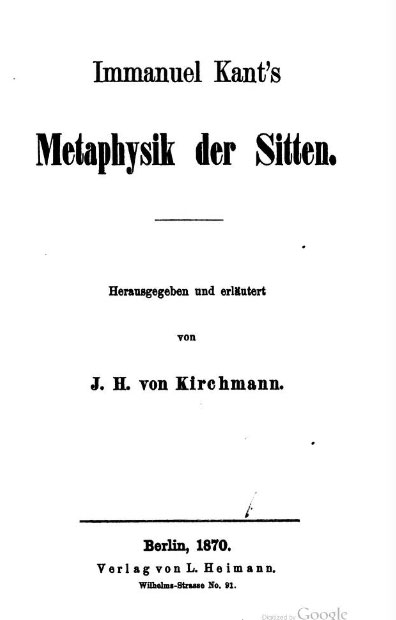
Title page of an 1870 Berlin edition of Immanuel Kant's Metaphysik der Sitten, edited by J. H. von Kirchmann, published by L. Heimann. Text is in German, black serif type on white.Book

Primary source

The Metaphysics of Morals

Immanuel Kant · 1797

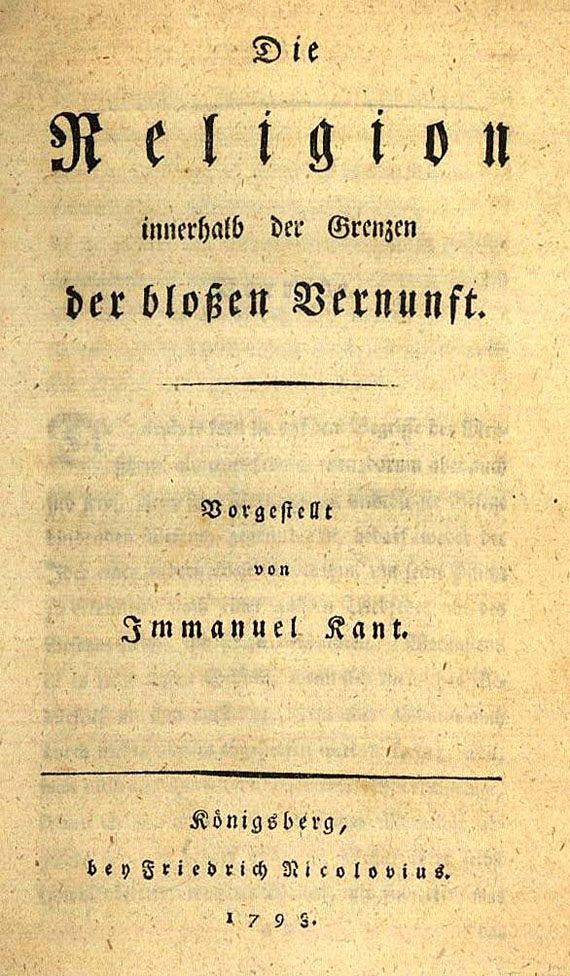
Title page of the 1793 German edition of Die Religion innerhalb der Grenzen der bloßen Vernunft, presented by Immanuel Kant, printed in Königsberg by Friedrich Nicolovius. Yellowed paper with black Gothic and roman type.Book

Primary source

Religion within the Bounds of Bare Reason

Immanuel Kant · 1793

Book

Primary source

Idea for a Universal History with a Cosmopolitan Purpose

Immanuel Kant · 1784

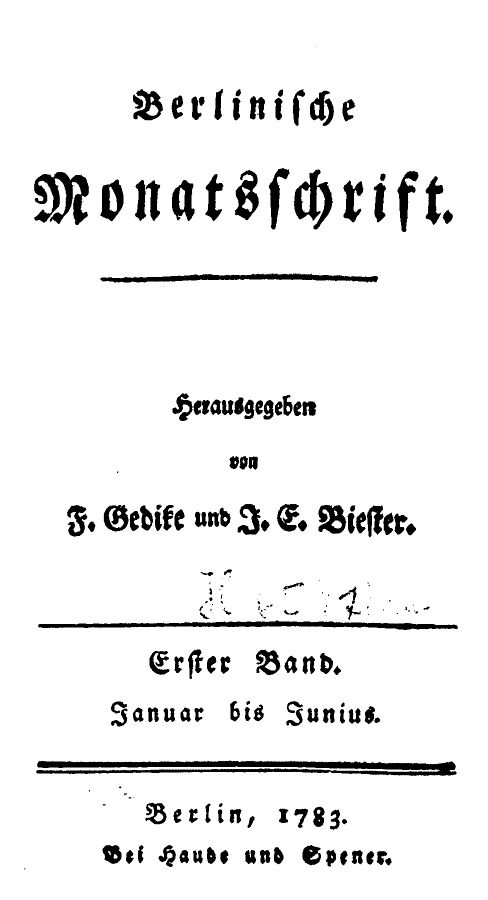
Title page of the Berlinische Monatsschrift, first volume, in black Fraktur lettering. Reads: 'Herausgegeben von F. Gedike und J. E. Biester', 'Erster Band, Januar bis Junius', 'Berlin, 1783, Bei Haude und Spener'. A handwritten scribble appears above a horizontal rule.Newspaper article

Primary source

Berlinische Monatsschrift

Johann Erich Biester and Friedrich Gedike · 1783

Book

Primary source

De Mundi Sensibilis atque Intelligibilis Forma et Principiis: Dissertatio

Immanuel Kant · 1770

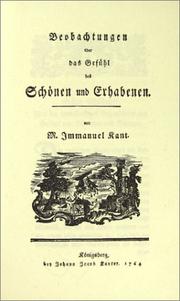
Title page of Kant's 1764 work 'Beobachtungen über das Gefühl des Schönen und Erhabenen', in German black-letter type, with an engraved vignette of a landscape and the line 'von M. Immanuel Kant' and imprint 'Königsberg, bey Johann Jacob Kanter, 1764'.Book

Primary source

Observations on the Feeling of the Beautiful and Sublime

Immanuel Kant · 1764

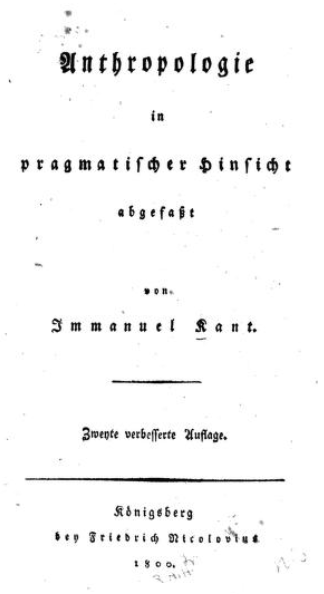
Title page of a German book in blackletter type: 'Anthropologie in pragmatischer Hinsicht abgefasst von Immanuel Kant. Zweyte verbesserte Auflage. Königsberg bey Friedrich Nicolovius 1800.' Faint marks appear in the page margins.Book

Primary source

Anthropology from a Pragmatic Point of View

Immanuel Kant · 1798

Book

Primary source

Dreams of a Spirit-Seer, Illustrated by Dreams of Metaphysics

Immanuel Kant · 1766

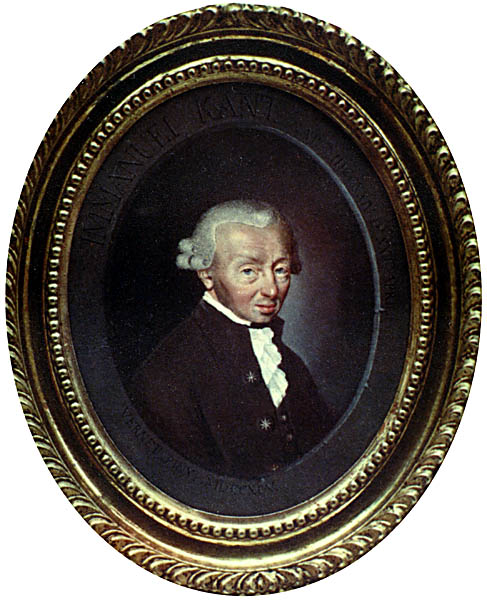
Oval portrait of an older man with white powdered hair, a dark coat and a white cravat, set in an ornate gilt frame. Partly legible letters above read IMMANUEL KANT, and smaller text sits along the bottom edge.Painting

Secondary source

Portrait of Immanuel Kant

Carle Vernet · after 1792

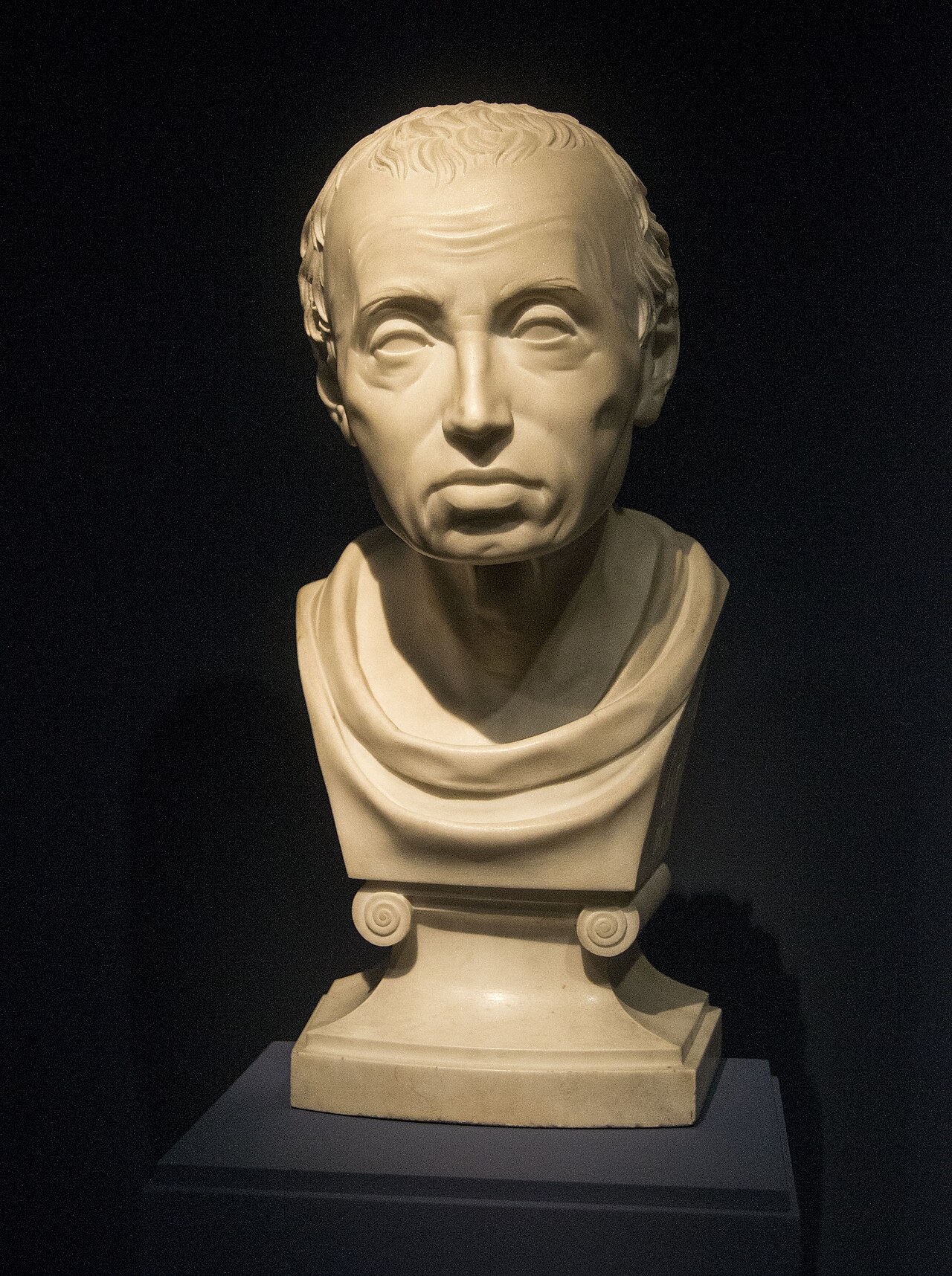
White marble bust of a balding man with deeply set eyes and a stern, downturned mouth, draped with a folded cloth at the shoulders, resting on a stepped pedestal with Ionic volute ornaments, set against a dark background.Sculpture

Primary source

Bust of Immanuel Kant

Friedrich Hagemann · 1801

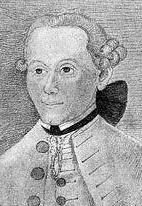
Grayscale drawing of a young man with powdered hair tied back, wearing a high black neckcloth, a light coat with a row of buttons, and a calm, serious expression, facing forward.Painting

Primary source

Der junge Kant

Caroline von Keyserling

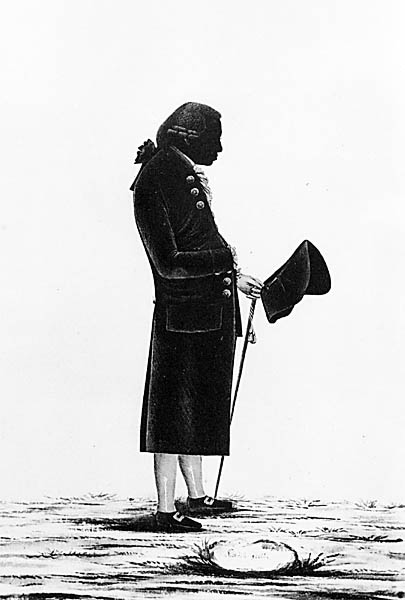
Black and white image of a standing man in profile facing right, wearing a long dark coat with buttons, holding a tricorn hat and a cane, with hair tied at the back, on a grassy ground against a white background.Painting

Secondary source

Kant im Schattenriss auf dem Spaziergang

Puttrich

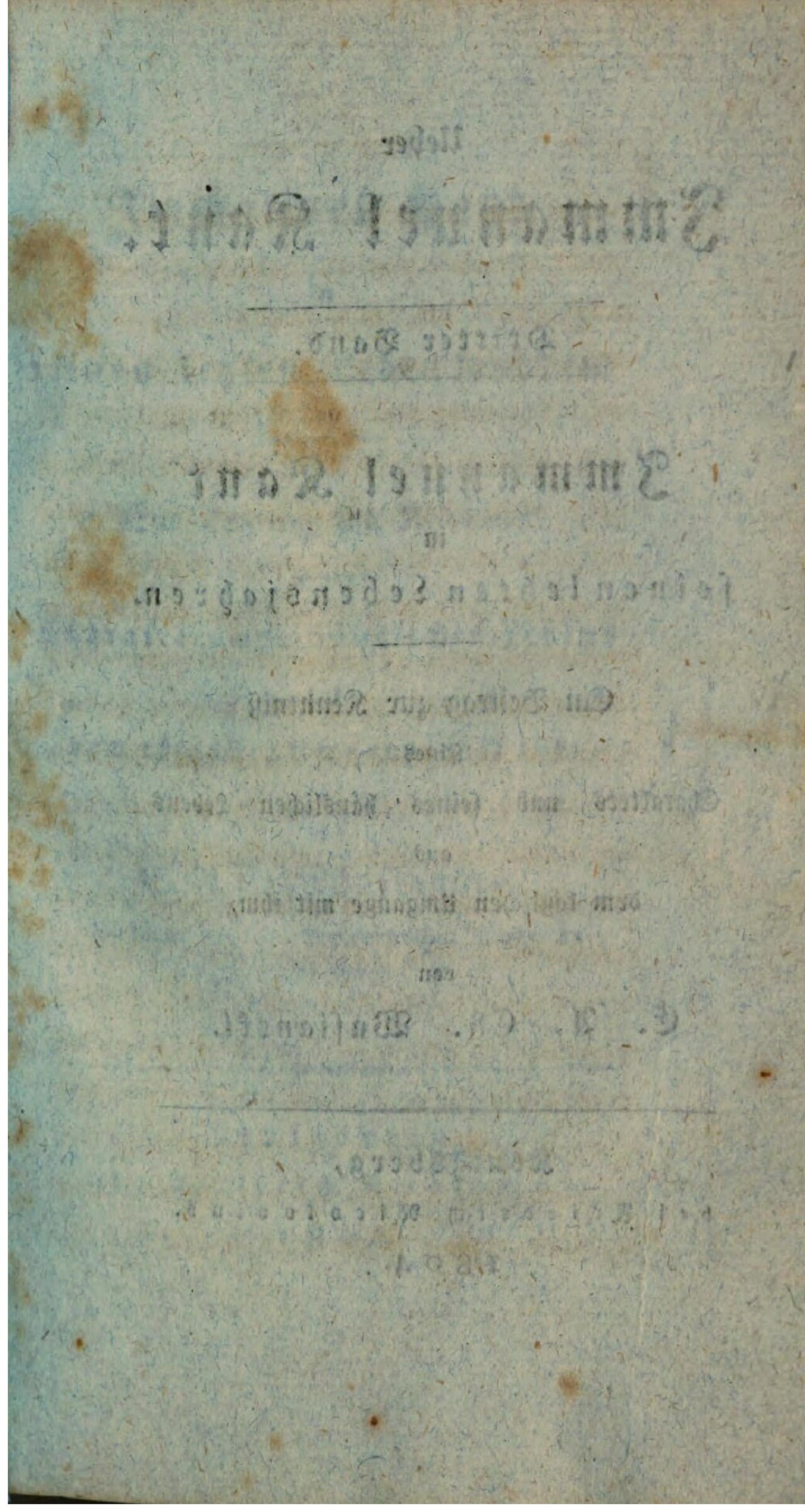
Title page of a German book in Fraktur type, printed on bluish paper with stains. Reads: 'Ueber Immanuel Kant' (partly blurred), 'Dritter Band' (third volume), 'Immanuel Kant in seinen letzten Lebensjahren', 'ein Beytrag zur Kenntniß seines Charakters und häuslichen Lebens aus dem täglichen Umgange mit ihm', by E. A. C. Wasianski, with publisher's imprint at the bottom.Book

Primary source

Immanuel Kant in seinen letzten Lebensjahren

Ehregott Andreas Christoph Wasianski · 1804

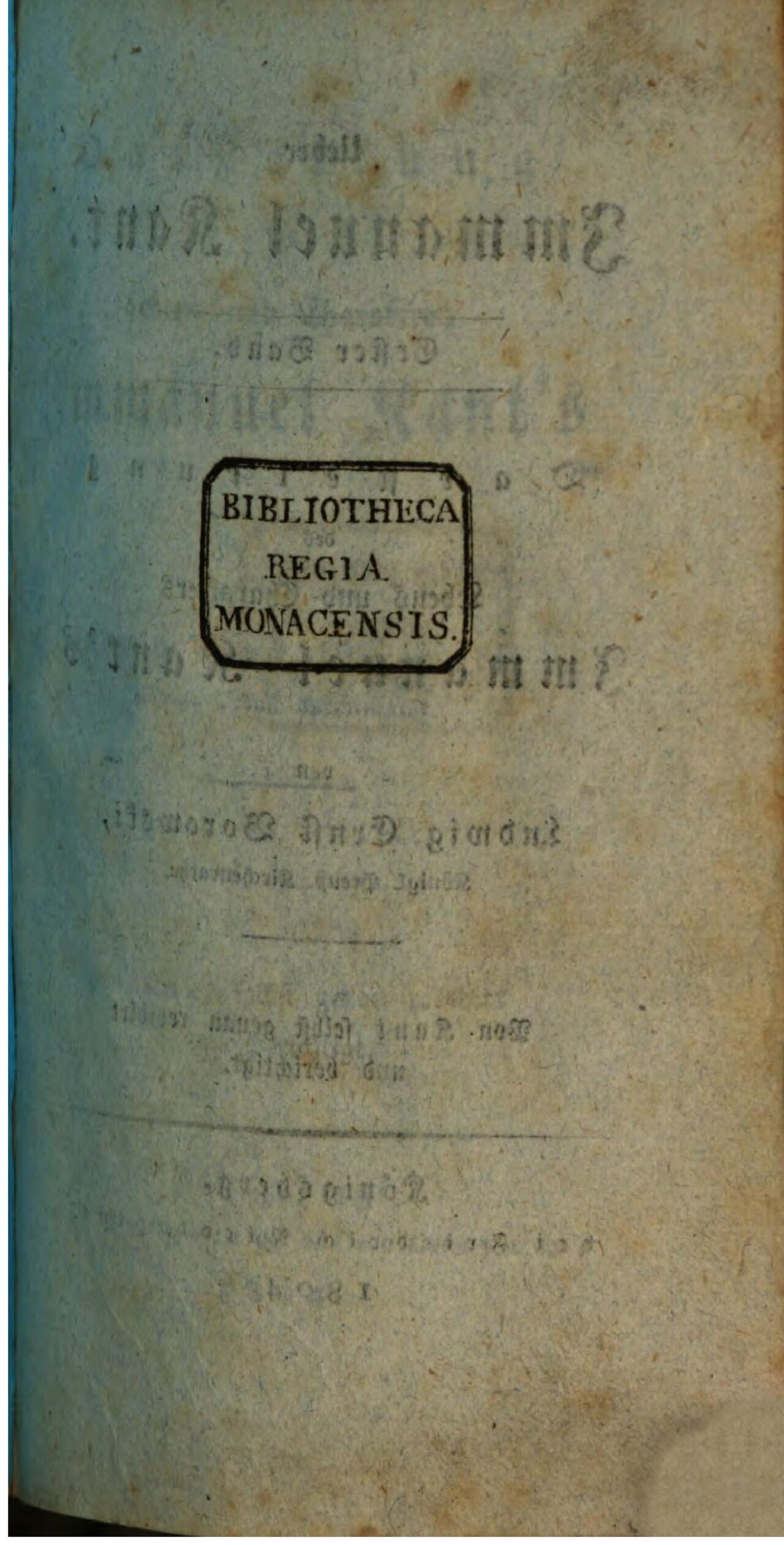
Scan of a book title page, mirrored and faded, with a rectangular stamp reading 'BIBLIOTHECA REGIA MONACENSIS'. Title text in Fraktur includes 'Immanuel Kant' and 'Borowski' with a printed line below.Book

Primary source

Darstellung des Lebens und Charakters Immanuel Kant's

Ludwig Ernst Borowski · 1804

Engraved oval portrait in profile of a man facing left, with powdered hair in curls and a queue tied with a ribbon, wearing a high-collared coat with buttons and a cravat.Painting

Secondary source

Immanuel Kant

Rosmäsler, after Veit Hans Schnorr von Carolsfeld · 1822

Black ink handwritten signature on white background, with a large looping flourish on the left and the word-like cursive script 'Kant' written to the right.Artifact

Primary source

Signature of Immanuel Kant

Immanuel Kant

Title page of the 1786 German edition of Kant's Metaphysische Anfangsgründe der Naturwissenschaft. Black text in Fraktur-style lettering reads Metaphysische Anfangsgründe der Naturwissenschaft, von Immanuel Kant, and at the bottom Riga, bei Johann Friedrich Hartknoch, 1786.Book

Primary source

Metaphysical Foundations of Natural Science

Immanuel Kant · 1786

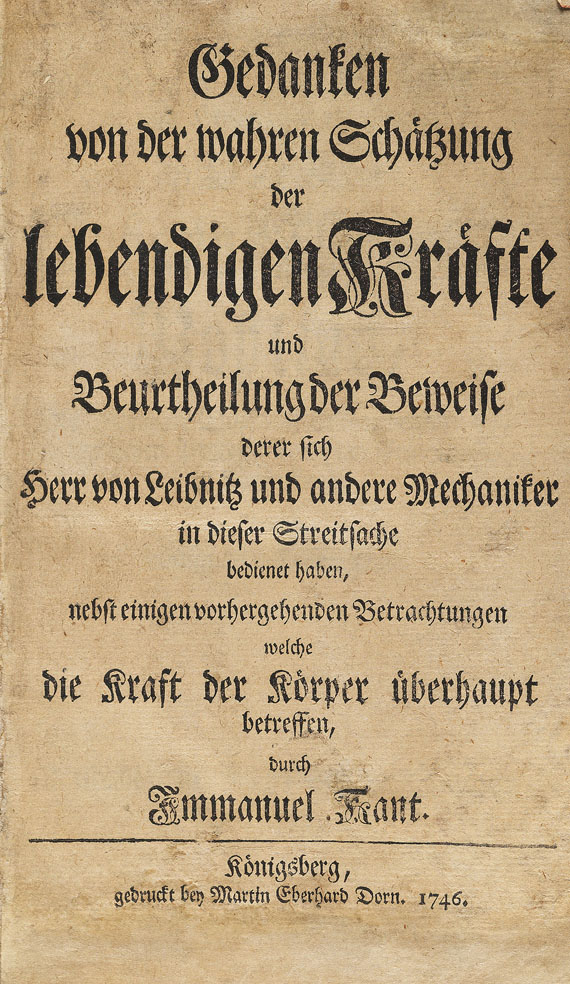
Title page of a German book in black-letter (Fraktur) type on aged paper. Title reads Gedanken von der wahren Schätzung der lebendigen Kräfte, with further text naming Immanuel Kant as author. Imprint at bottom: Königsberg, gedruckt bey Martin Eberhard Dorn, 1746.Book

Primary source

Thoughts on the True Estimation of Living Forces

Immanuel Kant · 1749

Title page of a 1911 German edition, Philosophische Bibliothek Band 47 II, reading 'Immanuel Kant's Beweisgrund zu einer Demonstration des Daseins Gottes', edited by D. Friedrich Michael Schiele, published by Felix Meiner in Leipzig.Book

Primary source

The Only Possible Argument in Support of a Demonstration of the Existence of God

Immanuel Kant · 1763

Book

Primary source

Was heißt: sich im Denken orientieren?

Immanuel Kant · 1786

Book

Primary source

Über Pädagogik

Immanuel Kant · 1803

Black and white engraving in profile of a man with powdered hair in curled side rolls and a tied queue, wearing a dark coat with a white collar and cravat, facing right.Painting

Secondary source

Kant5 (profile print after Schnorr)

after Veit Hans Schnorr von Carolsfeld · 1789 (drawing); print undated

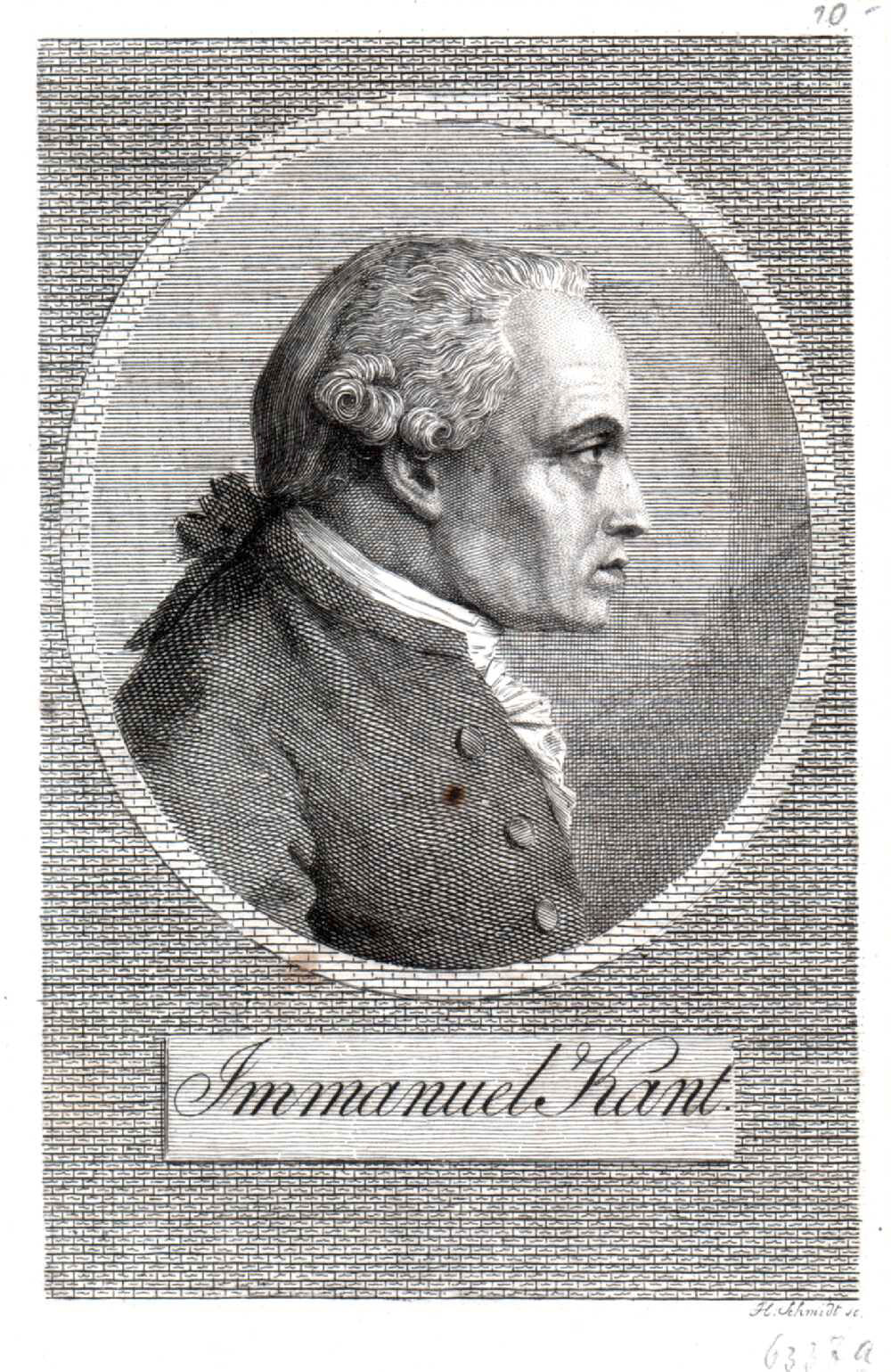
Black-and-white engraved portrait in profile facing right of a man with curled white hair and a high-collared coat with buttons, set in an oval frame. Below is a caption reading 'Immanuel Kant' in cursive script, with a small signature in the lower right corner.Painting

Primary source

Portrait of Immanuel Kant

Johann Friedrich Bause

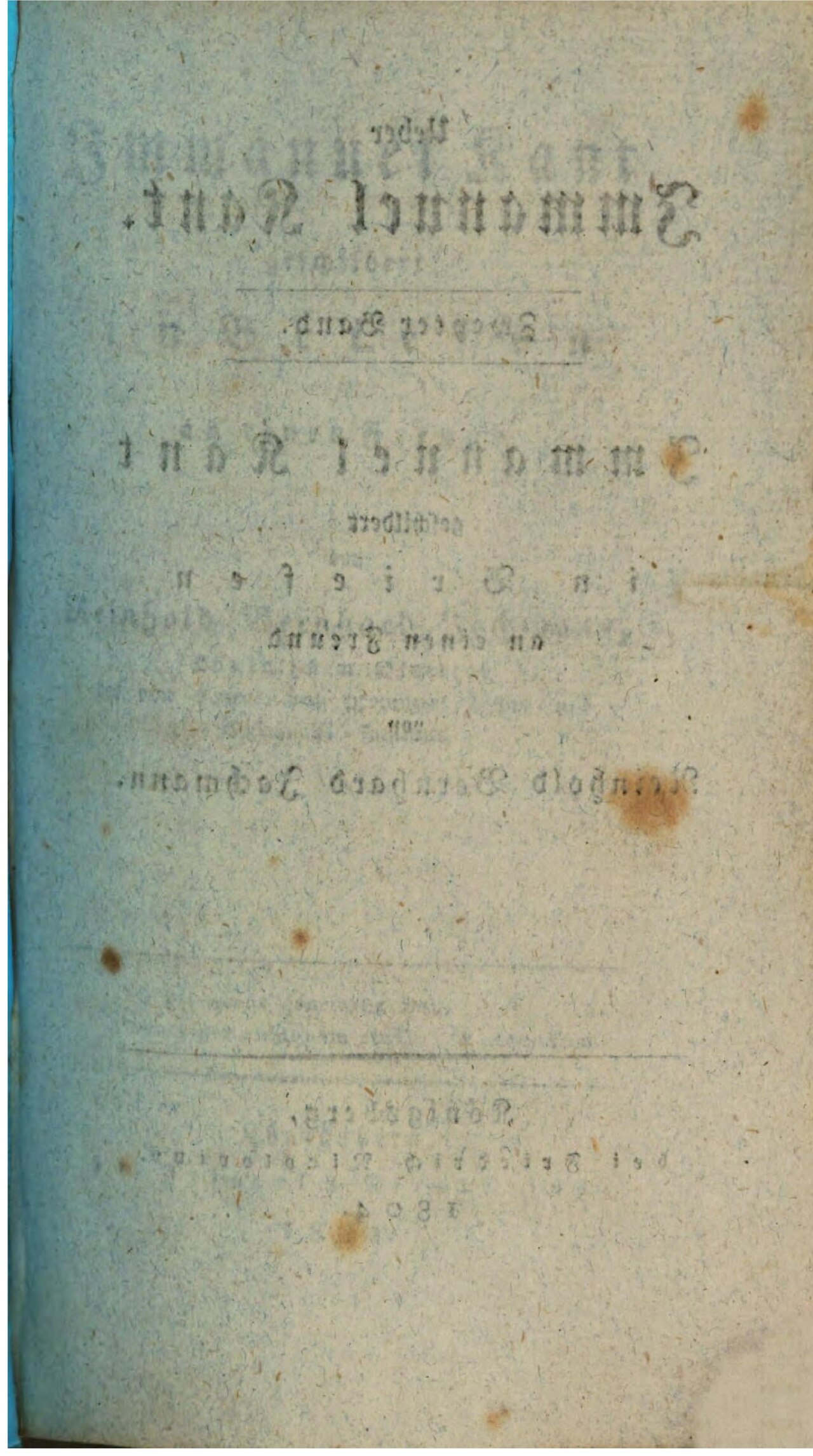
Title page of a German book, printed in Fraktur blackletter and partly mirrored or faded through the paper. Text reads 'Immanuel Kant, geschildert in Briefen an einen Freund' with 'von Reinhold Bernhard Jachmann' below, and a publisher line at the bottom. Brown foxing spots and a blue-tinted page edge are visible.Book

Primary source

Immanuel Kant geschildert in Briefen an einen Freund

Reinhold Bernhard Jachmann · 1804

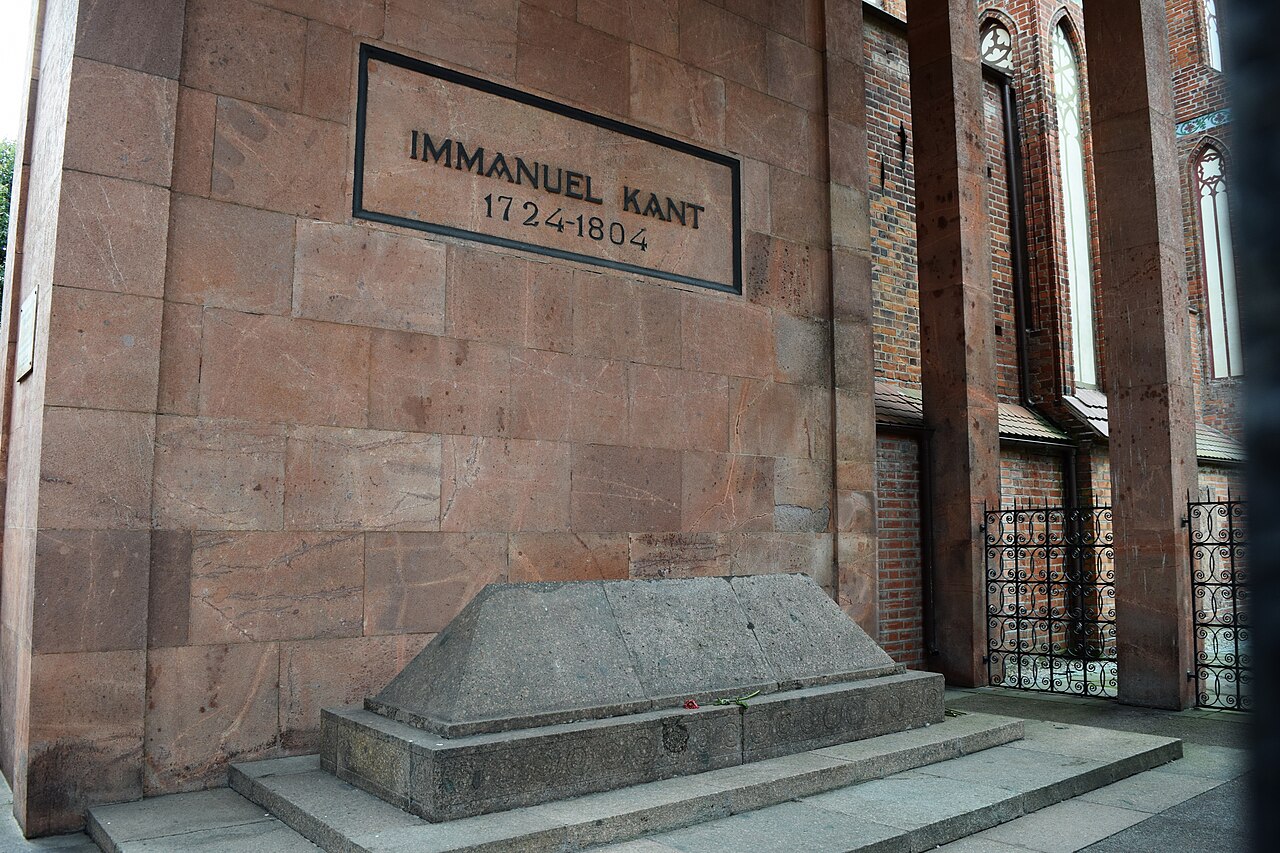
Stone sarcophagus-style tomb on a raised stone base at the foot of a red stone wall with a plaque reading 'IMMANUEL KANT 1724-1804'. Brick church architecture and iron gates are visible beside it.Artifact

Secondary source

Grave of Immanuel Kant

Book

Secondary source

Kants Leben und Lehre

Ernst Cassirer · 1921

Book

Primary source

Kritik der reinen Vernunft (Erste Fassung 1781)

Immanuel Kant · 1781

Book

Primary source

Perpetual Peace: Supplements

Immanuel Kant · 1795

Kant's Introduction to Logic and Essay on the Four FiguresBook

Primary source

Kant's Introduction to Logic and Essay on the Four Figures

Immanuel Kant · 1885

Prolegomena zu einer jeden künftigen MetaphysikBook

Primary source

Prolegomena zu einer jeden künftigen Metaphysik

Immanuel Kant · 1920

Kant's Inaugural Dissertation of 1770, Translated into EnglishBook

Primary source

Kant's Inaugural Dissertation of 1770, Translated into English

Immanuel Kant · 1894

Kant's Critique of Practical Reason and Other Works on EthicsBook

Secondary source

Kant's Critique of Practical Reason and Other Works on Ethics

Immanuel Kant · 1898

Briefwechsel von Imm. KantLetter

Primary source

Briefwechsel von Imm. Kant

Immanuel Kant · 1912

Book

Secondary source

A Commentary to Kant's Critique of Pure Reason

Norman Kemp Smith · 1918

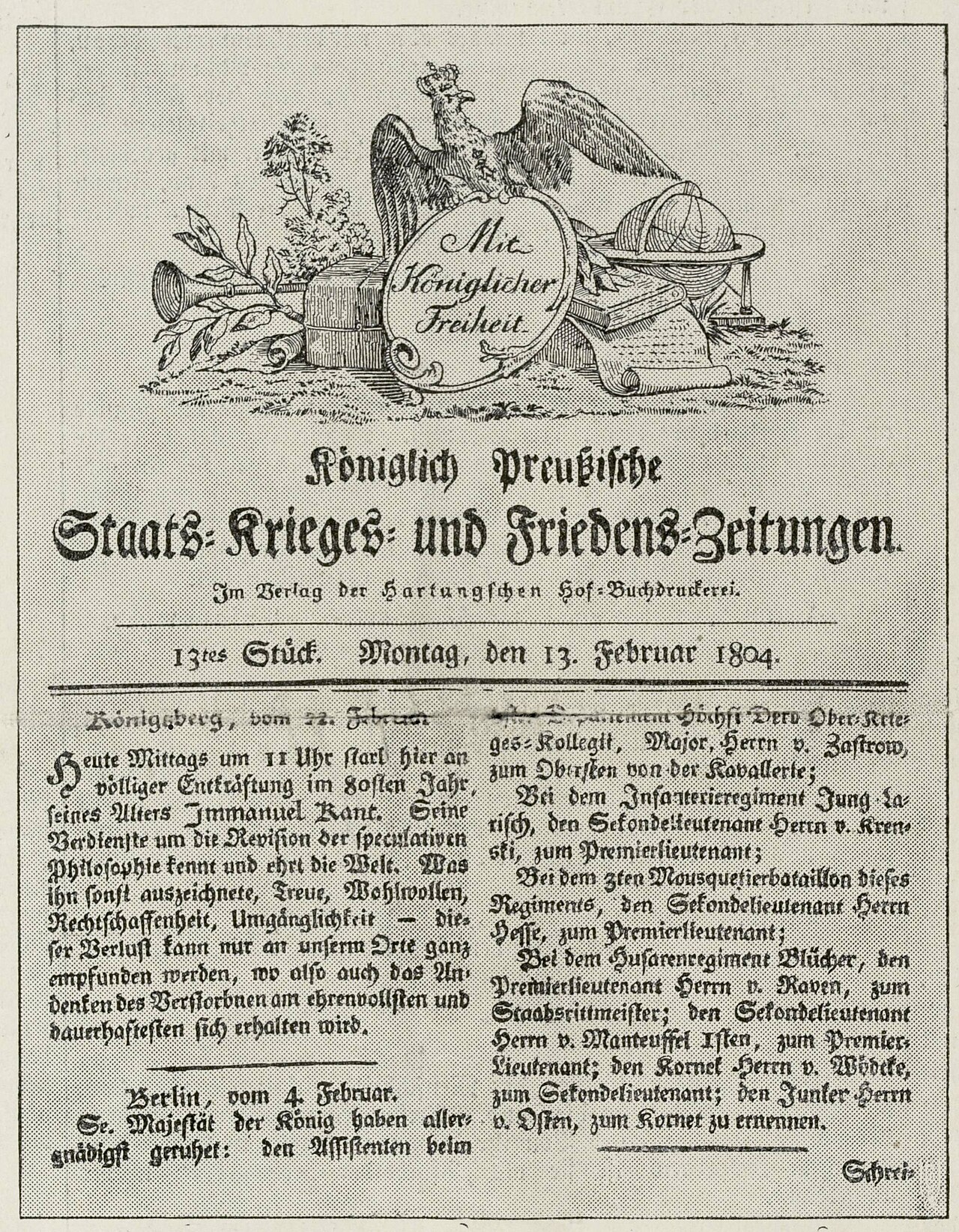
Scan of an 1804 German newspaper page, the Königlich Preußische Staats-Krieges- und Friedens-Zeitungen, dated Montag, den 13. Februar 1804. An engraved header shows an eagle and emblems with the words Mit Königlicher Freiheit. Two columns of black-letter text report Immanuel Kant's death in Königsberg and list military promotions.Newspaper article

Primary source

Todesanzeige Kants

13 February 1804

Book

Primary source

Zum ewigen Frieden

Immanuel Kant · 1795

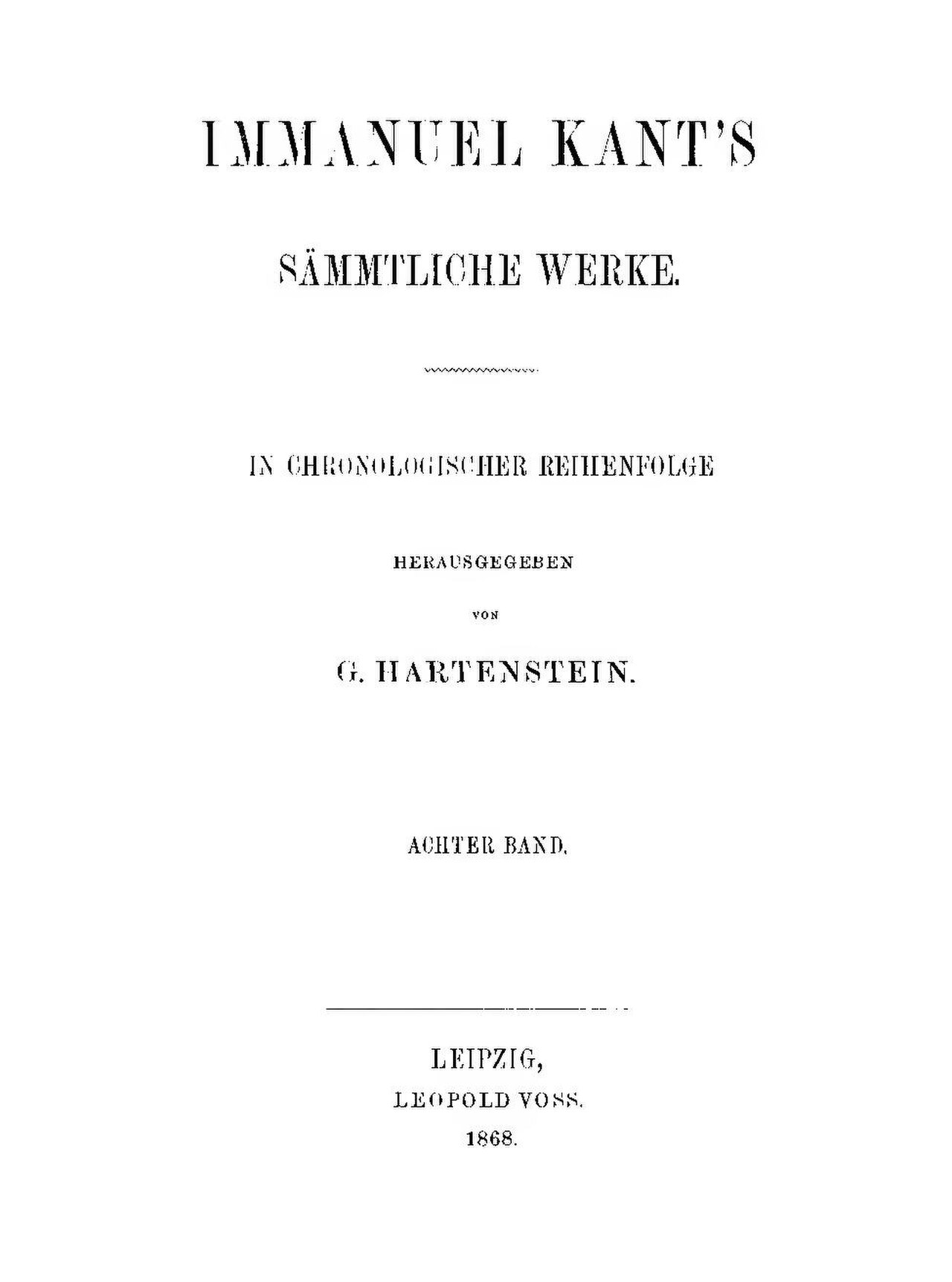
Title page of Immanuel Kant's Sämmtliche Werke, in chronologischer Reihenfolge, edited by G. Hartenstein, Achter Band. Leipzig, Leopold Voss, 1868. Black serif text on white background.Book

Secondary source

Immanuel Kant's Sämmtliche Werke

Immanuel Kant · 1868

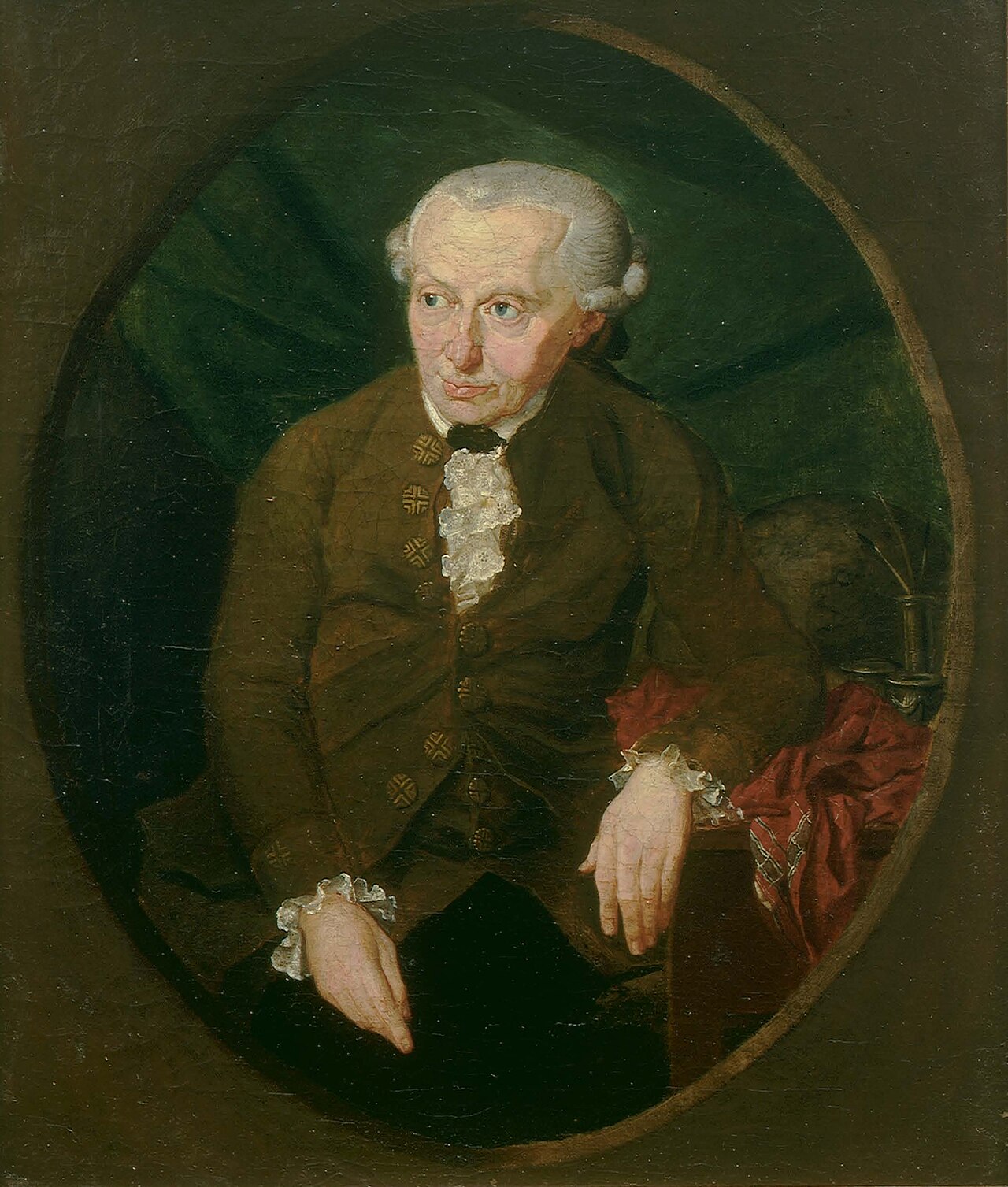
Oval-framed oil portrait of an elderly man with white powdered hair, wearing a dark brown coat with decorative buttons and white lace jabot and cuffs. He sits before a dark green curtain, one hand resting on a red cloth-draped table, the other hanging near his knee.Painting

Primary source

Portrait of Immanuel Kant by Gottlieb Döbler

Gottlieb Döbler · 1791

Book

Primary source

Kant's Critique of Aesthetic Judgement

Immanuel Kant · 1911

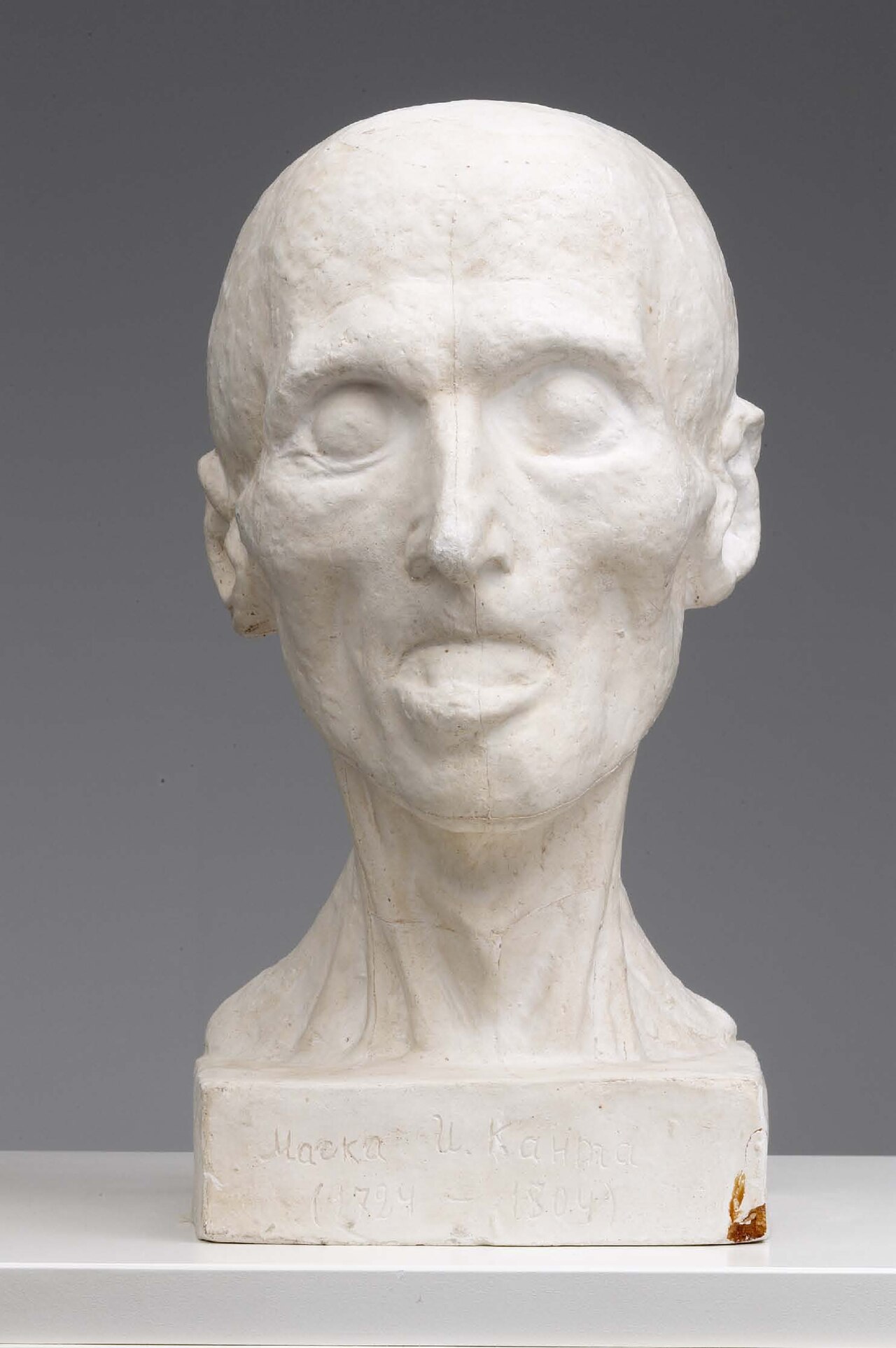
White plaster bust of a bald man's head with closed-looking eyes, prominent nose and set mouth, on a rectangular base with an inscription reading Mаска И. Канта (1724 - 1804). Grey background.Sculpture

Primary source

Death Mask of Immanuel Kant

Andreas Knorre · 1804

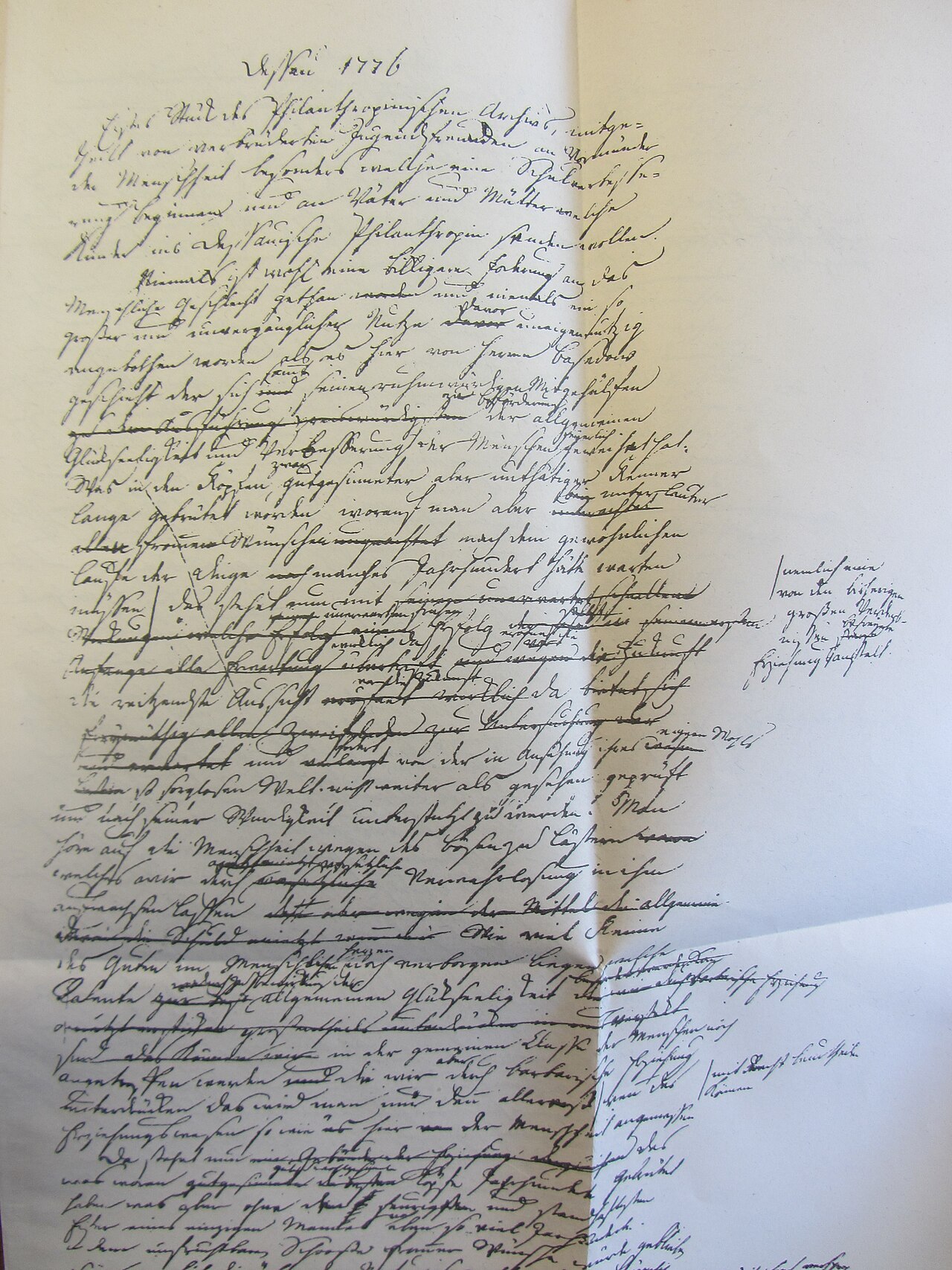
Photograph of a handwritten manuscript page in German script, headed '1776', with dense cursive lines, many crossed-out words, and interlinear and marginal additions. The page is slightly creased vertically.Document

Primary source

Kant's Handwritten Draft on the Philanthropin

Immanuel Kant · 1776

Black handwritten signature on a white background, with large looping strokes and a long underline stroke extending to the right, written in a cursive script.Document

Primary source

Autograph of Immanuel Kant

Immanuel Kant

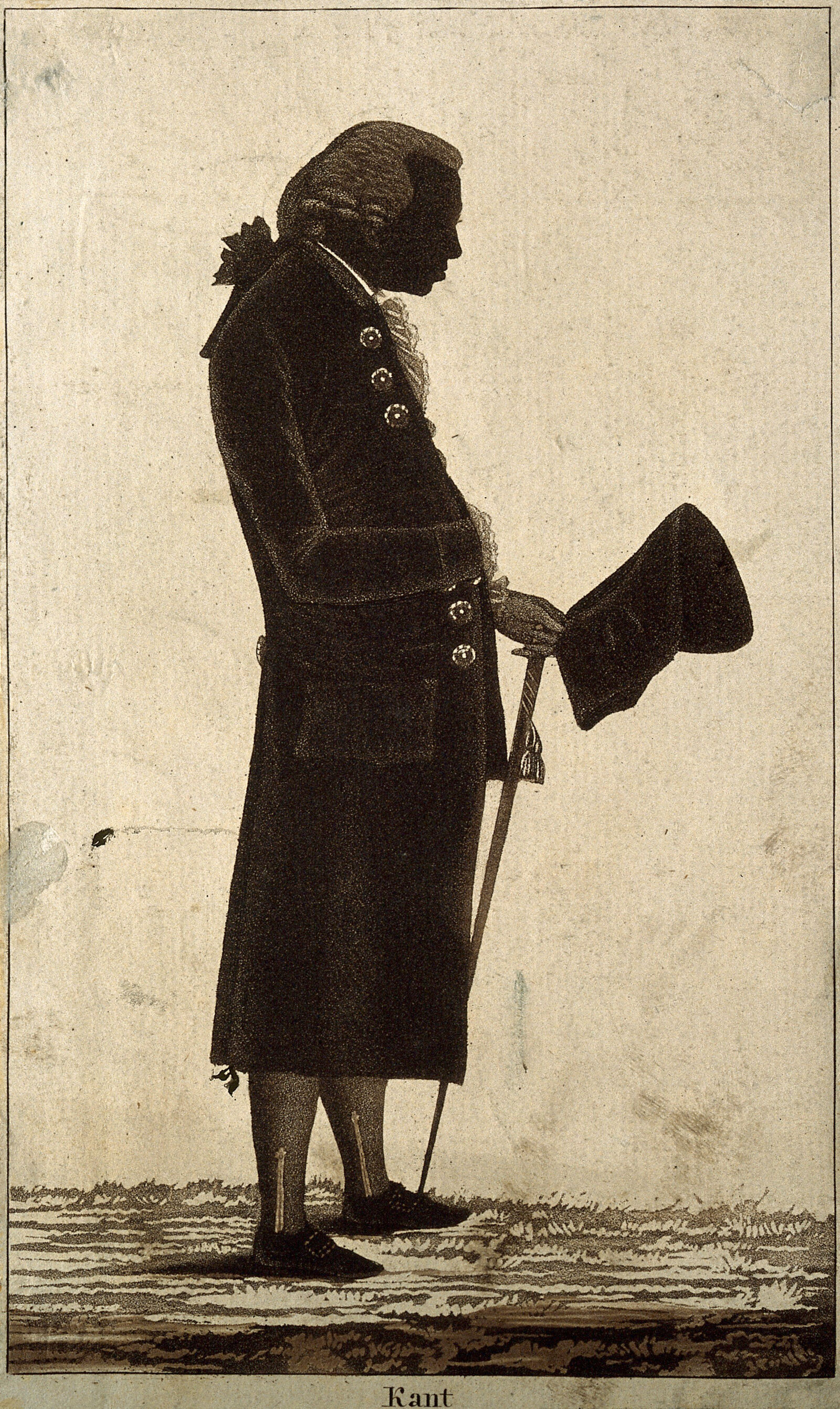
Sepia aquatint silhouette of a standing man in profile facing right, wearing a long dark coat with buttons, a frilled cravat, a wig with a bow, and holding a tricorn hat and a sword. He stands on a textured ground. The caption below reads Kant.Artifact

Primary source

Immanuel Kant, Aquatint Silhouette by Puttrich

Johann Theodor Puttrich · 1793

Book

Secondary source

The Life of Immanuel Kant

J. H. W. Stuckenberg · 1882

Book

Secondary source

The Critical Philosophy of Immanuel Kant, Volume 1

Edward Caird · 1909

Book

Secondary source

Immanuel Kant: A Study and Comparison with Goethe, Leonardo, Bruno, Plato and Descartes

Houston Stewart Chamberlain · 1914

Newspaper article

Secondary source

Kant-Studien

Kant-Gesellschaft · early 20th century

Kant's Theory of KnowledgeBook

Secondary source

Kant's Theory of Knowledge

H. A. Prichard · 1909

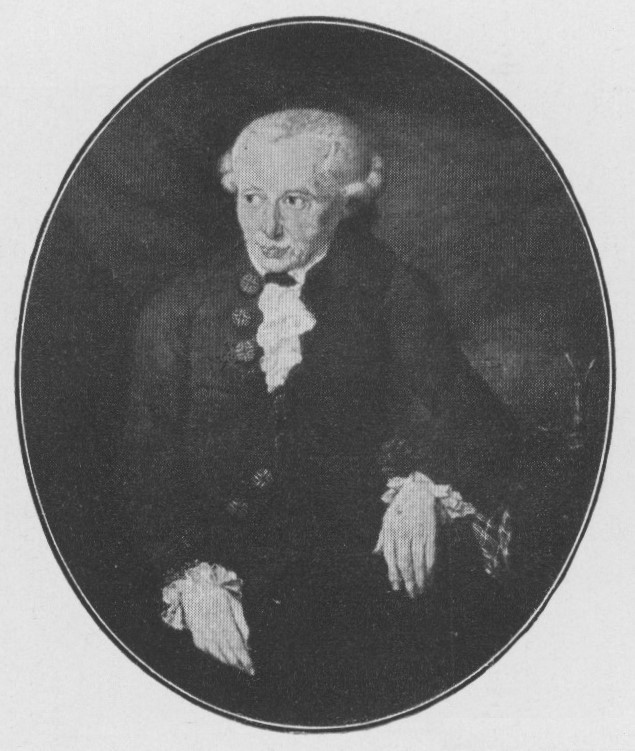
Black-and-white reproduction of an oval portrait of an elderly man with white powdered hair, dark coat, white cravat and lace cuffs, hands visible, against a dark background. Reproduction from an exhibition catalogue.Painting

Primary source

Portrait of Immanuel Kant

Gottlieb Doeppler · 1791

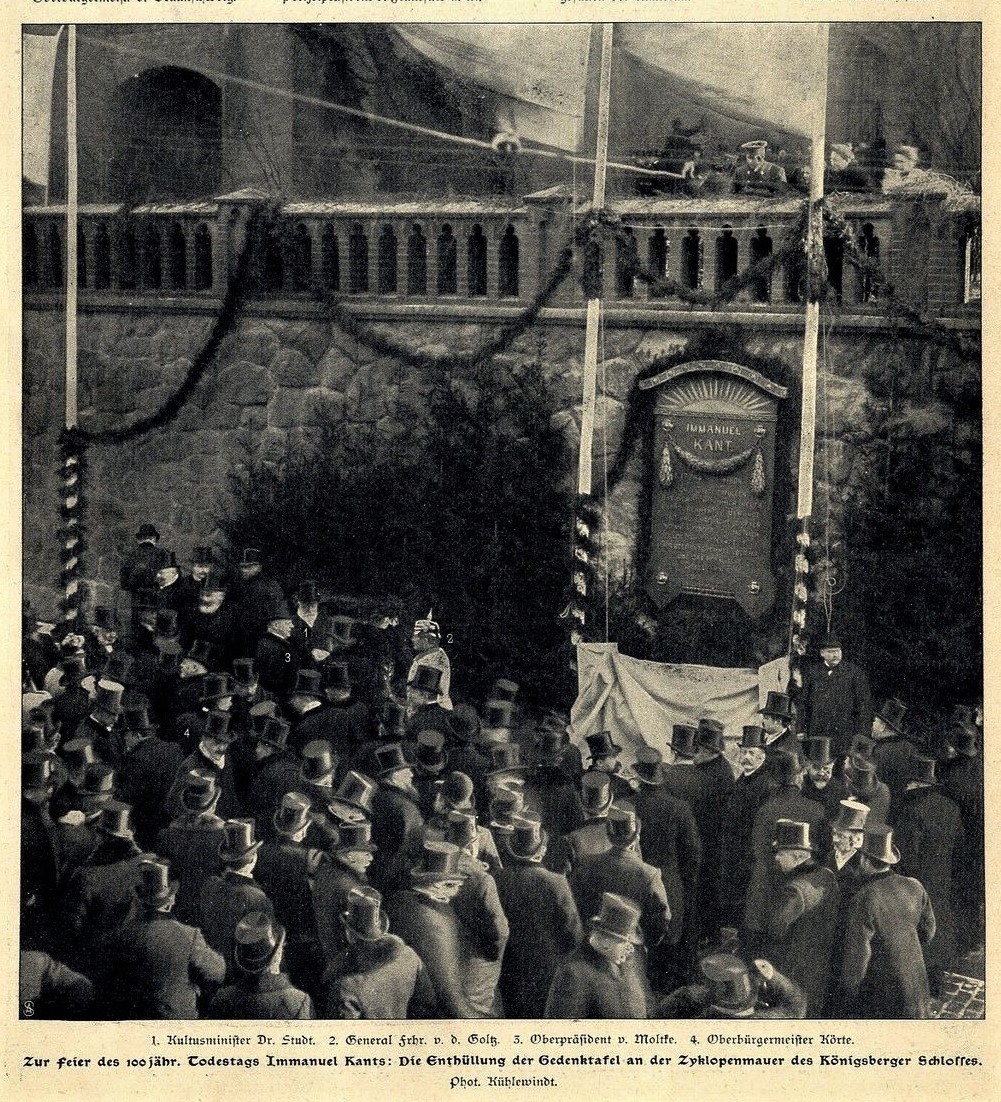
Crowd of men in top hats and dark coats gathered before a stone wall with a bronze plaque reading IMMANUEL KANT, partly draped with cloth; flagpoles and garlands frame the scene; a balcony with officials above.Photograph

Primary source

Unveiling of Kant Centenary Memorial Plaque, Königsberg

Alfred Kühlewindt · 1904

Document

Primary source

The Philosophy of Law, Part I, Chapter 3

Immanuel Kant · 1797

Book

Primary source

Literary and Philosophical Essays: French, German and Italian

Immanuel Kant and others

Book

Primary source

Of the Injustice of Counterfeiting Books

Immanuel Kant · 1798

Book

Primary source

Von der Macht des Gemüts

Immanuel Kant

Book

Primary source

Über die Vulkane im Monde

Immanuel Kant · 1785

Document

Secondary source

Kant's Conception of the Leibniz Space and Time Doctrine

Mary Whiton Calkins

Book

Tertiary source

Kant, Immanuel (Encyclopaedia Britannica, 1911)

Robert Adamson · 1911

Book

Secondary source

Introduction to Kant (Harvard Classics)

Ralph Barton Perry · 1914

Book

Secondary source

The Philosophy of Immanuel Kant

Alexander Dunlop Lindsay

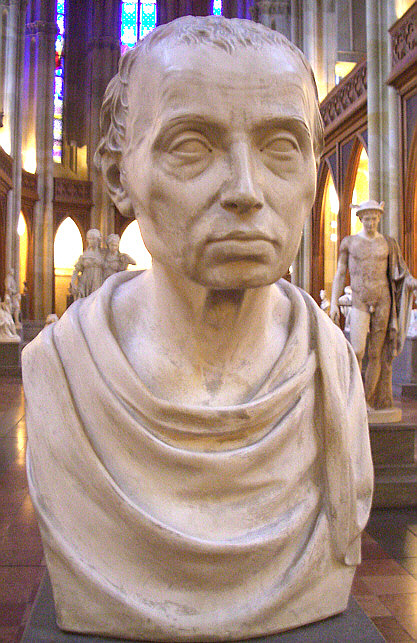
Marble bust of an older man with a furrowed brow, deep-set eyes, and a thin mouth, wearing a draped toga-like garment, set in a church interior with stained glass and other statues behind it.Sculpture

Secondary source

Statue of Immanuel Kant after Friedrich Hagemann

Friedrich Hagemann · 2005

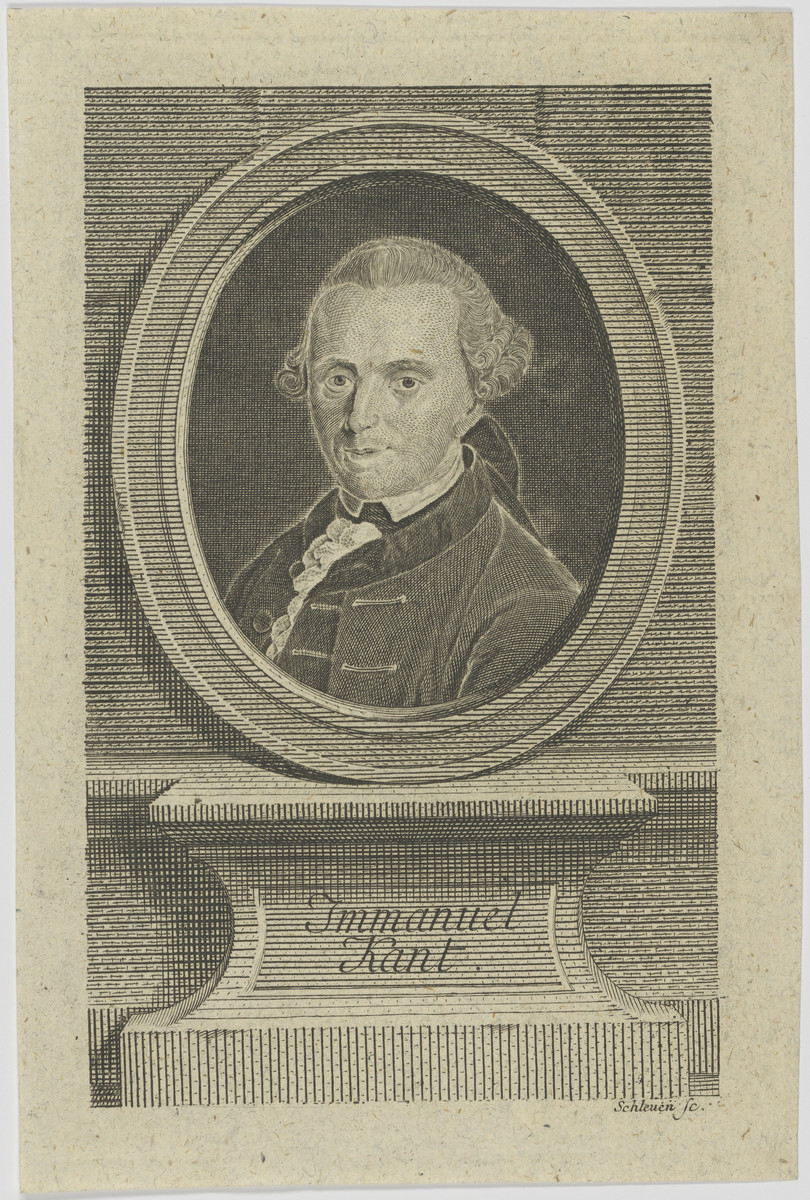
Engraved oval portrait of a man with curled, powdered hair in a dark coat with a white cravat and lace jabot, set in an ornate frame on a pedestal inscribed 'Immanuel Kant'. Signed 'Schleuen sc.' in the lower right.Painting

Secondary source

Engraved portrait of Immanuel Kant by Johann Friedrich Schleuen

Johann Friedrich Schleuen

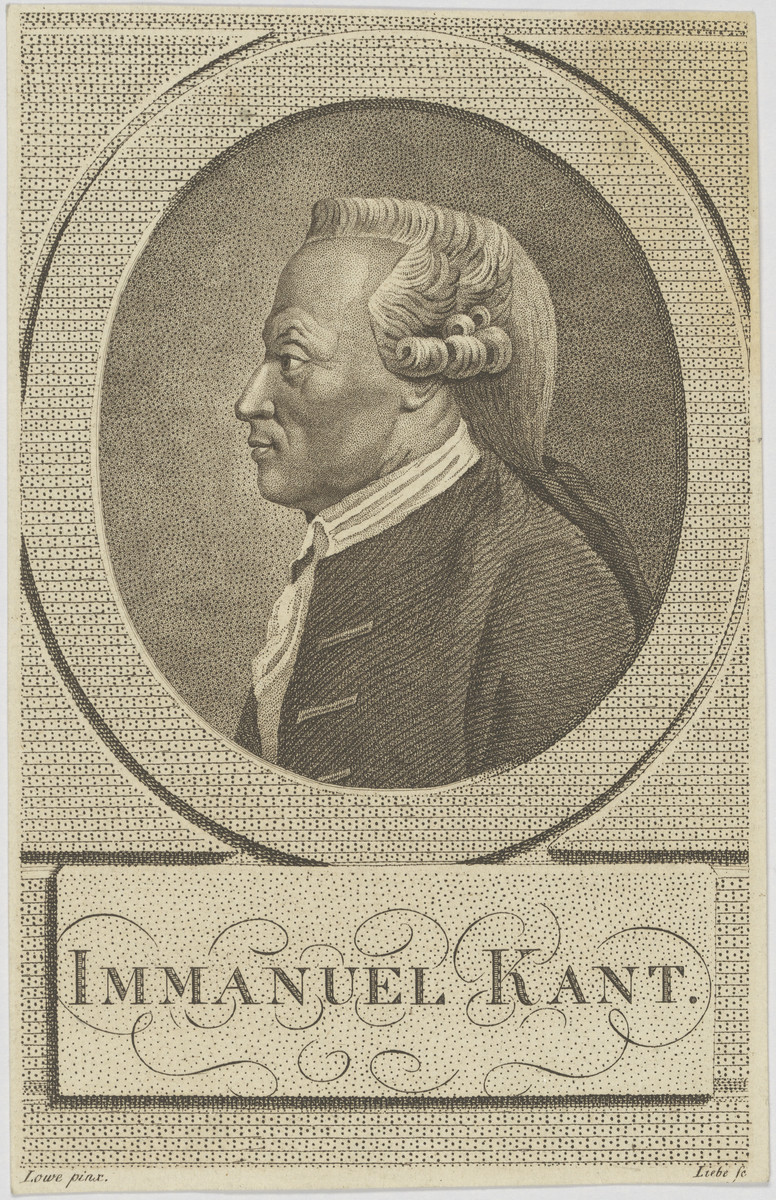
Engraved oval portrait in profile of a man facing left, wearing a powdered wig with curled side locks, a high white collar, and a dark coat. Below is a rectangular cartouche labeled IMMANUEL KANT. Signed Lowe pinx. and Liebe sc. in the corners.Painting

Secondary source

Engraved portrait of Immanuel Kant by Gottlob August Liebe

Gottlob August Liebe

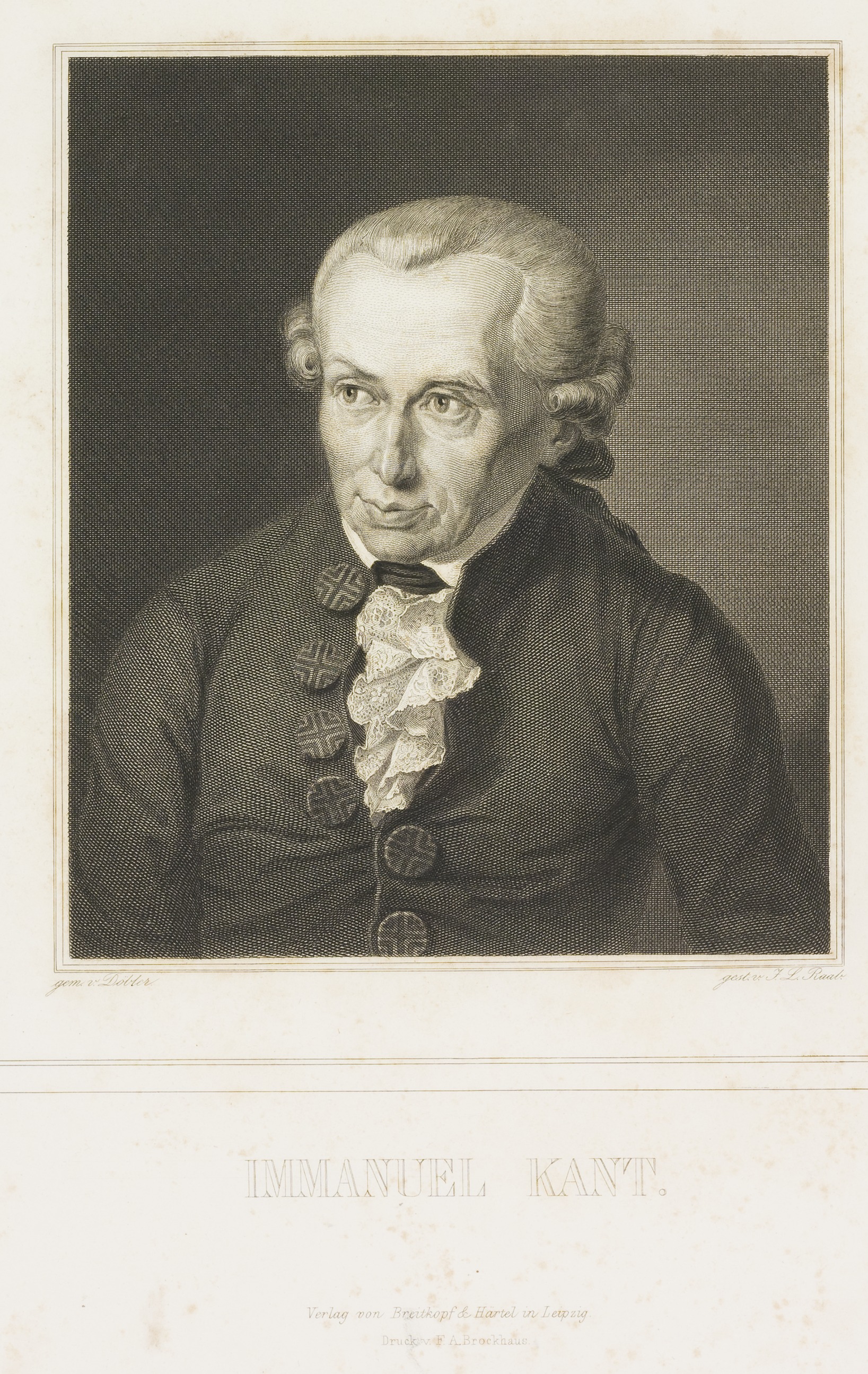
Engraved portrait of Immanuel Kant, a man with powdered hair in curls, wearing a dark coat with ornate buttons and a lace jabot, looking to the side against a dark background. Caption below reads IMMANUEL KANT with publisher text Verlag von Breitkopf & Härtel in Leipzig.Painting

Secondary source

Immanuel Kant, engraving by Johann Leonhard Raab

Johann Leonhard Raab

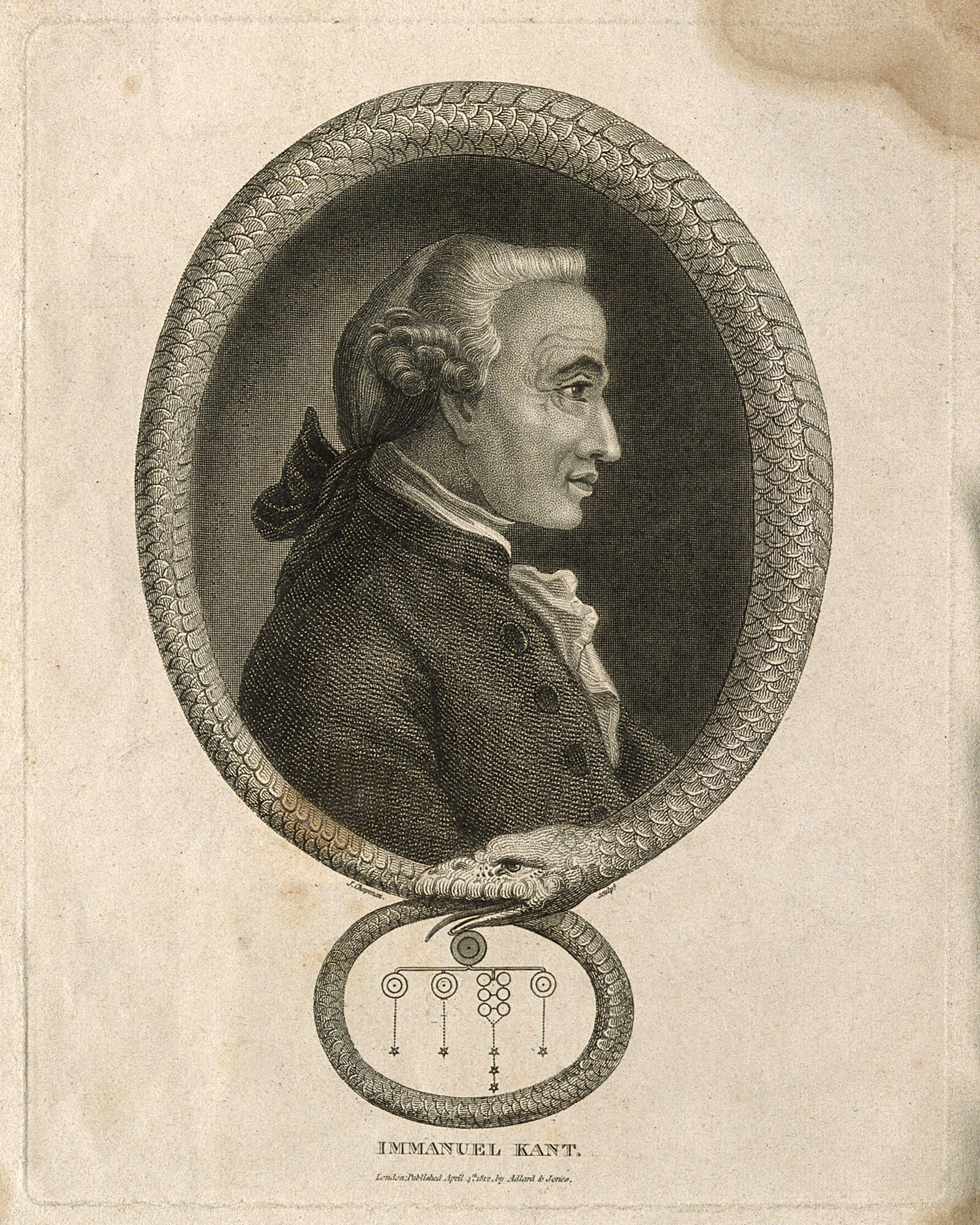
Engraved oval portrait in profile facing right of a man with powdered hair tied back, wearing a dark coat and white cravat, framed by a snake biting its own tail. Below the oval, a small diagram of circles and stars and the caption IMMANUEL KANT with publication line London 1812.Painting

Secondary source

Immanuel Kant

John Chapman · 1812

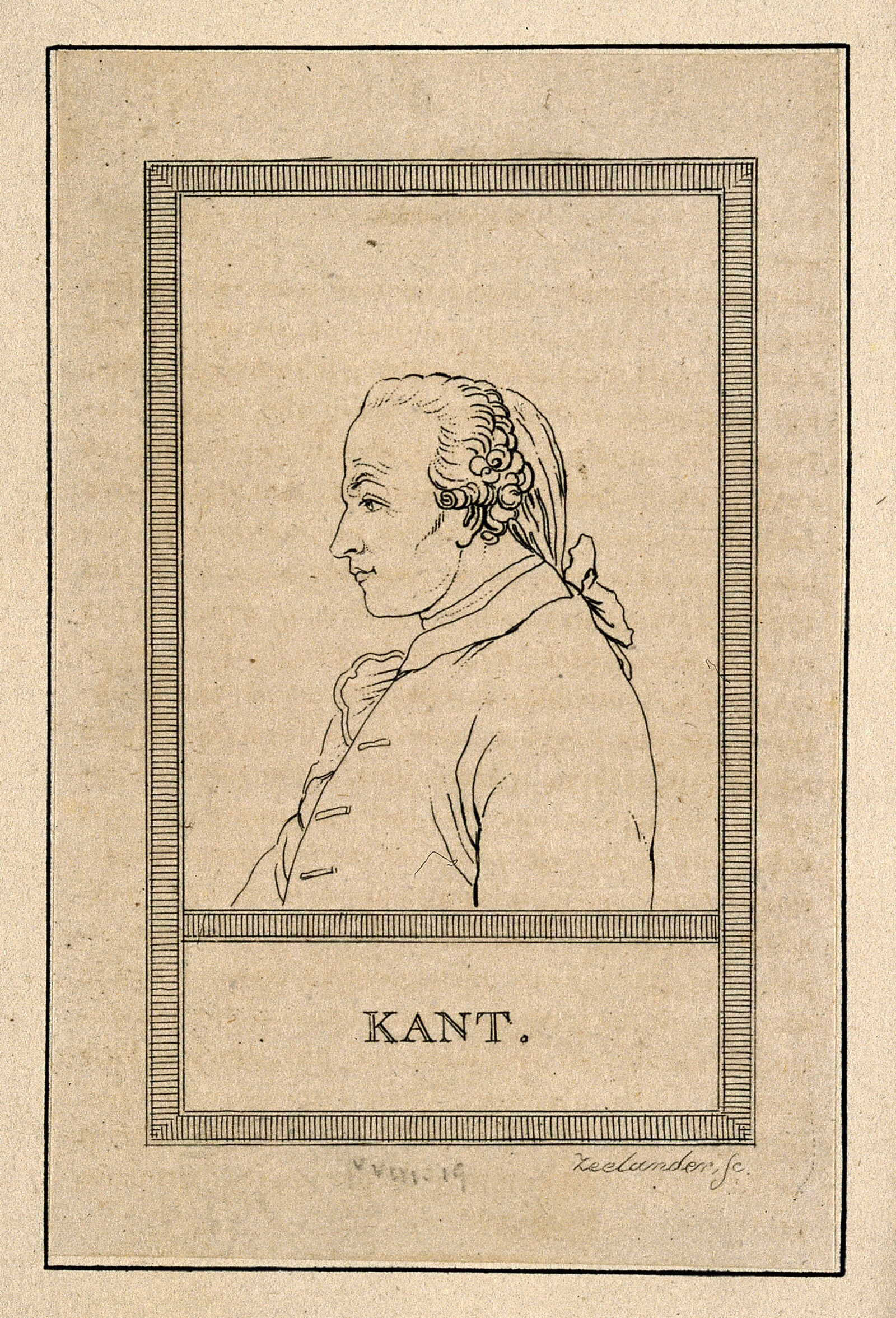
Line engraving of a man in profile facing left, with curled hair tied back in a ribbon, wearing a high-collared coat with buttons. He is set inside a ruled decorative frame, with the label KANT beneath and the signature Zeelander, sc. at lower right.Painting

Secondary source

Immanuel Kant

Abraham Lion Zeelander · 1800-1899

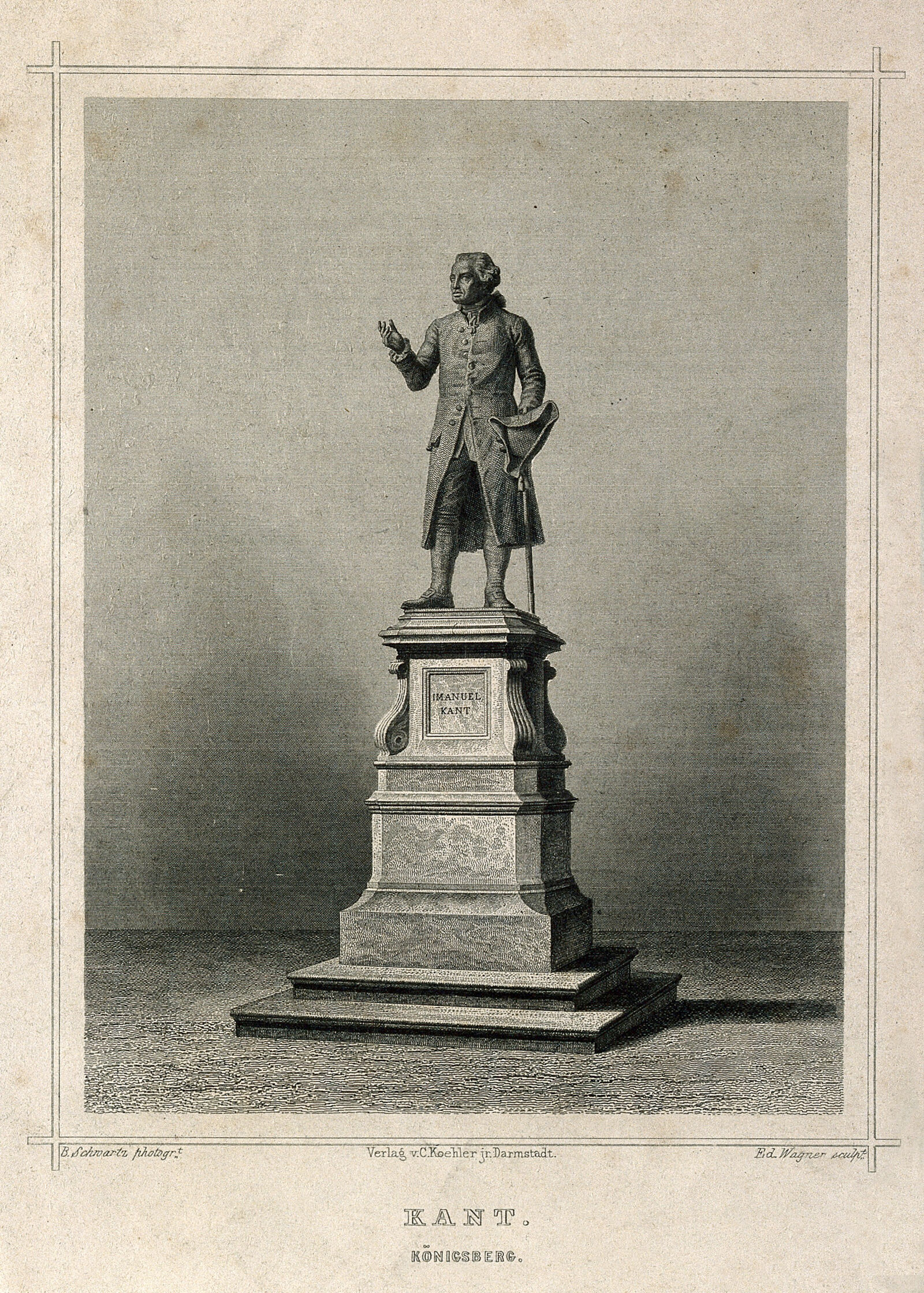
Engraving of the Kant monument in Königsberg: a bronze statue of a standing man in 18th-century coat, breeches and tricorn hat, one hand raised, on a tiered stone pedestal inscribed IMANUEL KANT. Printed title reads KANT, KÖNIGSBERG.Painting

Secondary source

Immanuel Kant

E. Wagner

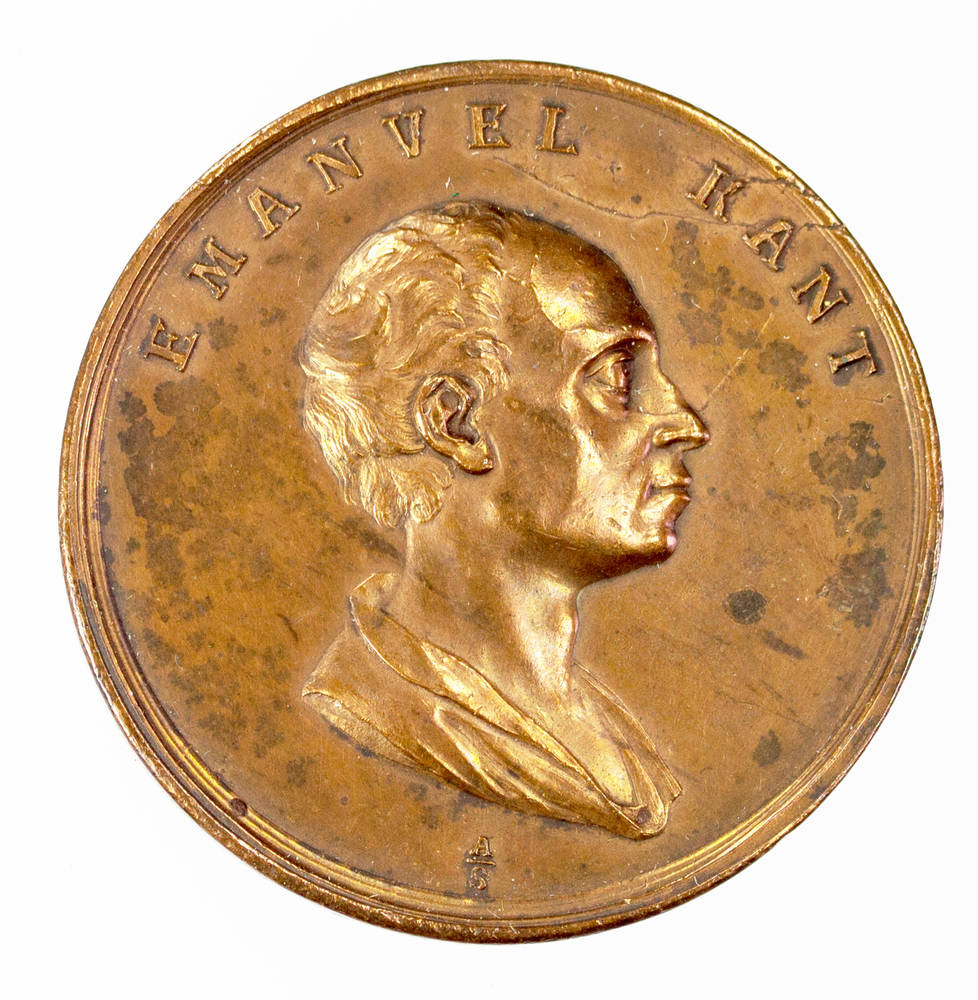
Photo of a bronze-colored medal in profile view of a bearded... no, a man in profile facing right, with short hair, a bust with drapery, inscribed 'EMANVEL KANT' around the top and a small monogram at the bottom. Plain white background.Artifact

Primary source

Medal for the 60th Birthday of Immanuel Kant

Abraham Abramson · 1784

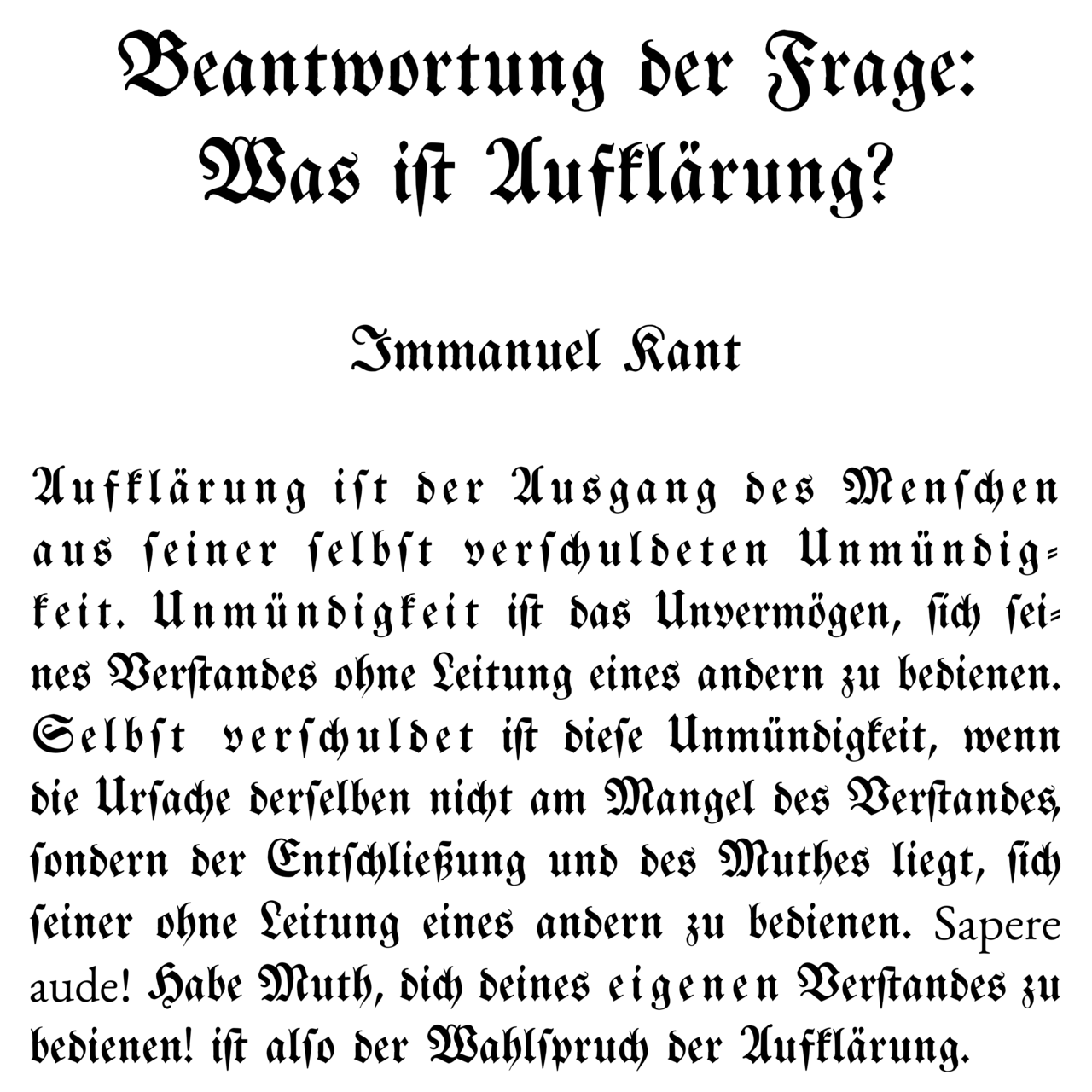
Title page of Kant's 'Beantwortung der Frage: Was ist Aufklärung?' in blackletter type, with the author name Immanuel Kant below and the opening paragraph in German, ending with the phrase 'Sapere aude!'.Document

Primary source

Opening of Kant's What Is Enlightenment? in Breitkopf Fraktur

Immanuel Kant · 2016-01-09

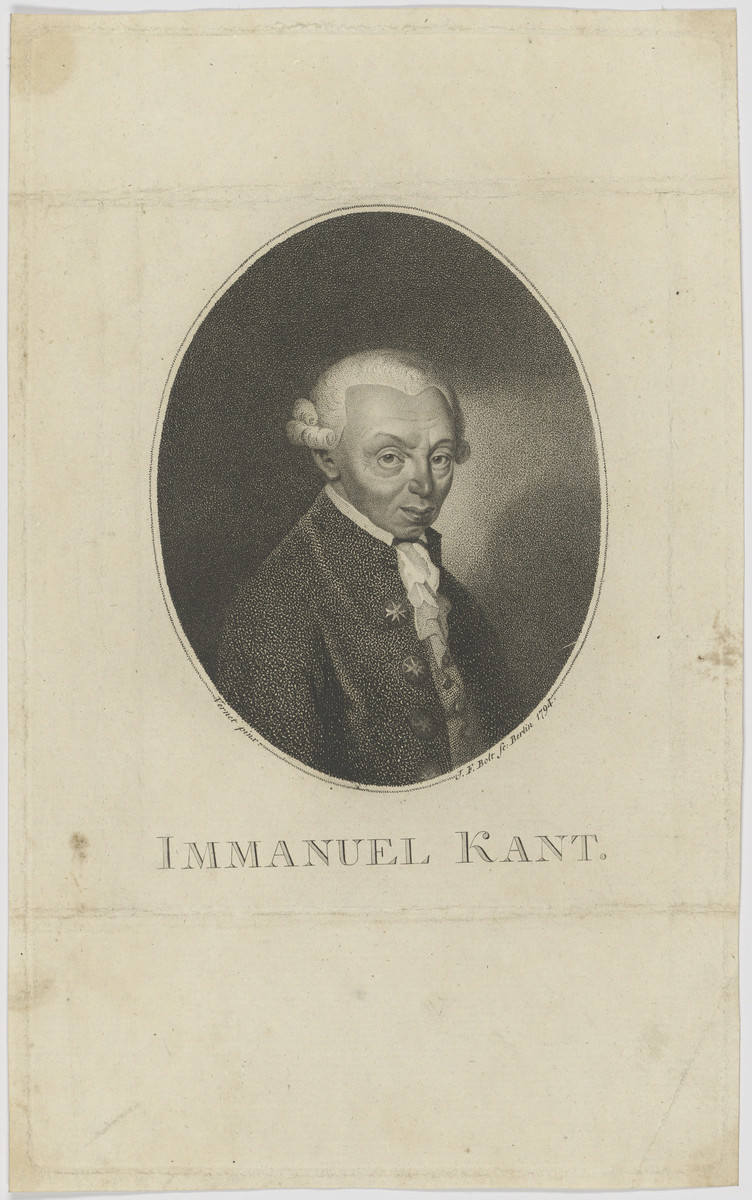
Engraved oval portrait of Immanuel Kant, a bust-length man in a white powdered wig, dark coat with cross-shaped buttons and a white cravat, on a sheet with the title IMMANUEL KANT below and an inscription dated 1794.Painting

Secondary source

Engraved Portrait of Immanuel Kant

Undated; inscription dated 1794

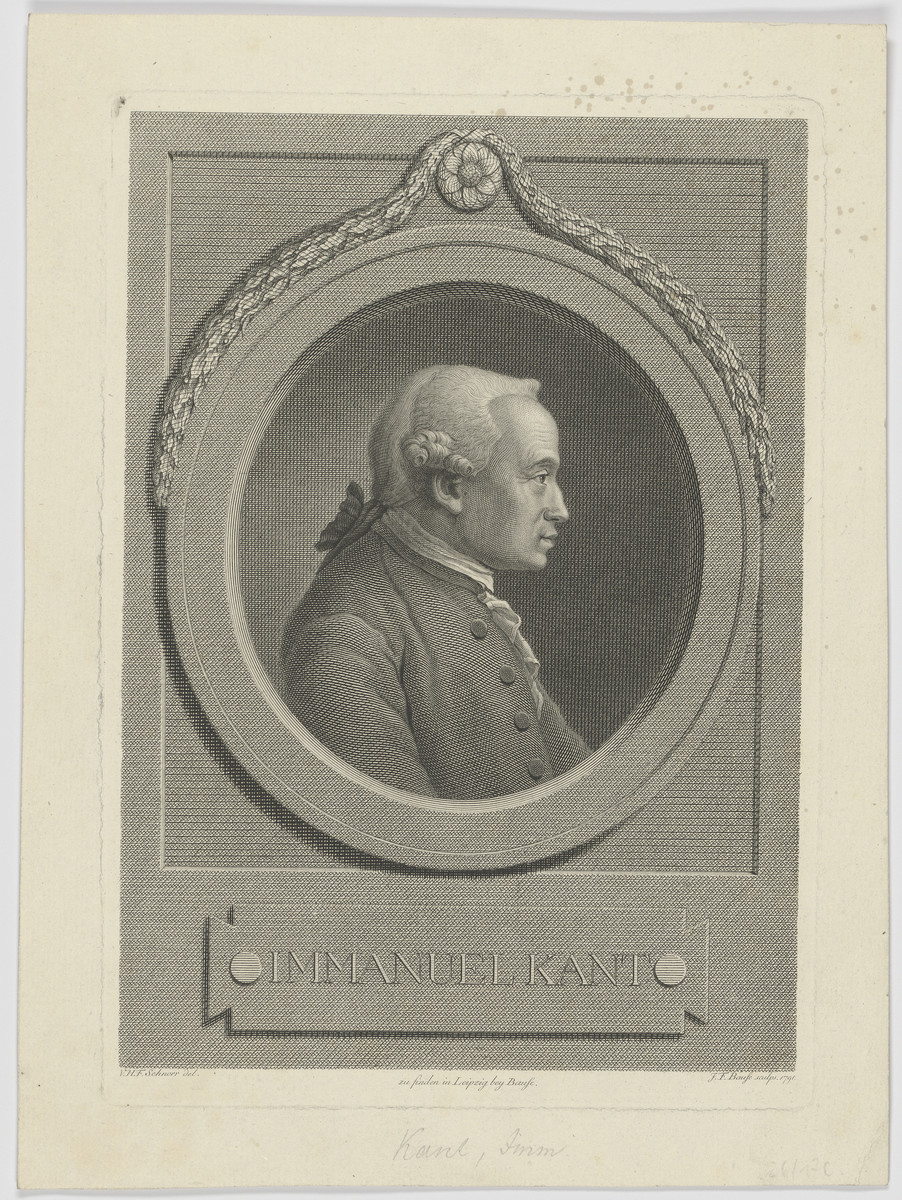
Engraved portrait in profile facing right of a man with powdered hair tied back with a dark ribbon, wearing a buttoned coat and cravat, inside an oval frame with a laurel-like garland above. Caption reads IMMANUEL KANT.Painting

Secondary source

Portrait of Immanuel Kant by Schnorr von Carolsfeld

Veit Hans Friedrich Schnorr von Carolsfeld

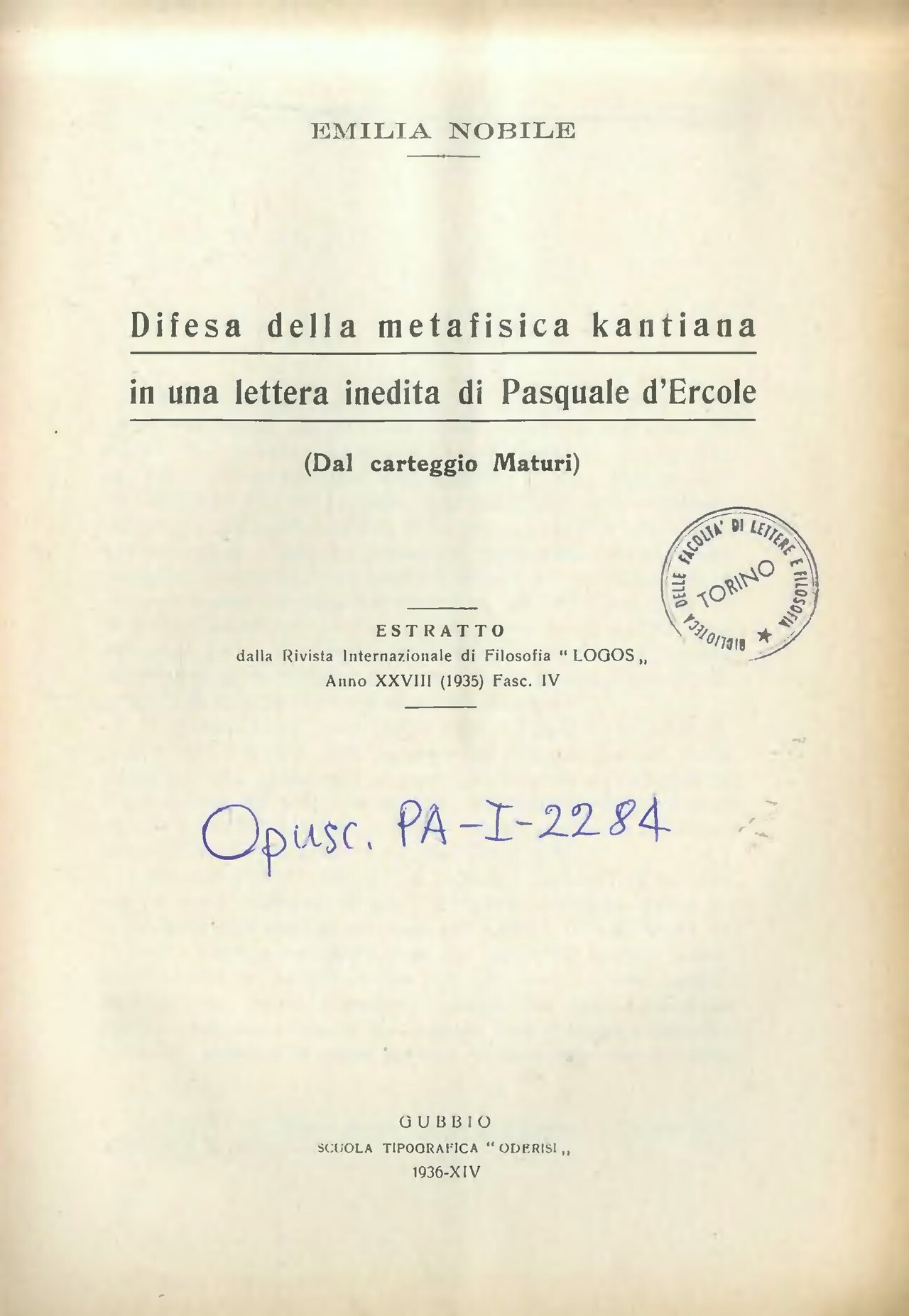
Title page of an offprint by Emilia Nobile, 'Difesa della metafisica kantiana in una lettera inedita di Pasquale d'Ercole', from Logos journal, Anno XXVIII 1935, printed Gubbio 1936. Has a Torino library stamp and a handwritten shelf mark.Document

Secondary source

Defence of Kantian Metaphysics in an Unpublished Letter by Pasquale d'Ercole

Emilia Nobile · 1936 (offprint printed in Gubbio)

Want the full shelf? Chat with Immanuel Kant in the app and open the Sources panel — every quote links back to the original.

Use Immanuel Kant in class

2 collections

Ready-made collections from the Humy team that feature Immanuel Kant. Preview any of them, then try it free.

Trusted by educators worldwide

Conversations
375,000+
Real exchanges between students and historical figures
Messages exchanged
4,142,000+
Across every figure, classroom and language
Historical figures
100,000+
Each informed by a curated biography and selected sources
Languages supported
50+
From English and Spanish to Arabic and Korean

Paying customers

Used by 98 schools and universities

Partner school logo
Tecnológico de Monterrey logo
Hyper Island logo
Partner school logo
Chambersburg Area School District logo
Broward County Public Schools logo
Nebo School District logo
National Louis University logo
South Florida PBS logo
Punahou School logo
University of Wisconsin–River Falls logo
Partner school logo
Partner school logo
Archbishop Mitty High School logo
Kingsburg High School logo
Norwalk Public Schools logo
Partner school logo
Connections logo
Partner school logo
Moore Public Schools logo
Partner school logo
Partner school logo
Partner school logo
Partner school logo
Robbinsville Public Schools logo
Partner school logo
Partner school logo
Partner school logo
Tecnológico de Monterrey logo
Hyper Island logo
Partner school logo
Chambersburg Area School District logo
Broward County Public Schools logo
Nebo School District logo
National Louis University logo
South Florida PBS logo
Punahou School logo
University of Wisconsin–River Falls logo
Partner school logo
Partner school logo
Archbishop Mitty High School logo
Kingsburg High School logo
Norwalk Public Schools logo
Partner school logo
Connections logo
Partner school logo
Moore Public Schools logo
Partner school logo
Partner school logo
Partner school logo
Partner school logo
Robbinsville Public Schools logo
Partner school logo
Partner school logo

What educators are saying

“We enjoyed the program last year and used it frequently.”
“My students say it’s a welcome change of pace. I’m not a fan of the “sage on the stage” model, so I try to incorporate research-oriented and self-paced activities. With Humy, students have to take charge of their learning. They’ve become more adept at critical thinking, forming better questions, and improving their reading comprehension. The interview feature has been my go-to tool. I create assignments where students must ask historical figures a set number of questions, then summarize the responses to ensure they’re truly absorbing the material. This approach lets them actively explore the past rather than passively consuming information.”
“Humy has helped me bring historical figures, sometimes long past, to life. When my students interact with these figures in real-time, it eliminates some of the perceived “ancient” characteristics of my curriculum. This has shifted my students’ thinking away from viewing history as abstract or irrelevant. Real-time interactions make historical figures relatable, even allowing students to ask off-topic questions that help put historical lives in a more relevant context for 13-year-olds. The feature I use the most is the interview feature. After teaching a topic, most recently Gandhi and Joan of Arc, I have the students ask pointed, focused questions. We practice good conversation techniques beforehand, teaching them to listen (or read) carefully and formulate thoughtful follow-up questions rather than just interrogating. It helps students practice effective conversation skills.”

FAQ

Frequently asked questions

Who is Immanuel Kant?
Enlightenment philosopher known for his work on ethics and metaphysics. On Humy.ai you can chat with an AI version of Immanuel Kant that draws on a short biography and 80 historical sources during the conversation — by text or voice, in 42 languages.
Is Immanuel Kant AI free?
Immanuel Kant is part of Humy's full library of more than 100,000 figures, which comes with a paid plan. A free account (no credit card) includes 20 AI messages a month with the free library's figures, so you can try how the conversations work first. The free plan's 20 AI messages a month are shared by you and your students: enough to try Humy yourself; a whole class needs Plus.
What sources does the Immanuel Kant AI use?
It draws on a short biography and 80 historical sources (books, paintings and documents), including “Critique of Pure Reason”, “Answering the Question: What Is Enlightenment?” and “Groundwork of the Metaphysic of Morals”. Each source has its own page on Humy.ai.
How historically accurate is the AI version of Immanuel Kant?
Each figure uses a short biography and a small set of selected historical sources as context (retrieval-augmented generation), so answers stay closer to known material than the model's general knowledge alone. It isn't a citation-grade research tool — like any LLM, the AI can get details wrong or extrapolate. Treat it as a strong starting point for inquiry and cross-reference important claims.
Can I talk to Immanuel Kant by voice?
Yes. In addition to text chat, you can call Immanuel Kant and hear their voice respond in real time — useful for auditory learners, interview practice and Socratic dialogue.
Is Humy.ai safe and compliant for schools?
Yes. Humy.ai is used by more than 100 schools, universities and organisations. The platform is FERPA- and GDPR-aligned, supports SSO, and offers an IT-approval pack tailored for school procurement teams.

Ready when you are

Start chatting with Immanuel Kant now.

20 messages free · No credit card · Available in 50+ languages.