


Secondary sourcePaintingbetween 1730 and 1756
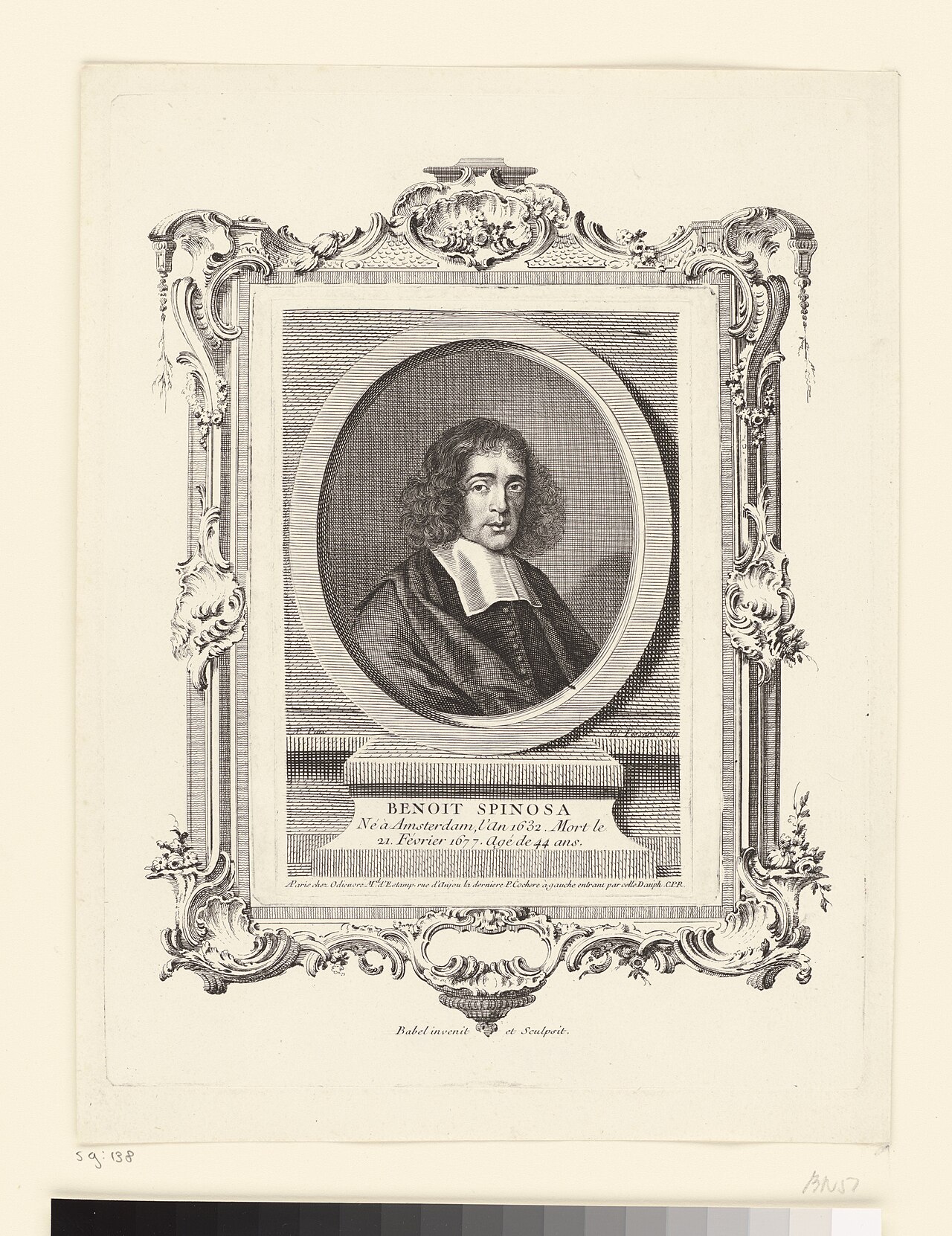
Portrait of Baruch Spinoza (Benoit Spinosa)
Etienne Fessard · between 1730 and 1756
An 18th-century engraved portrait of Spinoza, printed in France, based on a painting and shown with an ornate frame and a French inscription.
A later printed likeness of Spinoza, made decades after his death, showing how his image circulated among collectors in 18th-century France.
About this source
What it is
This is an engraved print titled 'Portret van Baruch Spinoza', also labeled 'Benoit Spinosa'. It was made in France between 1730 and 1756. Etienne Fessard engraved it after a painting by a painter known only by the monogram AE, and Pierre Edme Babel designed the frame. The publisher was Michel Odieuvre. The print is held by the Rijksmuseum, which bought it in 1959. The caption gives Spinoza's birth in 1632 in Amsterdam and his death on 21 February 1677 at the age of 44.
Why it matters
The print was made decades after Spinoza died, so it is a later likeness rather than a portrait from his lifetime. Prints like this one spread images of notable thinkers to buyers who could not see them in person. The French inscription and the decorative frame show how Spinoza's reputation had reached French publishers and collectors in the 1700s.
Look closer
- How does the frame, with its scrolls and decoration, change the way you read the face in the center?
- Who painted the original, and how might the engraver have changed it when copying it?
- What does the French caption tell us about how the publisher wanted buyers to see Spinoza?
This painting is part of the curated material that grounds the AI version of Baruch Spinoza on Humy.ai — when students ask about related events, the AI can quote it and cite it.
More Baruch Spinoza sources
Meet the AI Baruch Spinoza →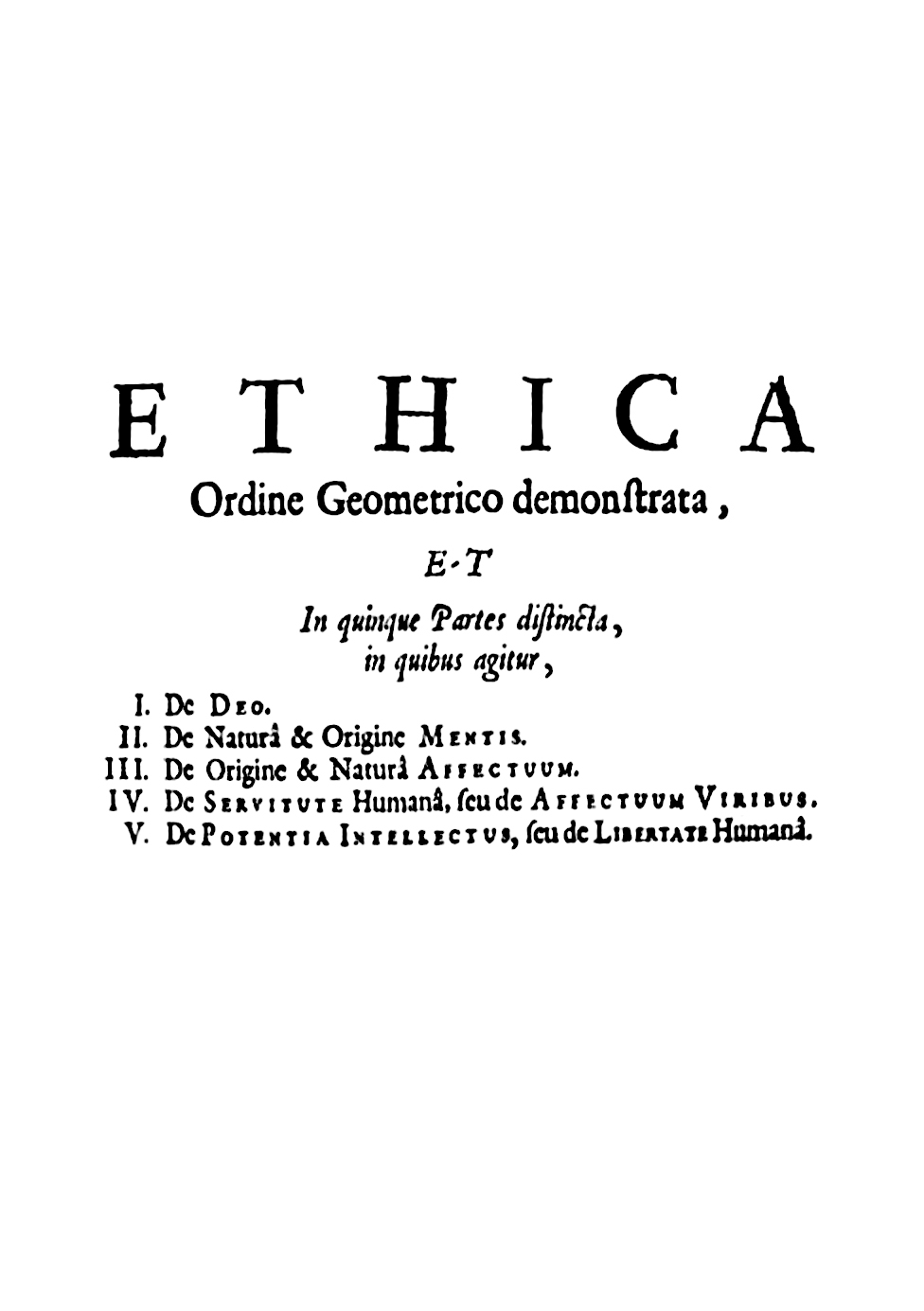 Book
Primary source
Ethics
Benedictus de Spinoza · 1677 (written 1661-1675)
 Book
Primary source
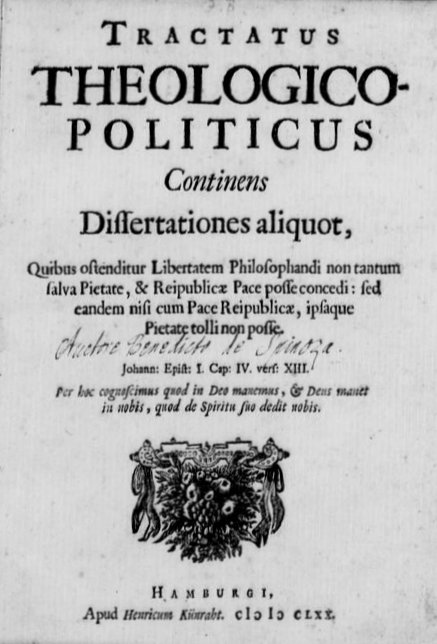
Tractatus Theologico-Politicus
Benedictus de Spinoza · 1670
 Painting
Primary source
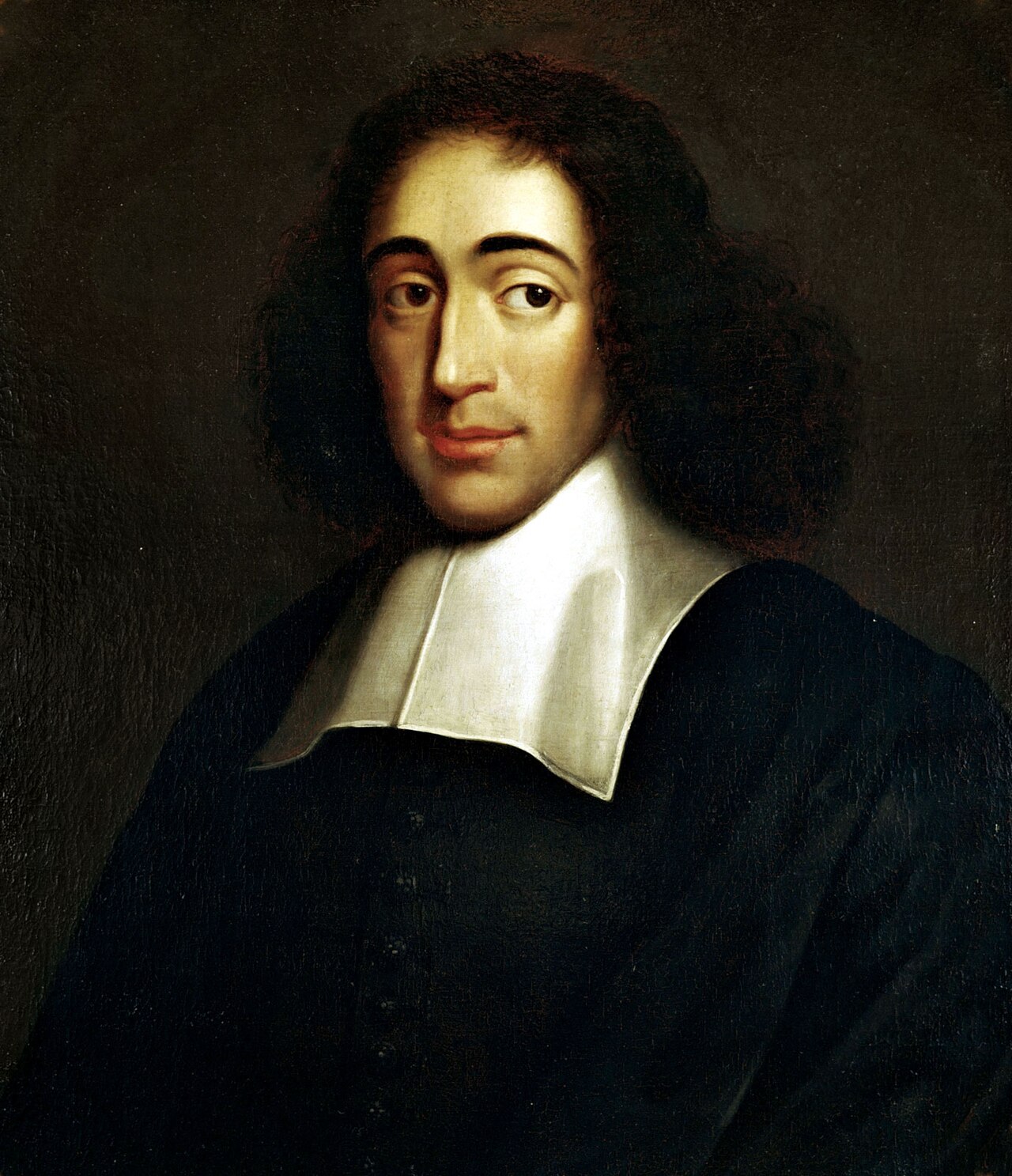
Portrait of Benedictus de Spinoza
Unknown · c. 1665
 Book
Primary source
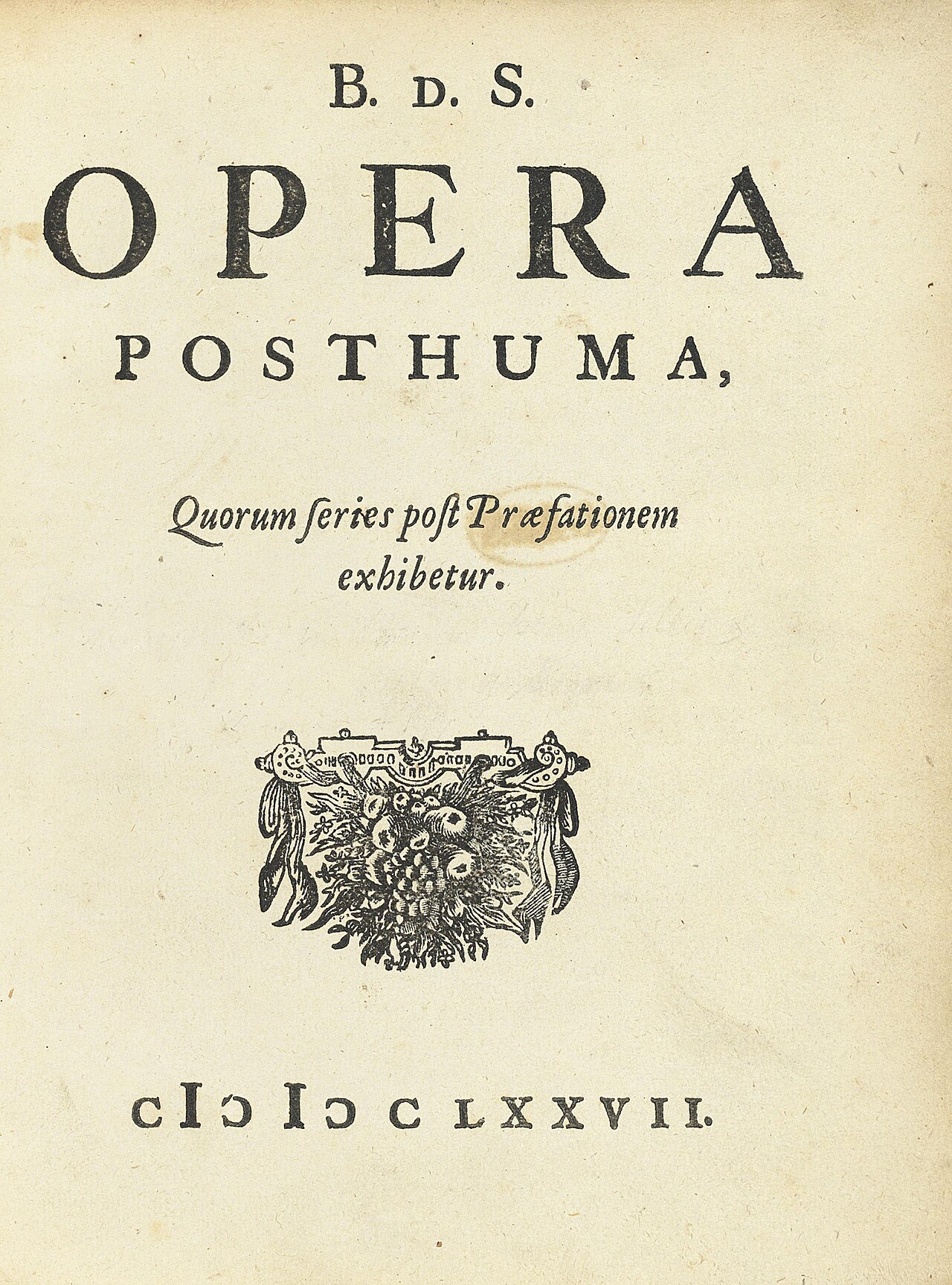
Opera Posthuma
Benedictus de Spinoza · 1677
 Letter
Primary source
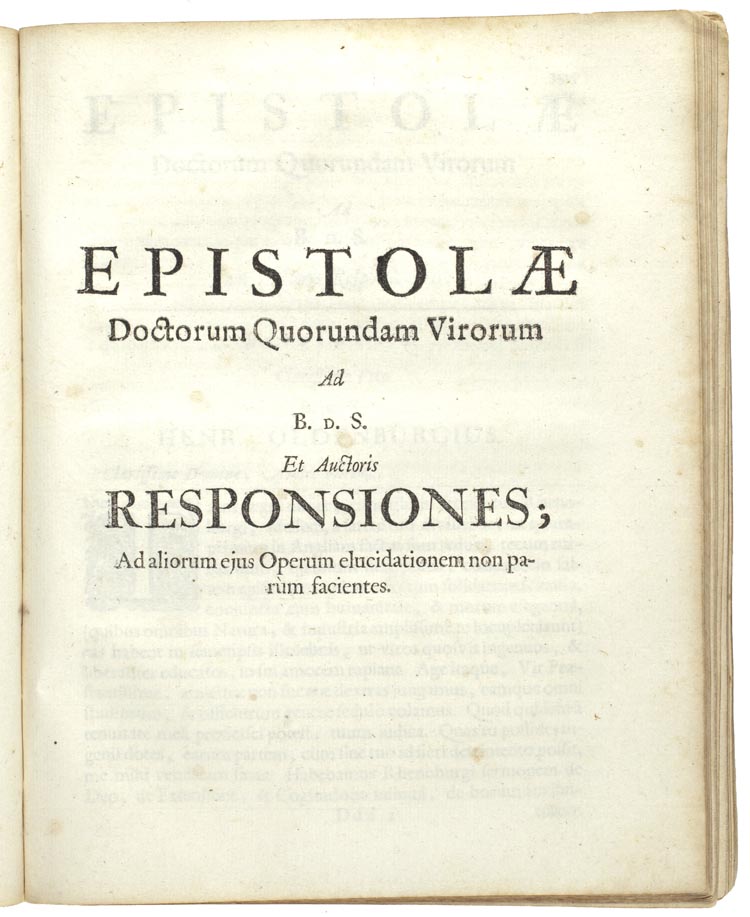
Epistolae, Correspondence of Benedict de Spinoza
Benedictus de Spinoza · 1661-1676, published 1677
Ready when you are
Start chatting with Baruch Spinoza now.
20 messages free · No credit card · Available in 50+ languages.