


Secondary sourcePainting
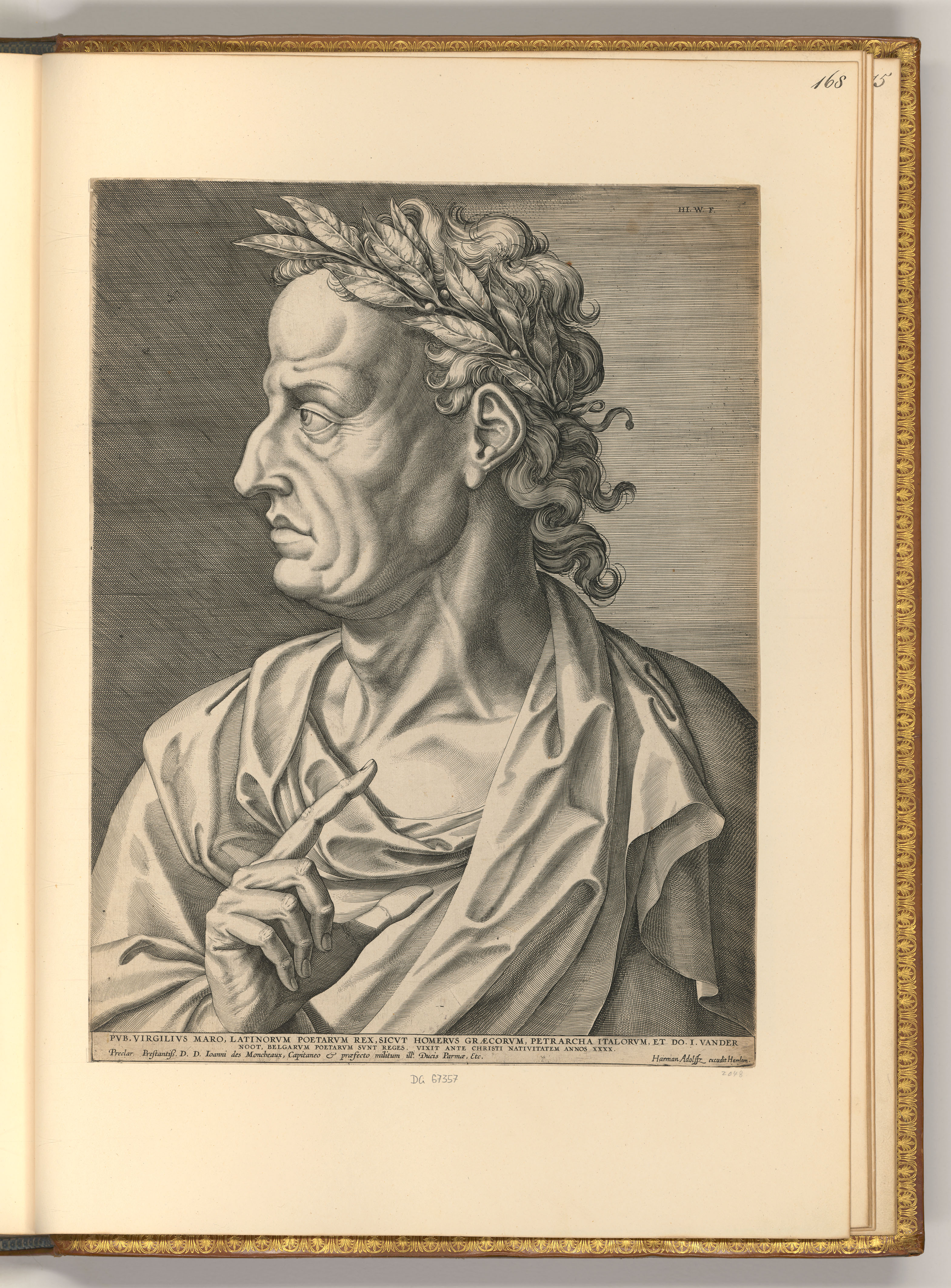
Portrait of Publius Vergilius Maro, Albertina collection
An engraved portrait of Virgil in profile, wearing a laurel wreath, with a Latin inscription. It was made long after the poet's death.
A later engraved likeness of Virgil, showing how his image as a laureate poet was made for later readers.
About this source
What it is
This is an engraved print in the Albertina collection in Vienna, titled as a portrait of Virgil. It shows a clean-shaven older man in profile, facing left, wearing a laurel wreath and a draped cloak. His right index finger is raised near his chin. A Latin inscription runs along the bottom margin. The record names the artist as unknown, and the curator notes that the print was made long after Virgil died.
Why it matters
Laurel wreaths were a sign of poetic honour in the ancient world, and this print uses that sign to present Virgil as a great poet. Portraits like this one were made in later centuries to build an image of Virgil for readers who had never seen him. The print tells us how later artists imagined the poet, not how he looked.
Look closer
- What objects and gestures does the artist use to show that this man is a poet?
- What does the Latin inscription add to the picture, and who would have been able to read it?
- How can we tell an imagined likeness from a portrait made from life?
This painting is part of the curated material that grounds the AI version of Virgil on Humy.ai — when students ask about related events, the AI can quote it and cite it.
Ready when you are
Start chatting with Virgil now.
20 messages free · No credit card · Available in 50+ languages.