


Secondary sourcePainting1584
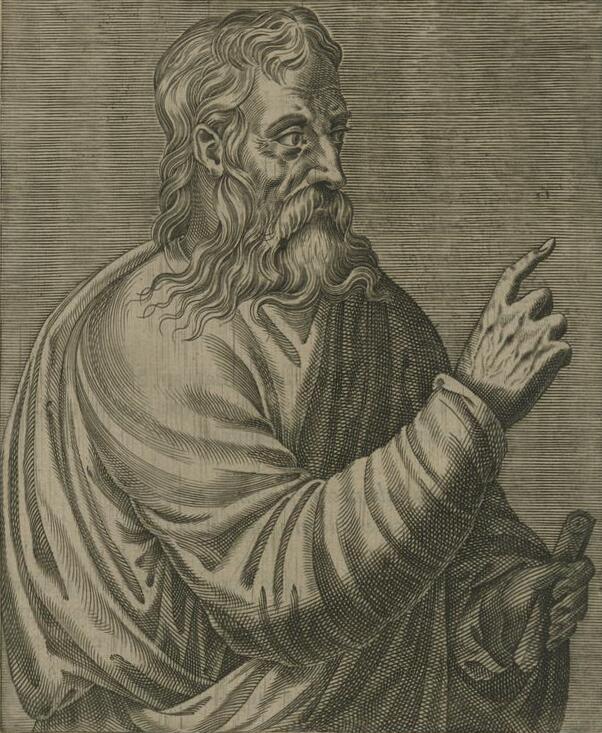
Portrait of Seneca in Thevet's Les vrais pourtraits
1584
An engraved portrait of Seneca from a 1584 Paris book of famous men. It is an imagined likeness, not a record from his lifetime.
A sixteenth-century printed likeness of Seneca as a learned man with a scroll, from a book of famous lives.
About this source
What it is
This is an engraving of Seneca on page 605 of André Thevet's Les vrais pourtraits et vies des hommes illustres, published in Paris in 1584. It shows a bearded old man in profile facing right, with long wavy hair and a draped robe, raising his right index finger and holding a scroll in his left hand. Fine parallel lines fill the background, and printed text appears below.
Why it matters
Thevet's book collected portraits and short lives of famous people from many periods. Images like this one were often made from imagination, so they show what the book's readers expected a wise ancient man to look like. The engraving connects Seneca to a wider Renaissance interest in famous figures from the past.
Look closer
- What objects and gestures does the engraver use to show Seneca as a thinker?
- Why might a book of famous men include pictures made long after their subjects died?
- What can we not learn about Seneca's real appearance from this image?
This painting is part of the curated material that grounds the AI version of Seneca on Humy.ai — when students ask about related events, the AI can quote it and cite it.
More Seneca sources
Meet the AI Seneca →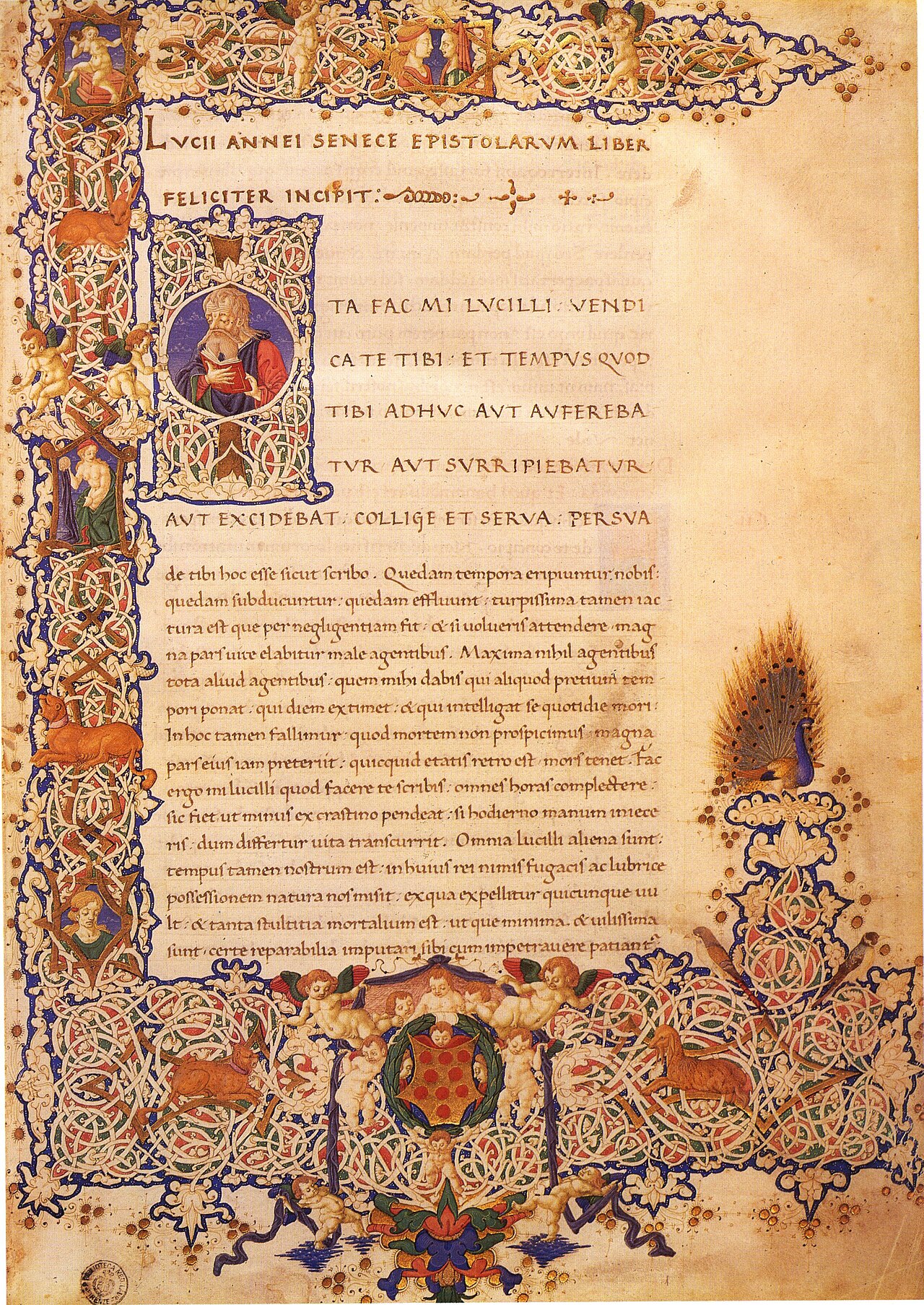 Letter
Primary source
Epistulae Morales ad Lucilium
Seneca · c. 62-65 CE
 Book
Primary source
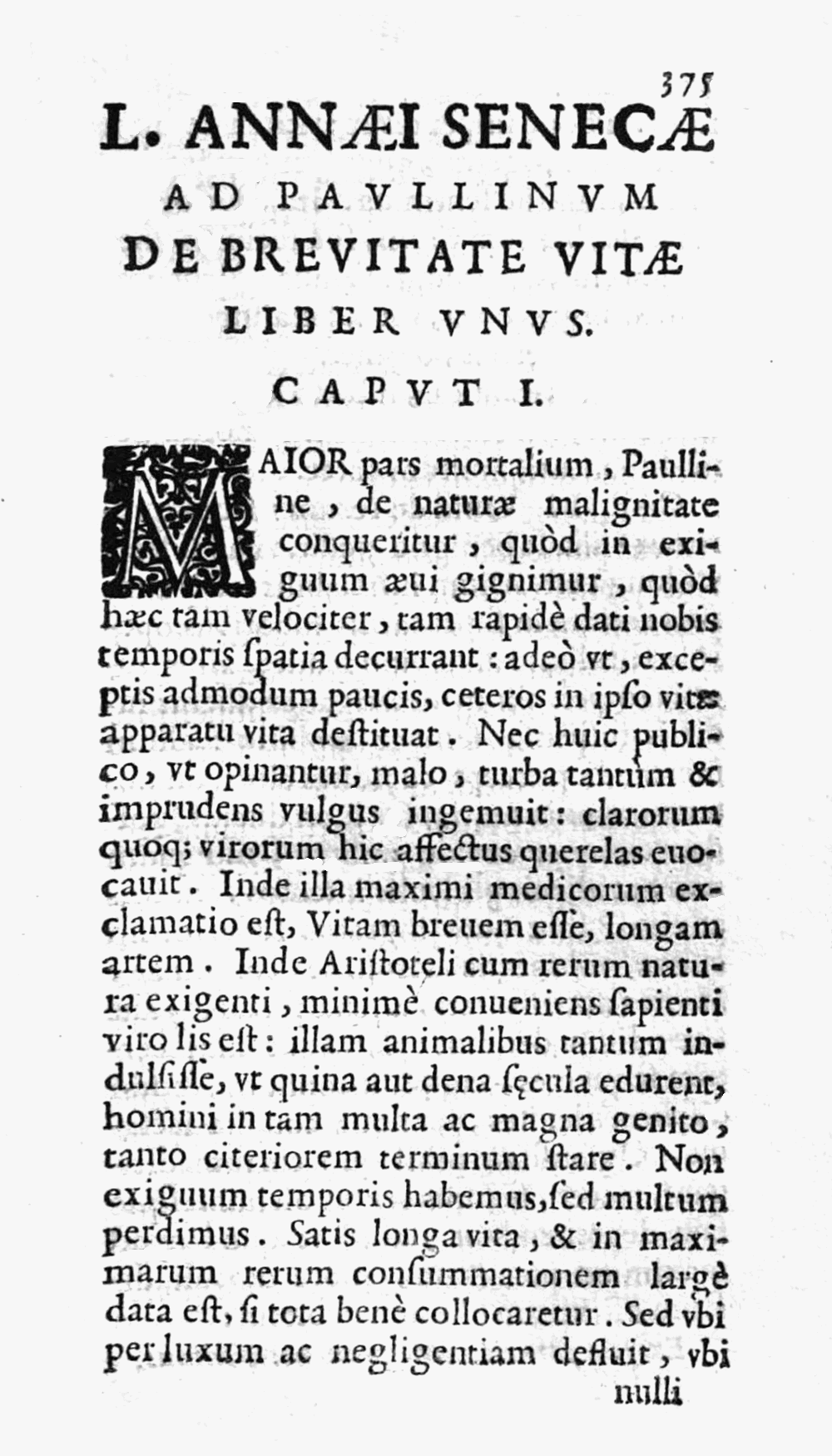
De Brevitate Vitae
Seneca · c. 49 CE
 Book
Secondary source
Annals
Tacitus · c. AD 116 or later
 Book
Primary source
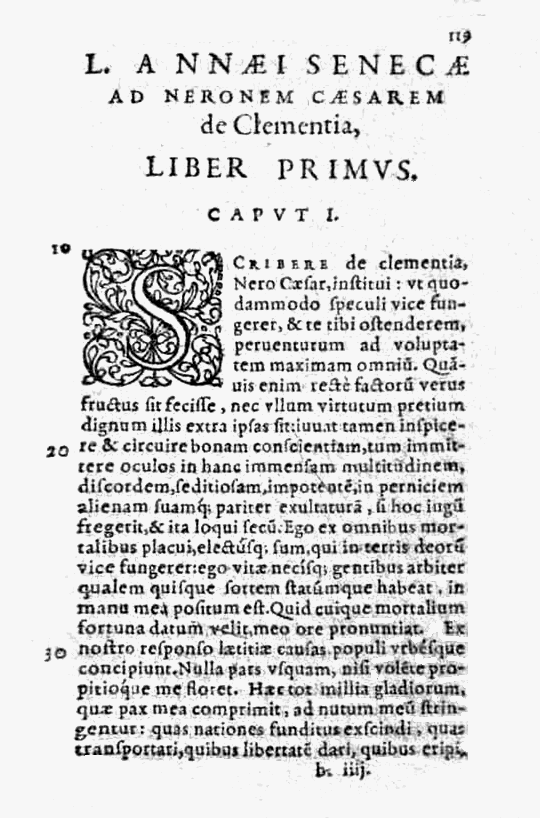
De Clementia
Seneca · 55-56 CE
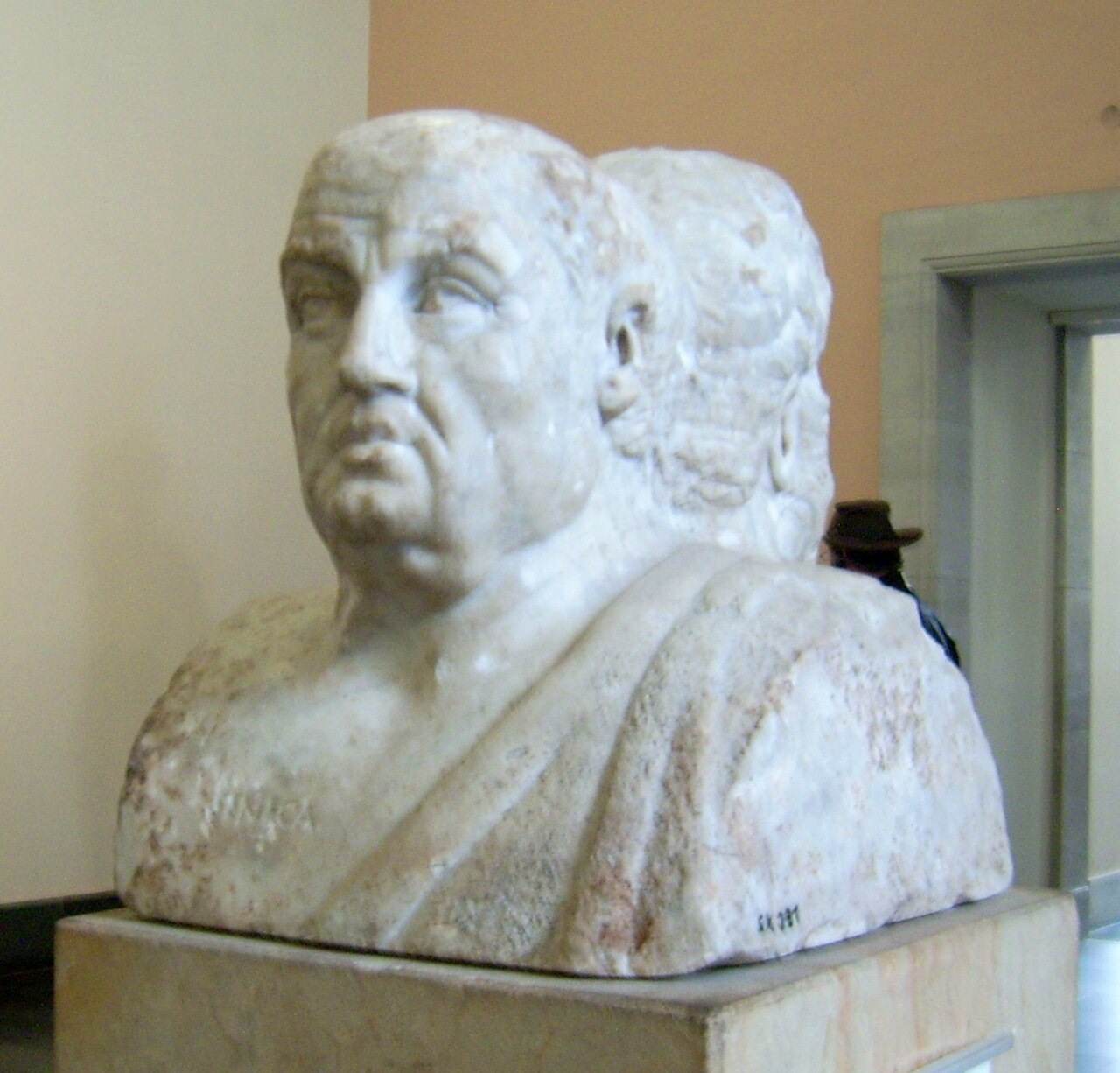 Sculpture
Secondary source
Double Herm of Socrates and Seneca
first half of the 3rd century AD
Ready when you are
Start chatting with Seneca now.
20 messages free · No credit card · Available in 50+ languages.