


Secondary sourcePainting1605
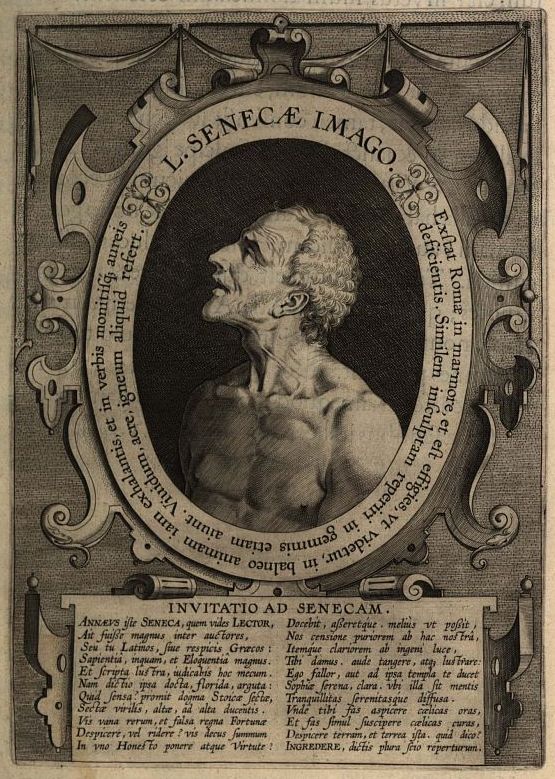
Portrait of Seneca the Younger by Theodore Galle
Theodore Galle · 1605
An engraved portrait of Seneca made in 1605, centuries after his death. It is an imagined likeness, not a record from his lifetime.
An early modern imagined likeness of Seneca, showing how later readers pictured the Roman philosopher.
About this source
What it is
This is an engraved print by Theodore Galle, dated 1605, showing a bust of an elderly bald man with curly hair and bare shoulders, facing left, in an oval frame. Above it is the Latin inscription L. SENECAE IMAGO. Latin verses in a decorative border surround the image, and a Latin text titled INVITATIO AD SENECAM sits below.
Why it matters
Portraits of ancient writers were often made long after their deaths, based on sculptures or imagination. This print shows how Seneca was pictured in early modern Europe, when his moral writings were widely read and admired. It tells us more about the artist and the readers of 1605 than about Seneca's real appearance.
Look closer
- What features does the bust show, and how does the Latin text present Seneca?
- Why might an engraver of 1605 choose a bust and an oval frame?
- What can we not know about Seneca's real face from this print?
This painting is part of the curated material that grounds the AI version of Seneca on Humy.ai — when students ask about related events, the AI can quote it and cite it.
More Seneca sources
Meet the AI Seneca →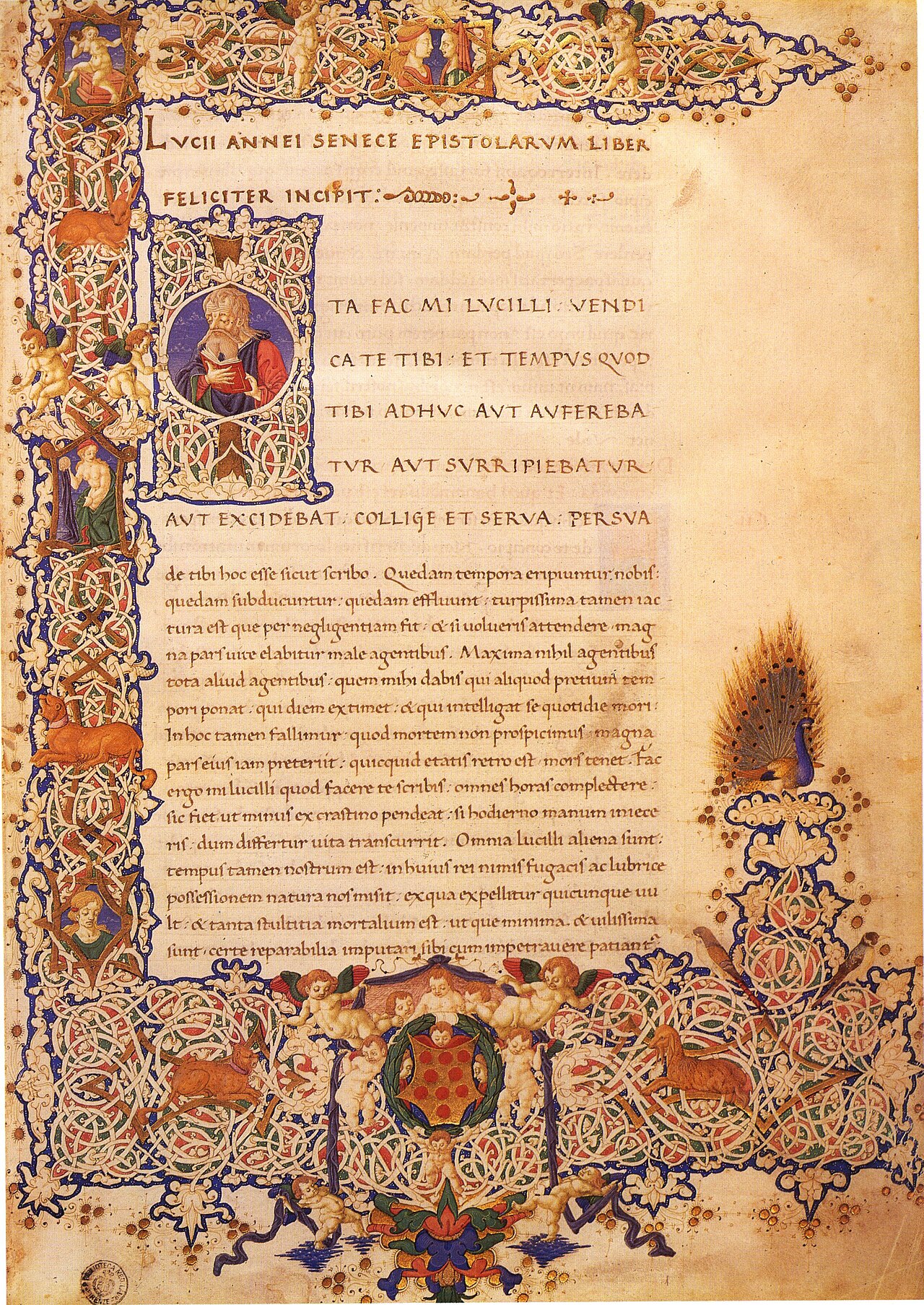 Letter
Primary source
Epistulae Morales ad Lucilium
Seneca · c. 62-65 CE
 Book
Primary source
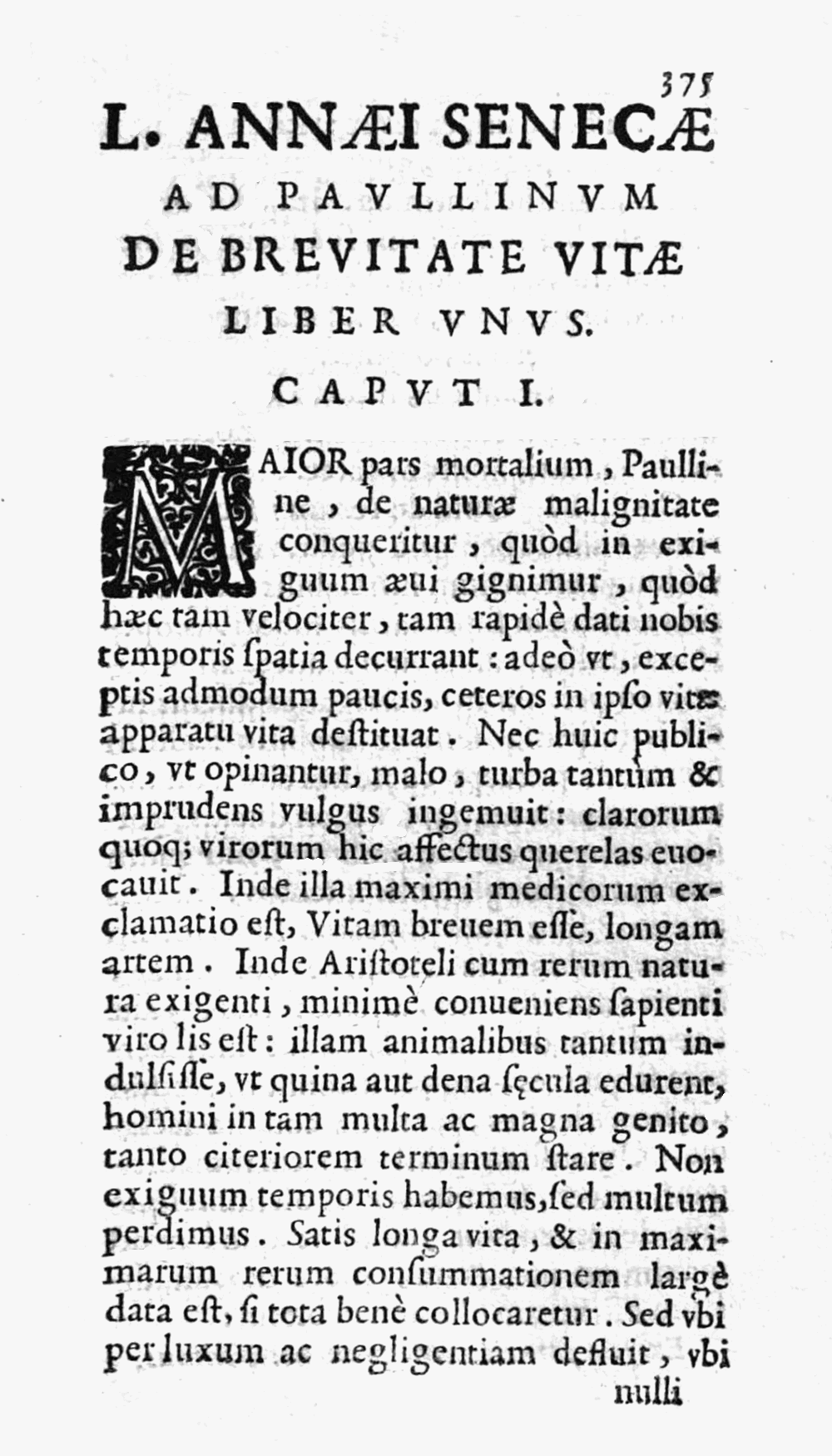
De Brevitate Vitae
Seneca · c. 49 CE
 Book
Secondary source
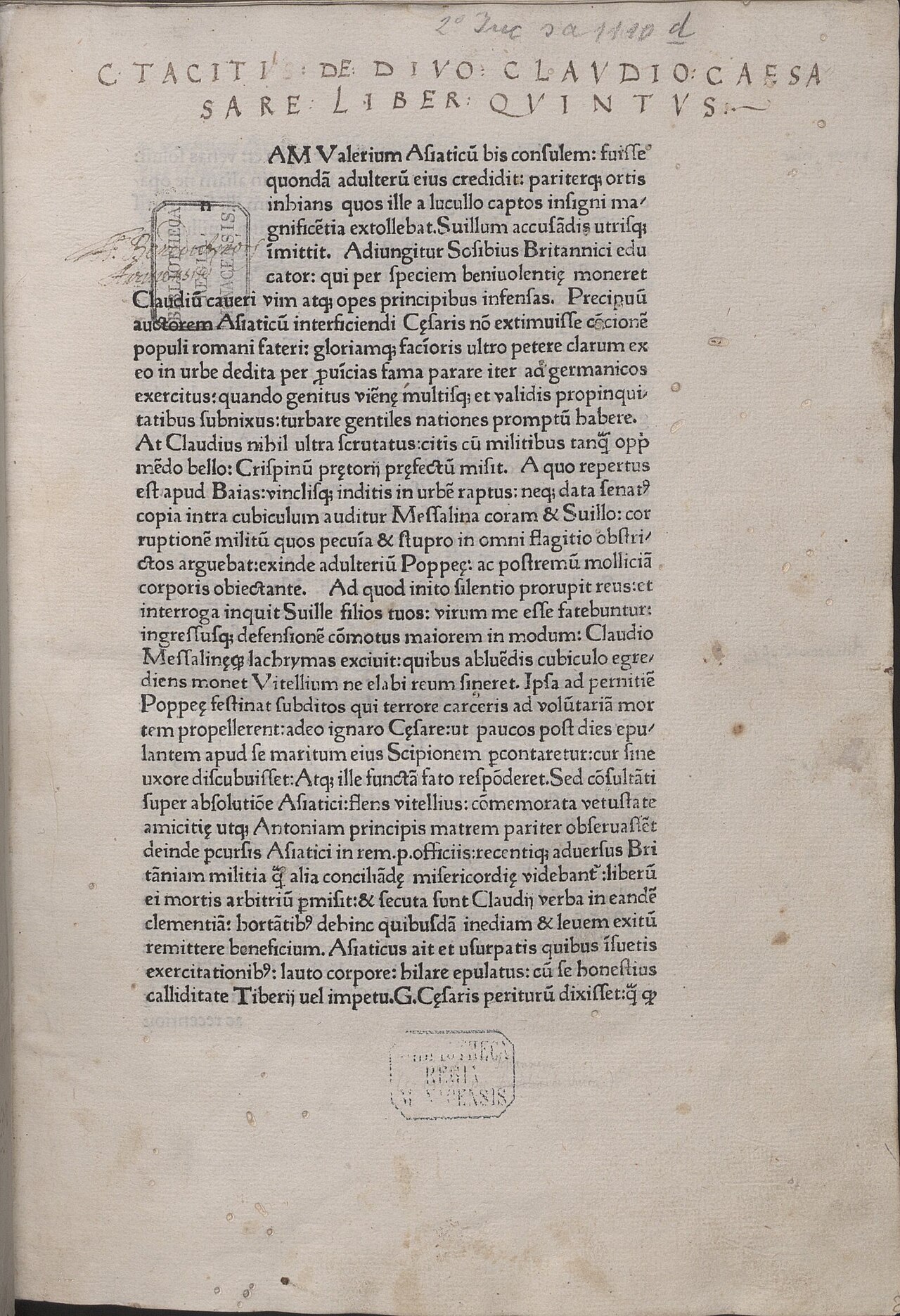
Annals
Tacitus · c. AD 116 or later
 Book
Primary source
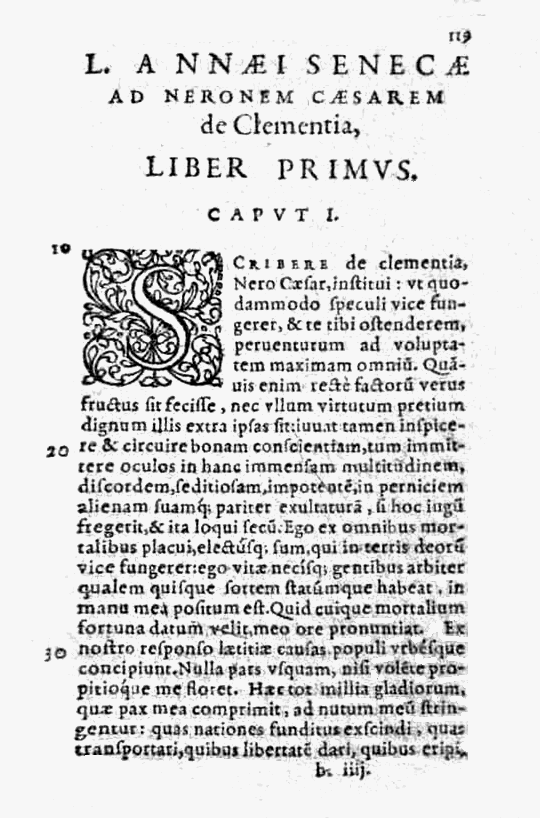
De Clementia
Seneca · 55-56 CE
 Sculpture
Secondary source
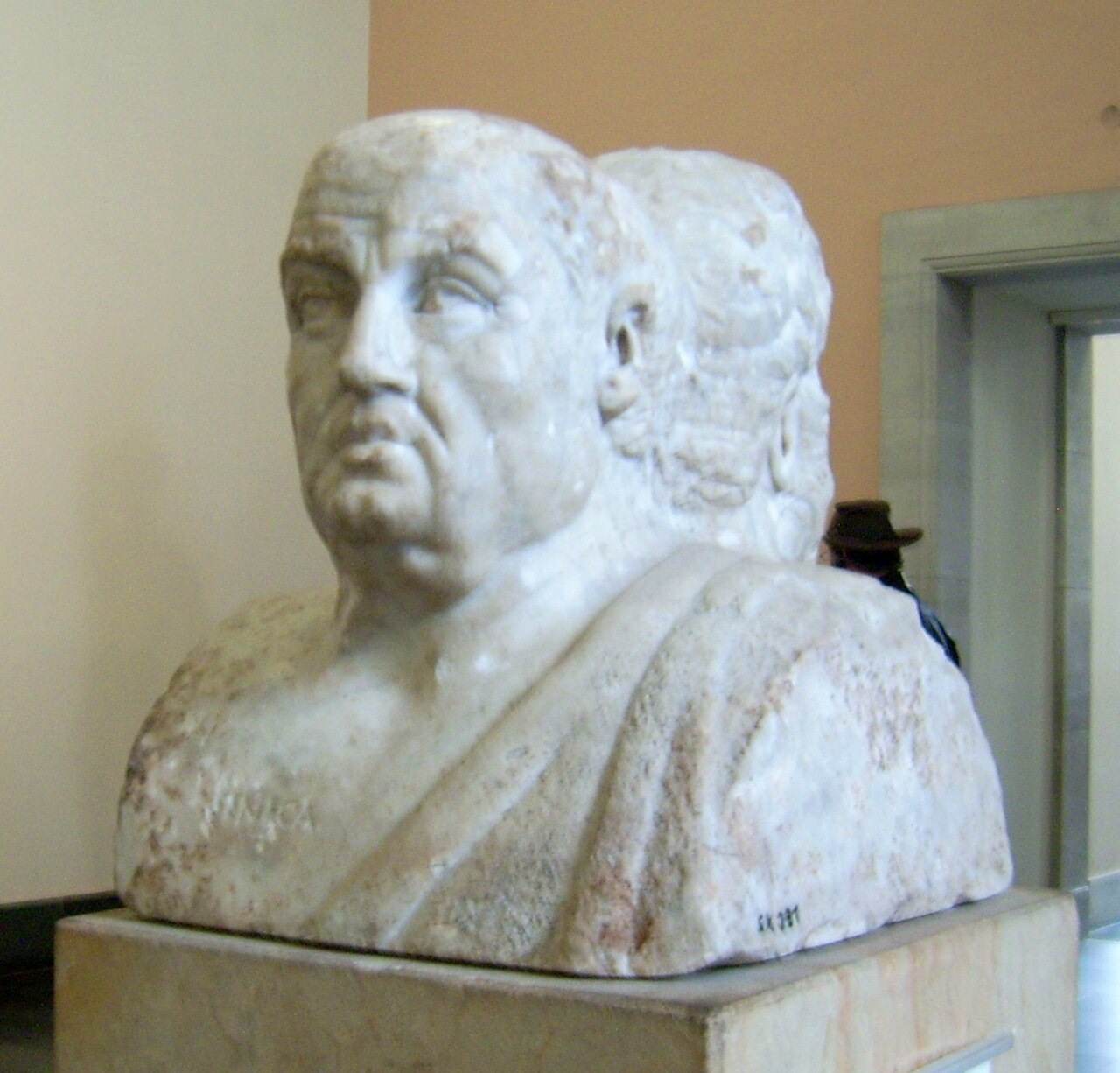
Double Herm of Socrates and Seneca
first half of the 3rd century AD
Ready when you are
Start chatting with Seneca now.
20 messages free · No credit card · Available in 50+ languages.