


Secondary sourcePhotographc.1923
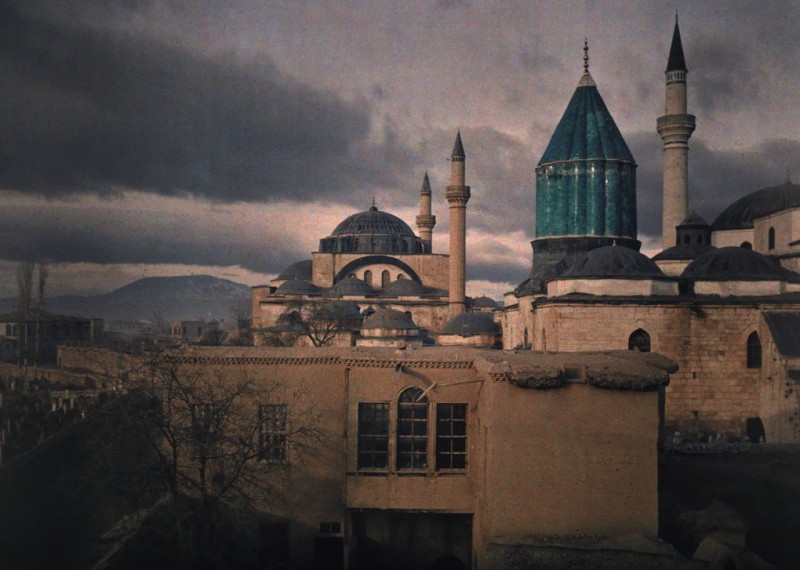
Shadow of the Mevlana Tomb, Konya, c.1923 photo
c.1923
An early twentieth-century colour photograph of the Mevlana complex in Konya, where Rumi is buried. It shows how the memorial looked long after his death.
Shows the Mevlana tomb in Konya as it looked in the 1920s, long after Rumi's death, when his memorial was part of the city.
About this source
What it is
This is an autochrome-style colour photograph of the Mevlana complex in Konya under a dark, cloudy sky. A turquoise-tiled conical roof dominates the right side beside a tall white minaret and stone domed buildings. A smaller domed mosque and minaret stand on the left, with a low stone building and bare trees in the foreground. The photographer is not named, and the date is given as about 1923.
Why it matters
The tomb of Rumi in Konya became a place of memorial and pilgrimage over the centuries. A photograph from the 1920s shows the site in an earlier era of modern Turkey, when the memorial was a visible part of the city's landscape. It is a record of how Rumi's memory was kept alive, not a view from his own time.
Look closer
- Which buildings in the photograph would be easiest to recognise today, and which seem to have changed?
- How does the sky and the dark light affect the mood of the picture?
- Who would have taken a photograph like this, and what did they want people to remember about the place?
This photograph is part of the curated material that grounds the AI version of Rumi (Jalāl ad-Dīn Muhammad Rūmī) on Humy.ai — when students ask about related events, the AI can quote it and cite it.
More Rumi (Jalāl ad-Dīn Muhammad Rūmī) sources
Meet the AI Rumi (Jalāl ad-Dīn Muhammad Rūmī) →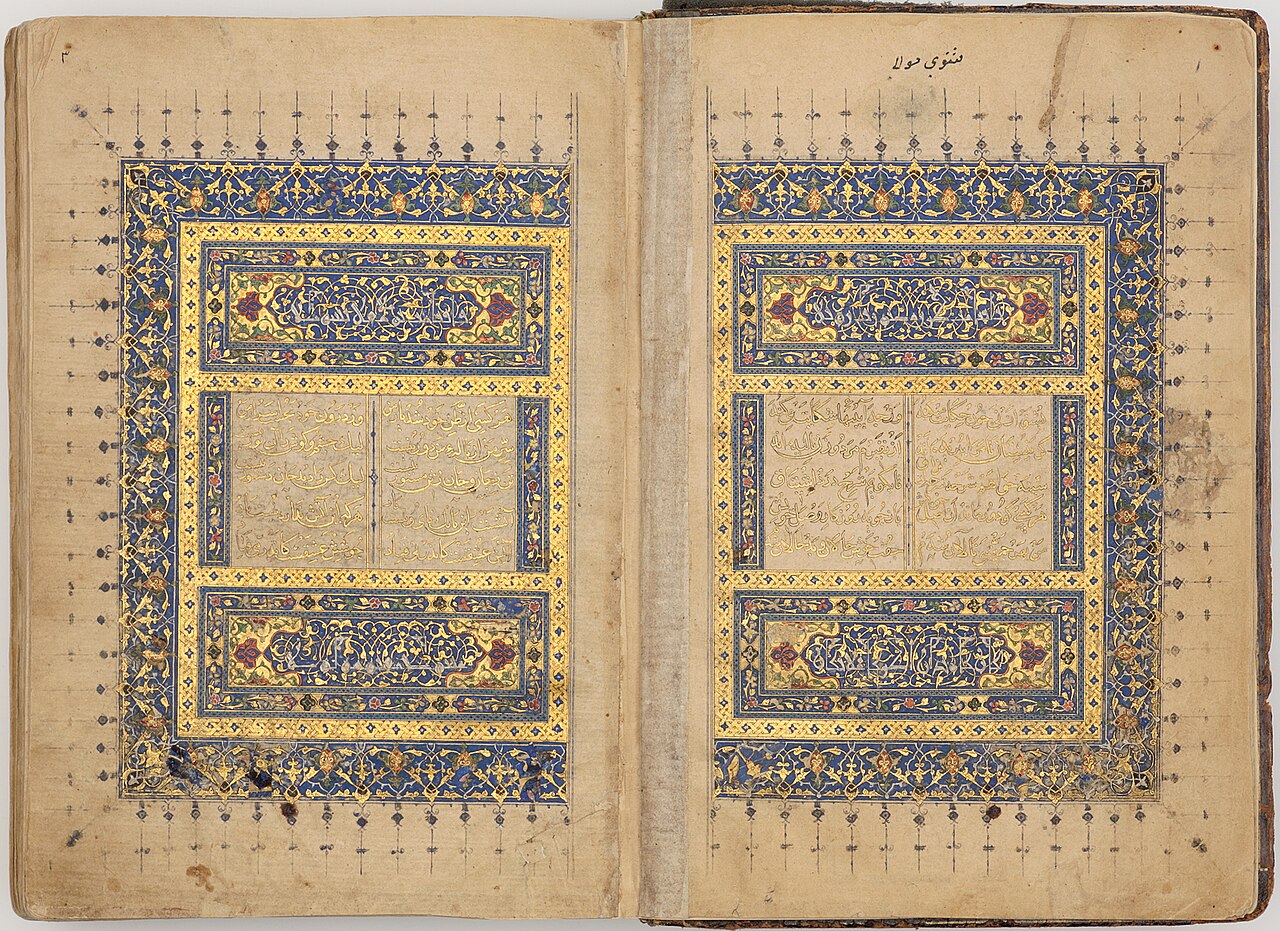 Book
Primary source
Masnavi
Rumi · c. 1258-1273
 Book
Primary source
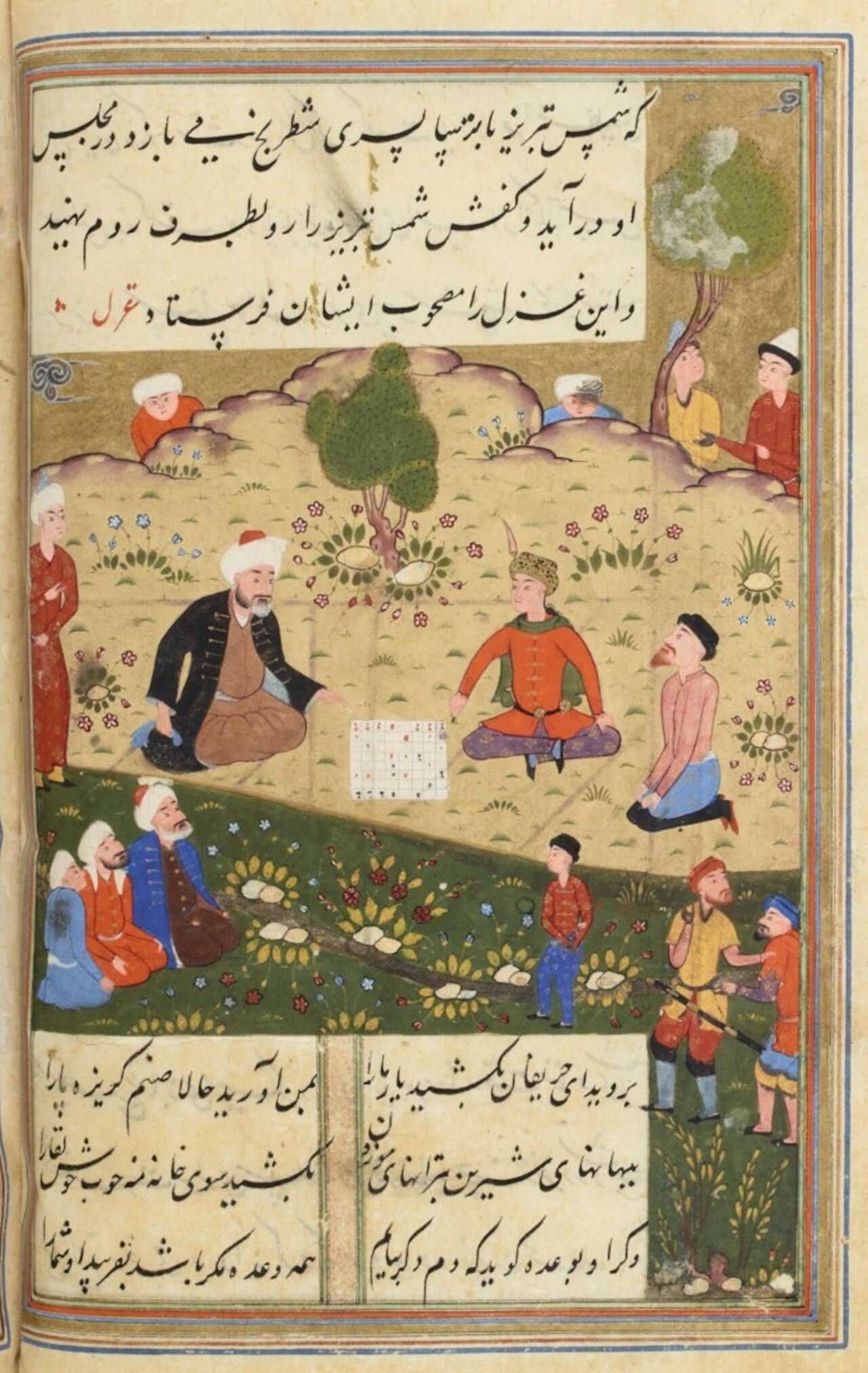
Diwan-e Shams-e Tabrizi
Rumi · c. 1247 onward
 Artifact
Secondary source
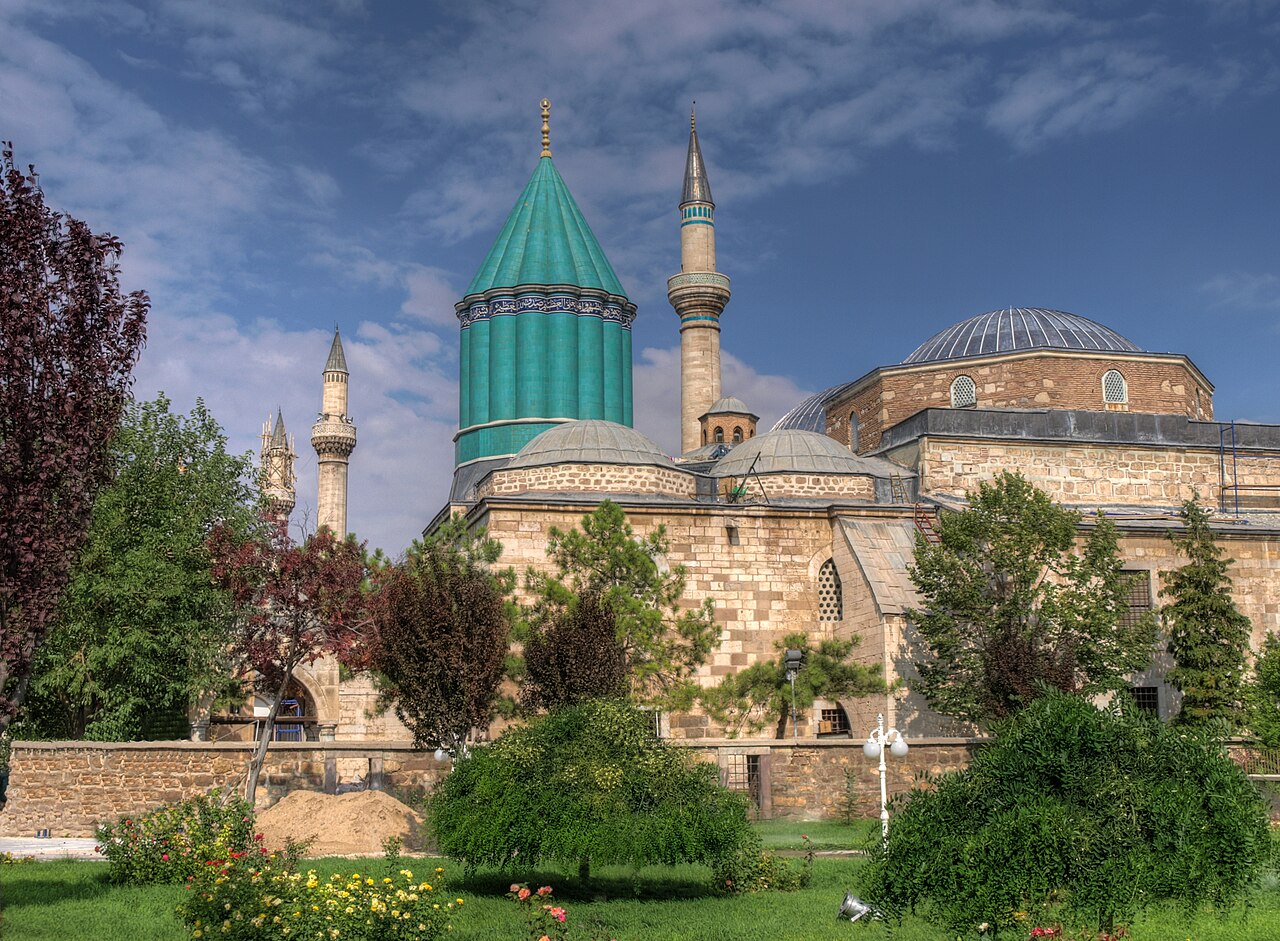
Grave of Rumi
soon after 1273
 Book
Primary source
Fihi Ma Fihi
Rumi · c. 1260-1273
 Artifact
Secondary source
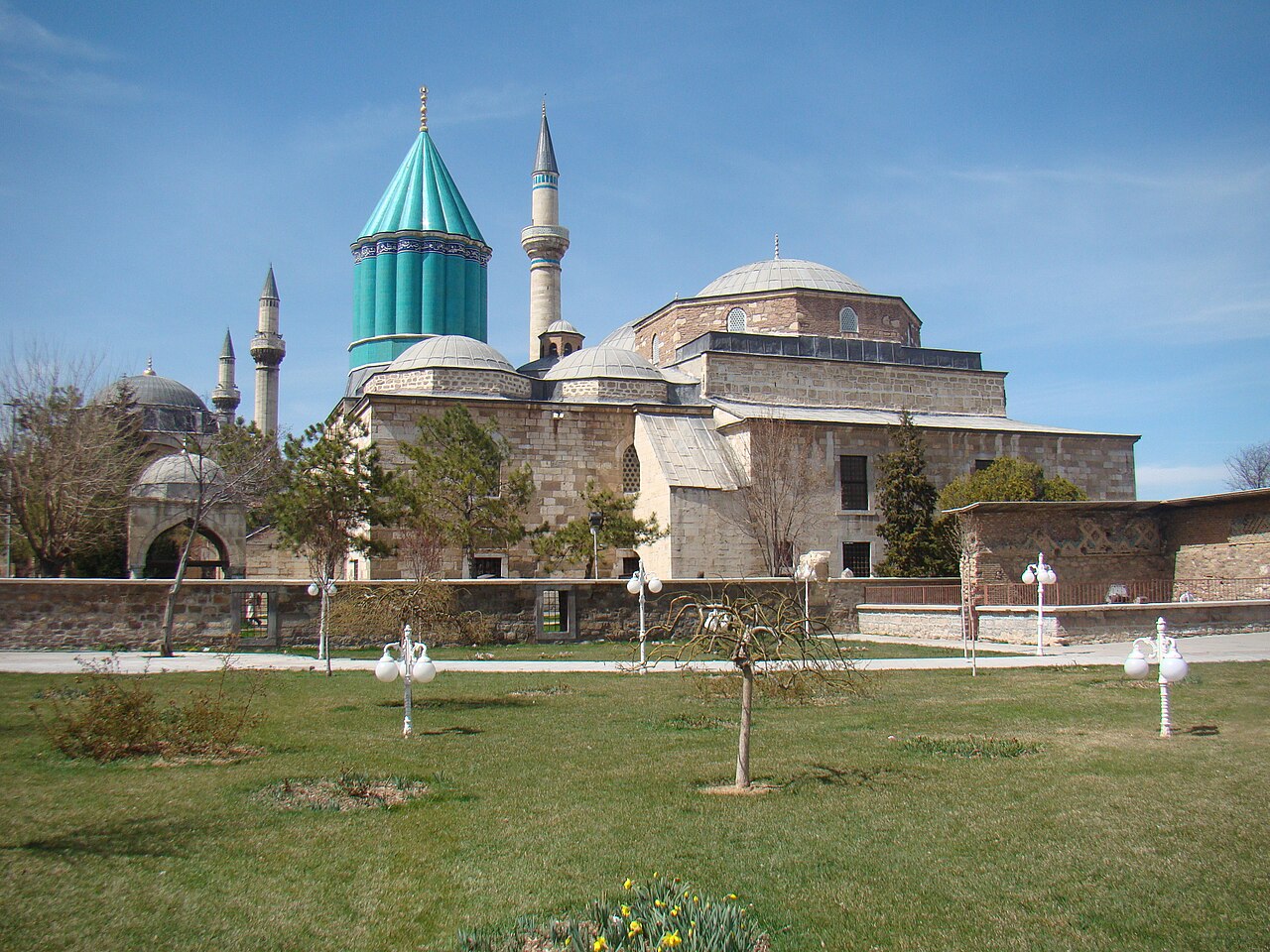
Mevlâna Museum
Badr al-Din Tabrizi (architect) · built soon after 1273; museum since 1926
Ready when you are
Start chatting with Rumi (Jalāl ad-Dīn Muhammad Rūmī) now.
20 messages free · No credit card · Available in 50+ languages.