


Secondary sourcePainting1870
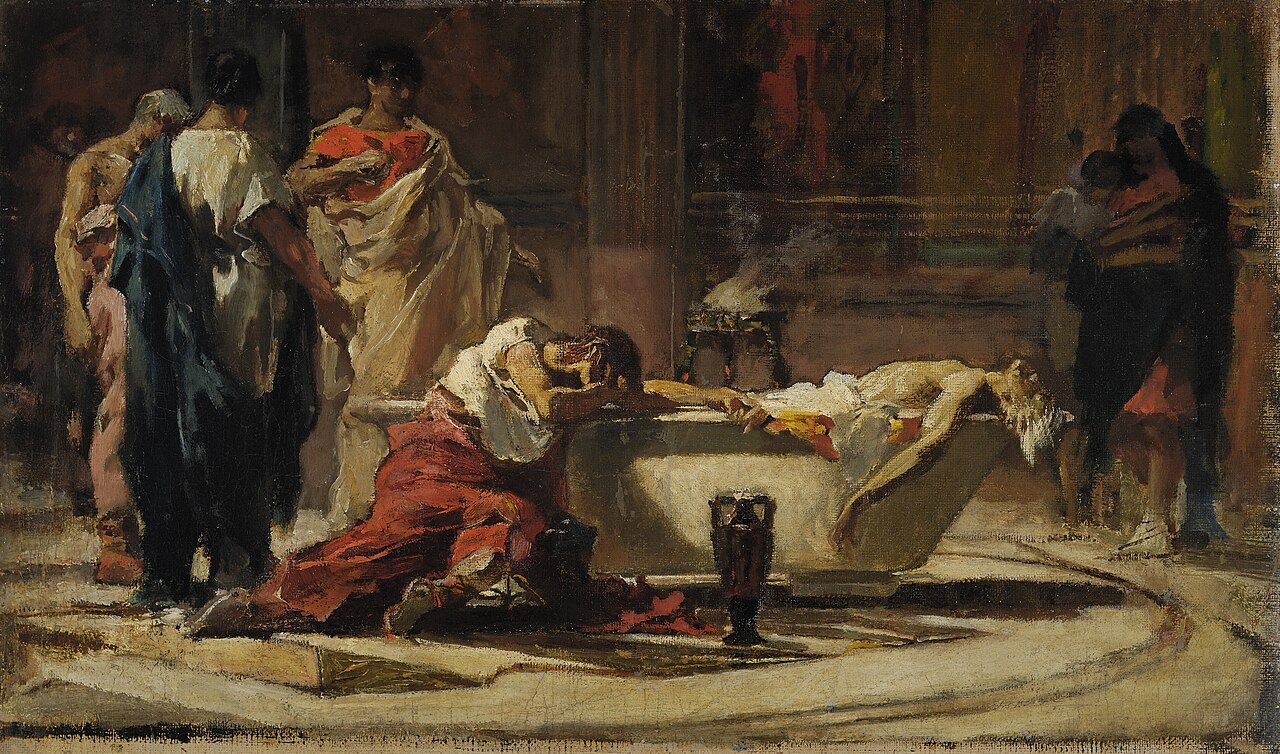
Sketch for La muerte de Séneca
Manuel Domínguez Sánchez · 1870
A loose painted sketch by Manuel Domínguez Sánchez, made in 1870 as a preparation for a painting of Seneca's death in a bath.
Shows a nineteenth-century artist's reinterpretation of Seneca's death in a bath, a later imagined scene rather than a record of the event.
About this source
What it is
This is a preparatory sketch by Manuel Domínguez Sánchez, dated 1870, for a painting titled La muerte de Séneca. It shows a marble bath chamber. An elderly bearded man lies back in a marble tub with one arm outstretched. A kneeling woman in a red skirt and white blouse leans over the edge of the tub. Standing figures in togas and robes watch from both sides, and a small incense burner smokes beside the tub. A dark vessel stands in the foreground, and blood is visible there.
Why it matters
Seneca's death was a subject that nineteenth-century painters returned to, and this sketch shows one artist's reinterpretation of it. The sketch is a working study rather than a finished painting, so it shows the artist's choices of composition, light and gesture. It reveals how a Spanish painter in 1870 imagined the final hours of a Roman philosopher.
Look closer
- Which figures does the sketch place closest to Seneca, and what do their positions suggest about how the scene is meant to be read?
- What does the loose, unfinished style show that a finished painting might hide?
- What does the sketch leave unclear, such as the exact cause of death or the words spoken in the room?
This painting is part of the curated material that grounds the AI version of Seneca on Humy.ai — when students ask about related events, the AI can quote it and cite it.
More Seneca sources
Meet the AI Seneca →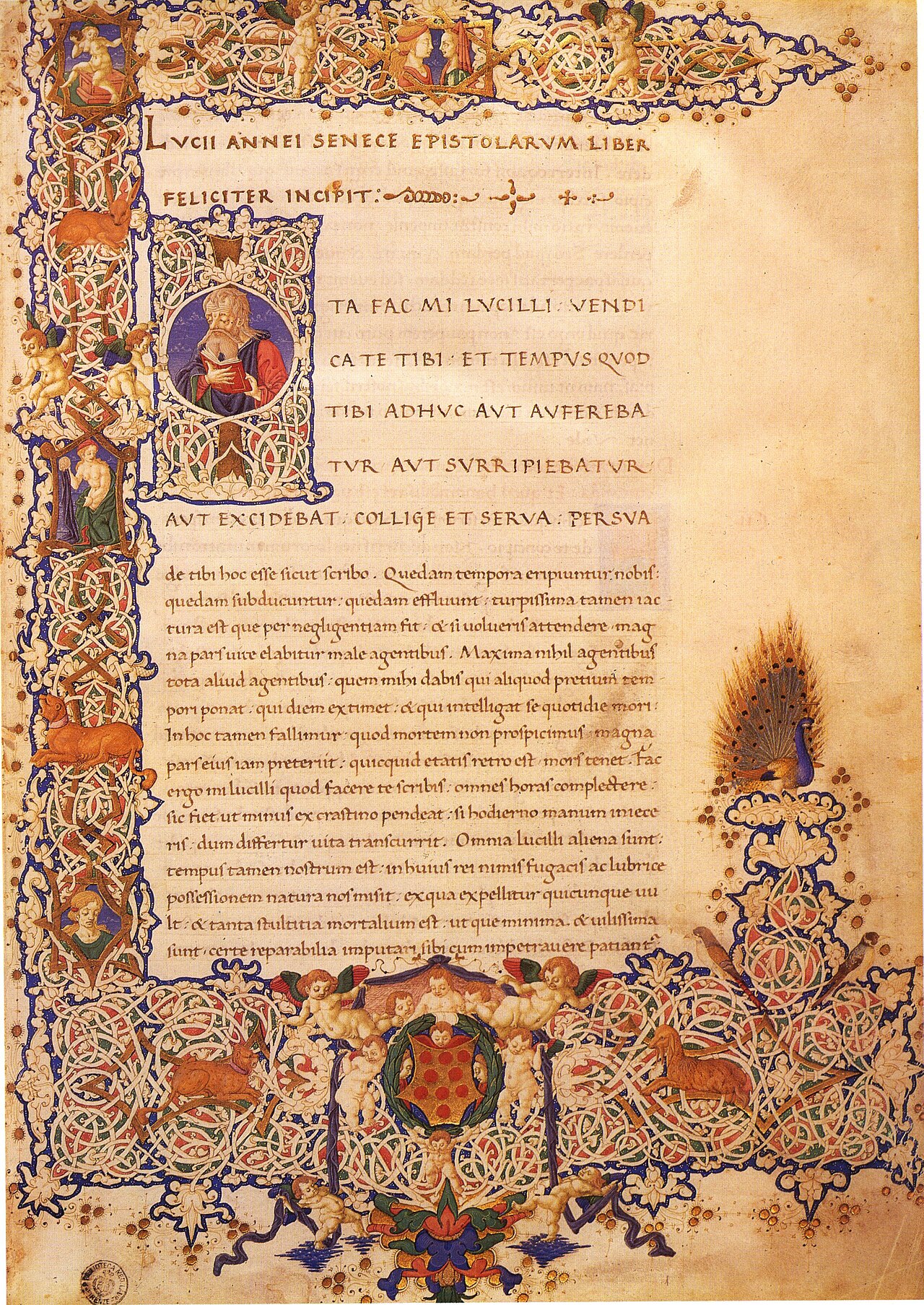 Letter
Primary source
Epistulae Morales ad Lucilium
Seneca · c. 62-65 CE
 Book
Primary source
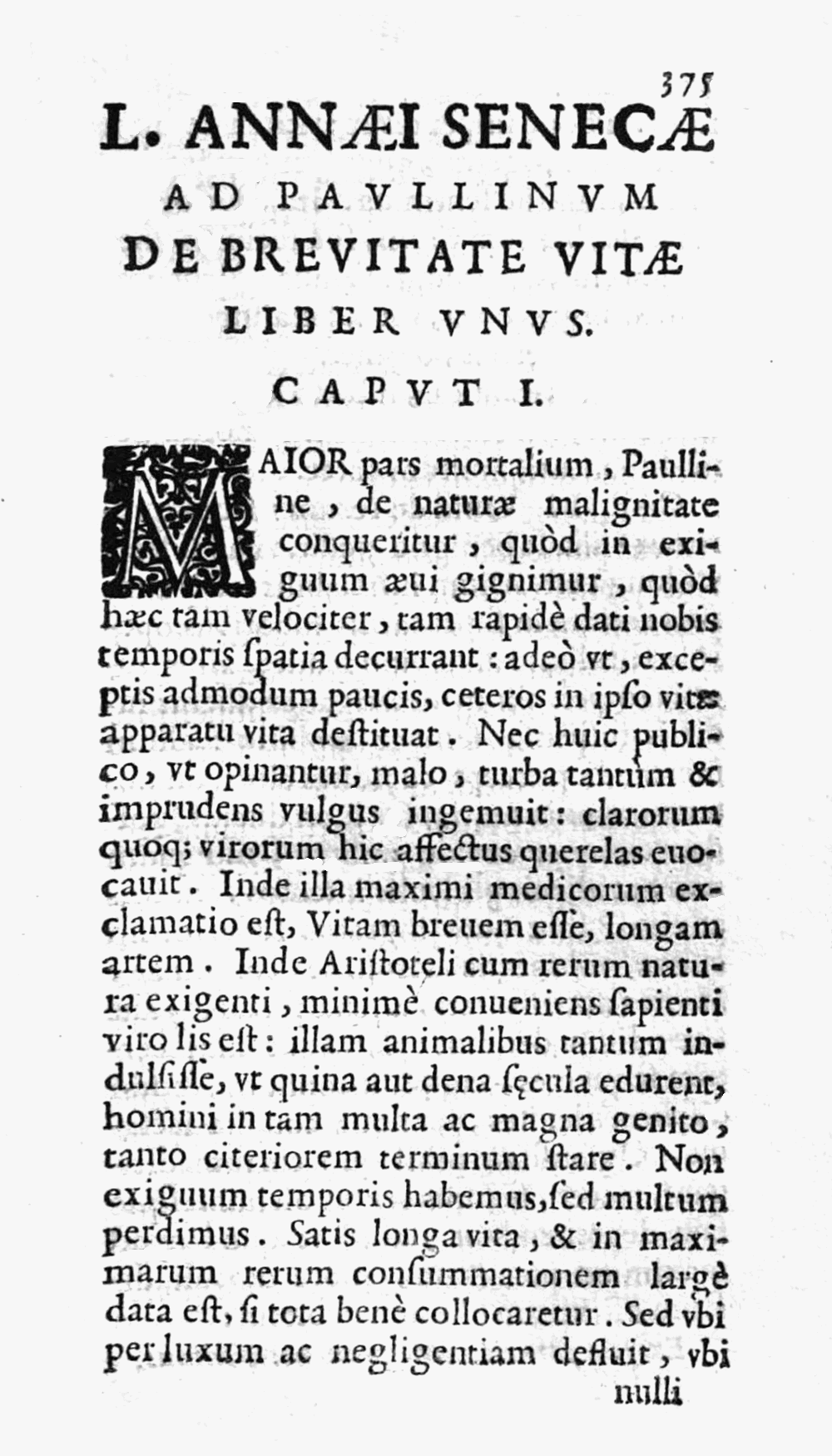
De Brevitate Vitae
Seneca · c. 49 CE
 Book
Secondary source
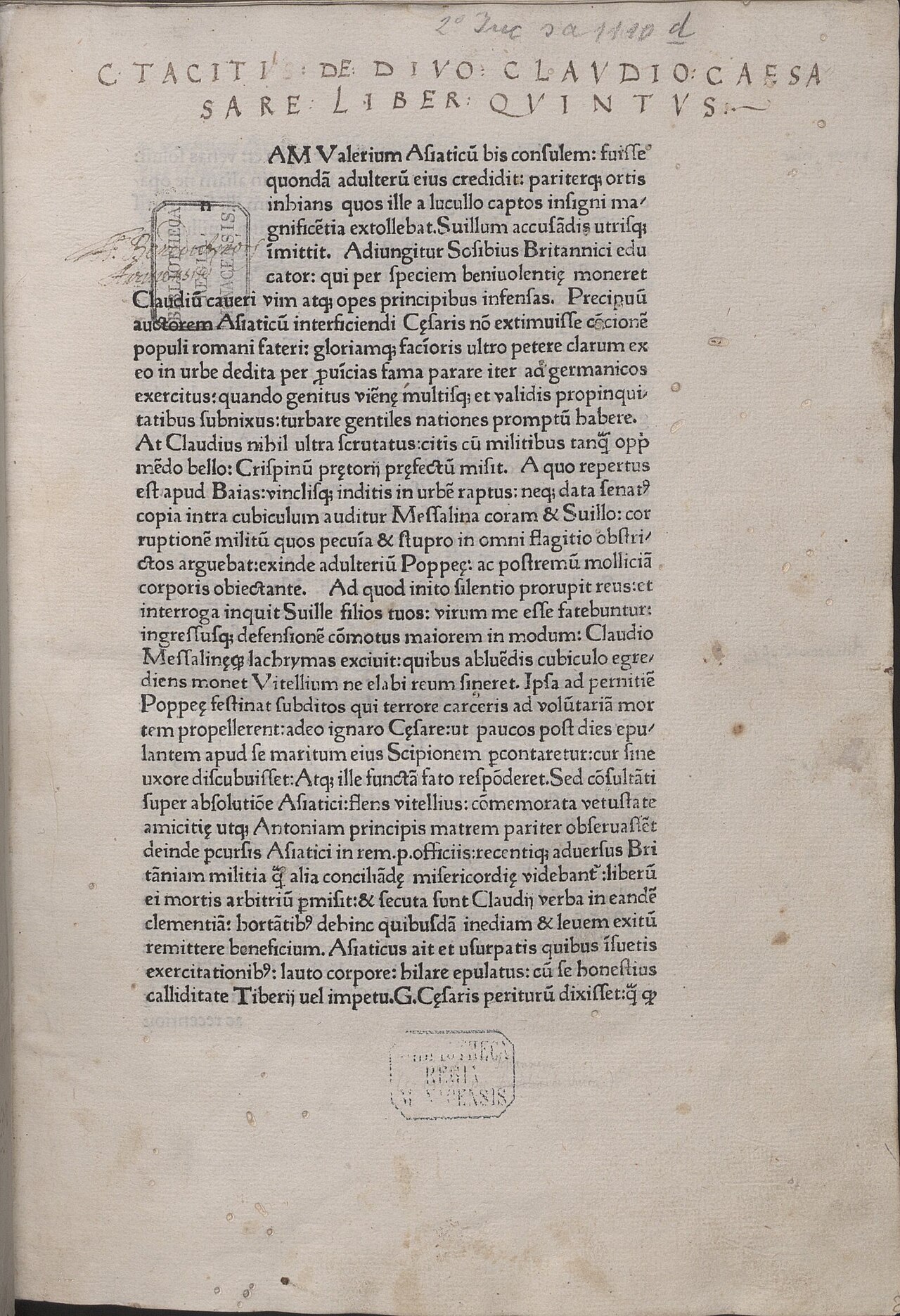
Annals
Tacitus · c. AD 116 or later
 Book
Primary source
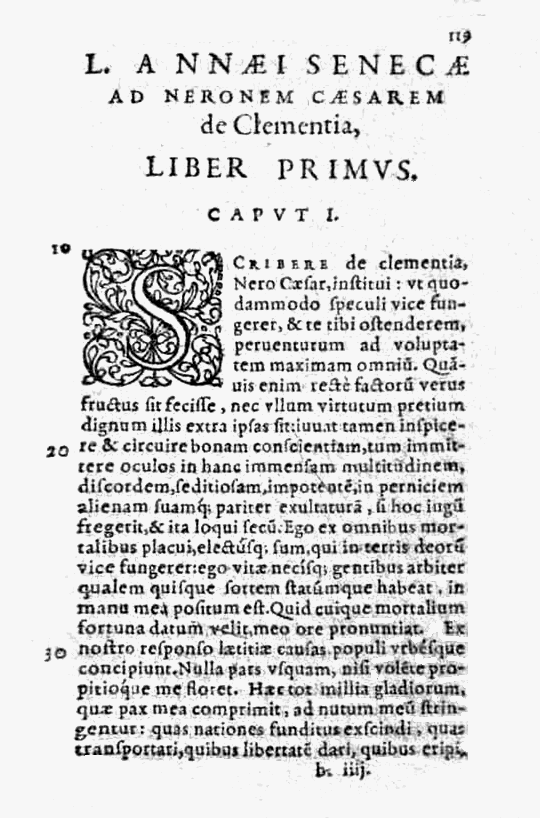
De Clementia
Seneca · 55-56 CE
 Sculpture
Secondary source
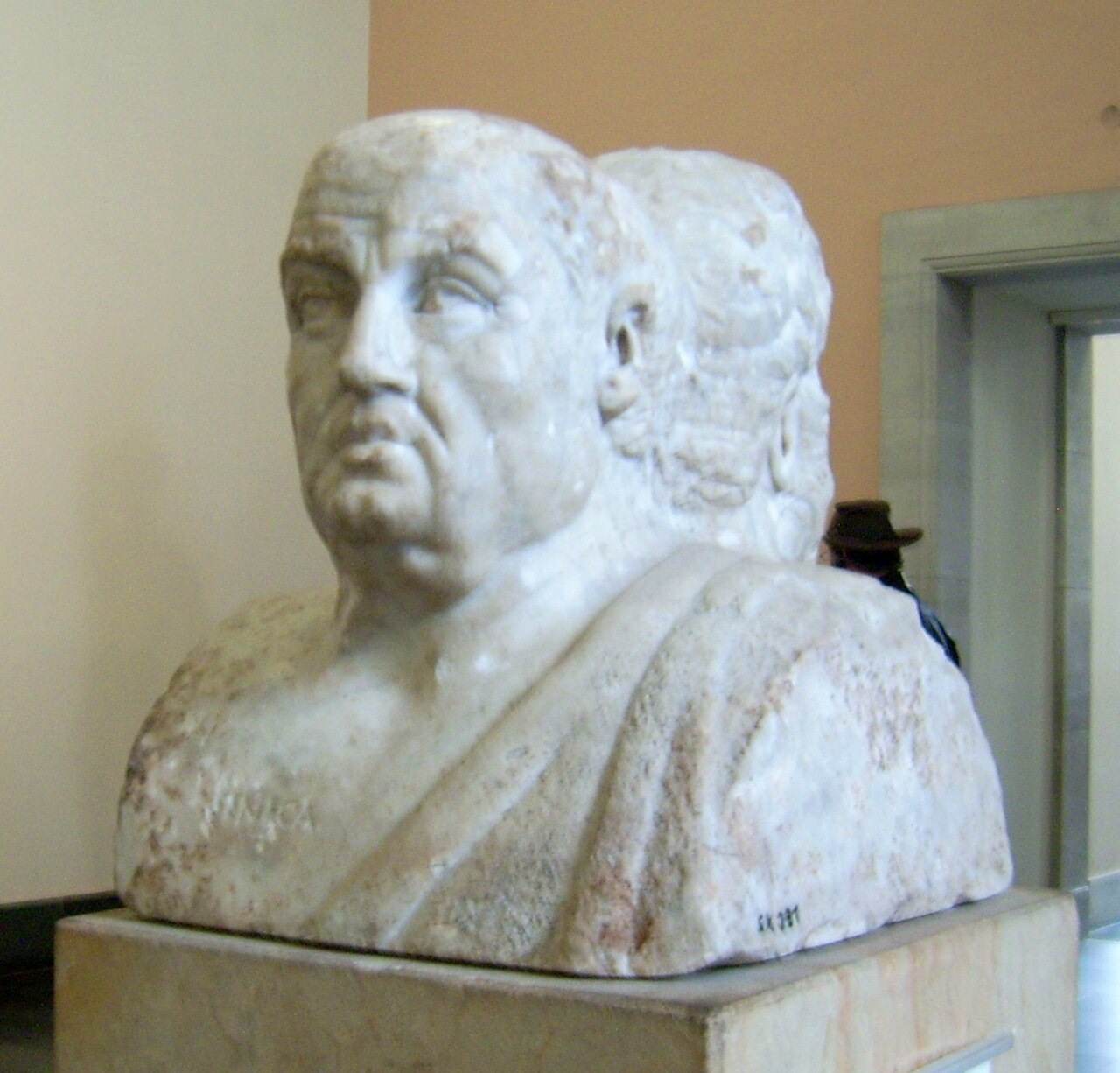
Double Herm of Socrates and Seneca
first half of the 3rd century AD
Ready when you are
Start chatting with Seneca now.
20 messages free · No credit card · Available in 50+ languages.