


Secondary sourceSculpture
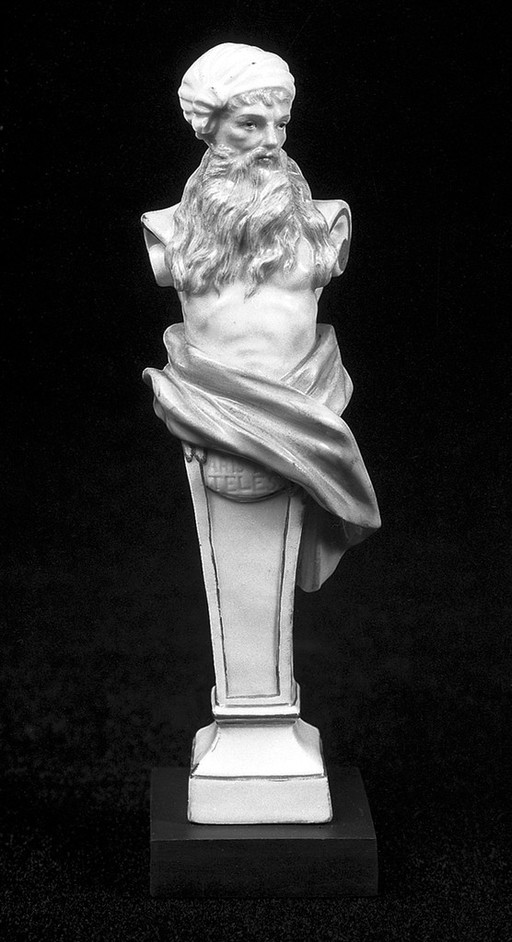
Statuette of Aristotle
A small white statue of a bearded man in a head covering, photographed against a black background. It was made long after Aristotle's death and shows later images of him.
A later small statue of Aristotle, showing how he was imagined and displayed in collections long after his lifetime.
About this source
What it is
This is a small statuette of Aristotle held by the Wellcome Collection in the United Kingdom. The media is a black-and-white photograph of the white statuette. It shows a bearded man wearing a head covering, with a draped cloth over his shoulder, standing on a tall pedestal with partly legible lettering. The photograph was taken against a black background on a dark square base. The maker and date are not given in the facts.
Why it matters
Aristotle lived in the 4th century BCE, and this statuette was made much later. Small figures like this one were often made to show a famous thinker in a settled, dignified way. The lettering on the pedestal hints at how the figure was labelled and understood, though the facts do not say more.
Look closer
- What details of clothing and posture does the statuette use to suggest that Aristotle was a learned man?
- What can you read on the pedestal, and what might it tell you about who made or owned the piece?
- What does a photograph of a statuette show, and what does it hide about its size and material?
This sculpture is part of the curated material that grounds the AI version of Aristotle on Humy.ai — when students ask about related events, the AI can quote it and cite it.
More Aristotle sources
Meet the AI Aristotle →
Ready when you are
Start chatting with Aristotle now.
20 messages free · No credit card · Available in 50+ languages.