


Secondary sourcePainting1610
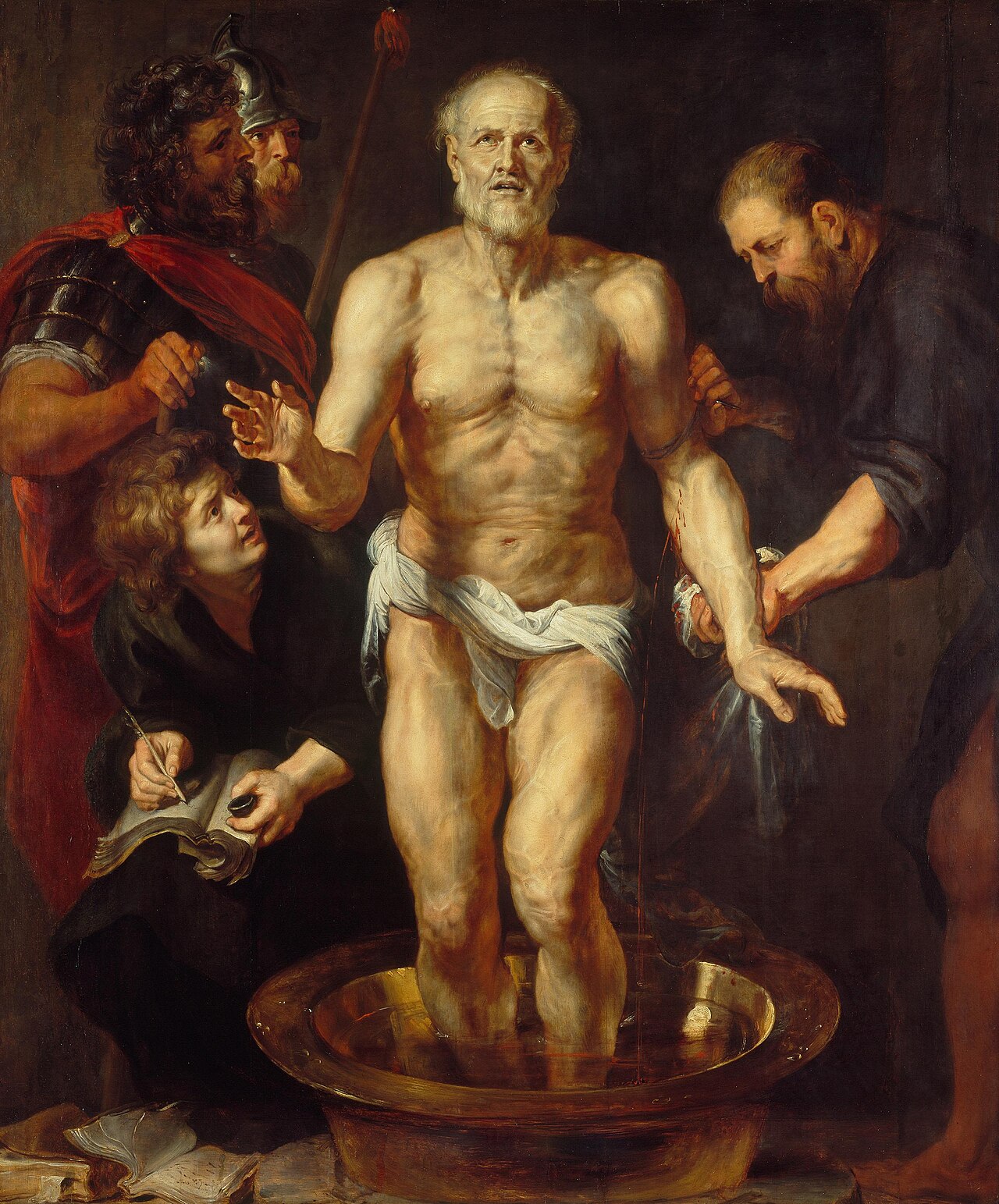
The Dying Seneca
Peter Paul Rubens · 1610
A baroque painting by Peter Paul Rubens imagining the death of Seneca, shown as an old man bleeding to death in a bath.
Depicts Seneca's death, shaping the enduring image of his final moments centuries after he lived.
About this source
What it is
This is a painting made by Peter Paul Rubens in 1610, now held in a princely collection. It shows an elderly, bearded nude man standing in a bronze basin while his arm is cut and bleeds, with soldiers and a writing attendant nearby, and another man opening the vein.
Why it matters
Rubens based his figure of Seneca on an ancient statue once believed to be a portrait of the philosopher, which fixed this dramatic image of a Stoic calmly dying in his bath in European art. It shows how later artists imagined and reshaped the deaths of famous ancient figures, often mixing fact with assumption.
Look closer
- What does the painting want you to feel about the man's death?
- Why might Rubens have included soldiers and a man writing?
- How did a mistaken identification of an old statue shape how people pictured Seneca for centuries?
This painting is part of the curated material that grounds the AI version of Seneca on Humy.ai — when students ask about related events, the AI can quote it and cite it.
More Seneca sources
Meet the AI Seneca →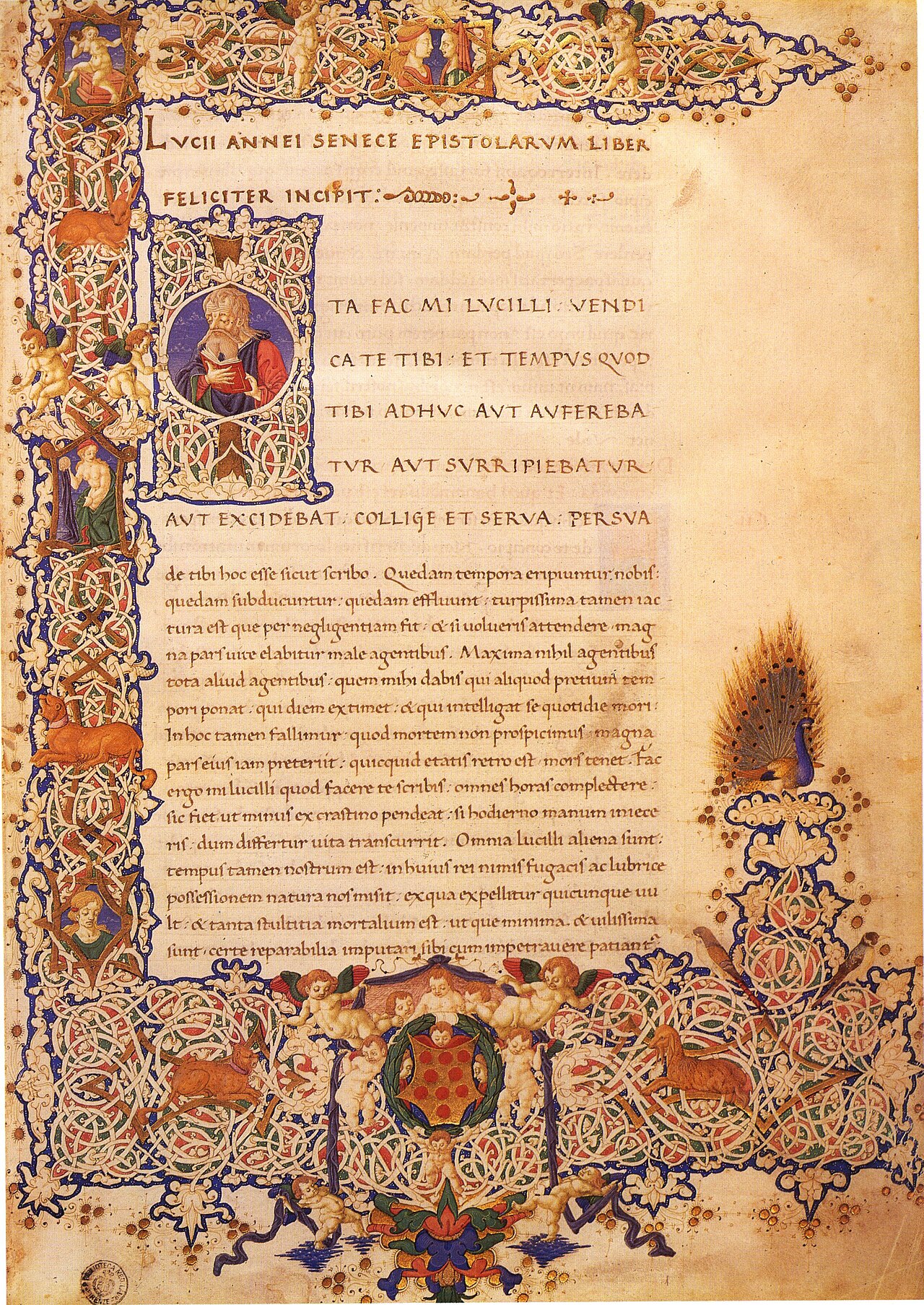 Letter
Primary source
Epistulae Morales ad Lucilium
Seneca · c. 62-65 CE
 Book
Primary source
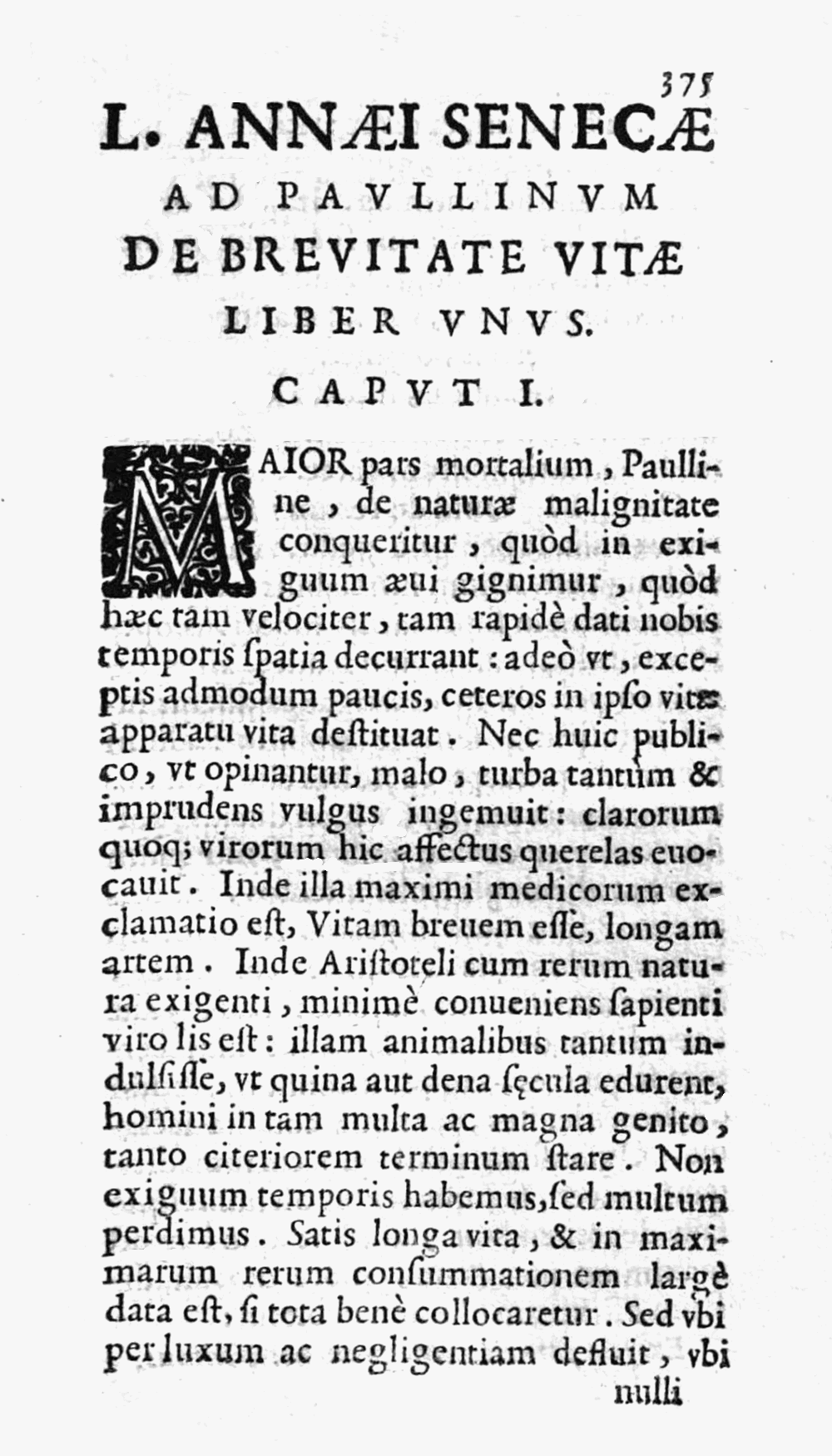
De Brevitate Vitae
Seneca · c. 49 CE
 Book
Secondary source
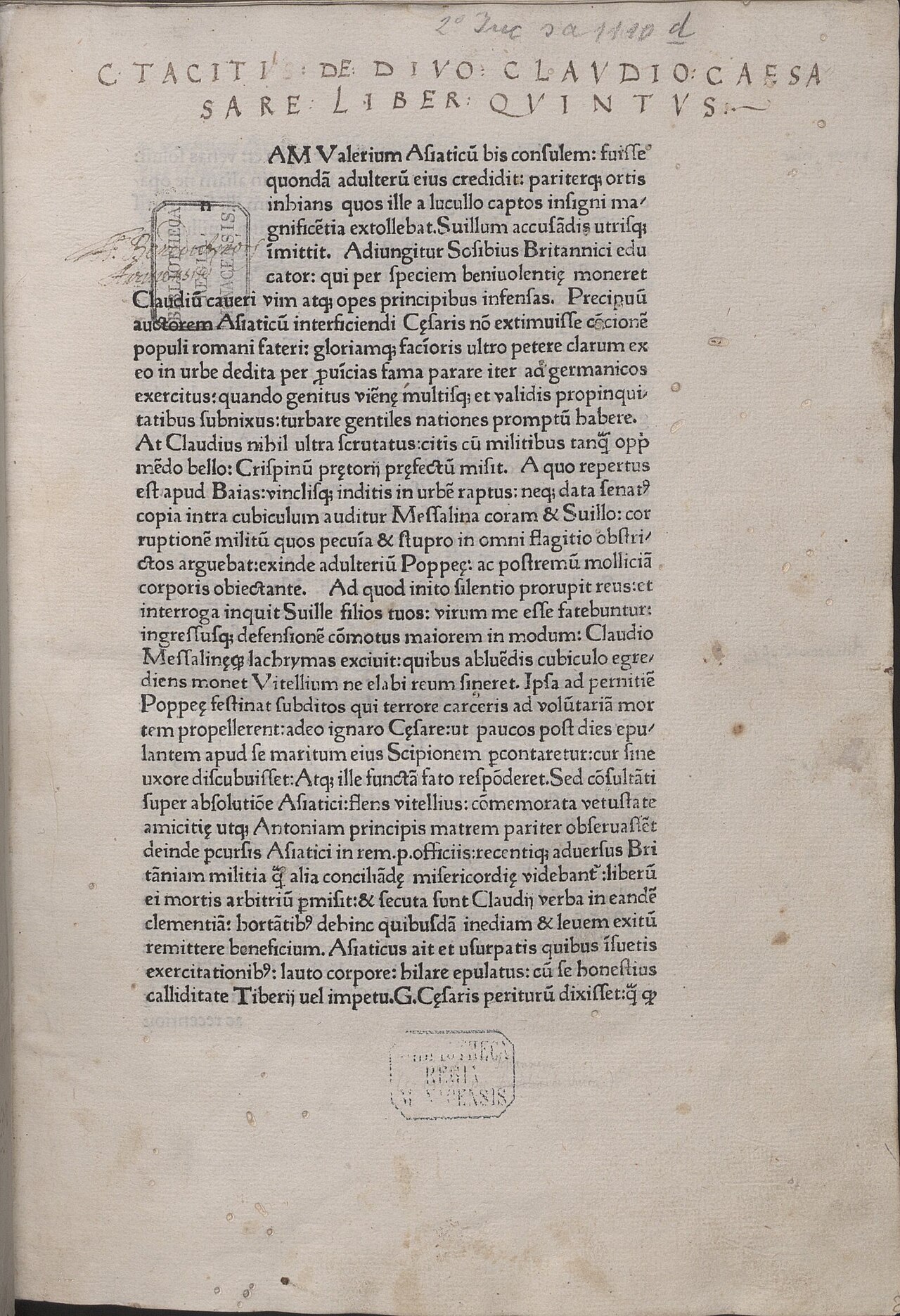
Annals
Tacitus · c. AD 116 or later
 Book
Primary source
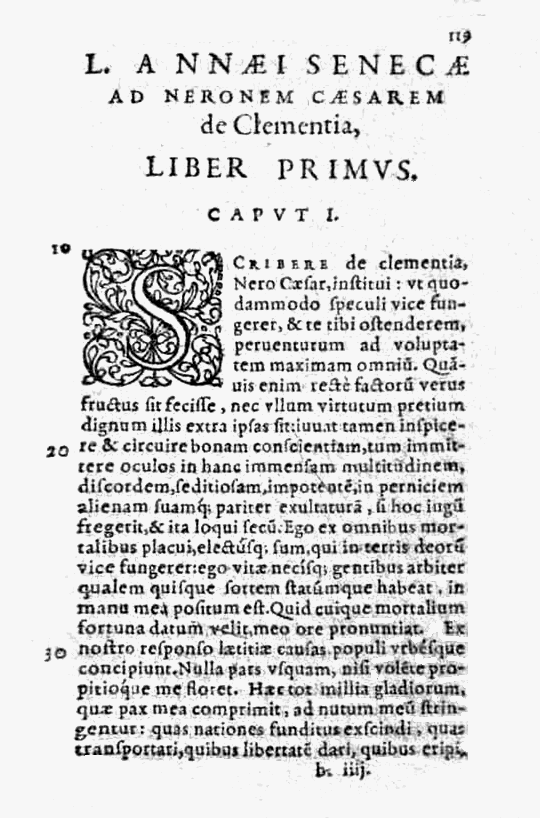
De Clementia
Seneca · 55-56 CE
 Sculpture
Secondary source
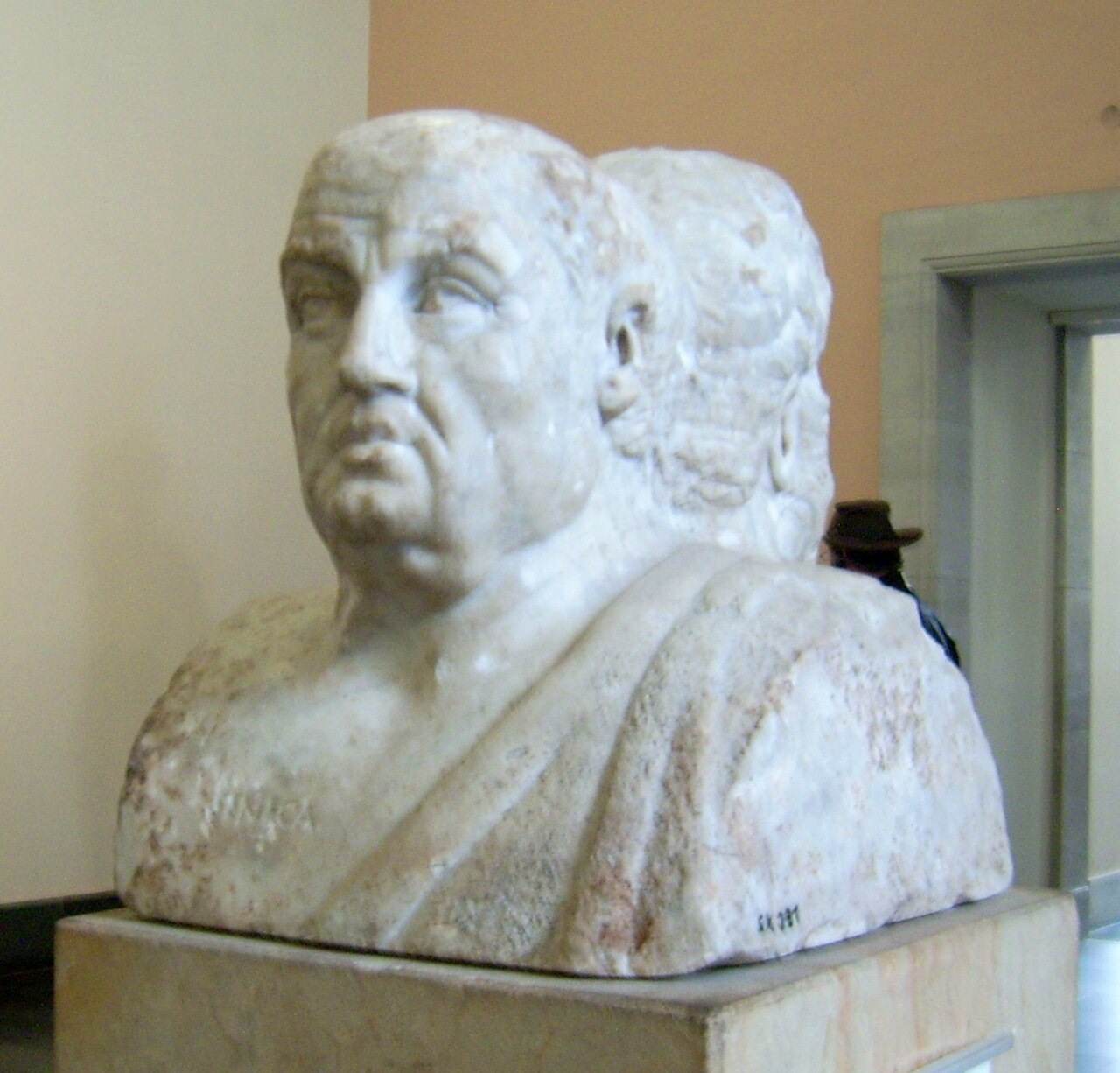
Double Herm of Socrates and Seneca
first half of the 3rd century AD
Ready when you are
Start chatting with Seneca now.
20 messages free · No credit card · Available in 50+ languages.