


Secondary sourceBook1910
The Eclogues and Georgics of Virgil
Publius Vergilius Maro (original); translated by John William Mackail · 1910
An 1910 English prose translation of Virgil's Eclogues and Georgics by John William Mackail. It puts the Roman poet's pastoral and farming poems into English for modern readers.
Shows how Virgil's poems were read in English in 1910, long after he wrote them in Latin.
About this source
What it is
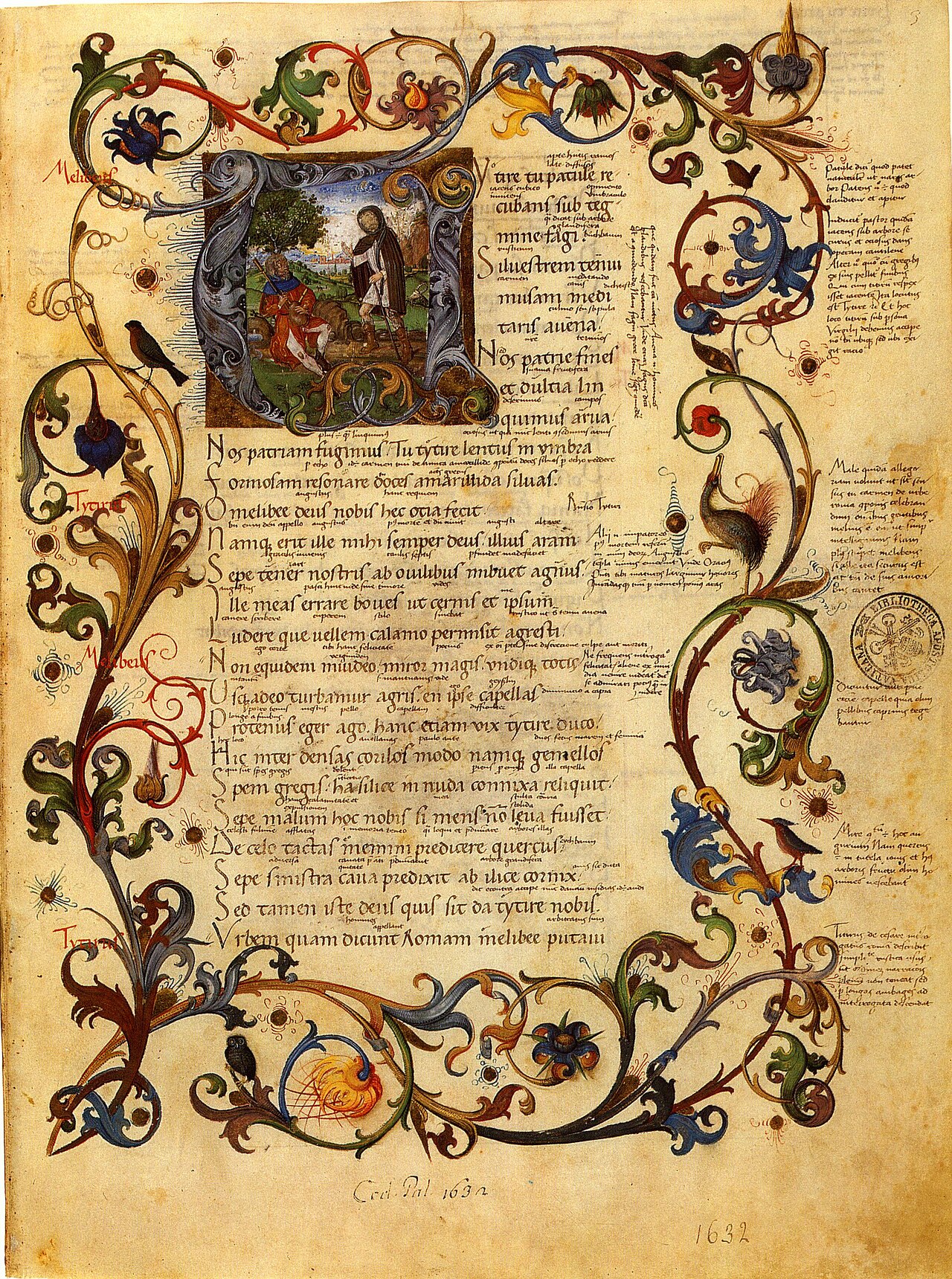
This is an English translation of Virgil's Eclogues and Georgics, published in 1910 and made by John William Mackail. The opening shows the first Eclogue, a dialogue between the shepherds Meliboeus and Tityrus. Meliboeus has been forced out of his fields, while Tityrus has kept his land and his peace. The original poems were written in Latin by Virgil, but this text is a translation made many centuries after his death.
Why it matters
Virgil was the most popular classical poet among his own countrymen, and his work was studied for centuries afterward. An English version lets students meet his pastoral poems in a language they know, though any translation loses some of the sound and form of the original verse. Mackail's version shows how English readers of 1910 approached a Roman poet they had long studied.
Look closer
- What does the first Eclogue suggest about who keeps land and who loses it?
- How might a prose translation change the feel of poetry that Virgil wrote in verse?
- Whose voices are in this text, and whose voices are missing?
This book is part of the curated material that grounds the AI version of Virgil on Humy.ai — when students ask about related events, the AI can quote it and cite it.
Ready when you are
Start chatting with Virgil now.
20 messages free · No credit card · Available in 50+ languages.