


Primary sourcePaintingText: 13th century, illustration: 17th century
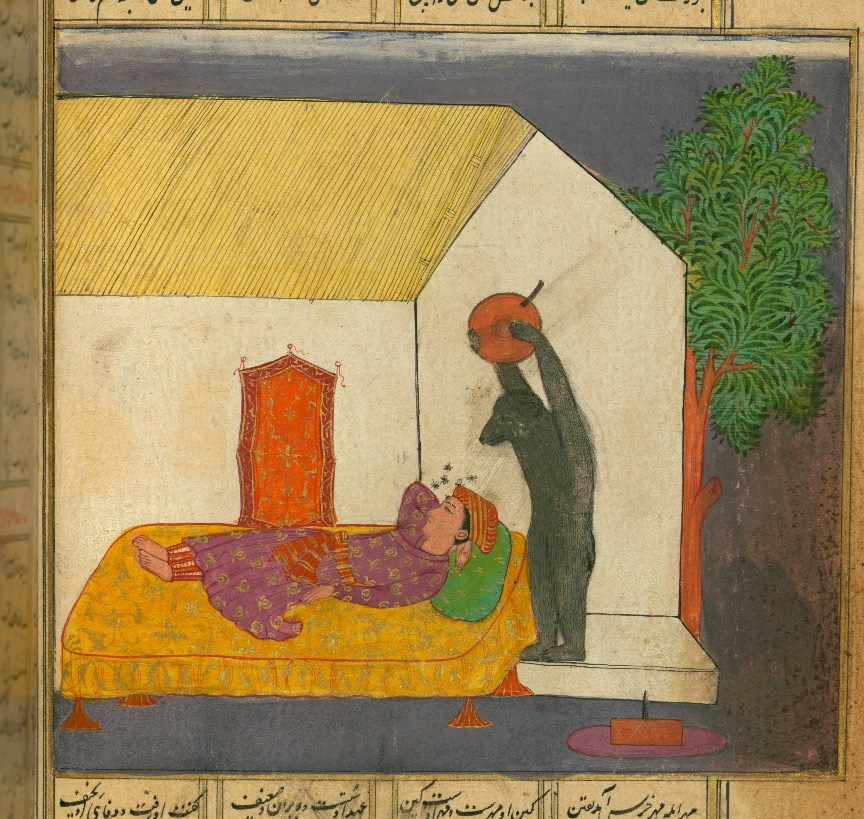
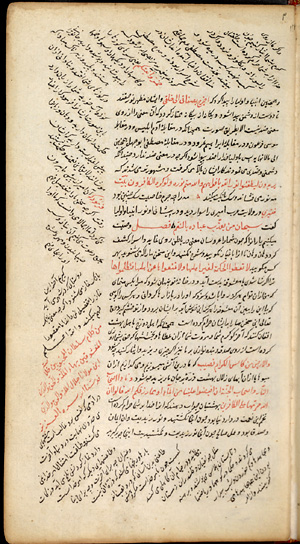
The Kind Man and the Bear, Illustration from the Masnavi
Rumi · Text: 13th century, illustration: 17th century
A 17th-century painted illustration of one of Rumi's parables about a man and a bear, paired with the 13th-century text it illustrates.
An illustrated version of one of Rumi's own parables, showing how his teachings were visualized by later artists.
About this source
What it is
This miniature painting illustrates a parable from Rumi's Masnavi, a poem he composed in the 13th century. The illustration was added later, in the 17th century, to a manuscript copy of the text. The story tells of a man who saves a bear from a serpent, and the bear's clumsy attempt to repay the kindness.
Why it matters
This parable, like many in the Masnavi, teaches a moral lesson through a simple, memorable story. The painting shows how later artists and readers engaged with Rumi's teachings centuries after his death, translating his words into vivid images for new audiences.
- What is the bear doing in the painting, and how does this connect to the written story?
- Why might an illustrator choose to depict this exact moment in the tale?
- What lesson do you think Rumi wanted readers to take from this story?
This painting is part of the curated material that grounds the AI version of Rumi (Jalāl ad-Dīn Muhammad Rūmī) on Humy.ai — when students ask about related events, the AI can quote it and cite it.
More Rumi (Jalāl ad-Dīn Muhammad Rūmī) sources
Meet the AI Rumi (Jalāl ad-Dīn Muhammad Rūmī) →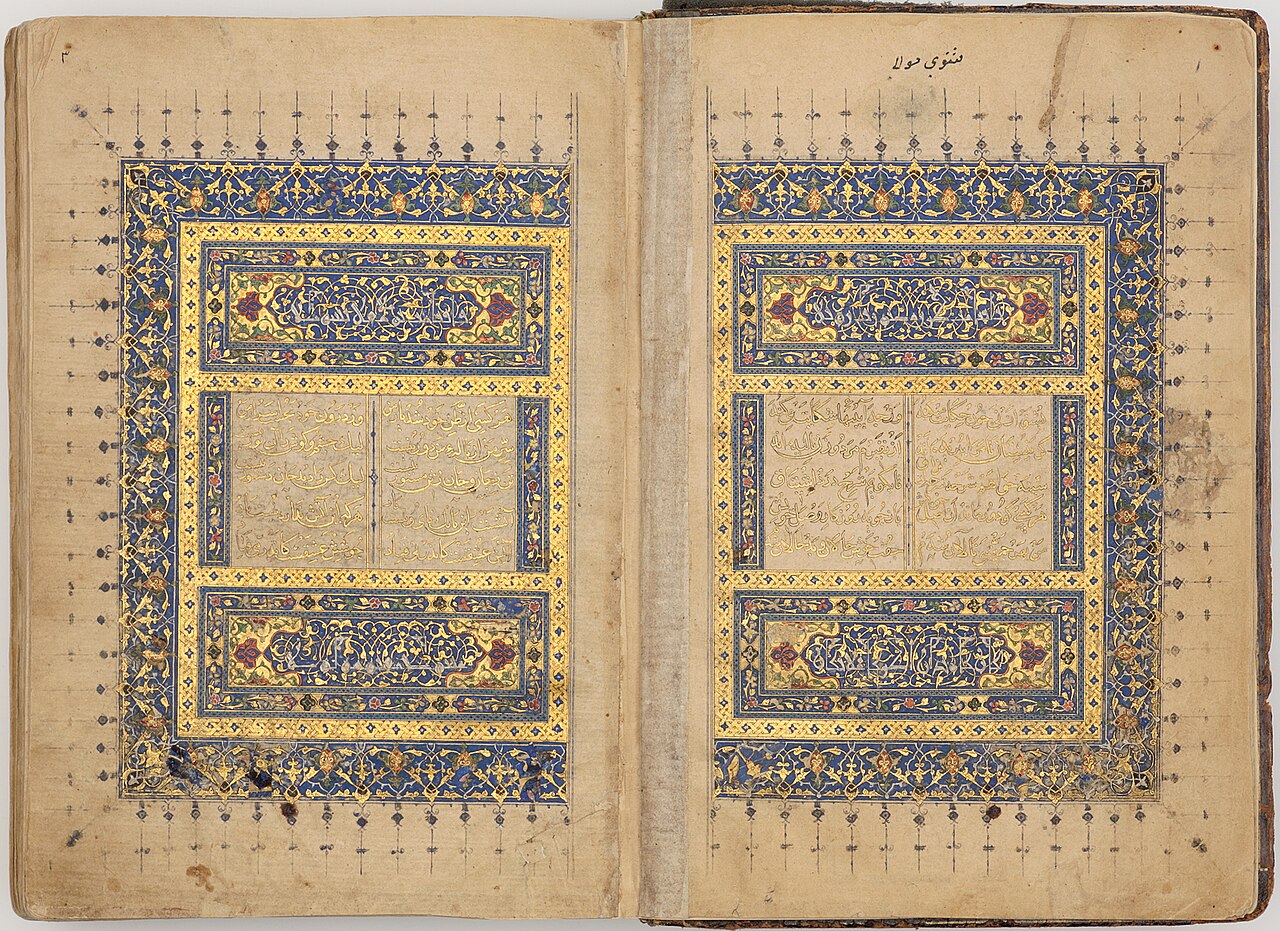 Book
Primary source
Masnavi
Rumi · c. 1258-1273
 Book
Primary source
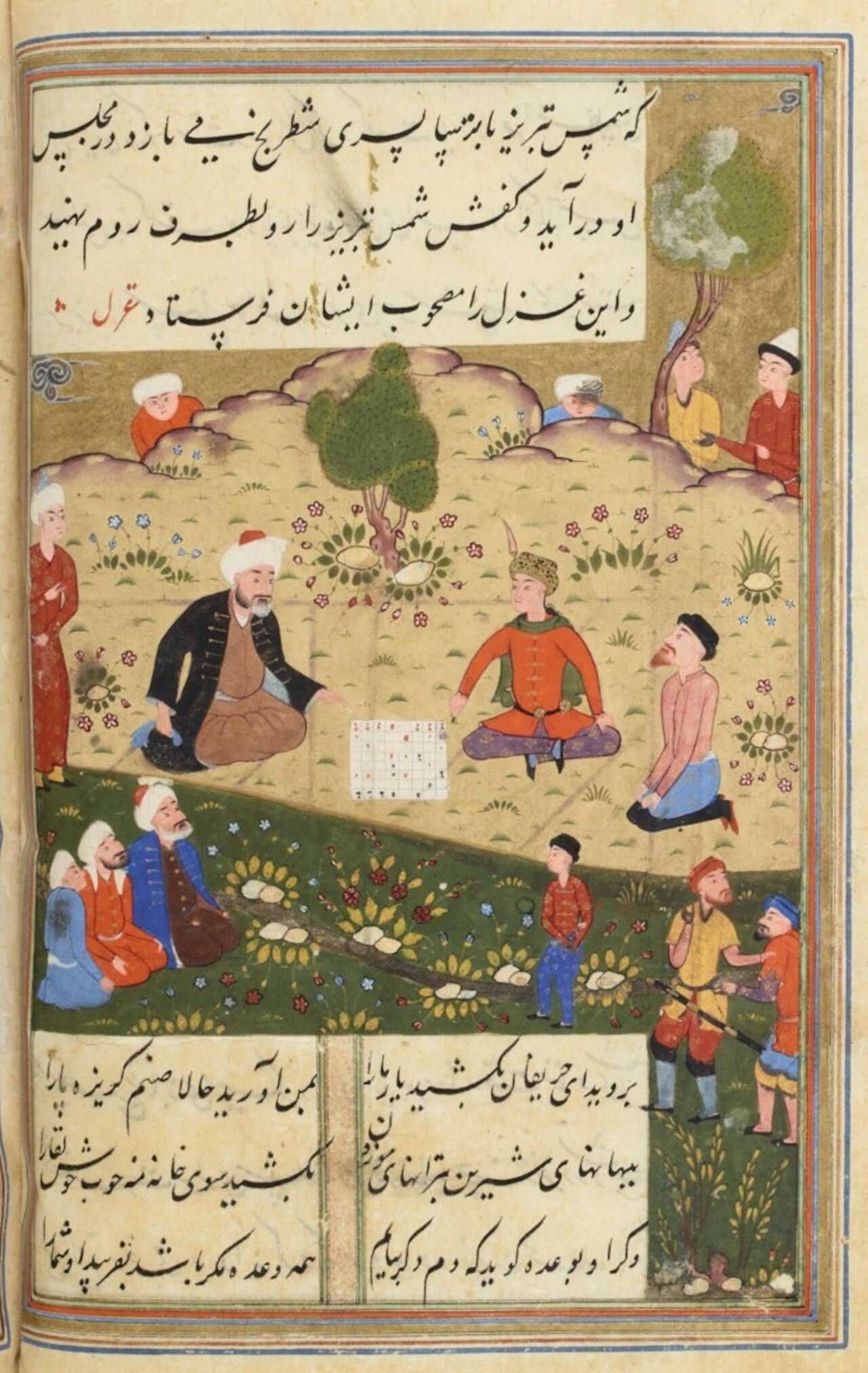
Diwan-e Shams-e Tabrizi
Rumi · c. 1247 onward
 Artifact
Secondary source
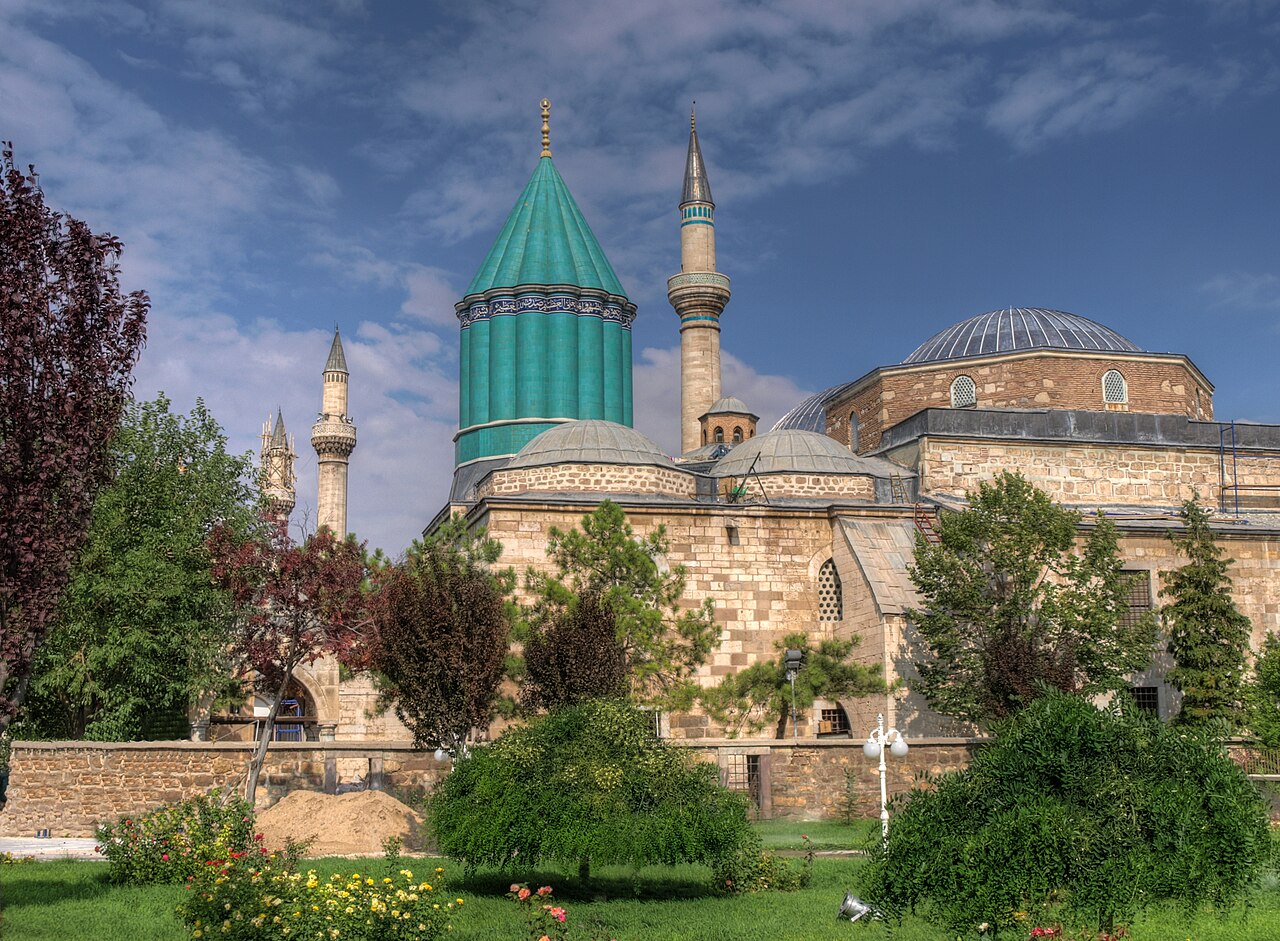
Grave of Rumi
soon after 1273
 Book
Primary source
Fihi Ma Fihi
Rumi · c. 1260-1273
 Artifact
Secondary source
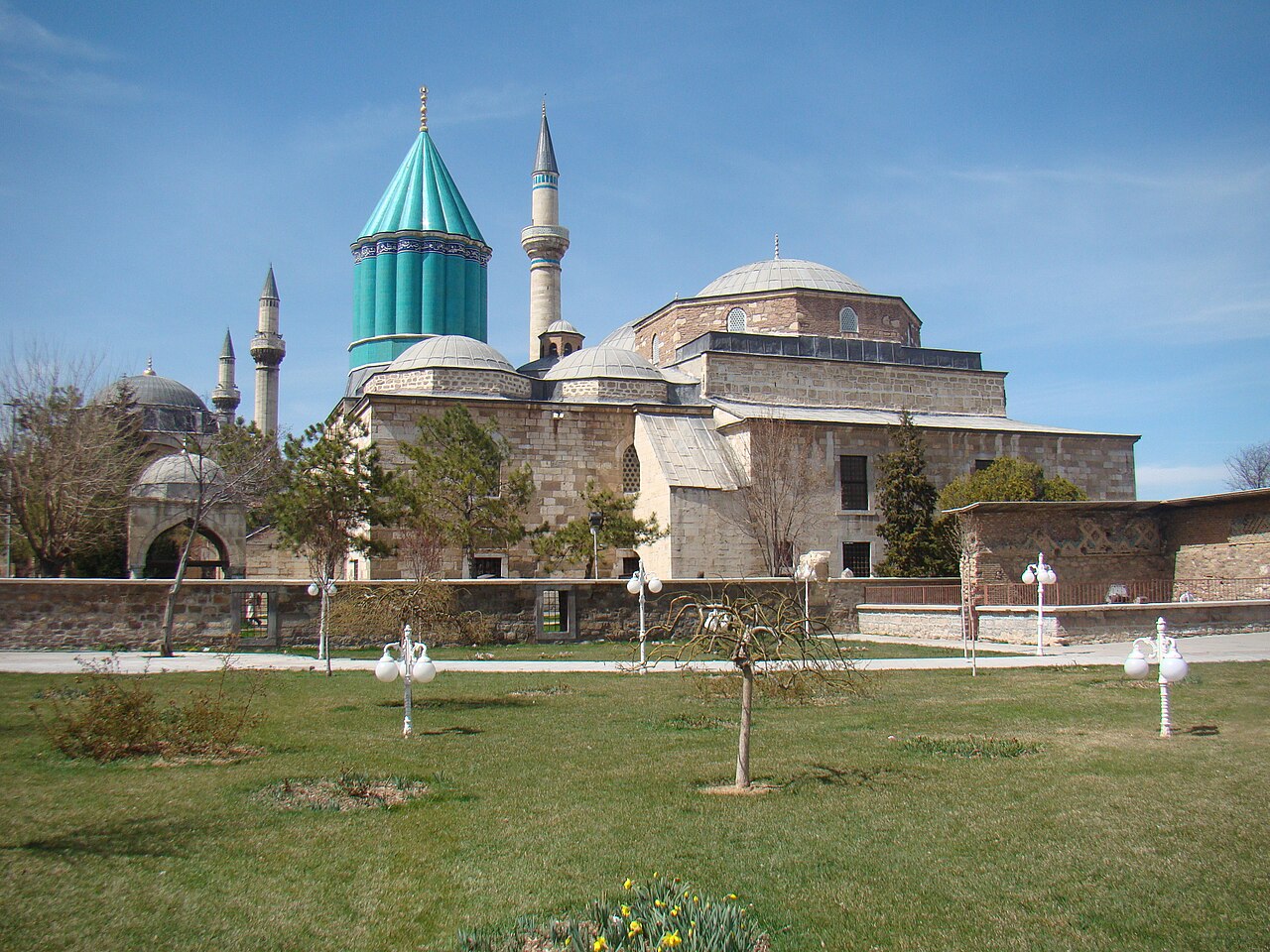
Mevlâna Museum
Badr al-Din Tabrizi (architect) · built soon after 1273; museum since 1926
Ready when you are
Start chatting with Rumi (Jalāl ad-Dīn Muhammad Rūmī) now.
20 messages free · No credit card · Available in 50+ languages.