


Secondary sourcePainting1785
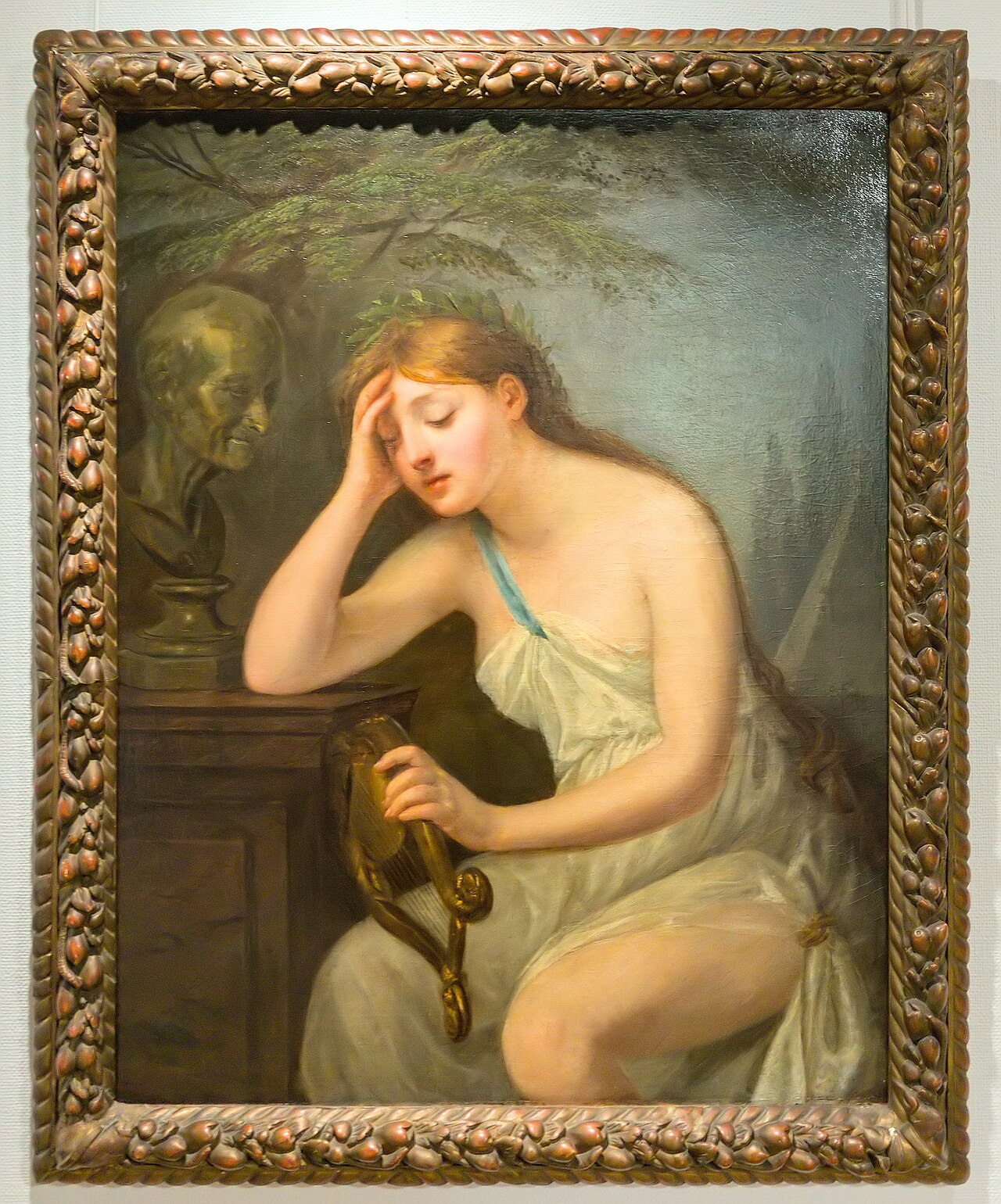
The Muse of Poetry Mourning the Death of Voltaire
Geneviève Brossard de Beaulieu · 1785
An allegorical painting from 1785 showing the muse of poetry grieving beside a bust of Voltaire, made shortly after his death.
This 1785 painting mourns Voltaire's death through an allegorical figure of poetry grieving over his bust.
About this source
What it is
This oil painting by Geneviève Brossard de Beaulieu, dated 1785, shows a young woman representing the muse of poetry, crowned with laurel and holding a lyre, mourning beside a bronze-toned bust of an elderly man. It is held in the Department of Paintings of the Louvre.
Why it matters
Painted not long after Voltaire's death, this work reflects how he was remembered as one of France's great poets and thinkers. The muse of poetry weeping over his bust is a classical way of expressing a nation's sense of loss for a major cultural figure.
Look closer
- Why might an artist use a mythological figure like the muse of poetry, rather than a real mourner, to express grief?
- What do the lyre and laurel wreath traditionally symbolise?
- What does this painting suggest about how Voltaire was viewed by the public after his death?
This painting is part of the curated material that grounds the AI version of Voltaire and Catherine the Great on Humy.ai — when students ask about related events, the AI can quote it and cite it.
More Voltaire sources
Meet the AI Voltaire →
Ready when you are
Start chatting with Voltaire now.
20 messages free · No credit card · Available in 50+ languages.