


Primary sourcePainting1663
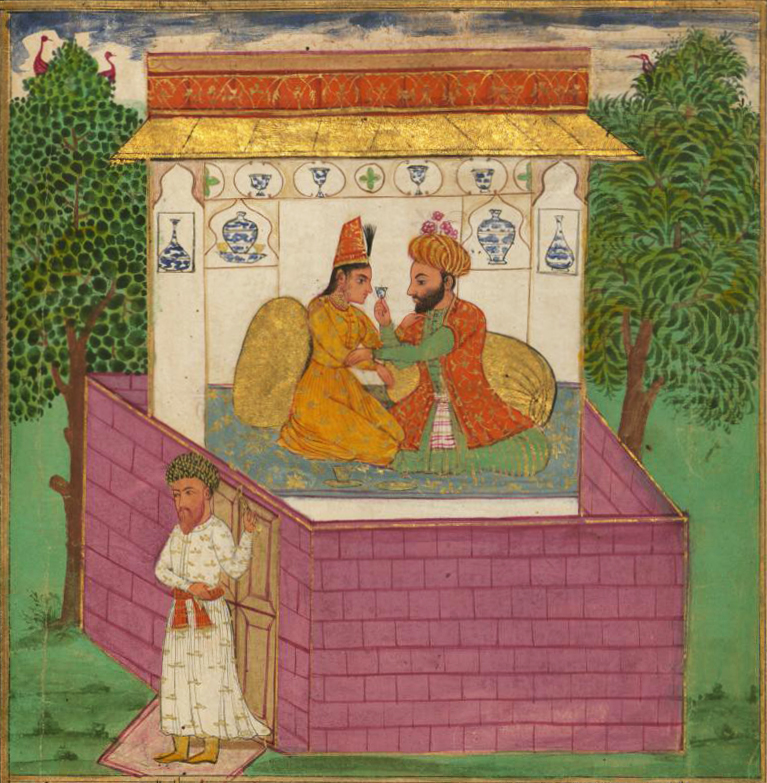
The Shoemaker and the Unfaithful Wife, Walters Masnavi Illustration, 1663
Rumi · 1663
A 1663 Mughal-style miniature illustrating a Masnavi story by Rumi about a shoemaker and an unfaithful wife caught by her husband.
An illustrated moral tale from Rumi's own poem, chosen by later artists to depict a story of infidelity and discovery.
About this source
What it is
This painting illustrates a tale from Rumi's Masnavi, found in a manuscript completed in 1663 and now held by the Walters Art Museum. It shows a shoemaker and the unfaithful wife of a Sufi being surprised by her husband's unexpected return.
Why it matters
Rumi's stories often used everyday situations and human flaws to teach spiritual lessons. This illustration shows how later artists chose dramatic, morally complex moments from his poetry to bring the text to life for readers.
- What clues in the painting show that someone is about to be caught in a difficult situation?
- Why might this particular moment from the story have been chosen for illustration?
- What does the setting (clothing, architecture, servant) tell you about where and when this manuscript was made?
This painting is part of the curated material that grounds the AI version of Rumi (Jalāl ad-Dīn Muhammad Rūmī) on Humy.ai — when students ask about related events, the AI can quote it and cite it.
More Rumi (Jalāl ad-Dīn Muhammad Rūmī) sources
Meet the AI Rumi (Jalāl ad-Dīn Muhammad Rūmī) →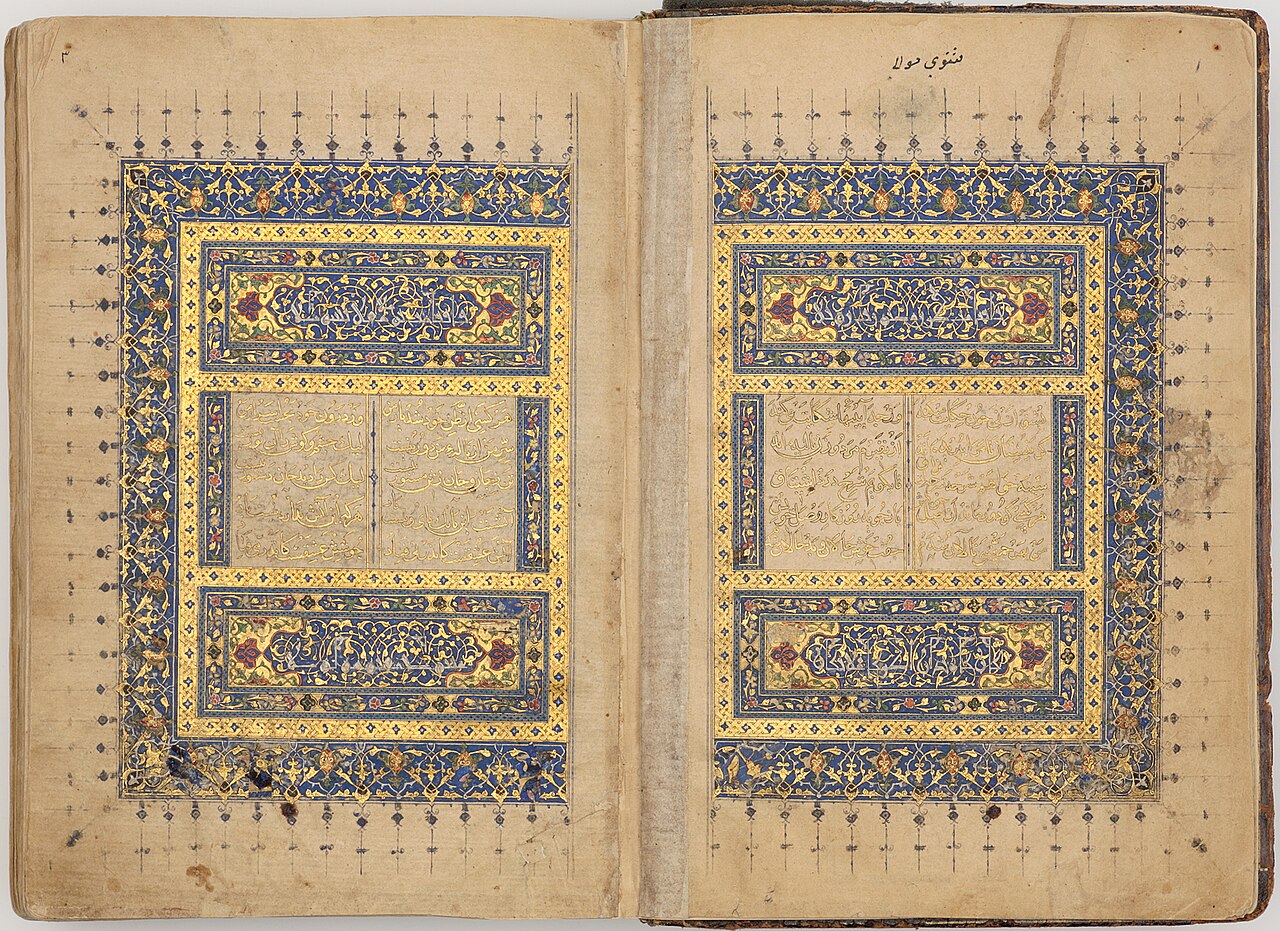 Book
Primary source
Masnavi
Rumi · c. 1258-1273
 Book
Primary source
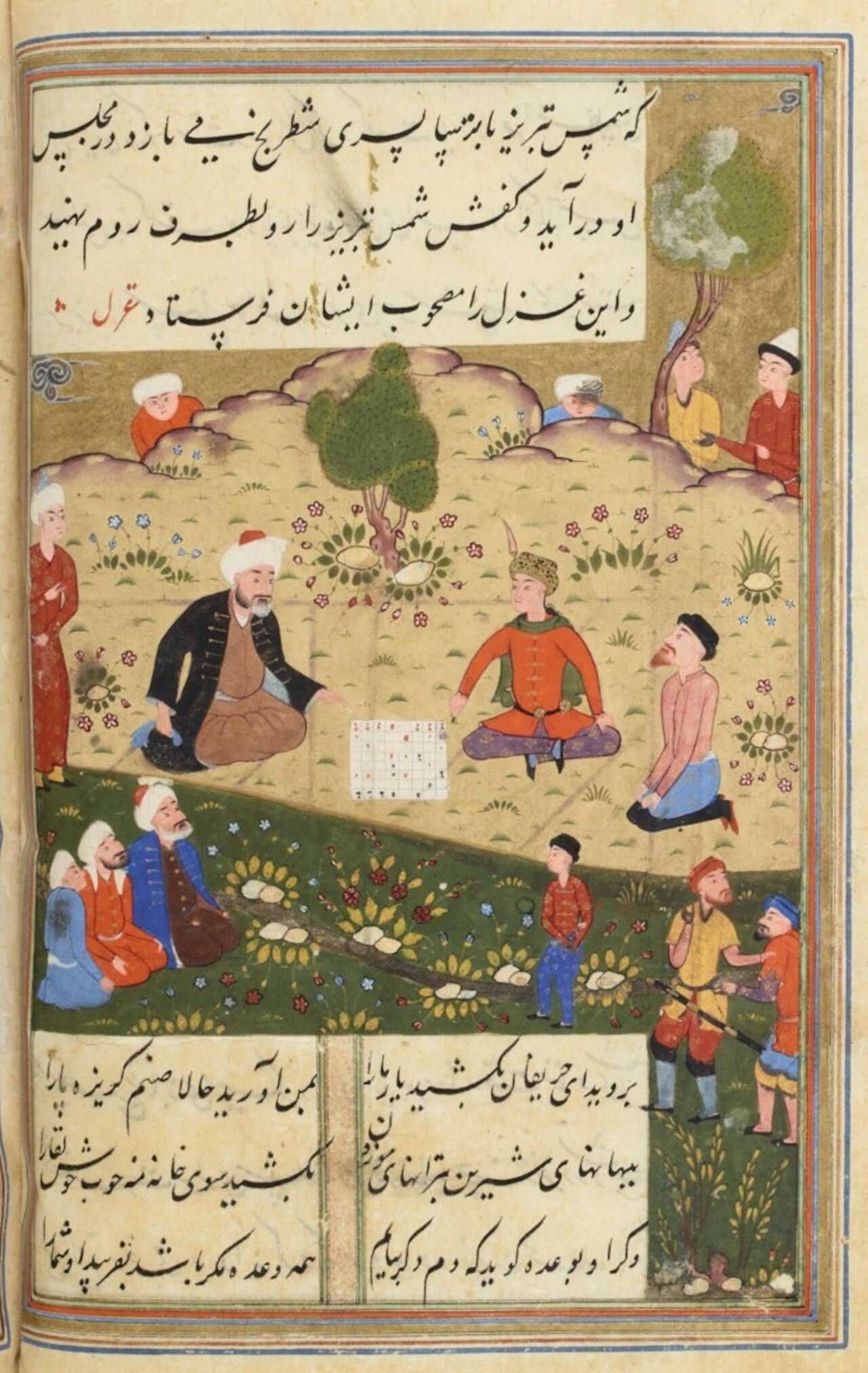
Diwan-e Shams-e Tabrizi
Rumi · c. 1247 onward
 Artifact
Secondary source
Grave of Rumi
soon after 1273
 Book
Primary source
Fihi Ma Fihi
Rumi · c. 1260-1273
 Artifact
Secondary source
Mevlâna Museum
Badr al-Din Tabrizi (architect) · built soon after 1273; museum since 1926
Ready when you are
Start chatting with Rumi (Jalāl ad-Dīn Muhammad Rūmī) now.
20 messages free · No credit card · Available in 50+ languages.