


Secondary sourcePainting1870
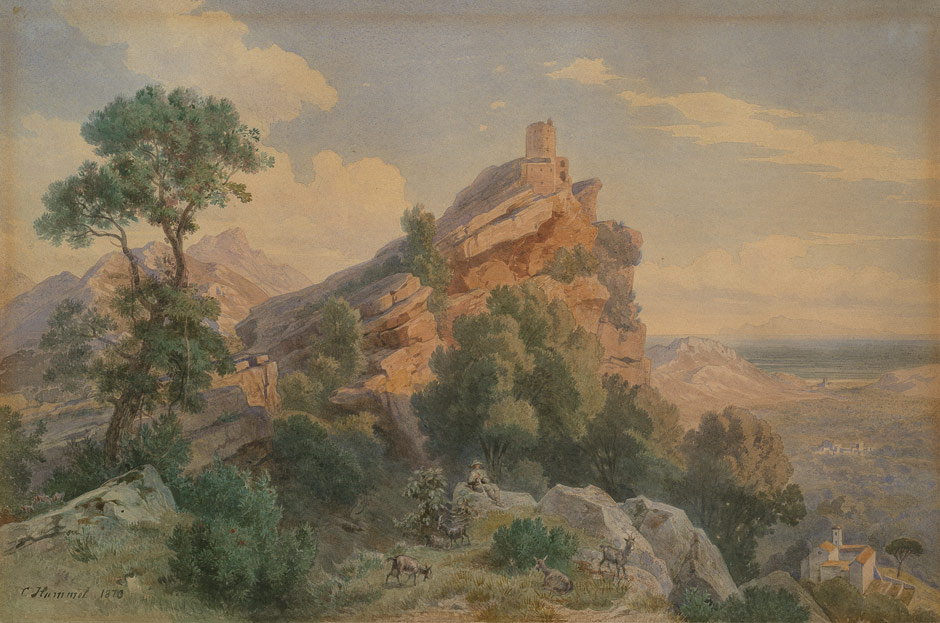
The Tower of Seneca on Corsica
Carl Hummel · 1870
A 19th-century watercolor by Carl Hummel showing a tower on Cap Corse linked by local tradition to Seneca's exile on Corsica.
This 19th-century landscape shows a site traditionally linked to Seneca's years of exile on Corsica.
About this source
What it is
This watercolor landscape was painted by Carl Hummel in 1870. It shows a stone tower on a rocky hilltop on Cap Corse, overlooking a valley, with the island of Elba visible on the horizon. Local tradition connected this tower to the period Seneca spent in exile on Corsica.
Why it matters
The painting shows how places associated with Seneca's life, like his exile from Rome between 41 and 49 CE, became part of local legend long afterward. It reveals how 19th-century travelers and artists were drawn to sites connected with ancient figures, blending history with tourism and myth.
Look closer
- What makes a place become associated with a historical figure's name, even centuries later?
- What does the peaceful, scenic style of this watercolor suggest about how Hummel wanted viewers to feel about the site?
- How much of this connection to Seneca do you think is based on fact versus local legend?
This painting is part of the curated material that grounds the AI version of Seneca on Humy.ai — when students ask about related events, the AI can quote it and cite it.
More Seneca sources
Meet the AI Seneca →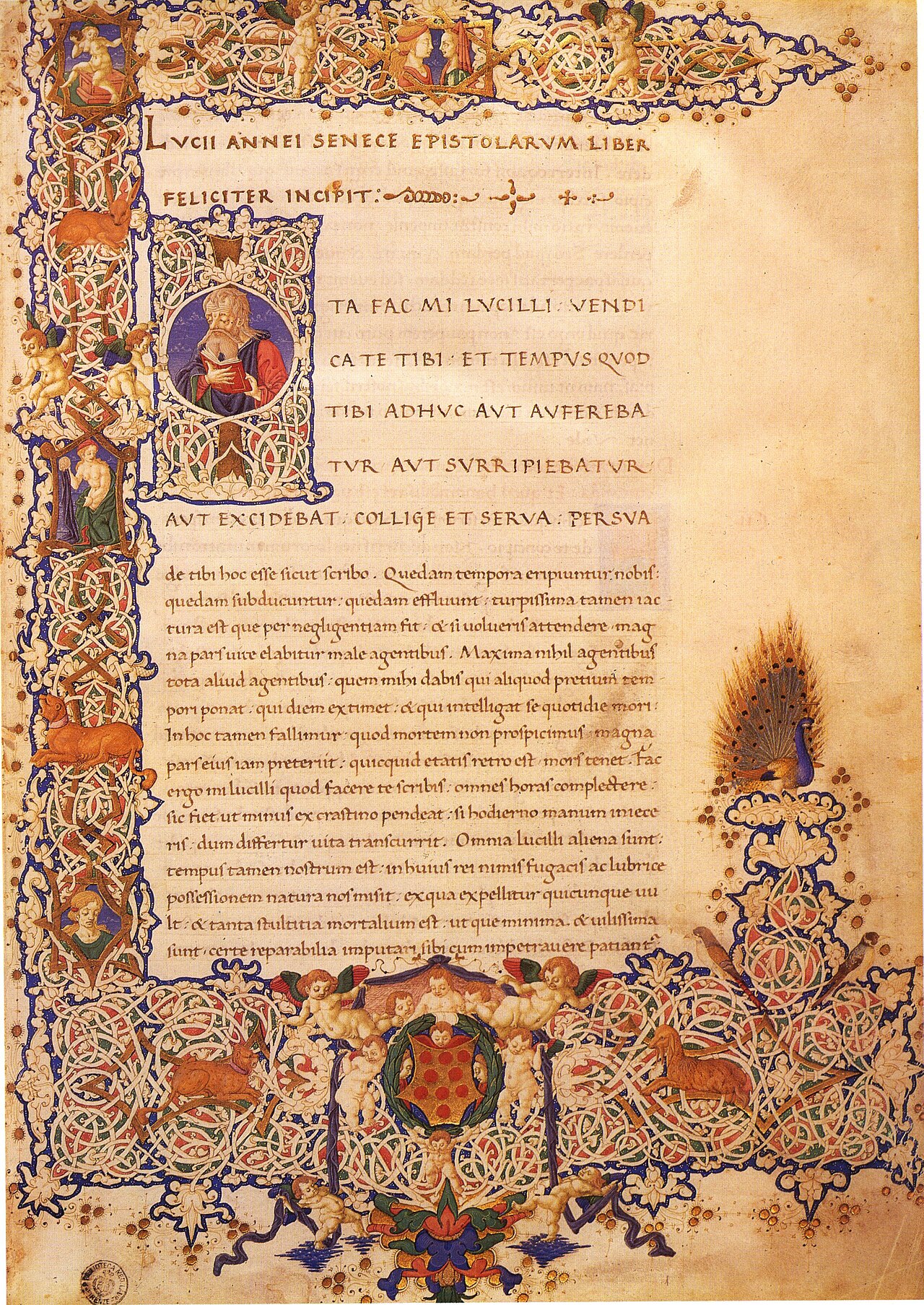 Letter
Primary source
Epistulae Morales ad Lucilium
Seneca · c. 62-65 CE
 Book
Primary source
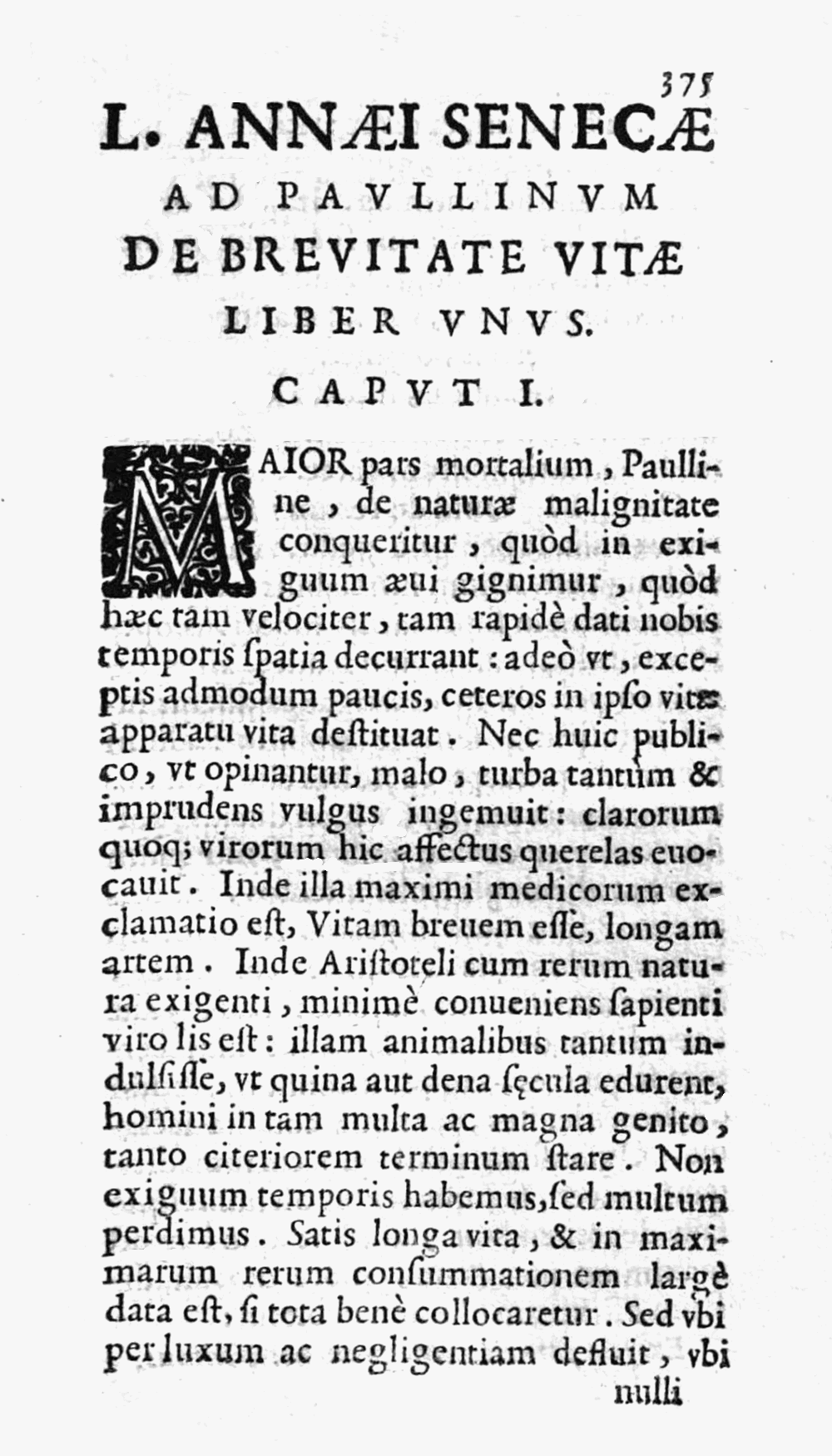
De Brevitate Vitae
Seneca · c. 49 CE
 Book
Secondary source
Annals
Tacitus · c. AD 116 or later
 Book
Primary source
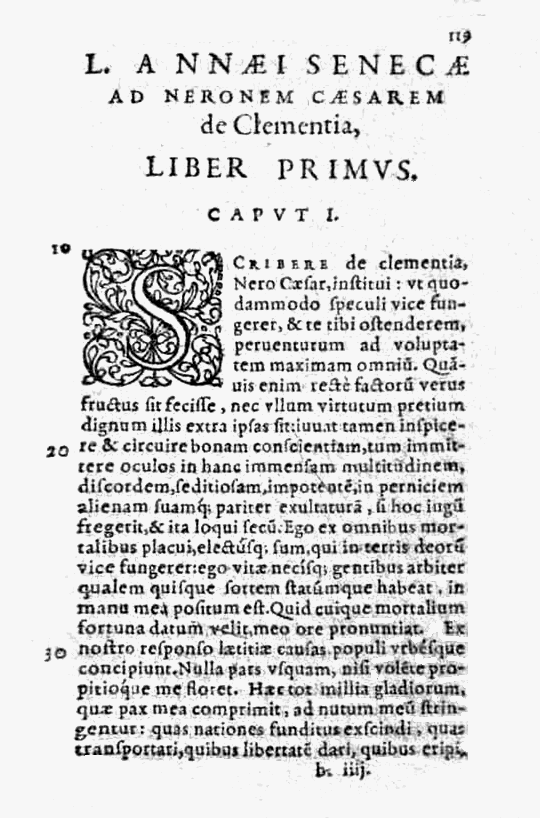
De Clementia
Seneca · 55-56 CE
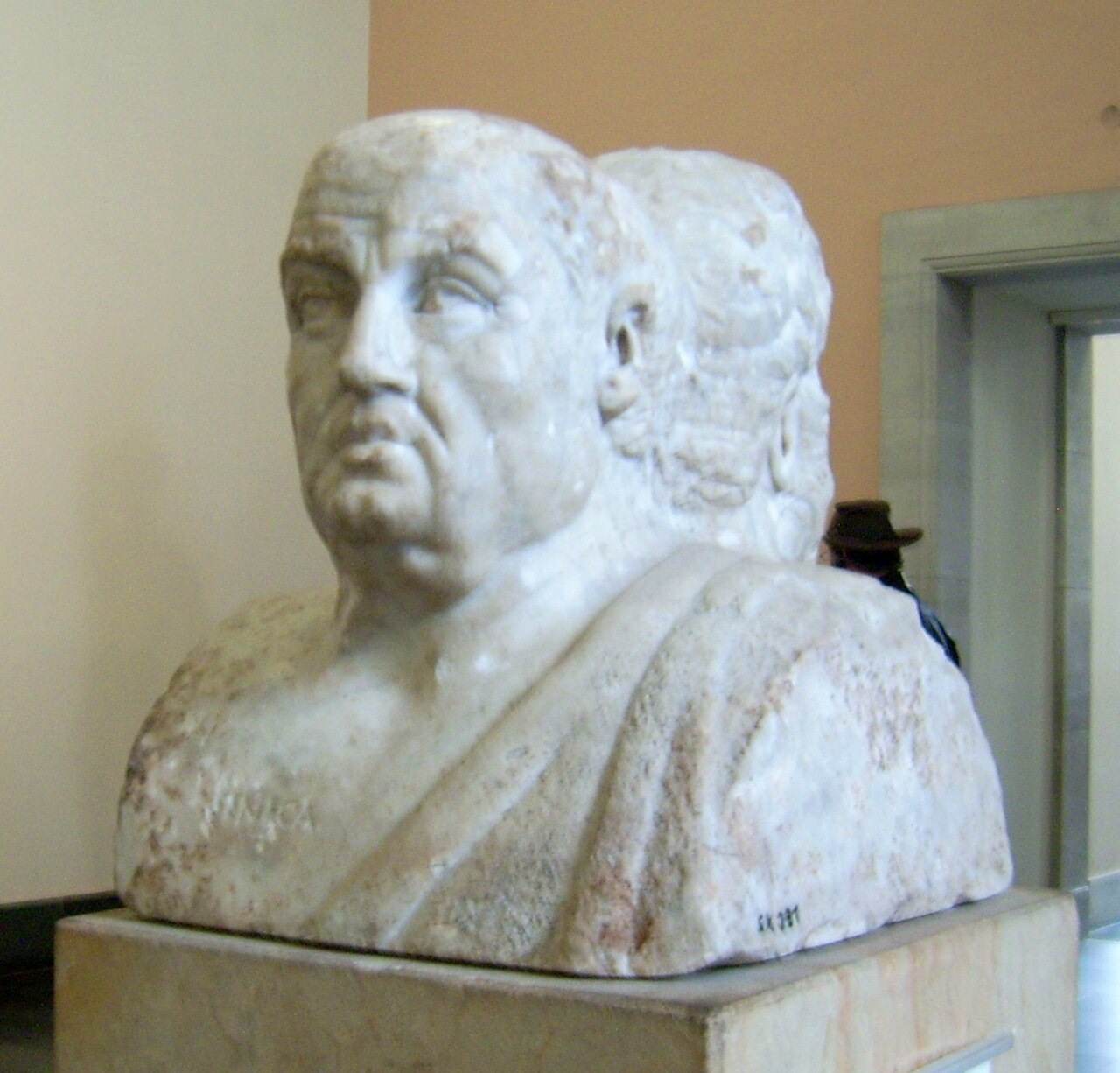 Sculpture
Secondary source
Double Herm of Socrates and Seneca
first half of the 3rd century AD
Ready when you are
Start chatting with Seneca now.
20 messages free · No credit card · Available in 50+ languages.