


Secondary sourceBook1716
The Works of Virgil
John Dryden · 1716
A 1716 English translation of Virgil's complete works by the poet John Dryden, a landmark edition that shaped how English readers knew Virgil.
An English translation of Virgil's complete works that brought his poetry to a new audience long after his death.
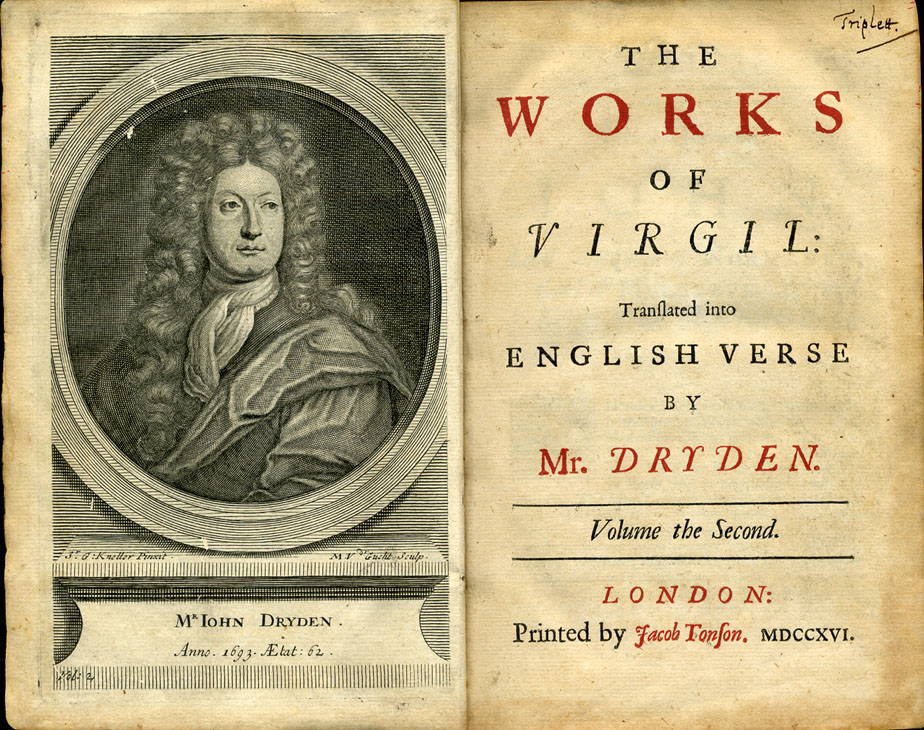
About this source
What it is
This is the frontispiece and title page of a 1716 edition of The Works of Virgil, translated into English verse by the poet John Dryden. The page shows an engraved portrait of Dryden alongside the title naming Virgil's works as translated by him, published in London.
Why it matters
Dryden's translation was a major way English-speaking readers encountered Virgil's poetry for centuries, long after Latin ceased to be widely read. It shows how Virgil's works kept being reinterpreted by later writers, and how translators like Dryden became important figures in shaping a classical author's reputation in a new language.
Look closer
- Why do you think the translator's portrait appears alongside the title, rather than Virgil's?
- What might be lost or changed when a poem is translated from Latin into English verse?
- Why would a translation from over two thousand years after Virgil's death still be considered important today?
This book is part of the curated material that grounds the AI version of Virgil on Humy.ai — when students ask about related events, the AI can quote it and cite it.
Ready when you are
Start chatting with Virgil now.
20 messages free · No credit card · Available in 50+ languages.