


Primary sourcePaintingc. 400 CE
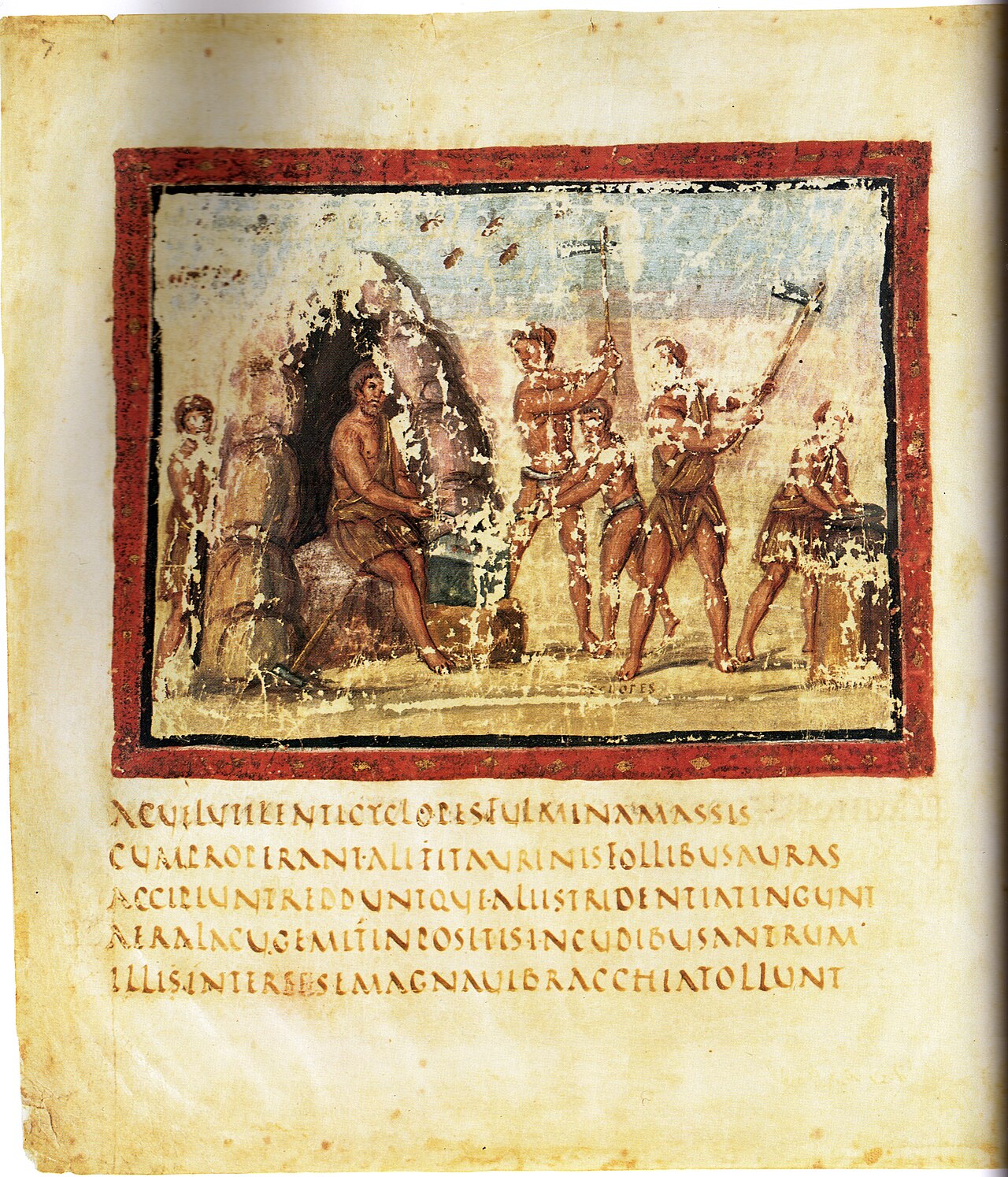
Vatican Vergil Folio 8v: Cyclops Laboring
Unknown · c. 400 CE
A page from the Vatican Vergil manuscript, one of the oldest surviving illustrated copies of Virgil's Georgics, showing Cyclopes at work.
An ancient illustrated manuscript page of Virgil's own poem the Georgics.
About this source
What it is
This is a page from the Vatican Vergil manuscript (Vatican Library, Cod. Vat. lat. 3225), made around 400 CE. It combines Latin text of Virgil's Georgics with a painted miniature showing Cyclopes working at a forge beside a cave.
Why it matters
The Vatican Vergil is one of the oldest surviving illustrated manuscripts of any classical text, created by an unknown artist a few centuries after Virgil's death. It shows how important his poetry remained in late antiquity, when readers and artists still copied and illustrated his words carefully by hand.
Look closer
- What does the scene of the Cyclopes working tell you about the story being illustrated?
- Why might ancient readers have wanted pictures alongside the written poem?
- What has survived of the Latin text on the page, and what condition is it in?
This painting is part of the curated material that grounds the AI version of Virgil on Humy.ai — when students ask about related events, the AI can quote it and cite it.
Ready when you are
Start chatting with Virgil now.
20 messages free · No credit card · Available in 50+ languages.