


Secondary sourceBookc. 4th century CE
Vergilius Augusteus
c. 4th century CE
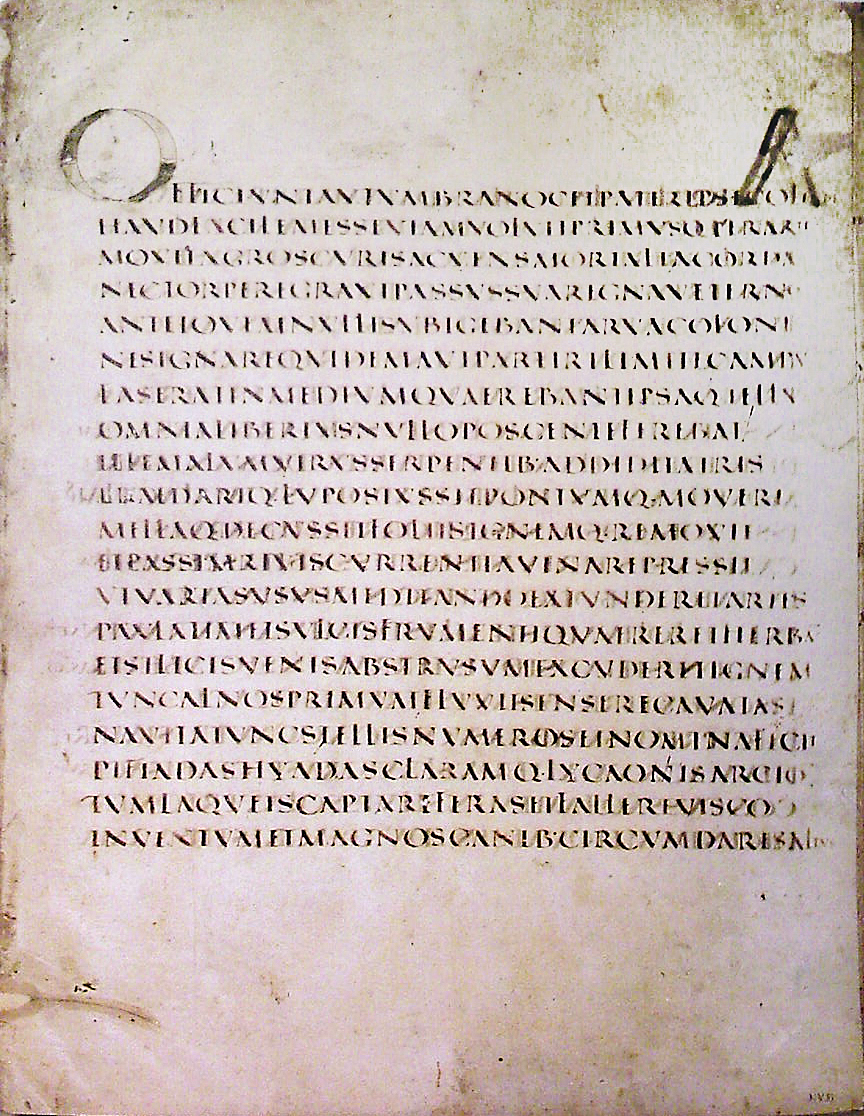
Fragments of a luxurious late-antique manuscript of Virgil's works, written in ornate square capitals.
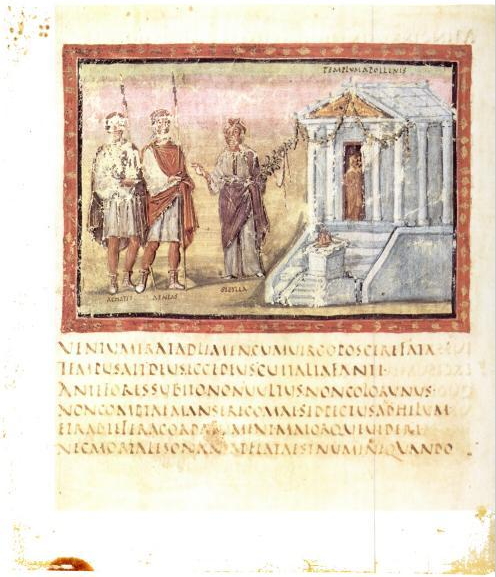
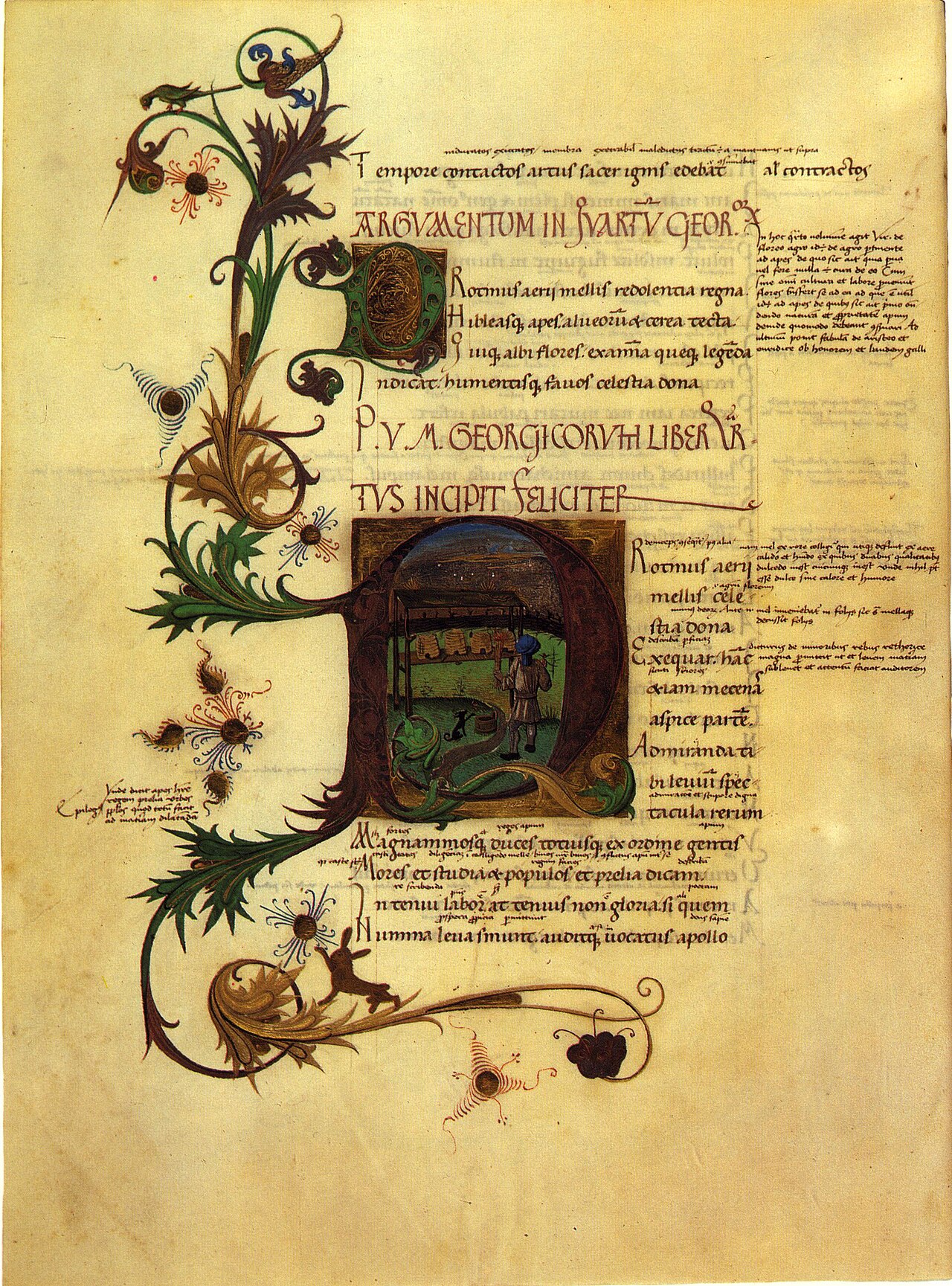
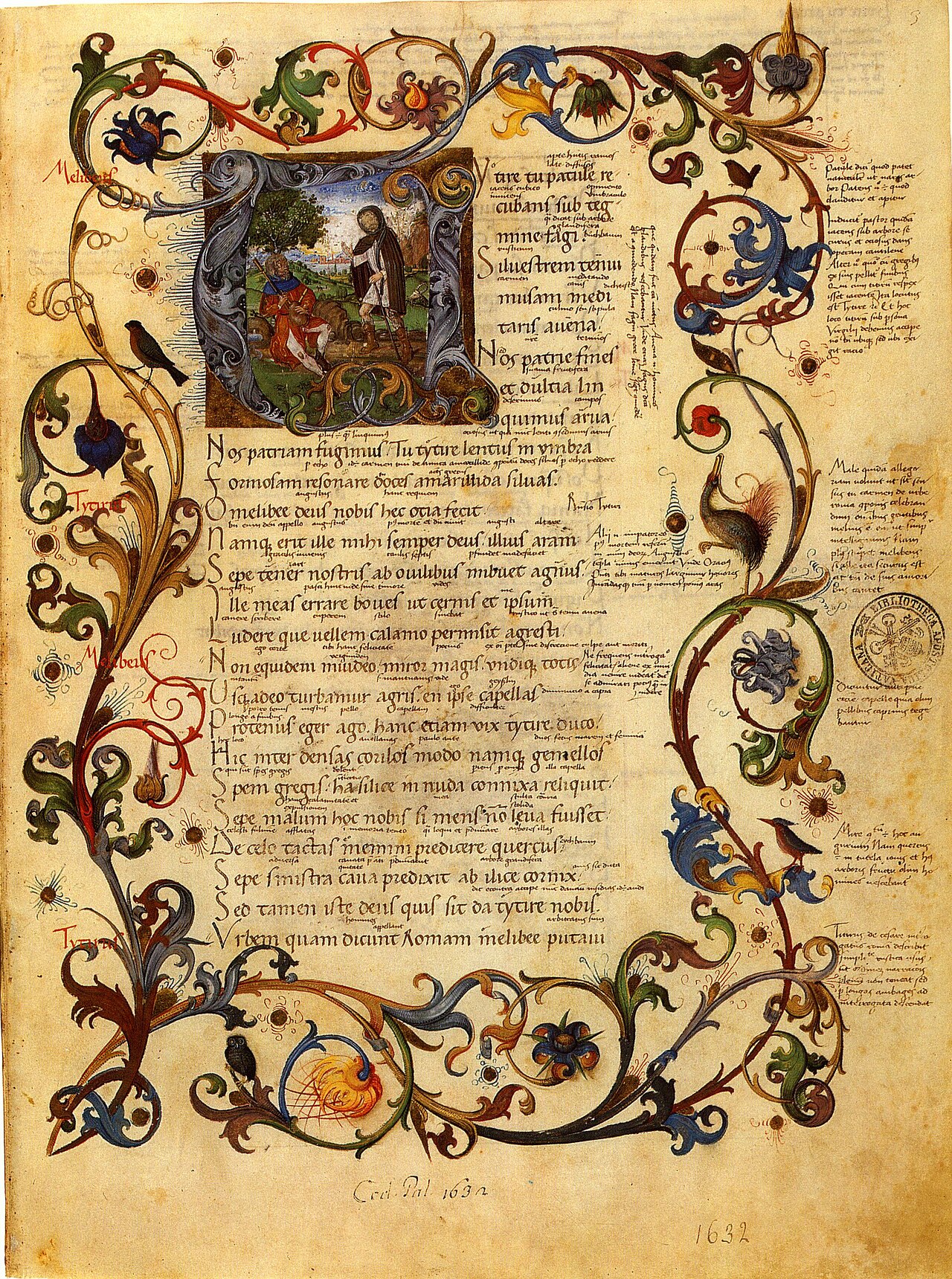
This manuscript preserves fragments of Virgil's Georgics and Aeneid, showing the prestige his texts held long after his death.
About this source
What it is
The Vergilius Augusteus is a manuscript from late antiquity, probably written around the 4th century, containing fragments of Virgil's Georgics and Aeneid. Only seven leaves survive, split between the Vatican Library and the Berlin State Library. It is written in Roman square capitals with decorated initial letters.
Why it matters
The text itself is unremarkable, but the handwriting matters: it proves that square capitals, usually seen carved into stone inscriptions, were also used for handwritten books. Its decorated initials are the earliest of their kind to survive, making it an important early example in the history of illuminated manuscripts. Its name comes from an old, mistaken belief that it dated to Emperor Augustus's own time.
Look closer
- Why would a scribe choose a grand, formal script normally used for stone inscriptions to copy a book?
- What does the manuscript's name tell us about how later readers sometimes guessed wrongly about an object's age?
- What do the decorated initials suggest about the value placed on Virgil's poetry?
This book is part of the curated material that grounds the AI version of Virgil on Humy.ai — when students ask about related events, the AI can quote it and cite it.
Ready when you are
Start chatting with Virgil now.
20 messages free · No credit card · Available in 50+ languages.