


Secondary sourceBookc. 500 CE
Vergilius Palatinus
Unknown Roman scribe · c. 500 CE
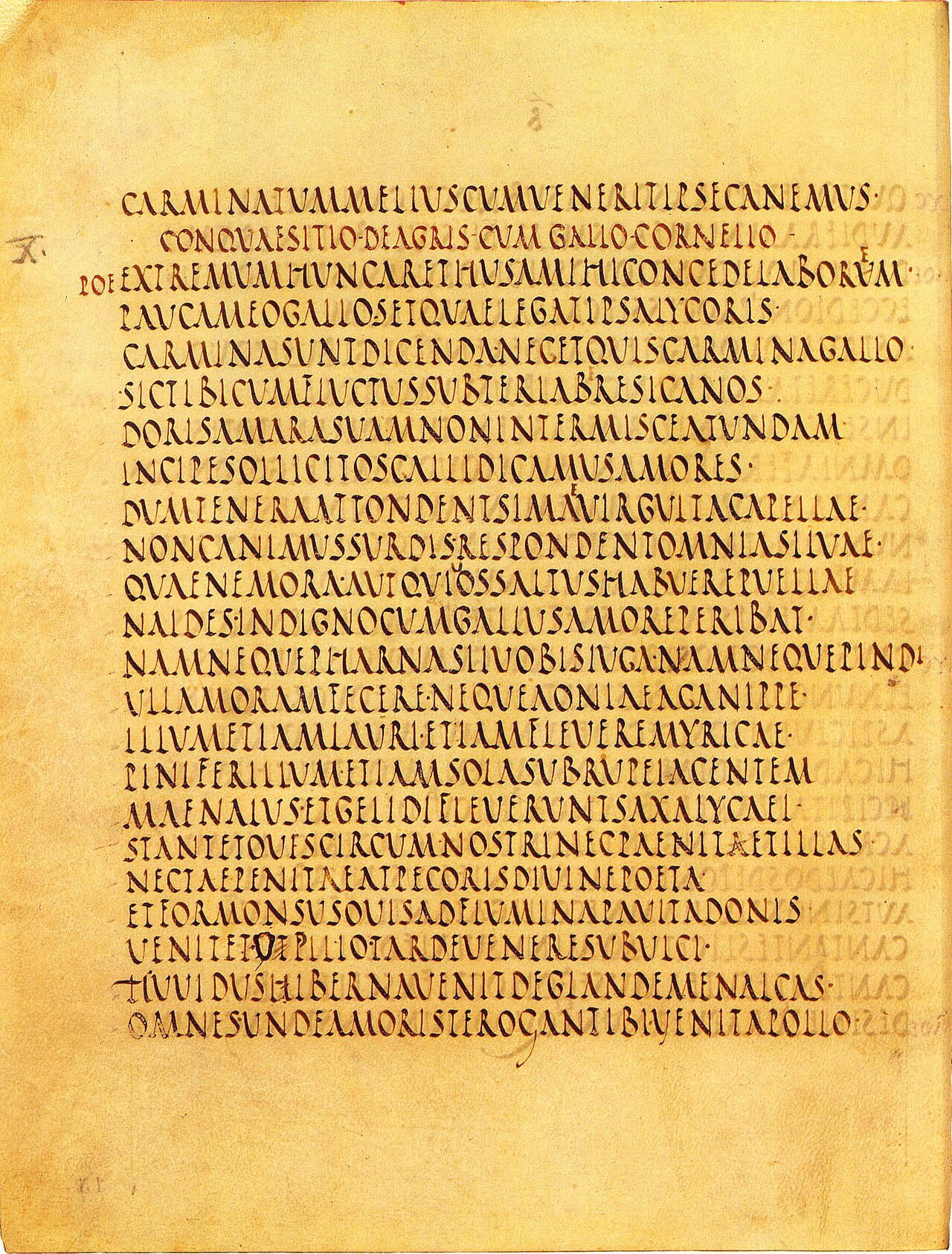
A late-antique manuscript of Virgil's poems, copied in rustic capitals a few centuries after his death.
This manuscript preserves Virgil's own poetry, copied centuries after his death to keep his work alive.
About this source
What it is
This is a parchment manuscript of Virgil's poetry, copied by an unknown Roman scribe around 500 CE in a script called rustic capitals. It is kept today in the Vatican Library.
Why it matters
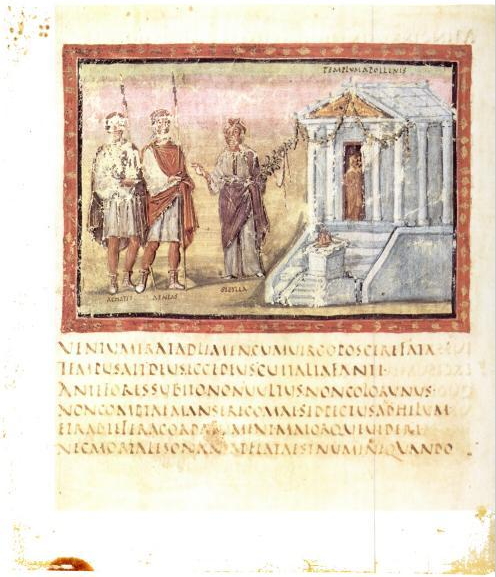
Virgil died centuries before this copy was made, but the manuscript shows how faithfully and carefully his works were reproduced by later generations of scribes. It is one of the few surviving manuscripts of Virgil from late antiquity, helping historians understand how ancient texts were transmitted before printing existed.
Look closer
- What do the red letters and marginal notes suggest about how this manuscript was used or studied?
- Why might a scribe centuries after Virgil's death still be copying his poems by hand?
- What does the survival of a manuscript like this tell us about which ancient texts were considered worth preserving?
This book is part of the curated material that grounds the AI version of Virgil on Humy.ai — when students ask about related events, the AI can quote it and cite it.
Ready when you are
Start chatting with Virgil now.
20 messages free · No credit card · Available in 50+ languages.