


Secondary sourcePaintingc. 500 AD
Vergilius Romanus
c. 500 AD
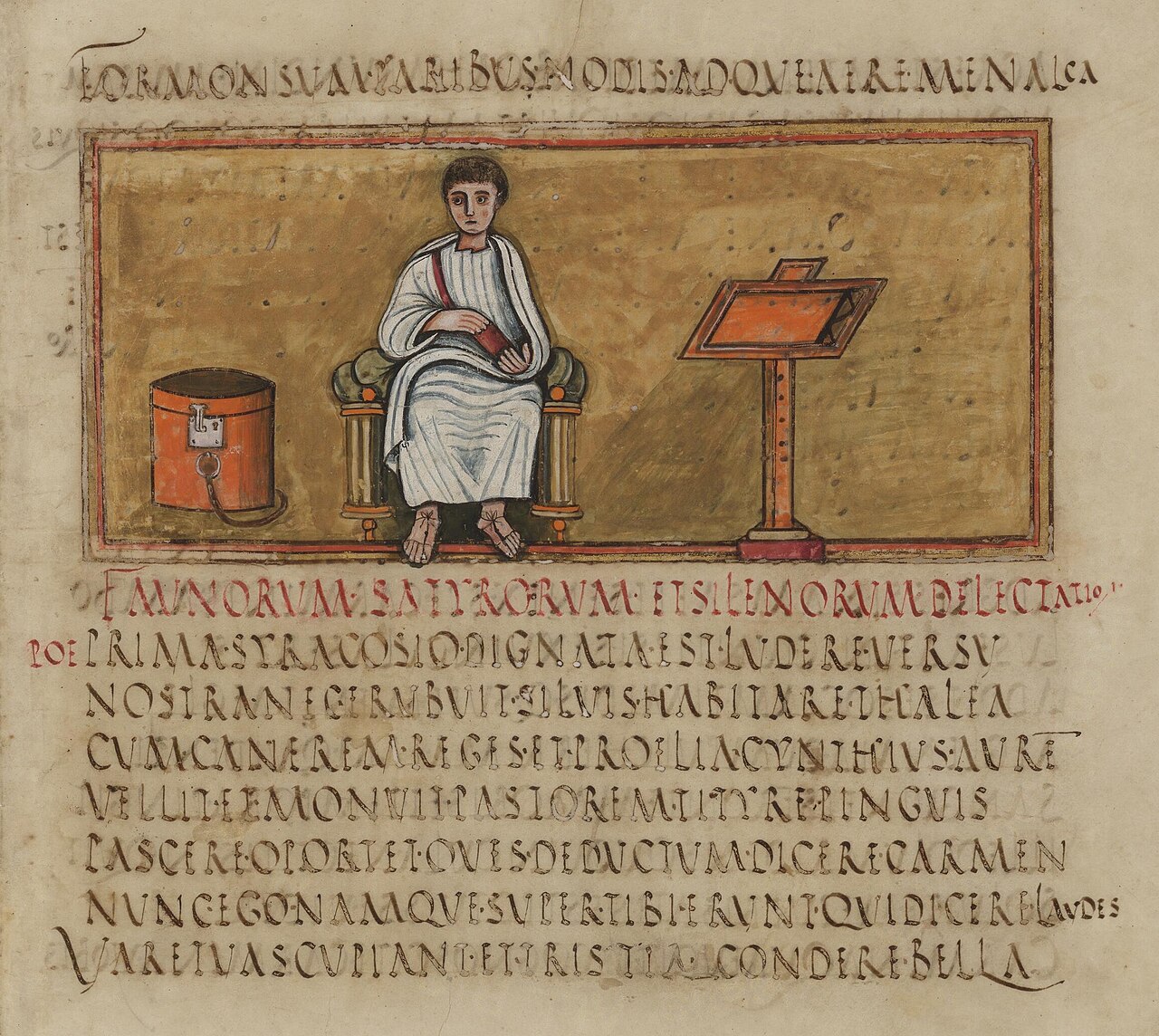
A 5th-century illustrated manuscript of Virgil's works containing one of the earliest surviving portraits of the poet himself.
This manuscript contains one of the earliest surviving portraits of Virgil, made centuries after his lifetime.
About this source
What it is
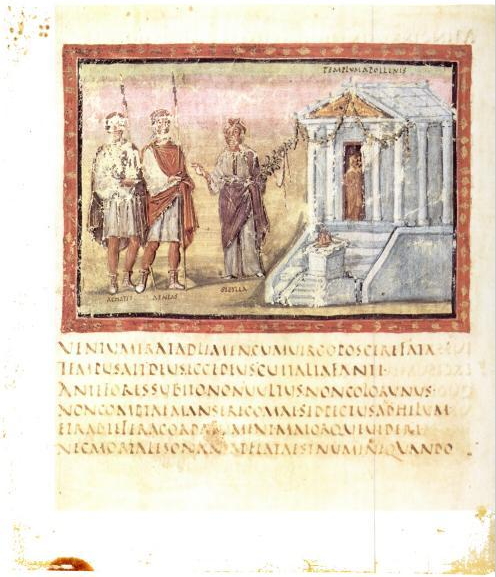
The Vergilius Romanus is an illustrated manuscript from the 5th century containing Virgil's Aeneid, Georgics, and some Eclogues. It survives with 309 vellum pages and 19 illustrations by at least two anonymous artists, and is held at the Vatican Library.
Why it matters
The manuscript contains three portraits of Virgil, showing him seated between a lectern and a locked chest — among the earliest known images of the poet. Its illustrations also mark a turning point in art history, moving away from classical naturalism toward flatter, more abstract styles, reflecting changes in Roman art as the empire declined.
Look closer
- What does the style of the illustrations tell us about changes happening in Roman art at this time?
- Why might the artists have chosen to show Virgil with a lectern and a chest of scrolls?
- What might be missing or inaccurate about a portrait made centuries after the poet's death?
This painting is part of the curated material that grounds the AI version of Virgil on Humy.ai — when students ask about related events, the AI can quote it and cite it.
Ready when you are
Start chatting with Virgil now.
20 messages free · No credit card · Available in 50+ languages.